If you’re looking for HeyReach alternatives, chances are you’re thinking of subscribing to it but are not sure if it offers the most bang for your buck. Or, perhaps you’ve been using it yourself, but have outgrown what it can do and now need a solution that offers more than LinkedIn automation. Maybe you need a tool that supports email outreach, allows for better campaign control, integrates with the best CRM for sales, or offers multiple tools in one.
But given the plenty of options available, choosing the right tool can seem like finding a needle in the haystack. So, how do you know which one is for you? By taking a look at your use case. After all, a solo founder engaging in targeted outreach has different needs from an agency managing several client campaigns or a sales team coordinating outreach across multiple LinkedIn accounts.
We know, we know… easier said than done. So, to help you out, we’ve compiled years of knowledge in the LinkedIn automation space to bring you the list of the best 8 HeyReach alternatives.
We’ll compare the tools by:
- Channel coverage
- Campaign logic and personalization
- Prospecting and data enrichment
- Agency and client-management features
- Reply handling
- Pricing and how the cost changes as you scale
We’ll also be clear about which tool is best for which use case.
What is HeyReach?
HeyReach is a cloud-based LinkedIn automation platform built primarily for agencies, sales teams, and GTM teams that manage multiple LinkedIn sender accounts.
Its core strengths are sender rotation, LinkedIn automation, a Unified Inbox, client workspaces, permissions, API and webhooks, and agency-level management features.
HeyReach is LinkedIn-first, meaning it doesn’t have a cold email infrastructure built-in. Instead, email sending is handled through 3rd party integrations with tools such as Instantly.ai and Smartlead, which costs extra.
Speaking of costs, HeyReach’s Growth plan starts at $79 per sender per month for fewer than 10 senders. Its monthly Agency plans are $999 for 25 senders and $1,399 for 50 senders, while the Unlimited plan is $2,999 per month.
That makes HeyReach a logical benchmark if your main job is scaling LinkedIn activity across many profiles. But it also explains why teams with a broader outbound workflow often compare it with LinkedIn automation tools that include more of the sales process natively.
Why people look for HeyReach alternatives
And that brings us to the alternatives. Now, people usually don’t switch tools because of one missing checkbox. They switch when the workflow around the tool becomes messy. In HeyReach’s case, these are the most common reasons to compare alternatives.
1. You want LinkedIn and email to live in the same platform
HeyReach can pass leads into external email tools, which works well if you already have that stack. But if you want to connect unlimited email accounts, warm them up, find and verify business emails, and build LinkedIn and email steps inside the same sequence, a platform with native email can remove a lot of handoffs.
2. You want prospecting, enrichment, and outreach in one workflow
A campaign tool still needs leads. If you rely on a separate database, another enrichment product, another personalization tool, and then a sending platform, your real comparison isn’t HeyReach vs. one competitor. It’s HeyReach plus the rest of your stack vs. a platform that replaces more of it.
3. Your agency needs more than sender and workspace management
HeyReach has genuine agency features, including multiple client workspaces, a master view, shared seat pools, permissions, white labeling, onboarding, and a dedicated Slack channel on agency plans. So the question isn’t whether it supports agencies. It does.
The better question is how much of your agency operation you want the platform to cover: prospecting for each client, cross-client conversations, risk detection, granular client permissions, branded support, AI reply handling, and even the ability to productize your agency’s sales know-how.
4. You want AI to handle replies, not just help write messages
Integrating with ChatGPT for sales copywriting is useful. But actually, the bigger workflow change happens after the first response. Users increasingly want AI to understand the offer, follow a conversation, handle objections, and move interested prospects toward a conversion, while still giving humans control where needed.
5. Your pricing model no longer matches your team shape
A solo seller, a small SDR team, and an agency managing 50 client accounts have completely different economics. Some alternatives are cheaper for 1 or 2 users. Meanwhile, others become more attractive at agency scale because they bundle more infrastructure or use flat pricing.
How we compared the best HeyReach alternatives
For this guide, we reviewed current product and pricing information from the vendors themselves and compared each tool against the jobs a HeyReach user is most likely trying to solve.
Most specifically, we focused on:
- Channel architecture: Does a platform support LinkedIn only, has native email support, too, or does it add cold email functionality through another tool?
- Sequence control: Can you branch, add conditions, engage in A/B testing, and edit existing outreach campaigns?
- Data layer: Does the product help you find, qualify, enrich, and verify prospects?
- Agency operations: How well does it handle clients, seats, permissions, reporting, white labeling, and support?
- Reply management: Is there one inbox, team visibility, or AI that can continue the conversation?
- Cost at scale: What do you actually pay when your team or client base grows?
And if you’re comparing the whole category rather than HeyReach specifically, our top sales engagement platforms guide gives you the broader shortlist.
Best HeyReach alternatives at a glance
| Alternative | Best for | Channels | Starting monthly price* |
| Skylead | Agencies & sales teams wanting the broadest all-in-one workflow | LinkedIn + native email | All-in-one outreach $100/seat; Agency $999/50 seats or $1,999 unlimited seats |
| Expandi | LinkedIn-first teams that want conditional multichannel sequences | LinkedIn + email | $99/month |
| La Growth Machine | Users that want deeper multichannel outreach | LinkedIn + email; more channels on higher plans | From €60/identity |
| Lemlist | Email-first outbound teams adding LinkedIn | Email + LinkedIn + more on Multichannel | $69 Email; $109 Multichannel |
| Waalaxy | Smaller teams wanting a lower-cost entry point | LinkedIn; email on Business | From $19/user |
| Dripify | Users who want more control over drip campaign performance | LinkedIn + email | From $59/user |
| Linked Helper | Budget-conscious LinkedIn power users | LinkedIn-first | From $15/month |
| Meet Alfred | SMBs wanting LinkedIn + email + X in one tool | LinkedIn; Pro adds email + X | From $59/user |
*Pricing reflects public vendor pricing checked September 9, 2026, and can change. Some “starting” prices depend on plan or billing cycle.
1. Skylead - Best overall HeyReach alternative for agencies and sales teams
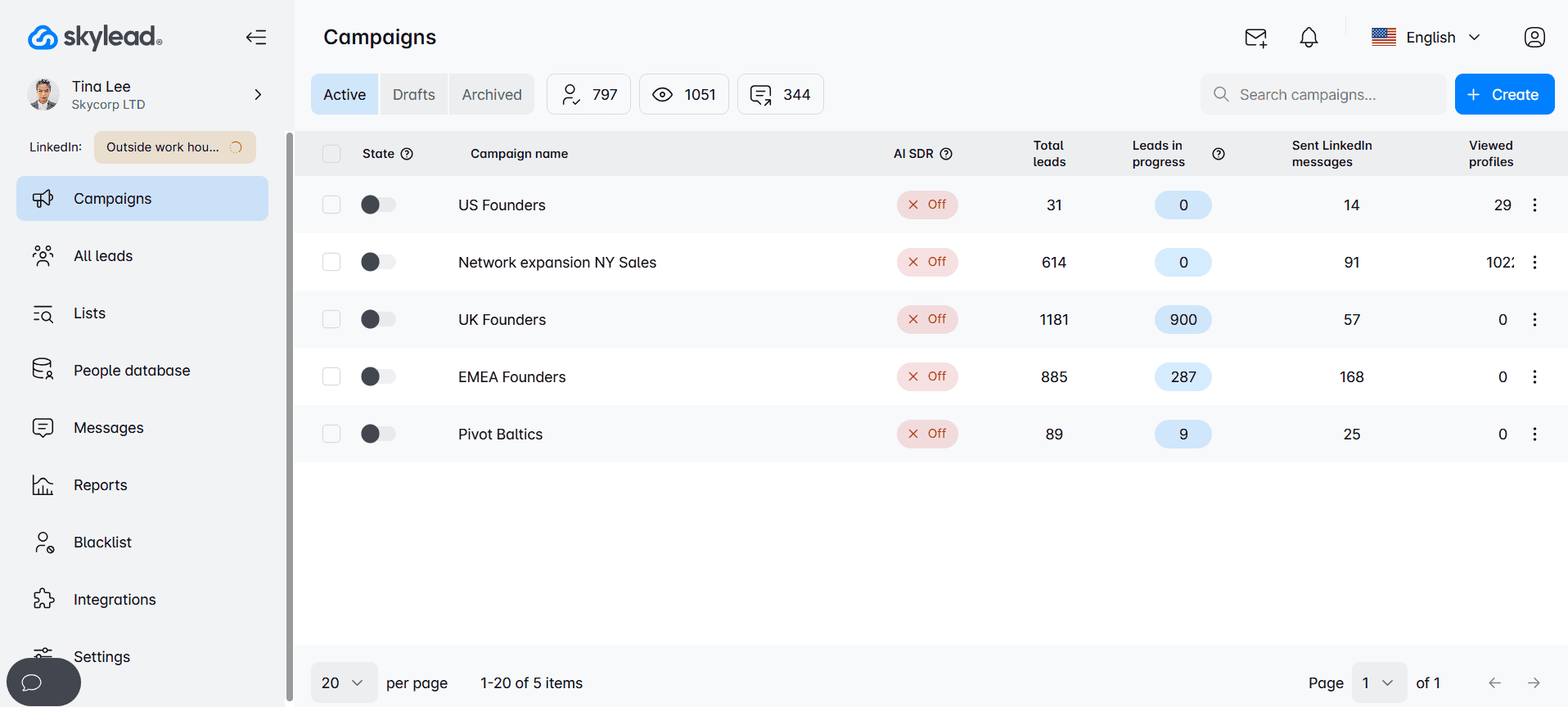
Yes, that’s us. Hi! ?
Skylead is a LinkedIn automation tool and cold email software for agencies and sales teams that covers the workflow before, during, and after the first message.
Namely, you can use it to find accounts and decision-makers, enrich their data, build Smart Sequences across LinkedIn and email, manage replies, and use an AI SDR to keep qualified conversations moving automatically.
What makes Skylead different from HeyReach?
HeyReach is a great tool - there’s no doubt about it. However, Skylead takes outbound a step further thanks to:
- Native LinkedIn and email outreach - Apart from automating LinkedIn actions (View, Follow, connection request, message, free & paid InMail), you can also connect unlimited email accounts, run email automation, warm up infinite mailboxes, and use email discovery and verification without handing the email part of the sequence to another sending platform.
- Account-based prospecting and a built-in B2B database - Build company lists, find matching decision-makers, and move them directly into outreach.
- AI data enrichment - Enrich contacts and companies with data from 20+ providers and 10+ company signals at provider cost with no added margin from our side. Then, use the uncovered data as variables in your campaigns for more personalized outreach.
- AI SDR - Have AI automatically handle replies as they come in based on your knowledge and conversation strategy, objection handling logic, goals, and feedback. Choose automatic or semi-automatic mode, depending on whether you want the conversations handled by AI end-to-end or would like to stay in the loop. Agencies can also productize their sales expertise by creating reusable AI Training Sets and apply them across client campaigns without exposing the underlying training.
- Agency dashboard and Unibox - See seats, activity, performance, client conversations, and risky accounts that may need attention from one place.
- Granular client access - Assign roles and permissions, invite co-workers and admins, and control what clients can see and do.
- White label option with custom branding, a branded Help Center, branded customer support, multilingual support, and Google Tag Manager integration.
Skylead pricing
Skylead’s All-in-one plan is $100 per seat per month, with AI SDR and AI Data Enrichment credits costing $1 per 100 credits.
Meanwhile, agency pricing is flat: $999 per month for up to 50 LinkedIn seats, or $1,999 per month for unlimited LinkedIn seats. Both agency options include unlimited email accounts and infinite email warm-up, features that HeyReach lacks.
Speaking of HeyReach, their current monthly Agency plan is $999 for 25 senders or $1,399 for 50 senders, while its Unlimited plan is $2,999. If you’re comparing these two tools specifically, our HeyReach alternative page breaks the feature sets down side by side.
The trade-off? If your only goal is to distribute one LinkedIn campaign across a large pool of sender accounts, HeyReach’s multi-sender LinkedIn rotation is purpose-built for that operating model. On the other hand, Skylead makes the stronger case when LinkedIn is a part of a wider outbound workflow.
Skylead vs. HeyReach for agencies
As both platforms are primarily aimed at agencies, we thought we’d make the comparison more useful by directly comparing their agency features.
That said, here are the core differences between the two:
| Area | Skylead | HeyReach |
| Core agency model | Full client outbound operation: prospecting → enrichment → LinkedIn/email → AI SDR → client oversight | Multi-sender LinkedIn outreach with agency workspaces and management |
| Email outreach | Native; unlimited email accounts, automation, warm-up, discovery & verification | Email steps via integrations with Instantly and Smartlead |
| Prospecting & data | Built-in B2B database, account-based prospecting, AI data enrichment | ❌ |
| AI reply handling | Trainable AI SDR | ❌ |
| Cross-client oversight | Agency dashboard, activity/performance overview, risk alerts + Unibox by team/seat | Master view, multiple workspaces, Unified Inbox, shared seat pool |
| Client permissions | Granular client roles and permissions; multiple admins/co-workers | Workspaces and permissions + external client manager role |
| White label | Branded platform + support + Help Center + in-app guidance + GTM integration | White label on Agency; multi-brand white label on Unlimited as an add-on |
| 50 LinkedIn seats/month | $999 | $1,399 |
| Highest flat plan/month | $1,999 unlimited seats | $2,999 Unlimited plan |
2. Expandi - Best for conditional LinkedIn + email sequences
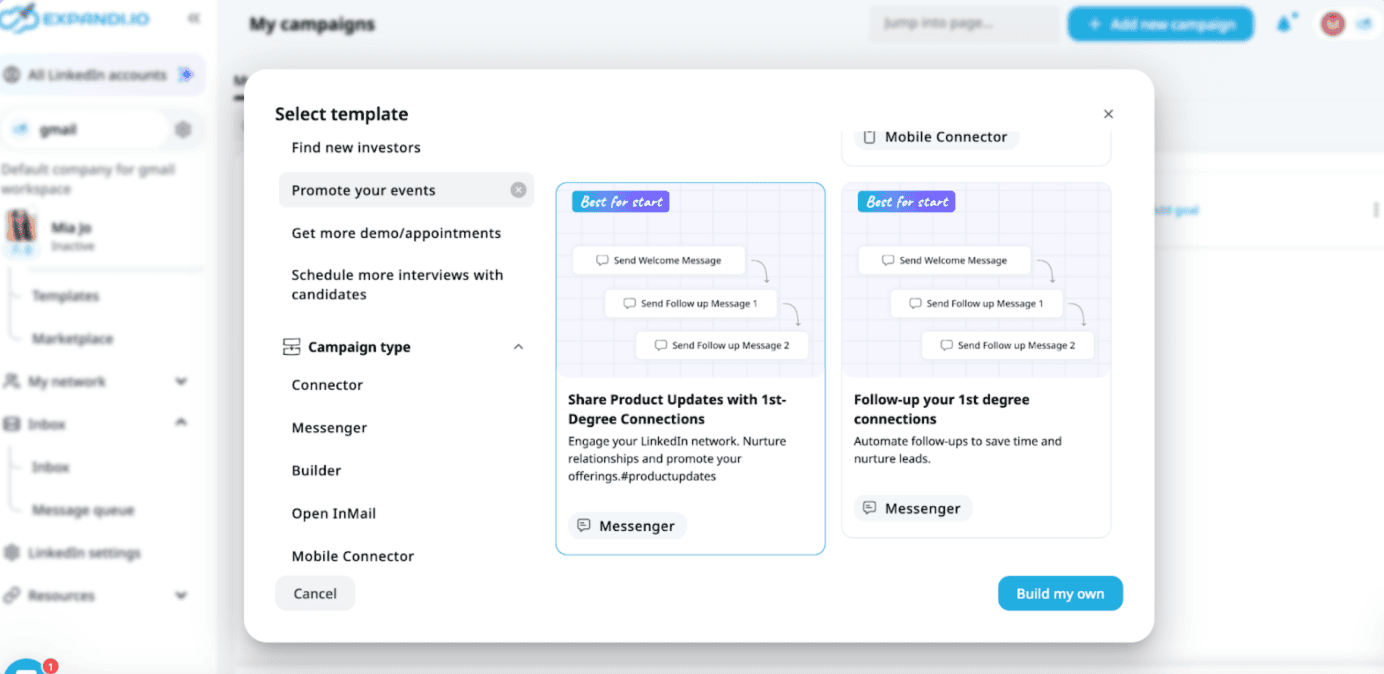
Expandi is one of the closest HeyReach alternatives if you still want LinkedIn automation to sit at the center of the workflow. It’s cloud-based, supports LinkedIn and email follow-ups in the same sequence, and gives users conditional campaign logic rather than only a fixed drip.
Its Business plan is $99 per month and includes unlimited campaigns, campaign prioritization, multichannel outreach, and multiple campaign types.
Expandi also has a custom agency plan for teams with 10+ seats, with centralized management, roles and permissions, and white-label options.
Compared with HeyReach, Expandi is a better match for those looking for a native multichannel outreach solution. Compared with Skylead, however, it is still more focused on the outreach layer. Skylead adds native prospecting, AI data enrichment, and AI SDR reply handling on top.
3. La Growth Machine - Best for teams that want more channels in the sequence
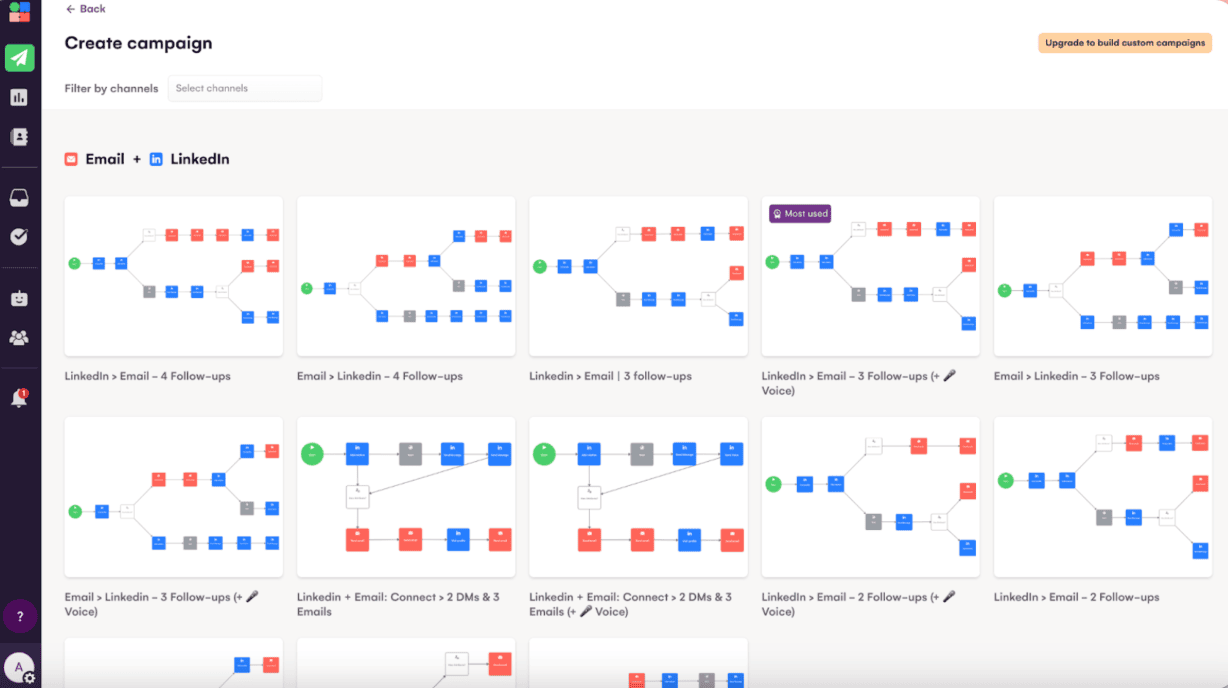
La Growth Machine (LGM) is a strong option when your outbound motion is genuinely multichannel.
Its Basic plan starts at €60 per identity (one connected LinkedIn profile and email account) and includes LinkedIn and email automation, support for LinkedIn voice messages, and access to a 27M+ company database.
Higher plans expand the channel mix to X and calls, and unlock A/B testing, Unified inbox, and CRM integrations, among others.
That makes LGM especially relevant for teams that don’t want LinkedIn to be the center of every campaign. You can build a workflow where the channel changes based on how you want to reach the prospect, rather than treating email and other channels as a separate backup system.
The trade-off is that LGM doesn’t offer flat agency plans.
In fact, the minimum identity requirement to sign up is 6, but pricing depends on the volume and requires a talk with their team. In turn, agencies get dedicated customer support, onboarding sessions, exclusive features, discounted plans, and custom identities. Compared to Skylead and HeyReach, which offer far more extensive agency benefits, these don’t seem to justify the investment.
4. Lemlist - Best for email-first outbound teams adding LinkedIn
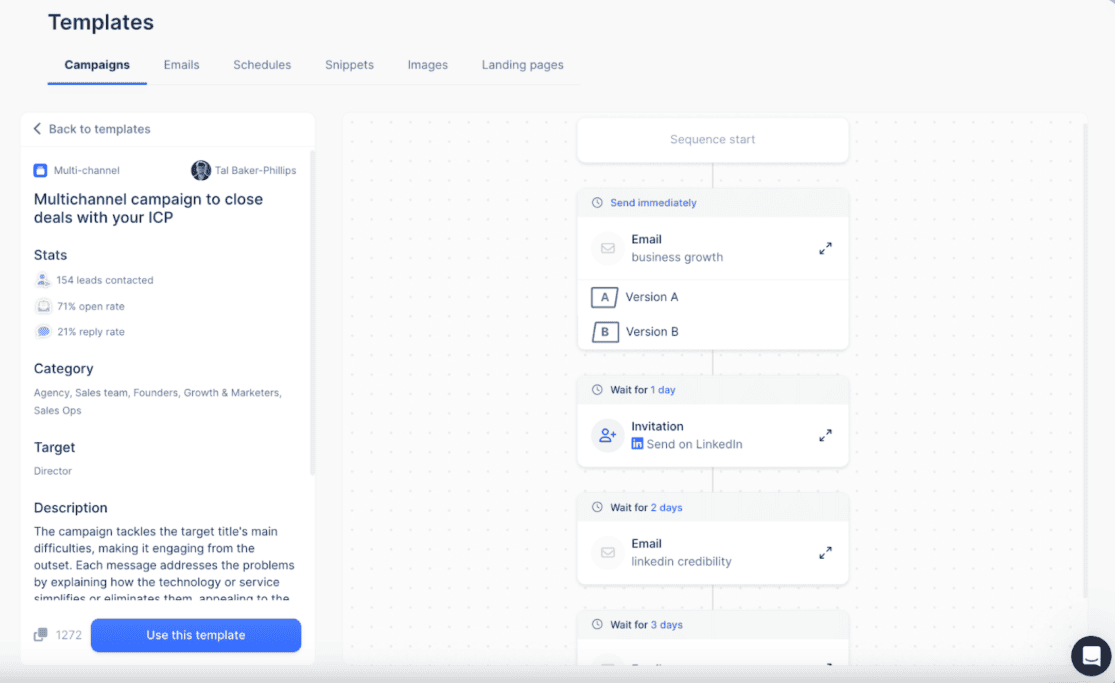
Lemlist comes at the problem from the other direction. HeyReach is LinkedIn-first, whereas Lemlist is traditionally email-first and has expanded into a broader outbound platform.
Its Email plan is $69 per month and includes unlimited users and email senders, a lead database, email and phone finder, warm-up and deliverability tools, a unified inbox, CRM integrations, and AI features.
In the meantime, the Multichannel plan is $109 per user per month and adds LinkedIn automation alongside SMS, calling, and other workflow features. However, they automate LinkedIn activities via a Chrome extension, which isn’t safe and could lead to restrictions.
All in all, if you’re evaluating best cold email software as much as LinkedIn automation, Lemlist deserves a serious look. However, if agency client management and LinkedIn/email parity are more important, Skylead is likely the more natural contender.
5. Waalaxy - Best lower-cost option for simpler outreach
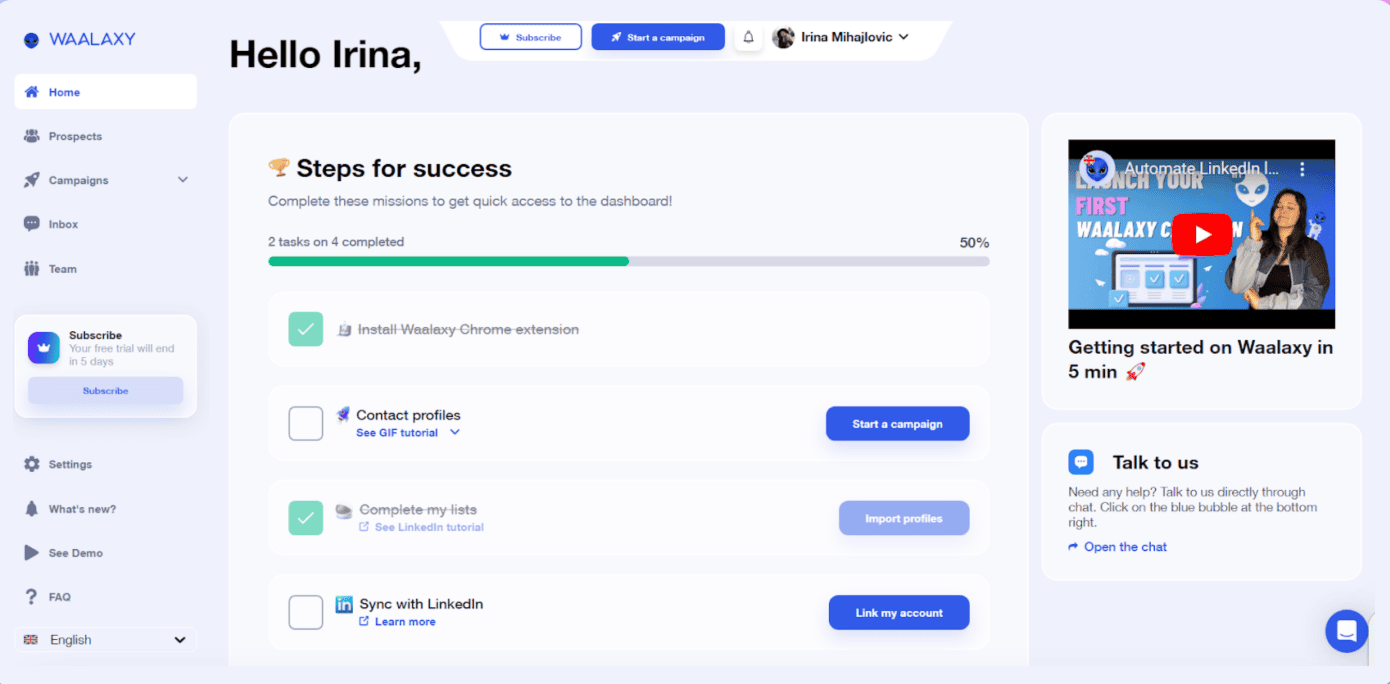
Waalaxy is one of the easiest HeyReach alternatives to consider when price and simplicity matter more than advanced agency infrastructure.
Its Pro plan starts at $19 per user per month and covers the basics of LinkedIn prospecting, with unlimited campaigns, pre-built sequences, automated follow-ups, and up to 300 invitations per month. The Advanced plan costs $49 per user per month, increases that limit to 800 invitations, and adds API access, Make, Zapier, and n8n integrations, plus live chat support.
For teams that also want email, the Business plan costs $69 per user per month and adds cold email sequences, LinkedIn + email multichannel campaigns, and 500 email finder credits per month.
The small price comes at a cost, though: the tool depth. As your workflow becomes more conditional, more client-heavy, or more dependent on centralized reply handling and enrichment, you may outgrow the simpler structure and may start leaning toward Waalaxy alternatives that are more advanced.
6. Dripify - Best for structured drip campaigns with built-in analytics
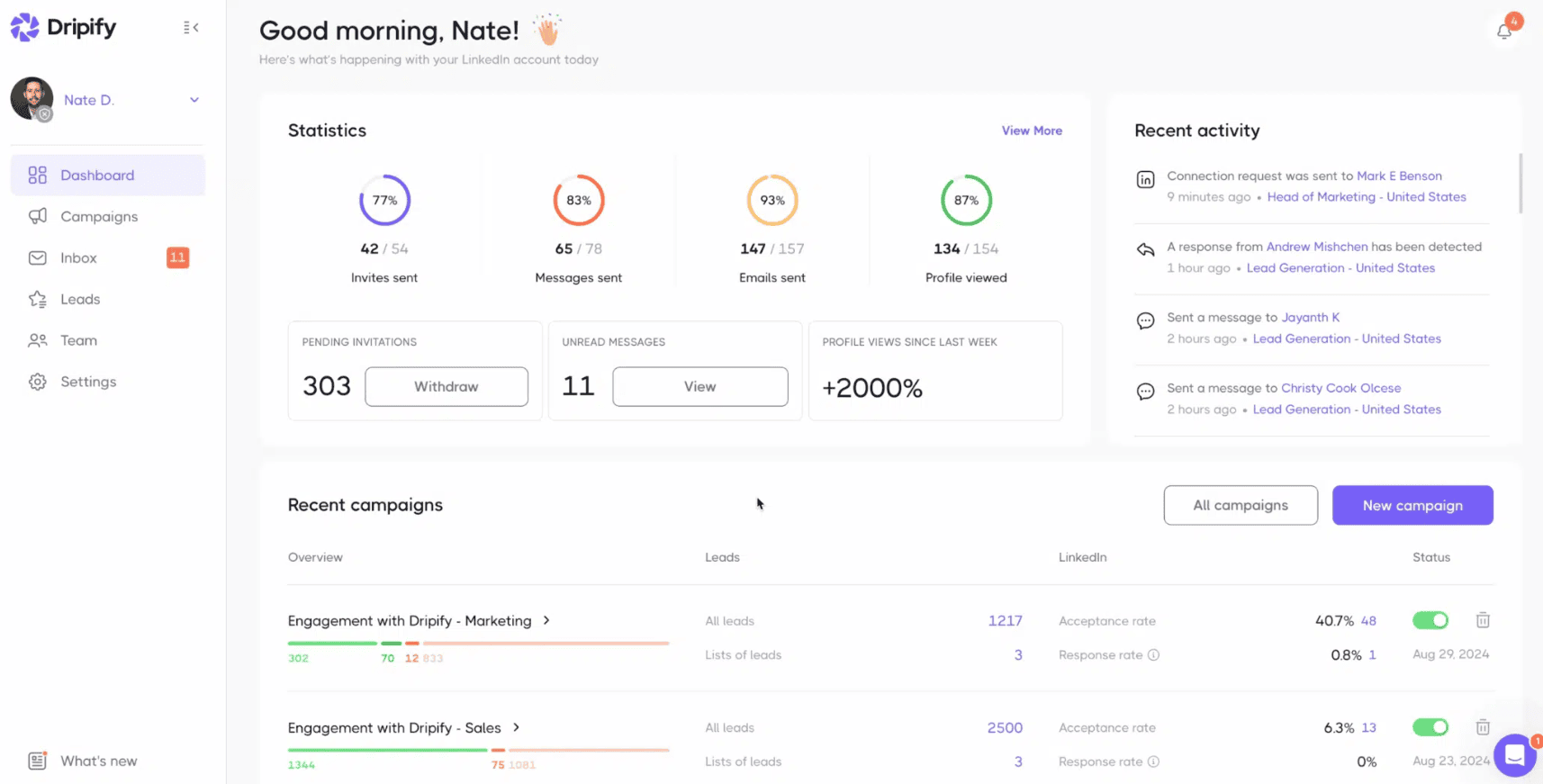
Dripify is another cloud-based alternative built around easy-to-launch drip campaigns. Its plans currently start at $59 per user per month, and all paid tiers include LinkedIn and email sequences.
The $79 Pro plan adds unlimited drip campaigns, a dedicated inbox, webhooks, and HubSpot integration.
Meanwhile, the $99 Advanced plan adds multi-team management, lead tagging, step analytics, evergreen leads, and A/B testing.
Dripify is easier to shortlist when your requirements are outreach-centric. Skylead vs Dripify vs HeyReach stops being a question, though, when you also want prospecting, broader data enrichment, unlimited email infrastructure, and agency-level client operations in the same product.
7. Linked Helper - Best budget option for LinkedIn power users
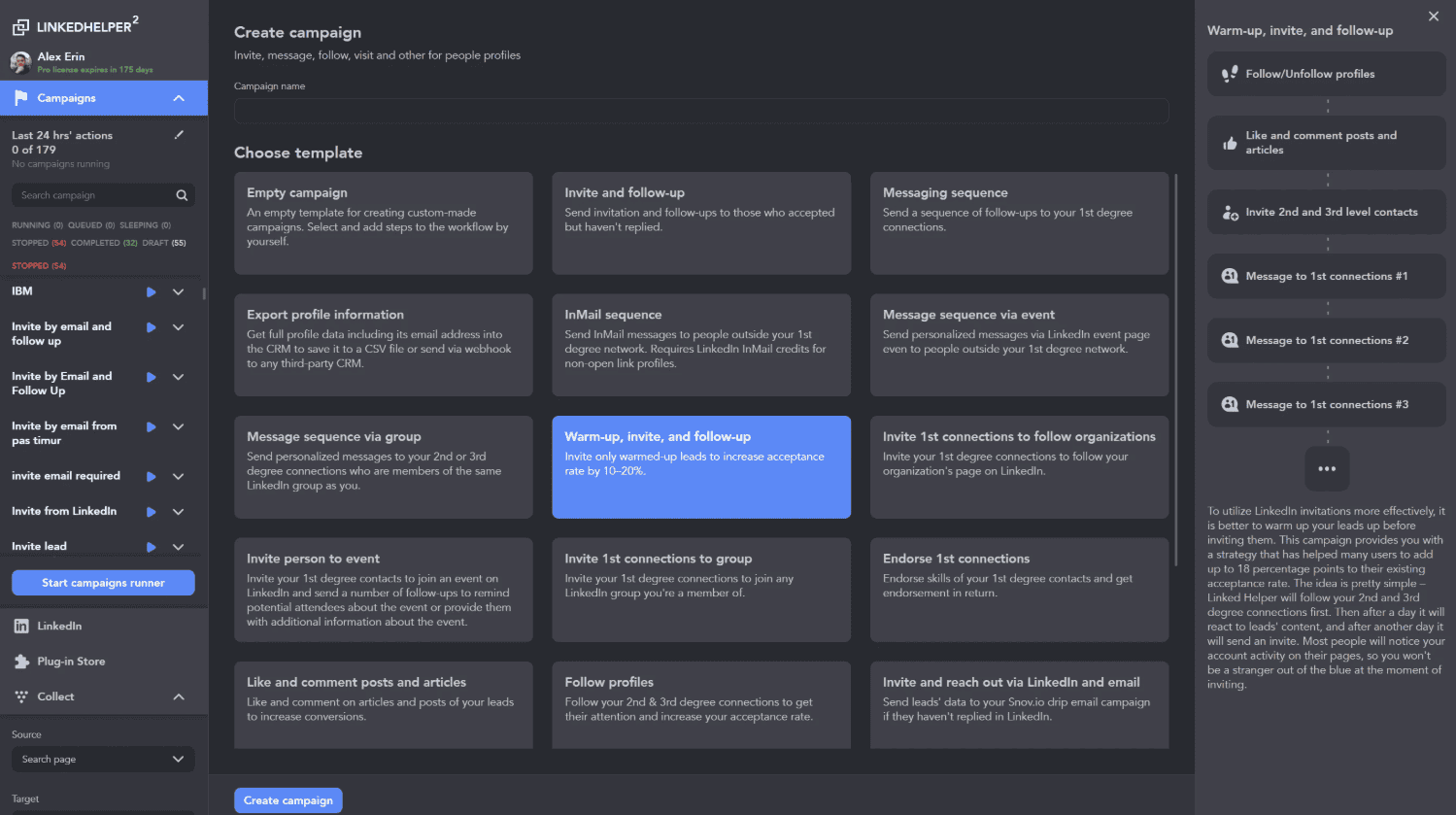
Rather than being a cloud-first platform centered on many remote sender accounts, Linked Helper has traditionally focused on a desktop/local workflow, with optional cloud-based data storage and newer team features.
Its Standard plan starts at $15 per month for local-based storage and includes unlimited campaigns, core lead-generation tools, a built-in CRM with tagging and notes, exports, data credits, and AI credits for message generation.
Linked Helper also supports a wide range of LinkedIn-native actions, which makes it attractive to power users who want more control at a much lower entry price.
But that architecture can also become a downside as you scale. Because campaign execution happens on-device, the machine running each LinkedIn account needs to stay available while campaigns are active. Teams that want uninterrupted execution can move the setup to a VPS or dedicated server, but that adds another layer of infrastructure to manage.
For an individual user, that may not be a big deal. But for an agency managing many client accounts, it very well could, as a centralized cloud operation is usually easier to scale. Plus, if you also need a broader feature set, the savings may not compensate for the extra systems you still need around Linked Helper.
8. Meet Alfred - Best for small teams that want LinkedIn, email, and X
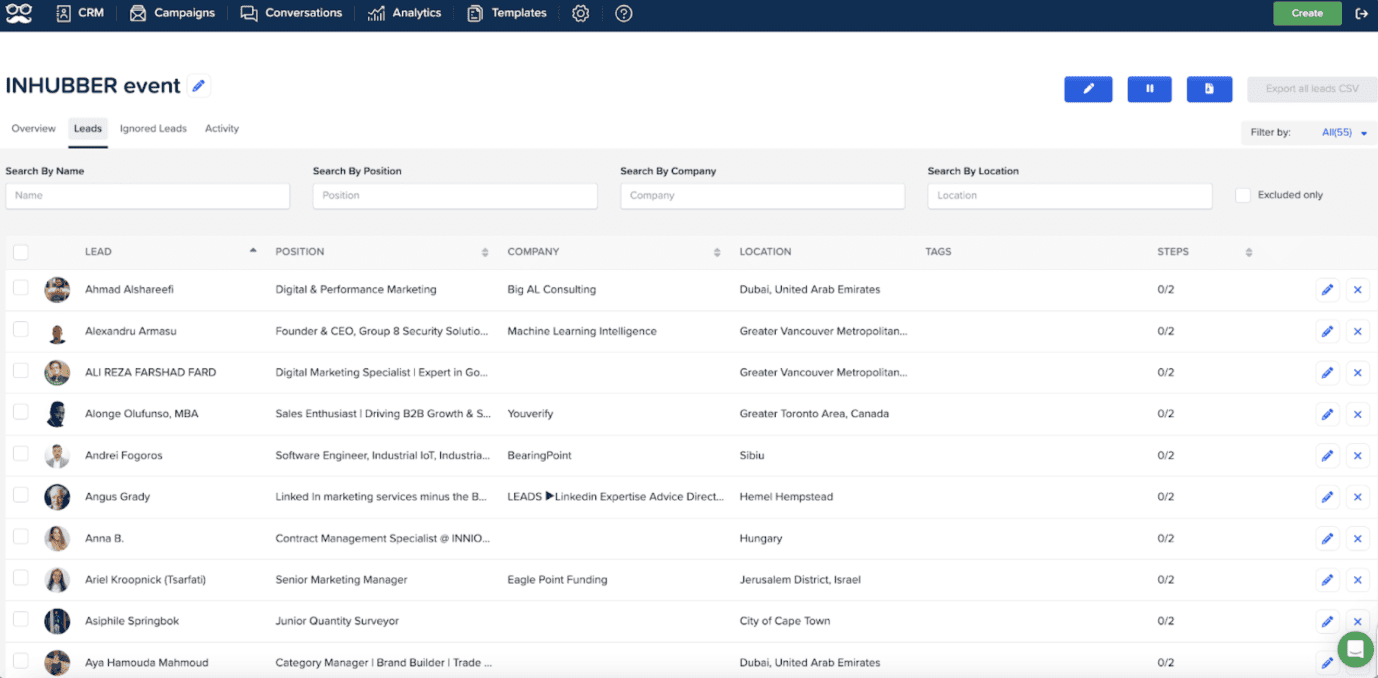
Meet Alfred is a cloud-based platform with LinkedIn automation at the entry level and a broader social and email workflow on higher plans.
The Basic plan is $59 per user per month. Pro is $99 per month and adds unlimited campaigns, LinkedIn + X + email automation, Sales Navigator support, integrations, and additional campaign types.
Its Team plan is $79 per user per month and comes with advanced team settings and team inbox management. White-labeling is available for teams with 5+ users, while larger teams (10+ users) can get onboarding and a dedicated account manager.
And while Meet Alfred covers core collaboration and white-label needs, it’s not the best option for scaling, compared to Skylead and HeyReach, which are more directly structured around larger multi-client operations.
Which HeyReach alternative should you choose?
The fastest way to narrow this list is to stop comparing features in isolation and identify the bottleneck in your current sales engagement process.
| Your priority | Best fit |
| You run an agency and want the most complete client outbound stack | Skylead |
| You mainly want LinkedIn sender rotation across many accounts | HeyReach may still be the right fit |
| You want conditional LinkedIn + email outreach with a LinkedIn-first setup | Expandi |
| You want a broader multichannel motion beyond LinkedIn + email | La Growth Machine |
| Cold email is the center of your outbound strategy | Lemlist |
| You want a cheaper, simpler entry point | Waalaxy |
| You want straightforward LinkedIn + email drips | Dripify |
| You want low-cost LinkedIn automation and don’t mind a desktop model | Linked Helper |
| You want LinkedIn + email + X for a small team | Meet Alfred |
If you’re choosing for an agency, we’d put one more filter on top: How many separate products do you need to deliver the service you’re selling?
That’s because a cheaper sender seat can become an expensive operating model once you add prospect data, enrichment, email infrastructure, reply management, reporting, client access, and support.
HeyReach alternatives FAQs
What is the best HeyReach alternative in 2026?
Skylead is the best overall HeyReach alternative for agencies and sales teams that want a broader all-in-one workflow. It combines prospecting, AI data enrichment, LinkedIn automation, native email outreach, email warm-up and verification, Smart inbox, and an AI SDR. HeyReach can still be the better choice if your main need is multi-sender LinkedIn rotation.
What is the best HeyReach alternative for agencies?
For agencies, Skylead is the strongest alternative when you want to manage more than sender accounts: client prospecting, enrichment, LinkedIn + email campaigns, AI reply handling, permissions, risk monitoring, cross-client conversations, and optional white labeling. Its current agency pricing is $999 for up to 50 LinkedIn seats and $1,999 for unlimited seats.
Does HeyReach support email outreach?
Yes, but not as a native email-sending system inside HeyReach. HeyReach supports multichannel workflows by integrating with external email platforms such as Instantly and Smartlead. If you want email accounts, warm-up, email sending, discovery, and verification managed natively in the same platform, look at Skylead or another native multichannel alternative.
Is Skylead better than HeyReach?
It depends on the job. Skylead is more complete for teams that want prospecting, enrichment, native LinkedIn and email outreach, AI SDR reply handling, and deeper agency operations in one platform. HeyReach is especially strong for teams whose primary requirement is rotating LinkedIn outreach across many sender accounts.
What is a cheaper HeyReach alternative?
Waalaxy, Linked Helper, and some Dripify plans have lower entry prices than HeyReach’s $79-per-sender monthly Growth plan. However, price alone isn’t a like-for-like comparison: these tools differ in architecture, email support, agency management, sequence depth, and the other products you may need alongside them.
Should agencies choose one outreach platform or several specialized tools?
That depends on how much operational complexity your agency can absorb. A best-of-breed stack can give you more specialized control, but every extra system adds integrations, billing, permissions, reporting, and support overhead. An all-in-one platform is usually more attractive when your priority is standardizing delivery across many clients.
The right HeyReach alternative is the one that removes your bottlenecks
HeyReach is good at a specific job: running LinkedIn outreach across multiple sender accounts at scale. That’s exactly why the best HeyReach alternative depends on what you want to change.
If you only want a cheaper or simpler LinkedIn tool, Waalaxy, Dripify, or Linked Helper may be enough. If you want deeper multichannel orchestration, Expandi, La Growth Machine, Lemlist, or Meet Alfred can make sense depending on which channels lead your motion.
But if your real goal is to consolidate the outbound stack - especially as an agency - Skylead gives you the broadest workflow in this comparison: prospecting, AI data enrichment, LinkedIn and email outreach, AI reply handling, granular client permissions, Agency dashboard, Unibox, risk alerts, and white-label options in one place.
In other words, don’t switch because a competitor has one more feature. Switch when the platform removes the bottleneck that is slowing down your team.
And if Skylead looks like it could do exactly that, start your 7-day free trial and put it to the test with a real campaign. Connect your channels, build your sequence, and see what changes when more of your outbound workflow runs from one place.
Updated on: September 15th, 2026
If you are looking to scale your outreach, you've likely come across Instantly.ai. This cold outreach software, launched in 2021, promises to help you find, contact, and close your ideal clients.
But before you commit to it, there are a few things to consider.
Is it worth the investment?
What do others have to say about it?
And how does it compare to other tools on the market?
If you're ready to get answers to these questions, dive into our review that reveals:
- Notable Instantly.ai features
- Downsides to using it
- Real users’ opinions on the tool
- How much it costs
We’ve even added a list of 12 alternatives, just in case Instantly features do not fulfill your business needs.
Let’s jump right in!
Instantly.ai or alternatives?
Instantly.ai is one of the cold email software and an email management platform that has quickly become popular for email outreach.
This cloud-based tool allows users to set up automated email campaigns with follow-ups to reach leads at scale.
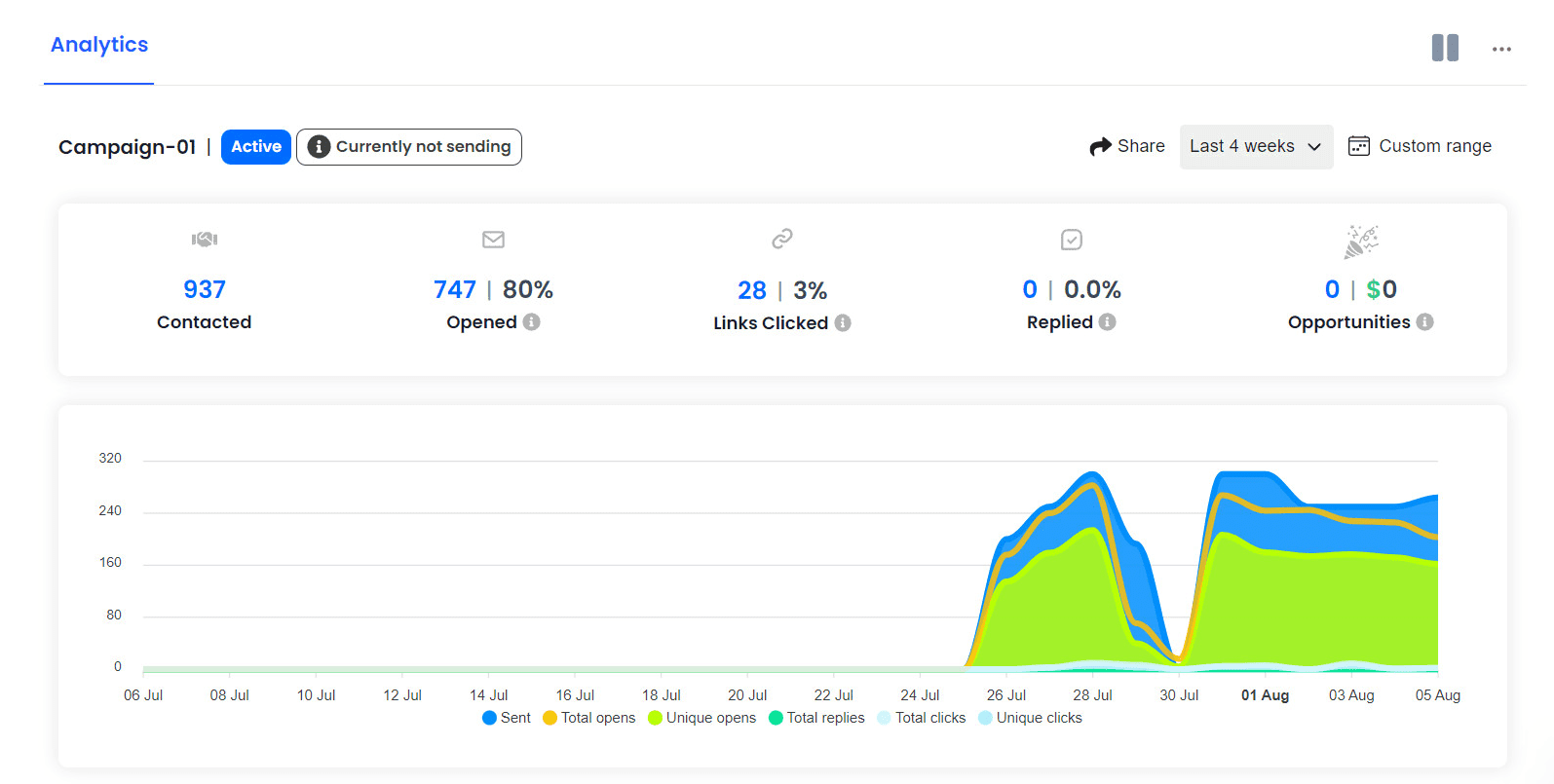
Users can add leads to their campaigns by either importing a CSV file with lead information or using Instantly.ai’s native B2B Lead Finder tool.
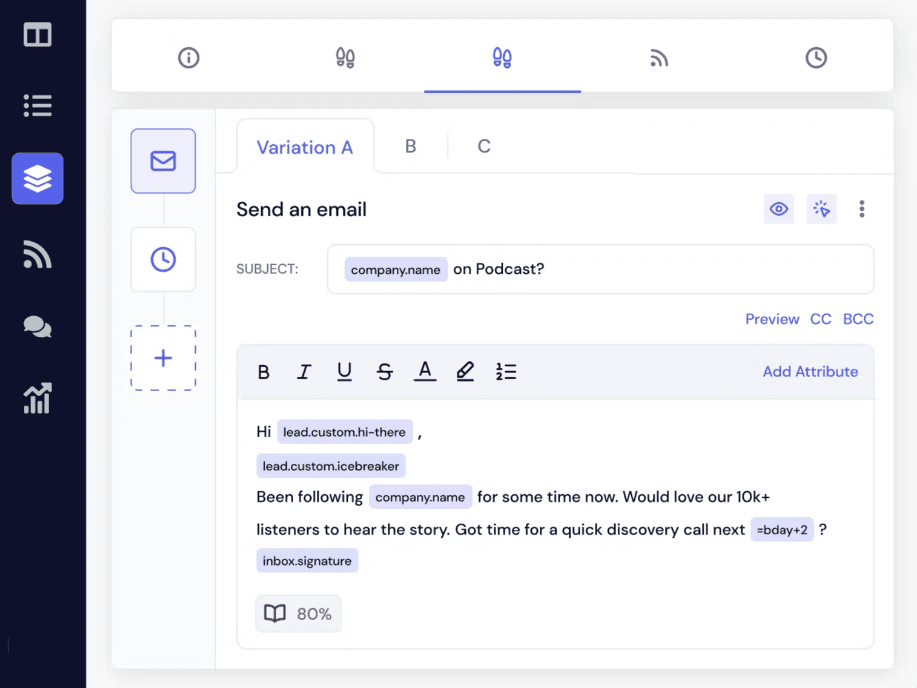
The software also offers a Unibox, which consolidates all email conversations in one place and various options for message personalization.
Speaking of personalization, to enhance your outreach, you can use its:
- Pre-set or custom variables
- Spintax - multiple variations of a text to avoid repetition
- Liquid syntax - dynamic text based on data
Additionally, Instantly.ai supports A/Z testing, which lets you test up to 26 different versions of email copy.
Data from Instantly.ai can be pushed to different CRMs and tools via Zapier webhooks.
However, the platform also has a built-in CRM that helps track lead statuses and enables you to make calls and send SMS directly from the platform.
Finally, the software can verify your leads' emails, reducing the chance of bounces and protecting your domain's reputation.
With the basics covered, let’s take a closer look at Instantly.ai’s main features.
Instantly.ai features
Unlimited email accounts
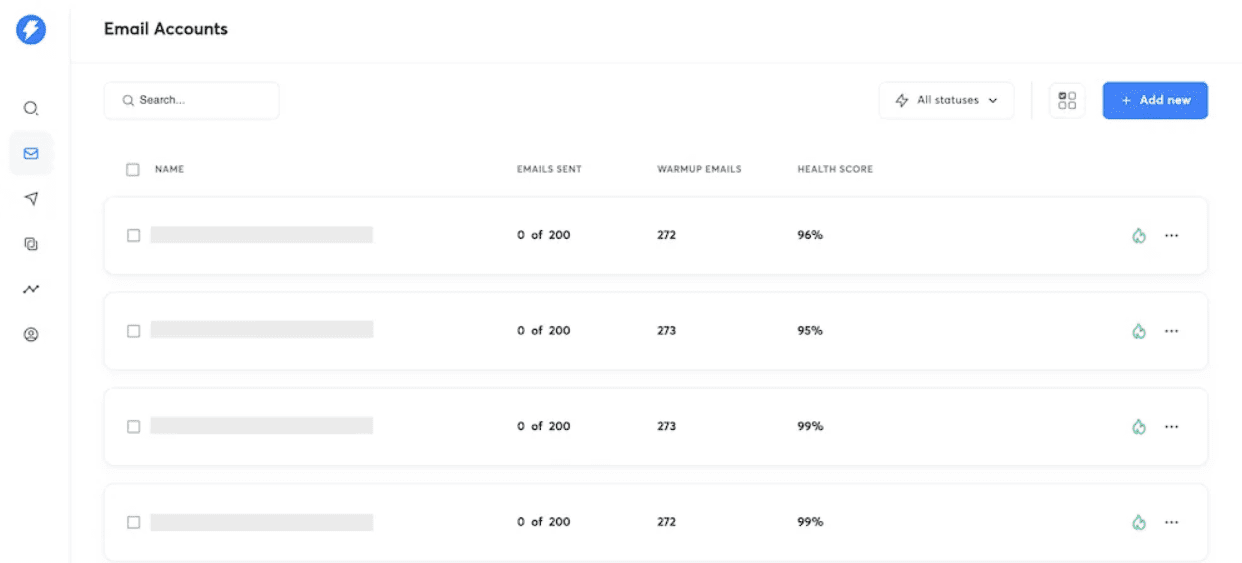
Instantly.ai allows you to connect and manage unlimited email accounts.
As they like to say, this enables you to:
‘’Infinitely scale your outreach.’’
However, despite being able to connect unlimited email accounts, the tool caps the number of active leads and emails you can send per month based on the subscription plan.
Nonetheless, Instantly.ai is still useful for email outreach, especially for those who need to reach a large number of leads quickly.
Why? Because you can use all connected accounts in the same campaign.
This is possible due to the software’s inbox rotation feature. This feature alternates sending emails from different accounts. In turn, it helps you send more emails daily without triggering automation detection.
Unlimited email warm-up
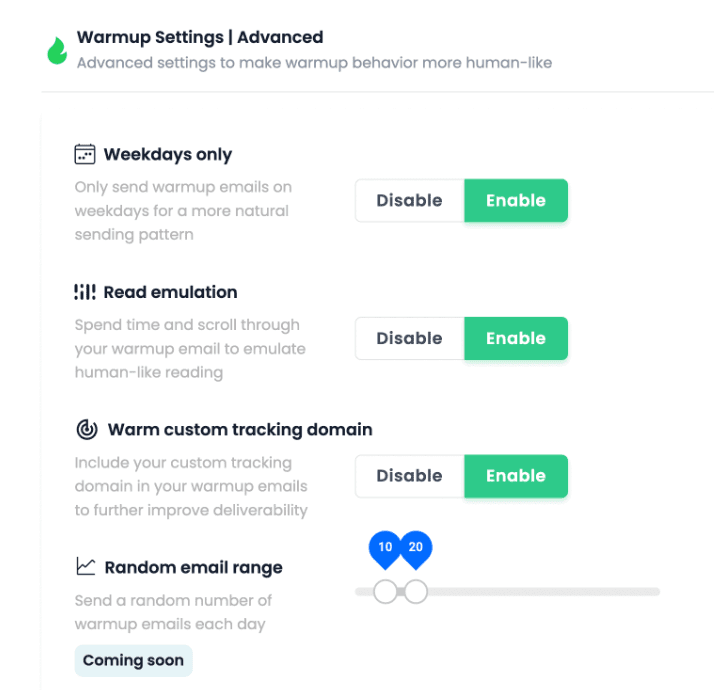
Instantly.ai is one of the few sales outreach tools (or outreach tools in general) with a built-in unlimited email warm-up functionality.
This means that you can warm up every new email address that you connect to it to ensure that:
- Fewer emails end up in spam
- Your sender’s reputation remains optimal
B2B Lead Finder
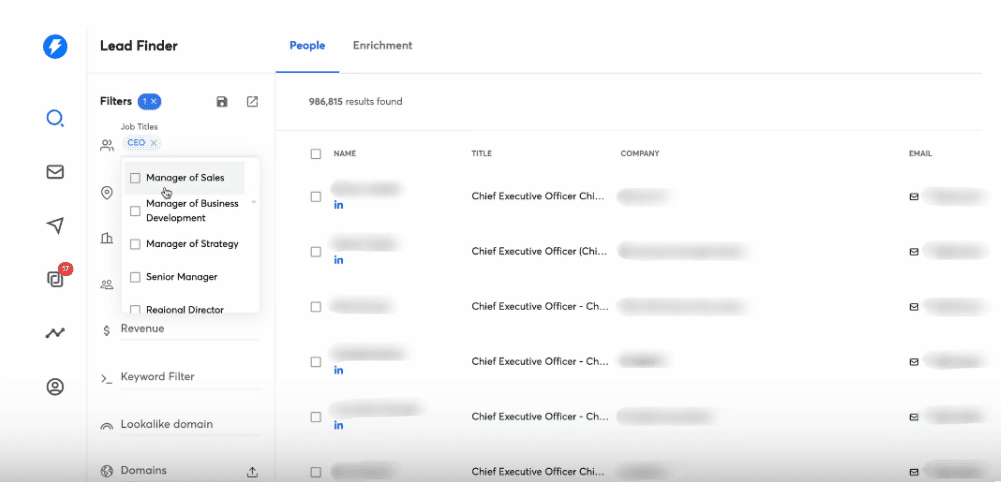
Instantly's B2B Lead Finder is a database with 160M contacts designed to help find leads that are highly relevant and accurate.
The feature relies on a range of filters — some of which match Sales Navigator filters. These include:
- Job Titles
- Location
- Industry
- Employees
- Revenue
- Domains
- ...etc.
What's more, the feature supports keyword-based searches and lets you apply multiple filters simultaneously. This helps you better narrow your search and pinpoint the most promising leads according to your Ideal Customer Profile (ICP) and buyer persona.
Another useful feature of the Lead Finder is Lead Enrichment. To use it, upload a list of contacts, and the system will enrich it with additional data.
Instantly.ai disadvantages
Instantly.ai excels in many aspects. However, certain disadvantages make it less than ideal and position other tools as superior.
Instantly.ai doesn’t support multichannel outreach of any kind.
Moreover, email sequences that you can create with Instantly.ai are pretty basic. You can’t set them up to adjust based on your leads’ behavior. So, if your leads don’t respond, there’s not much you can do.
Why, yes, messages can be personalized. Unfortunately, rich media content, including images and GIFs, can’t.
Analytics could also be improved to provide deeper insight into campaign performance. Additionally, there is no option to export stats to CSV or PDF.
While Instantly.ai claims you can scale your outreach infinitely, that's not quite accurate. In fact, their basic plan lets you send 5,000 emails per month only. Consequently, the mid-tier plan limits you to 100,000 emails, and the top plan caps at 500,000 emails.
Plus, they limit the number of leads you can upload to the platform. Depending on the plan, you can either upload 1,000, 25,000, or 100,000 leads.
Finally, while the tool can enrich your leads’ information, including their emails, this functionality will cost you extra. Not to mention, there are limits to how many leads you can enrich.
This is a huge con, considering that a certain tool lets you send tens of thousands of emails a month and verify as many emails as you want at no additional cost.
But we’ll get to that shortly.
What Instantly.ai reviews say
While doing the research, we stumbled across both positive and negative Instantly.ai reviews.
As for the positive aspects, we noticed many users are praising the interface.
For instance, one of them, Jonas R, says:
‘’The automation of follow-ups and the user-friendly interface make it incredibly efficient for managing my cold outreach campaigns.’’
On the other hand, Zirva Z. has pointed out certain flaws in her review:
‘’The leads aren't great, and being limited to adding only 100 at a time is really frustrating.’’
She also went on to mention that:
‘’It's not very useful unless you have a really high budget.’’
Instantly.ai pricing
Instantly.ai has 2 main pricing categories — Sending & Warmup and Leads — with multiple sub-plans.
Sending & Warmup is the pricing plan for sending and warming up emails.
As such, it doesn’t include access to the B2B Lead Finder and is divided into 3 individual sub-plans.
The pricing varies and is determined based on the number of leads you can upload and emails you can send.
| Growth | $37/mo per account |
| Hypergrowth | $97/mo per account |
| Light Speed | $358/mo per account |
Meanwhile, Leads plans are meant to streamline prospecting and entail full access to the B2B Lead Finder feature.
There are a total of 4 of these. They differ in price depending on the number of leads you can verify and include:
| Growth Leads | $37.9/mo per account |
| Supersonic Leads | $77.6/mo per account |
| Hyperleads | $169.3 per account |
| Enterprise | Custom / Contact sales for pricing details |
But remember, if you want to use Instantly.ai to send and warm up emails and generate leads, you can’t purchase a plan from a single category. Instead, you’ll need one from each.
This means that the price of using the software can quickly skyrocket.
For instance, if you were to subscribe to their lowest-tier subscriptions, you’d pay a total of $84 for both each month. On the other hand, their highest-tier plans combined set you back an exorbitant $850 a month.
That said, you might be better off using a tool that offers much more at a lower price.
12 best Instantly.ai alternatives
Are you interested in exploring other software on the market? If so, here are 12 compelling alternatives to Instantly.ai that may provide you with better value for your money.
1. Skylead
Well, hello - that’s us! ?
Skylead is a LinkedIn automation tool and cold email software for agencies and alike who want to scale their business.
It's commonly used by:
- Sales professionals and entrepreneurs who aim to free up as much as 11 hours a week for booking 3x more meetings.
- Marketing professionals seeking to distribute content and secure more backlinks.
- Recruiters on the hunt for the best talent.
- Lead generation agencies focused on acquiring high-quality leads for their clients.
The biggest difference between Instantly.ai and Skylead is the support for LinkedIn outreach.
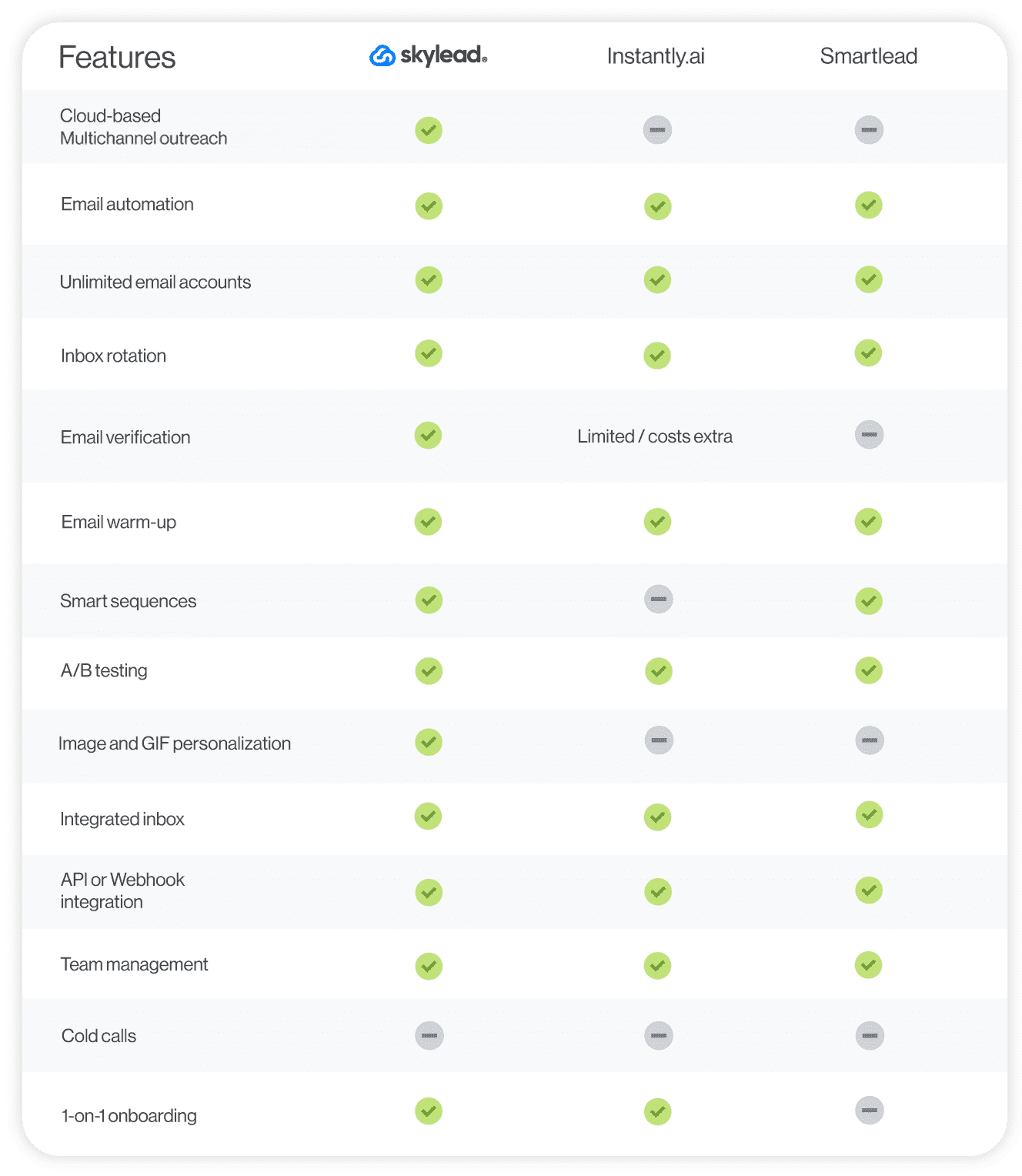
As a matter of fact, our software allows you to create multichannel campaigns that combine different LinkedIn and email outreach actions. All thanks to our Smart sequences.
The tool also lets you personalize messages with AI data-enriched variables, liquid syntax, and spintax, and preset and custom variables. While at it, you can even engage in A/B testing to determine how to best approach leads.
However, what truly sets Skylead apart in the personalization department is our native image and GIF personalization feature.
Not to mention, Skylead also offers infinite email warm-up, courtesy of our partnership with an email warm-up tool, Mailivery.
Finally, our tool comes with advanced reporting capabilities and even supports CSV and PDF exports. You can also integrate it with any CRM or tool you like, using Zapier webhooks or API.
Now, let’s get deeper into our features that are changing the outreach game as we know it.
Account-based prospecting
The best way to find your ideal leads is to find your ideal companies first. That is exactly what Skylead offers - account-based prospecting. With it you can:
- Create account lists directly in Skylead
- And discover contacts by company to reach out to them.
In other words, once you add your companies, Skylead can help you find and match contacts within those selected companies. This way, you can focus on your target companies that are most likely to convert and have greater lifetime value.
AI data enrichment
Apart from email discovery and verification, we introduced a game-changing feature - AI data enrichment, which you can use to:
- Enrich contact & company data
- Prompt AI to get specified info or generate personalized icebreakers for each contact
- Use all gathered info directly inside your sequences as variables.
It’s Clay-like in what it can discover, but it’s connected to your outreach workflow, so you avoid constant tool switching and data importing.
LinkedIn automation
Skylead is a cloud-based LinkedIn automation tool.
It’s the best among other types of LinkedIn automation tools (browser extensions & desktop apps) in that:
- It exists on the ‘’Cloud’’. This means that it doesn’t require an Internet connection or power to run.
- It comes with a dedicated IP address (proxy) that shields your activity, an integrated inbox, and the possibility of adding multiple accounts.
- The tool mimics human behavior, browsing through LinkedIn and scrolling just as a human would.
Now, with Skylead, you can automate much of your LinkedIn prospecting and LinkedIn lead generation through targeted outreach campaigns.
To create one, you can use the following lead sources:
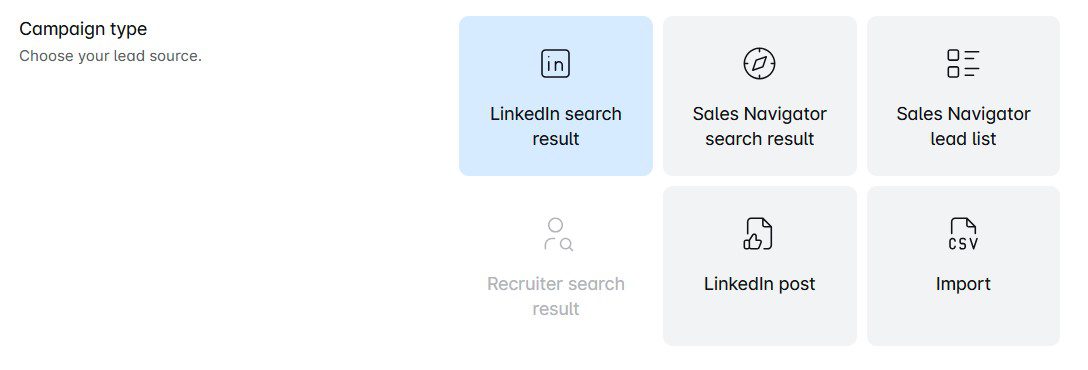
And, yes, you can connect any LinkedIn Premium, Sales Navigator, or Recruiter account to the software.
Once you do, you can use Skylead to:
- View your leads' profiles
- Follow them
- Send them invites to connect
- Automate LinkedIn messages and LinkedIn inMails
However, the tool isn’t limited to performing actions on LinkedIn. So, feel free to add emails to the mix — including the email discovery and verification feature — and turn the tool into a complete multichannel outreach platform.
Email automation
Much like Instantly.ai, Skylead lets you add unlimited email accounts to help you send tens of thousands of emails a month.
However, unlike it, it doesn’t limit the number of active leads you can have. You can input unlimited leads, allowing you to reach out to more people.
If you were wondering how it’s possible to send thousands of emails a month, well, it’s because our tool supports inbox rotation. This means that Skylead alternates sending emails from different accounts to keep you within safe limits on each.
Infinite email warm-up
To make sure your emails land where they are supposed to, your mailboxes must be warmed up.
Luckily, Skylead has partnered up with an email warm-up tool, Mailivery, to make this a reality.
This tool allows you to warm up infinite email accounts to stay away from spam and protect your senders’ reputation. Completely free of charge for all our Skylead users.
Email discovery & verification
Namely, our software can find and verify your leads’ emails. In turn, it reduces the chances of bounces that impact deliverability and your sender’s reputation.
And guess what? You can take advantage of this feature without breaking your campaign creation flow.
Just add the Find & Verify Email step to your sequence for the tool to find and double-verify the existence of your leads’ emails.
The best thing about this feature is that it has one of the highest, if not the highest, email-finding probabilities on the market.
Not to mention, it’s both unlimited and comes at no extra cost. In other words, as long as you’re subscribed to the tool, you can use it as much as you want.
This makes Skylead more cost-effective than Instantly.ai, which requires a separate subscription to enrich emails.
Smart sequences
And that brings us to the star of the show: Smart sequences.
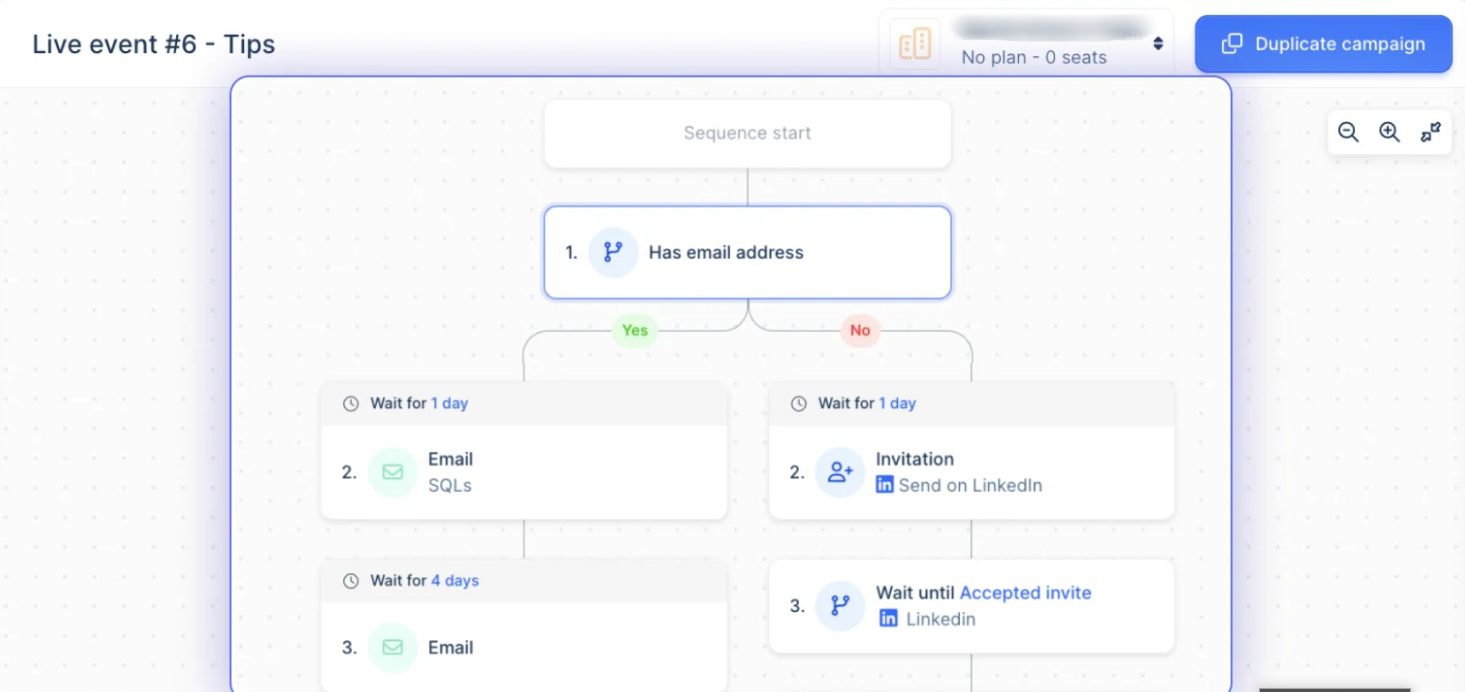
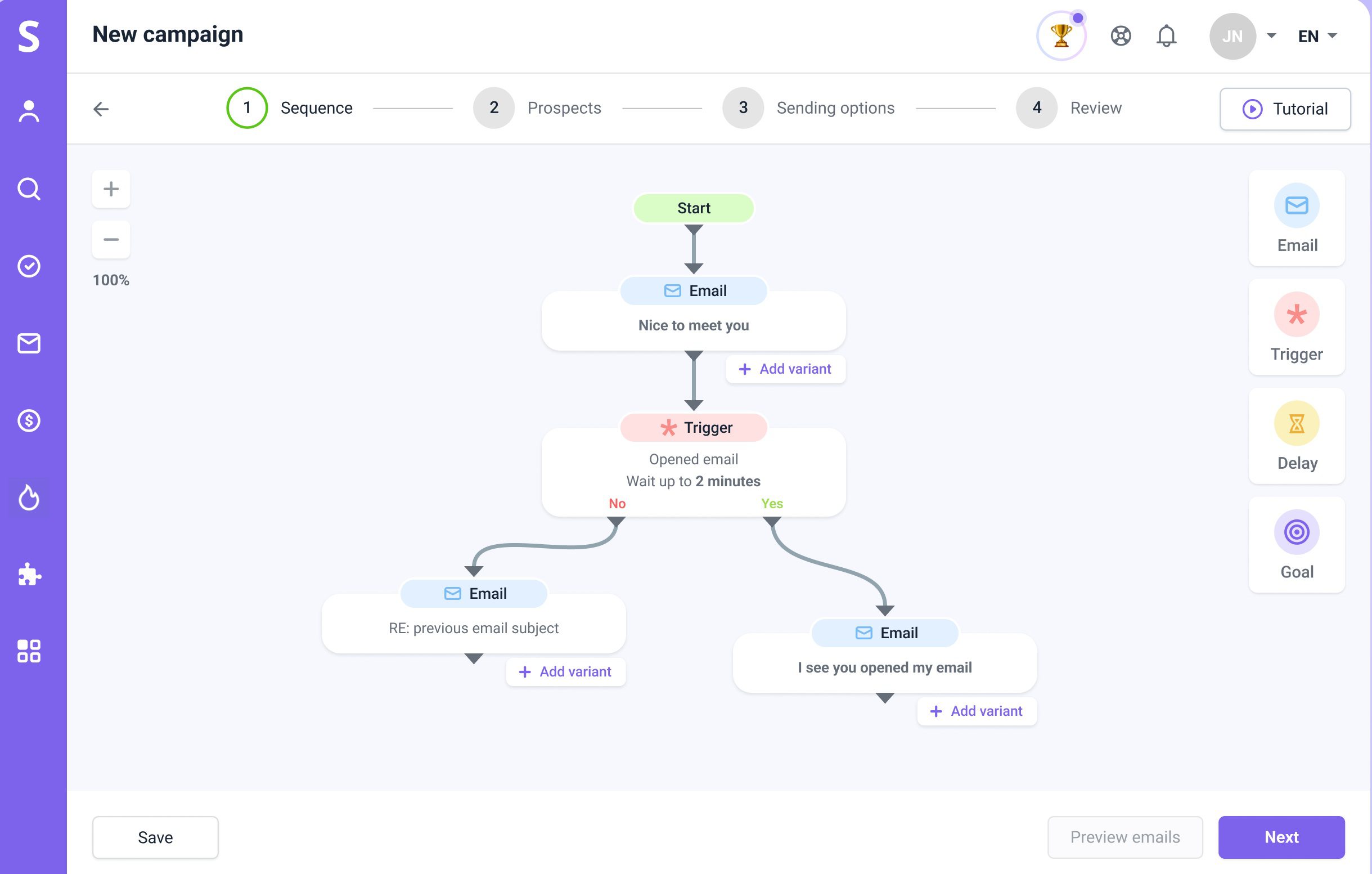
In essence, they are algorithms that combine the above-mentioned LinkedIn and email actions with if/else conditions. As a result, you get coherent outreach flows that unfold according to the way your prospects behave.
For instance, let’s say you tried adding a lead to your network on LinkedIn, but they haven’t accepted the invite.
If this were a simple sequence, you’d get stuck at this step and miss the opportunity to get to the lead.
But with Smart sequences, you get to maximize touchpoints by covering every possible scenario.
In this case, you can add the ‘’If Connected’’ condition to your campaign and then define the following steps.
For example, you can set up Skylead to automatically message your lead when they accept your connection request. If they don't, you can try to locate their email address, and if the tool finds it, send them an email. But if that doesn't work, you can always send an InMail to maximize getting in touch with leads.
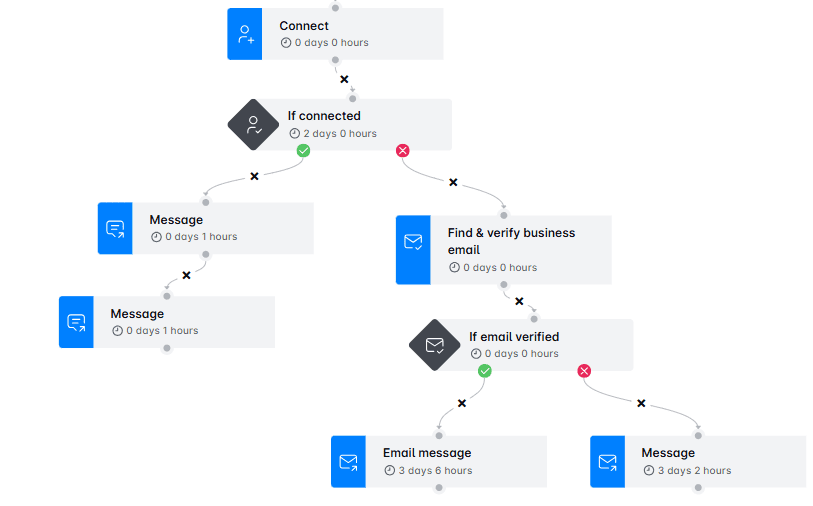
Of course, there are a thousand more ways this can go. Smart sequence builder is your playground, so feel free to experiment with different branching paths.
Or, you can try our tried and tested Smart sequences templates inside the tool for guaranteed results!
Smart inbox
Smart inbox, although serving the same purpose as Instantly.ai’s Unibox, is far superior. That’s because it not only aids email management. It also lets you manage your conversations on LinkedIn, Sales Navigator, and Recruiter, whether it’s messages or inMails.
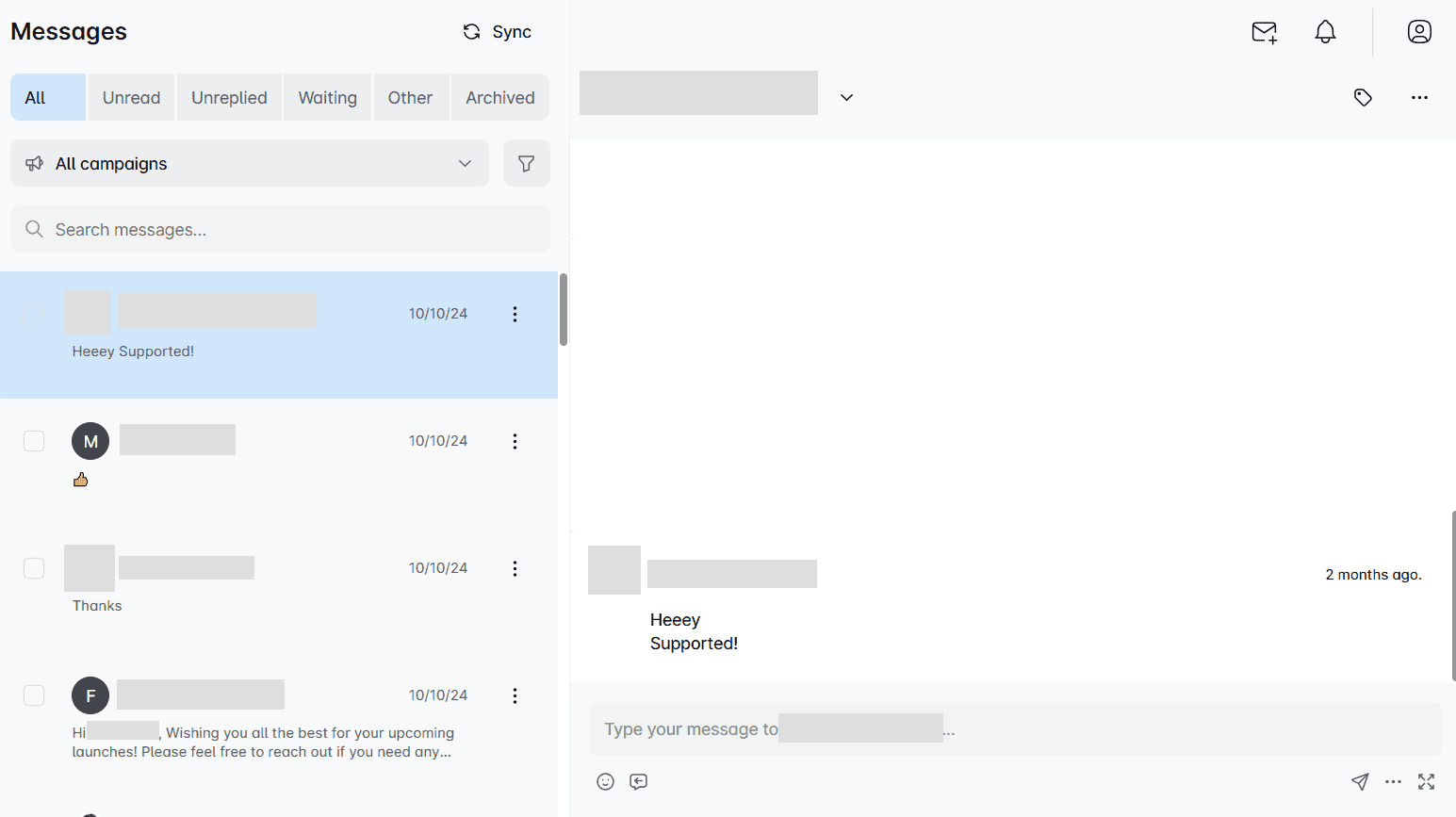
But what makes our Smart inbox truly irreplaceable is the opportunity to label chats. These labels are great because they can help you keep track of ROI and conversions. That said, you can choose between a couple of predefined ones or add your own.
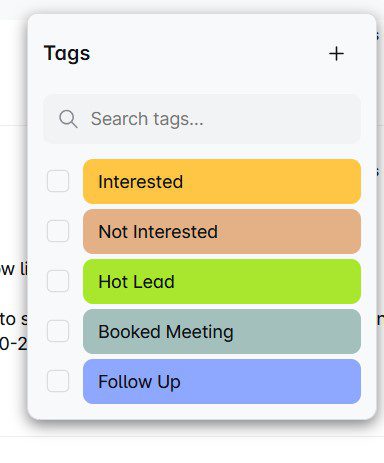
Image & GIF personalization
They say a picture is worth a thousand words. And we agree, which is why we introduced our image and GIF personalization feature.
Believe it or not, by personalizing visuals for each recipient, you can increase your response rate to more than 63%.
That said, our image and GIF editor lets you upload any picture you like and personalize it with:
- Your lead’s name
- Their and/or your profile image
- Their and/or your company logo
- A custom message
The choice is yours! Either way, you’ll surely leave a lasting impression.
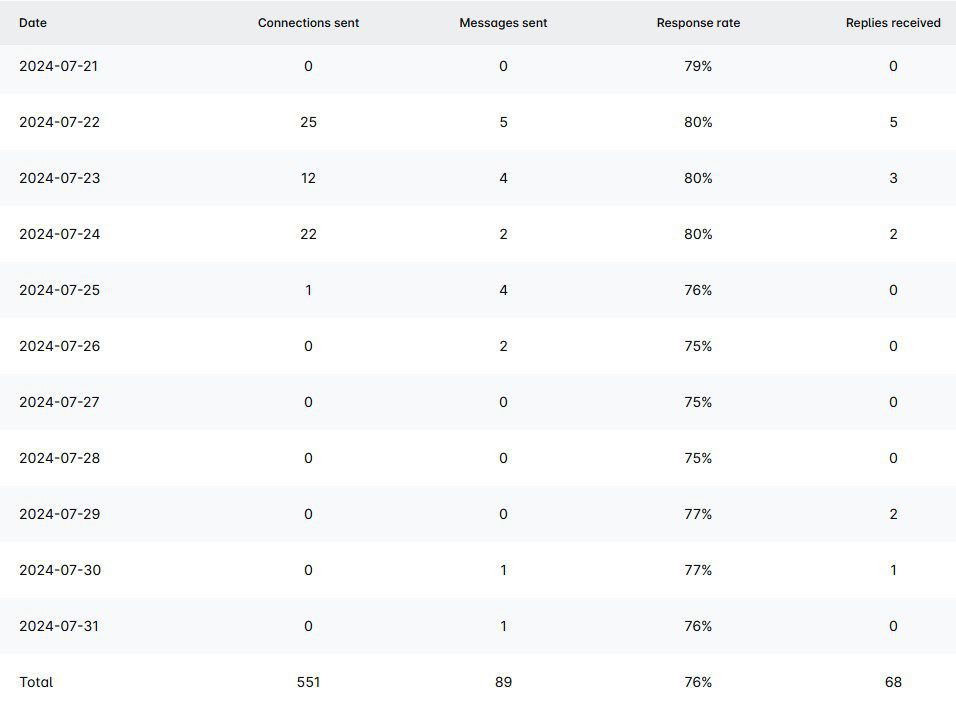
In fact, just look at the astonishing 76% response rate we got using the following visual!

Advanced analytics
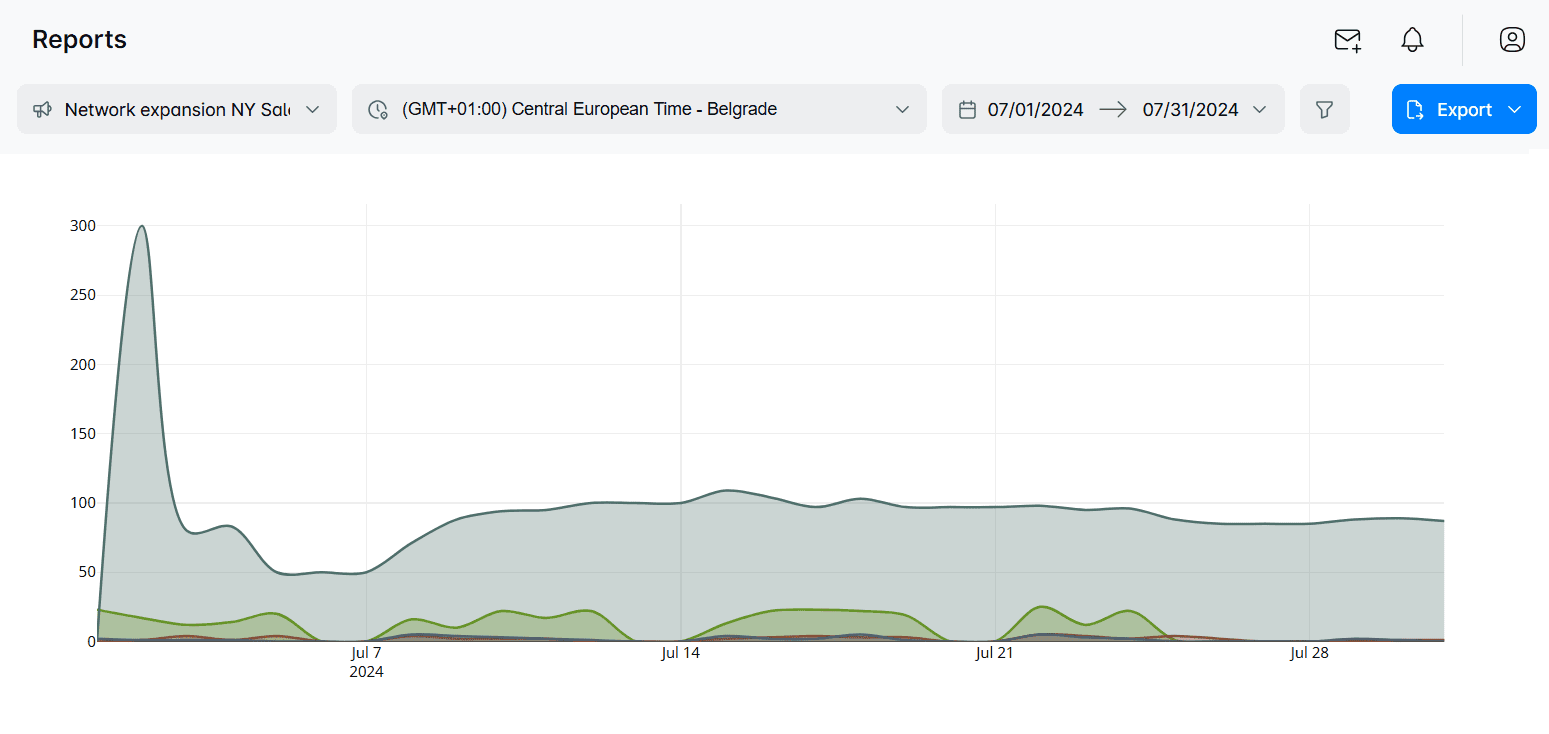
Speaking of results, Skylead comes equipped with advanced analytics, which are available on the Reports page.
Here, you can see how all of your campaigns are performing or examine the stats for a single campaign.
That said, there are 3 ways to observe results:
- In a graph form, to visually compare oscillations between different metrics;
- In table-view, to observe fluctuations on a daily basis;
- Step-by-step, to see how your A/B tests are performing.
Unlike Instantly.ai, Skylead even lets you download these reports. The good news is that there are 2 different formats to choose from: CSV and PDF.
What Skylead reviews say
Skylead reviews are positive, with people praising it for what it has helped them accomplish.
For instance, Daniel Hoffmann, a Managing Director at Toplevel Performance, has said that:
“Since I’ve started working with these clients and using Skylead, I have earned approximately $33.000.”
In the meantime, NewPoort's founder, Toine Boelens, has highly praised our Smart sequences email finder and verifier:
‘’If/else conditions in Smart Sequences are also great. It's low code, so it's great because I'm not good at coding yet. I also like the Find & verify business email step, which finds email addresses most of the time. So you get, like, two ways you can get in touch with the client. ‘’
Instantly.ai vs. Skylead
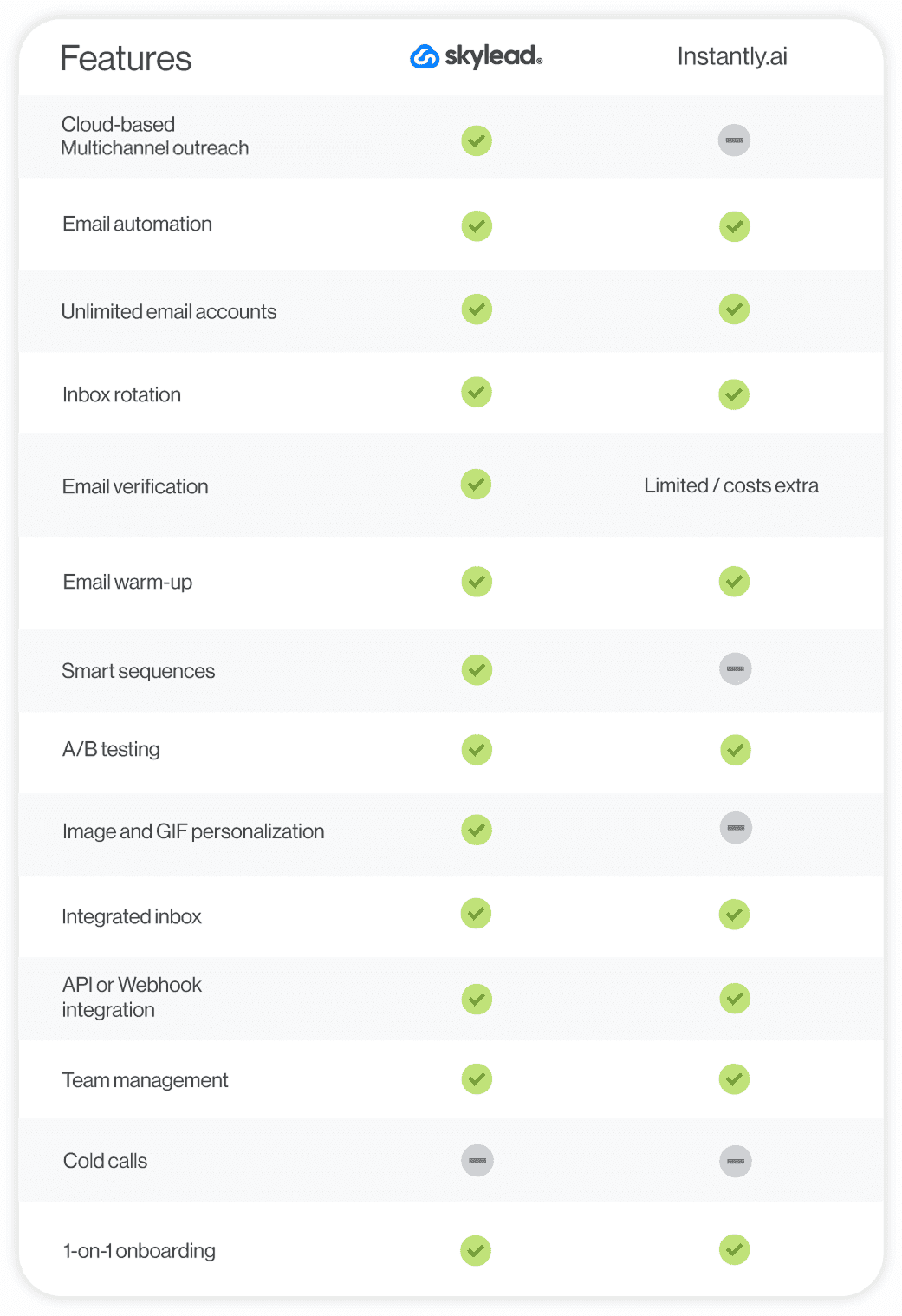
Pricing
All of Skylead’s native features + access to InboxFlare come with a monthly subscription of only $100 per seat.
AI data enrichment acts as an add-on. What makes this pricing truly different is simple: our core value is not to make money from these credits, and it will never be our business model. Credits are priced based on the actual costs of our third-party providers (OpenAI, Bright Data, etc), and we offer a special rate of $1 for 100 credits.
To test out the tool and its functionalities, feel free to take advantage of our 7-day free trial period. Moreover, our customer support remains available for a 1-on-1 onboarding call—completely free of charge!
2. Lemlist
Lemlist is a cloud-based tool primarily used for email outreach. Nonetheless, its higher-tier subscription supports multichannel outreach, letting you add automatic LinkedIn actions and calls to the mix.
In terms of LinkedIn automation, the tool can visit your leads' profiles, invite them to connect, and send them a message. Moreover, you can add conditions to your sequences to cover several outreach scenarios.
You can also perform any other action on LinkedIn. However, you’ll need to add it as a manual step to your campaign, the same as calls.
The software offers advanced personalization features, including custom images, intro lines, and dynamic landing pages.
It's also known for Lemwarm, a built-in email warm-up tool that helps emails stay away from spam.
Now, even though Lemlist comes with an email finder and verifier, like Skylead and Instantly.ai, it limits the number of emails you can discover and verify by plan. In fact, even with their most expensive plan, you can only discover and verify up to 1,000 emails a month. If your needs exceed this, you can purchase additional credits. However, this comes at a cost of $1 per 100 verified emails.
That's not it for limitations, though. For instance, you can't connect unlimited email accounts to the tool. Moreover, although Lemlist offers a B2B lead database with over 450M contacts, the quality of leads isn't the highest.
This is somewhat compensated for with the Chrome extension for prospecting on LinkedIn. However, considering that Chrome extensions inject code into LinkedIn that may jeopardize your account, you might want to think twice before using it.
Instantly.ai vs. Lemlist
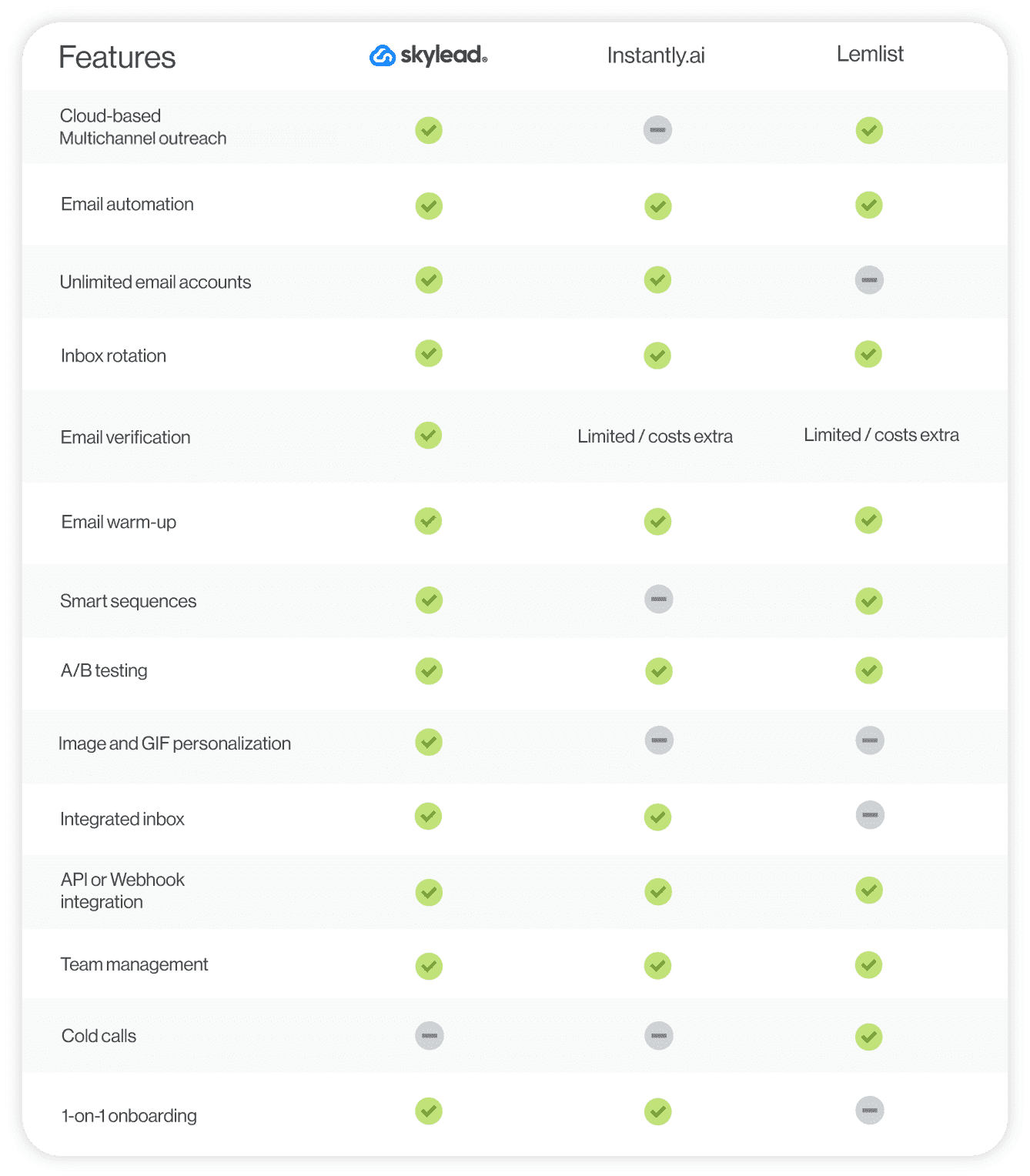
Pricing
| Email Starter | $39/mo per user with 1 sending email address |
| Email Pro | $69/mo per user with 3 sending email addresses |
| Multichannel Expert | $99/mo per user with 5 sending email addresses |
| Outreach Scale | $159/mo per user with 15 sending email addresses |
| Outbound agency | Contact sales for pricing details |
3. Apollo
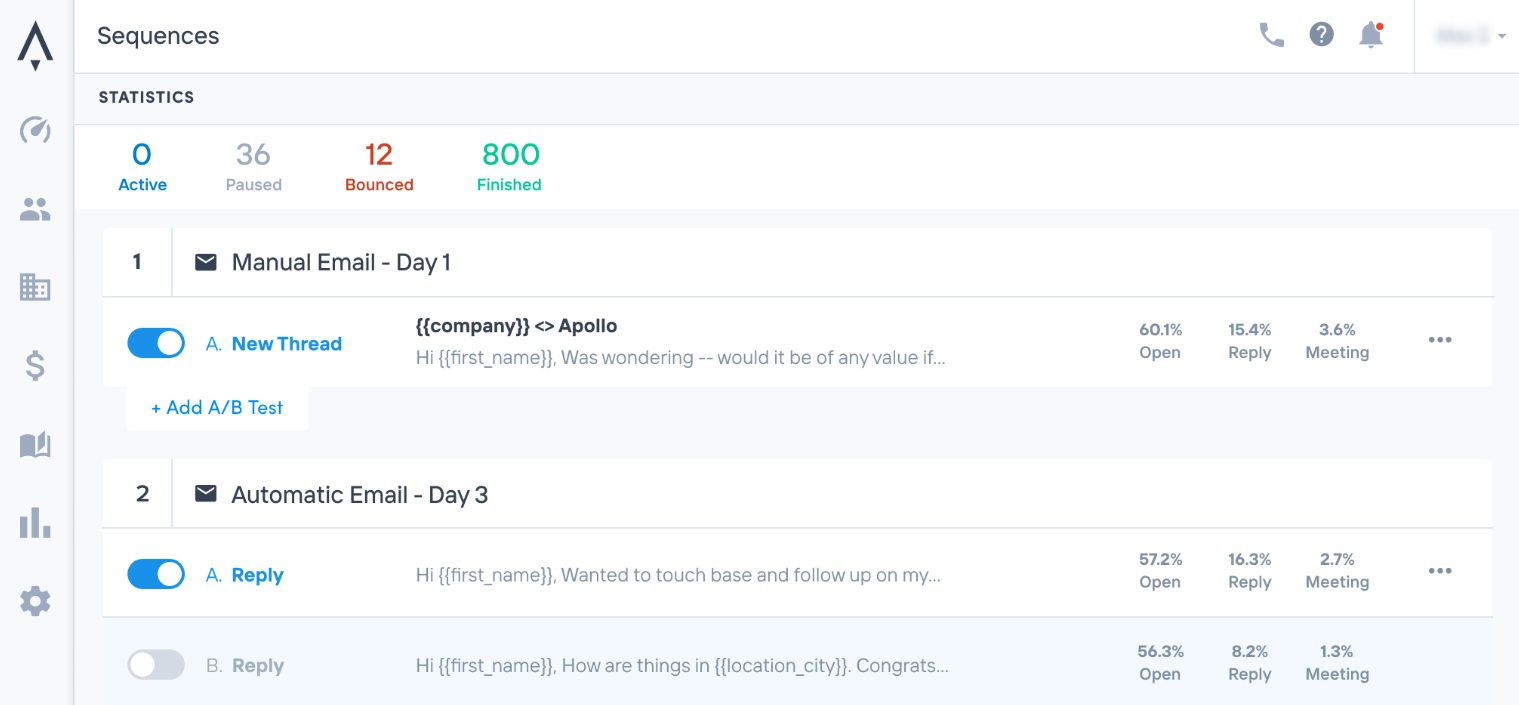
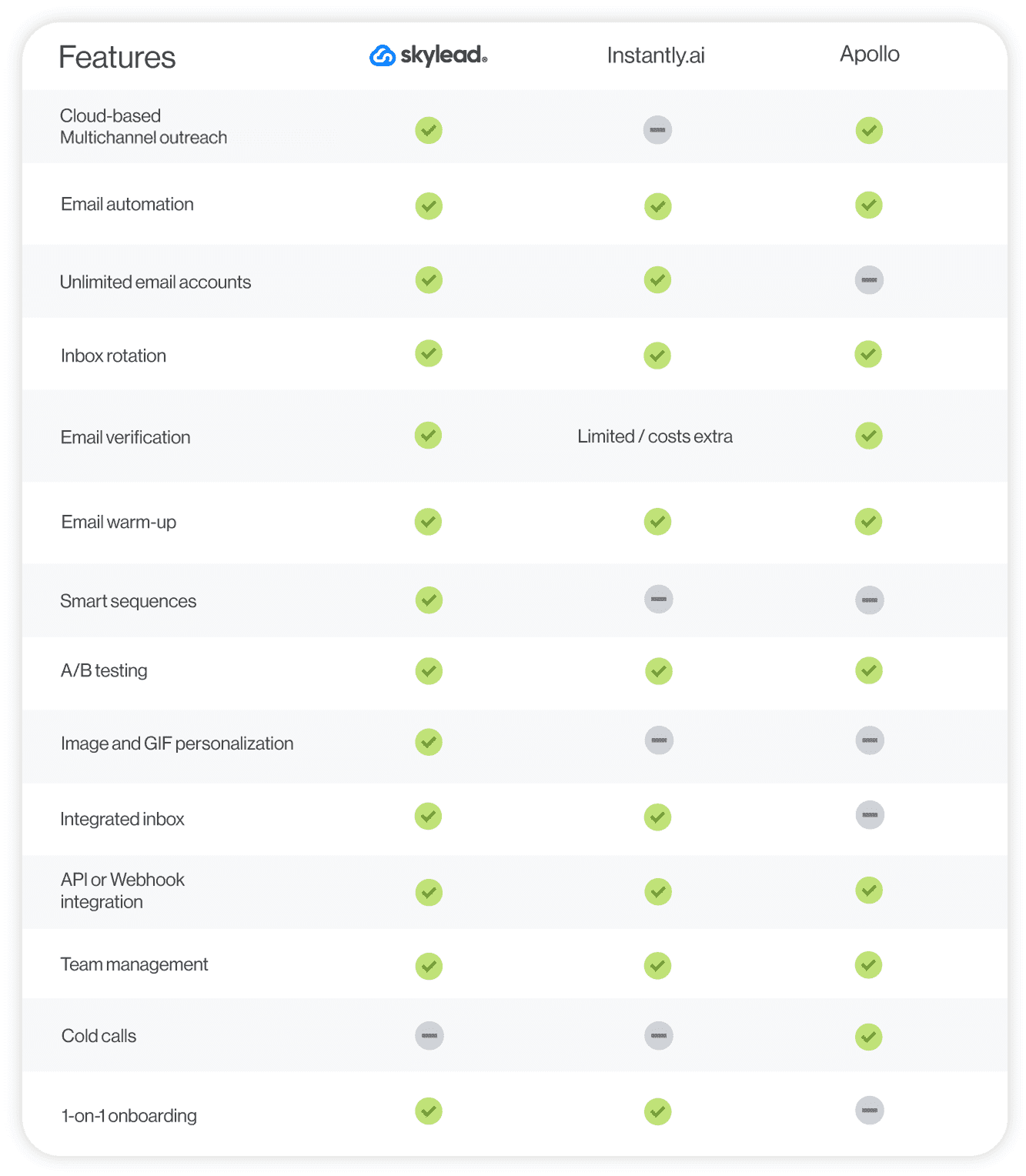
Apollo.io is a multichannel sales engagement platform that combines email, LinkedIn outreach, and cold calls in seamless sequences.
It allows users to set up campaigns that feature both automatic and manual emails.
When engaging leads via LinkedIn, Apollo can automate connection requests, messages, and interactions with posts.
However, its multichannel sequences—known as Playbooks—are relatively simple. Namely, unlike Skylead's Smart sequences, they don't unfold according to your lead's behavior, making them less than ideal.
Regarding integrations, the platform natively integrates with tools like Pipedrive, HubSpot, and Slack.
The software also has A/B testing capabilities, which help optimize outreach efforts. Additionally, it comes with a built-in AI writing assistant that those previously using ChatGPT for sales writing may find convenient.
Now, in terms of pulling leads into a campaign, Apollo does it through its databases of over 275M contacts. However, certain users have complained about the quality of these leads.
Like Lemlist, the platform can also scrape new leads from LinkedIn. However, this process, yet again, involves using a Chrome extension and could lead to account penalties.
Instantly.ai vs. Apollo
Pricing
| Free | $0/mo per user with 1 email account / 2 sequences |
| Basic | $59/mo per user with 1 email account / Unlimited sequences |
| Professional | $99/mo per user with 5 email accounts / Unlimited sequences |
| Organization | $149/mo per user with 15 email accounts / Unlimited sequences (minimum 3 users / billed annually) |
4. Smartlead.ai
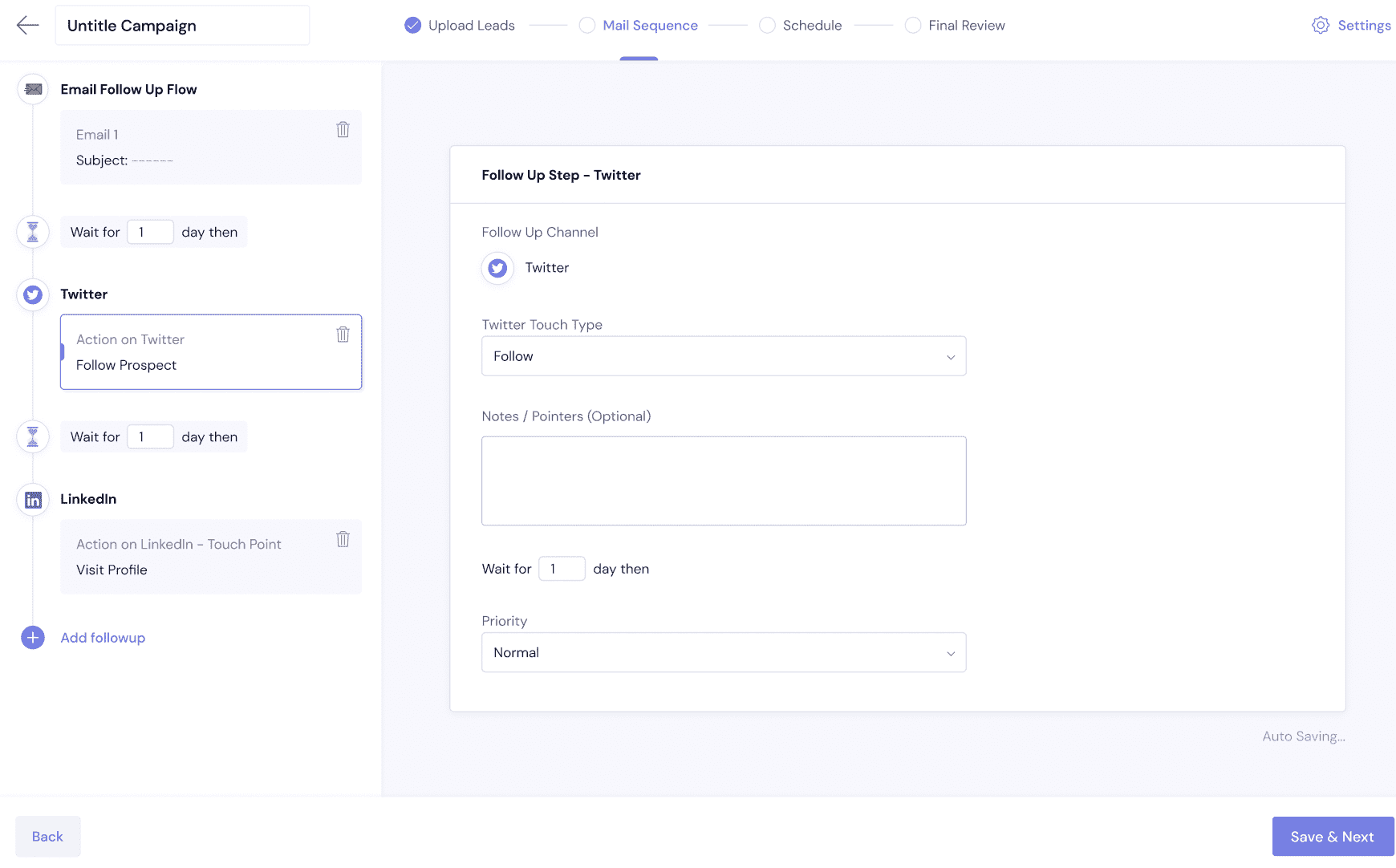
Smartlead is a robust email outreach tool designed to automate and streamline lead generation efforts.
It supports unlimited email accounts and email warmups, features inbox rotation, and uses a Master Inbox for streamlined email management.
The platform offers advanced personalization options like variables, spintax, and liquid syntax, along with split testing capabilities for up to 26 email variants.
Smartlead also integrates with various CRMs, including HubSpot, via API and webhooks.
However, it has some drawbacks.
For example, it lacks image and GIF personalization and an email discovery feature that Skylead has.
And while you can create subsequences for each campaign to make it reactive to your leads' behavior, you must break the campaign creation flow to do so. Not to mention, you can only add leads to your campaign through a CSV file or HubSpot.
Instantly.ai vs. Smartlead.ai
Pricing
| Basic | $39/mo per account with 2,000 active leads |
| Pro | $94/mo per account with 30,000 active leads |
| Custom | starting at $174/mo per account with up to 12M active leads |
Pro and Custom plans support adding additional seats, with each costing $29 a month.
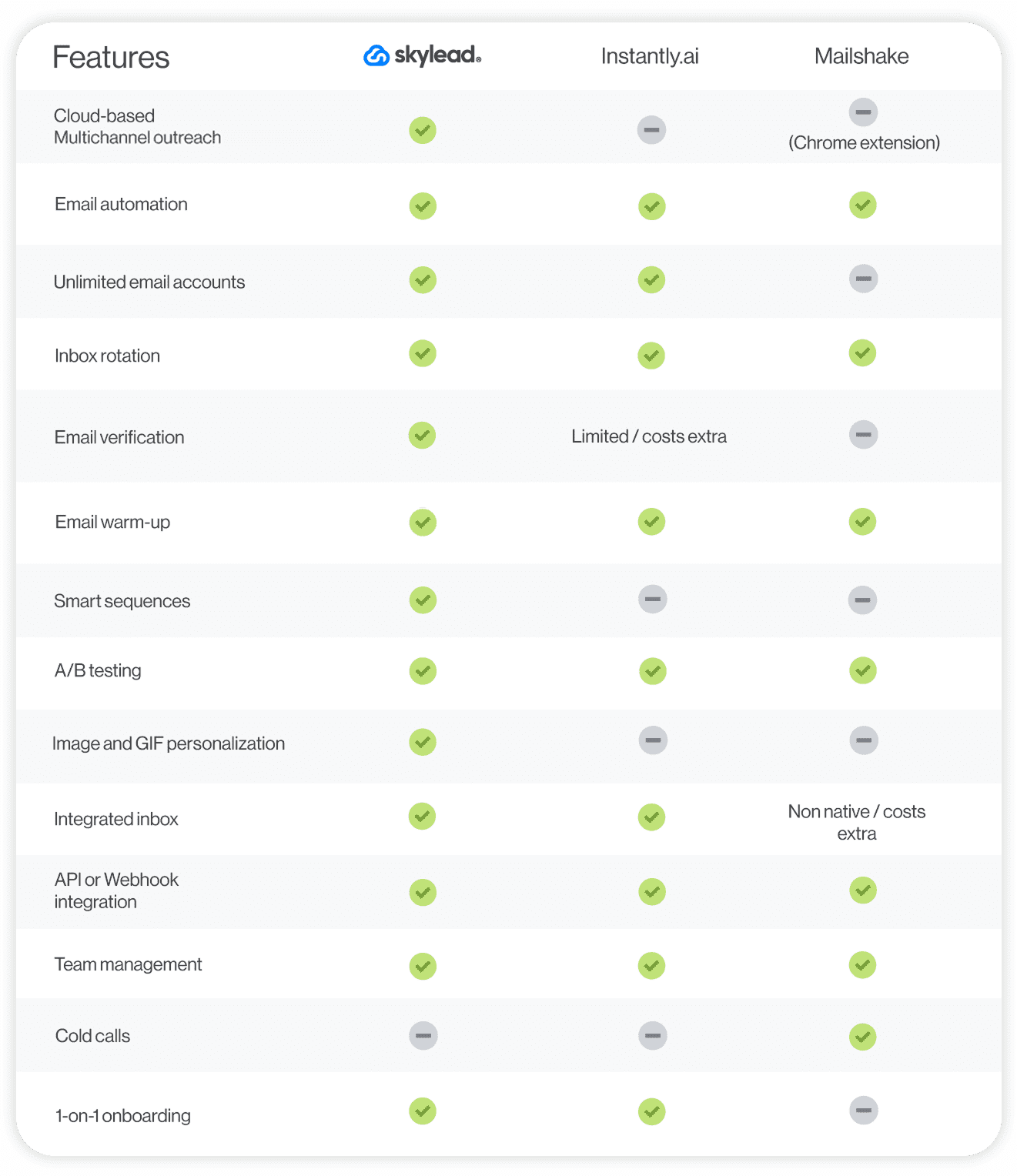
5. Mailshake
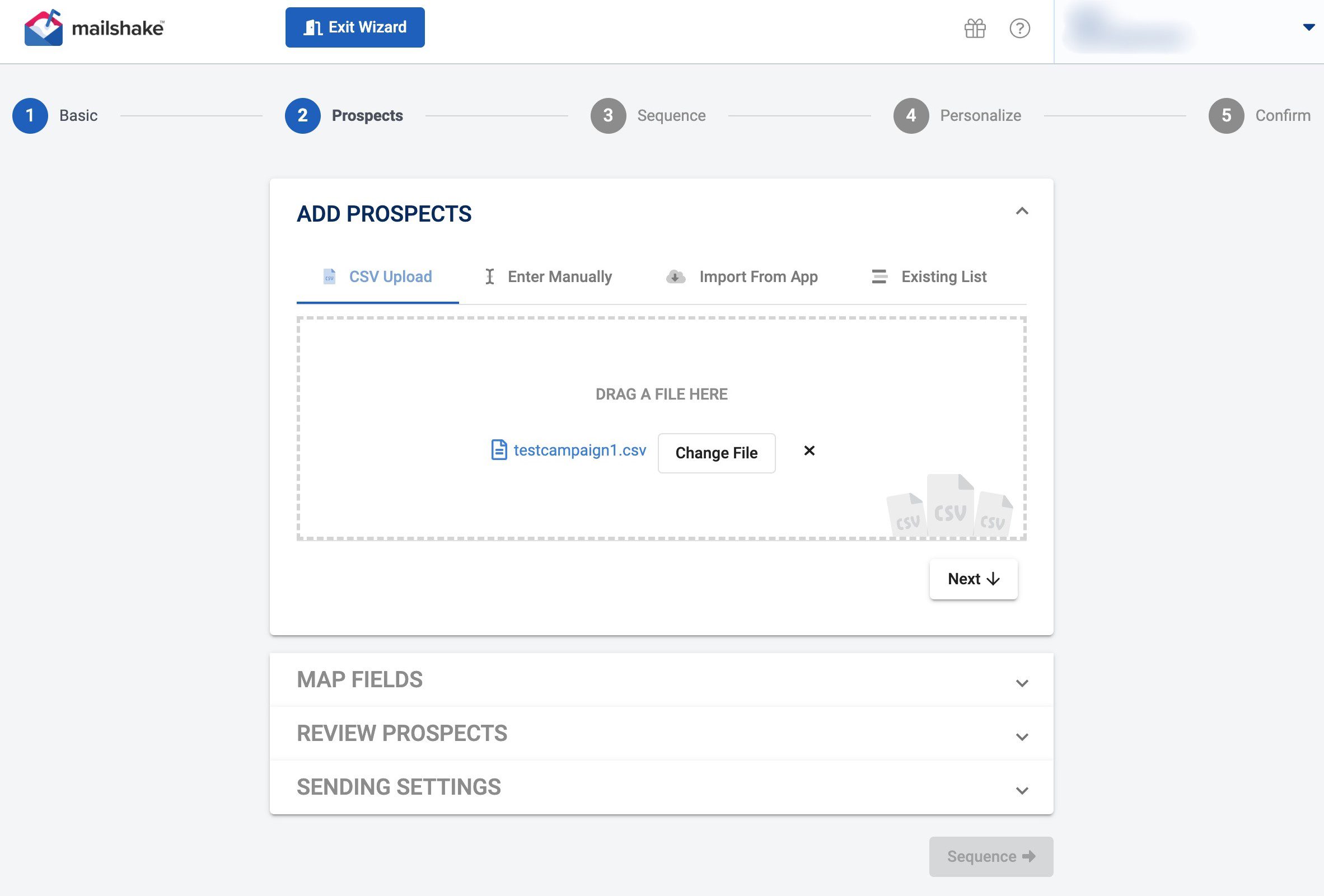
Mailshake is a cloud-based tool designed primarily for sending emails and follow-ups.
Nonetheless, it does have a Chrome extension that transforms it into a multichannel outreach and may lead to getting your LinkedIn account restricted. You can use it to set up simple outreach sequences to automatically:
- View your leads' profiles on LinkedIn,
- Send them invites to connect,
- And messages.
At the same time, you can use the extension for cold-calling purposes, as it comes with a built-in dialer and call recorder. However, this option is available strictly for leads based in the US and Canada.
Moreover, you can integrate the tool with more than 1,000 software via Zapier webhooks. In terms of native integrations, there are those with Pipedrive and HubSpot.
A/B testing is supported, too, and so is inbox rotation. Unfortunately, you can't connect unlimited email accounts to Mailshake as you can with Skylead and Instantly.ai. In fact, the highest-tier subscription limits you to a maximum of 5 accounts.
LinkedIn automation and calls are restricted to the highest-tier plan, too.
Lastly, the use of a Chrome extension for LinkedIn actions risks account restrictions.
Instantly.ai vs. Mailshake
Pricing
| Starter | $29/mo per user with 1 sending email address |
| Email Outreach | $59/mo per user with 2 sending email addresses |
| Sales Engagement | $99/mo per user with 5 sending email addresses |
6. Woodpecker
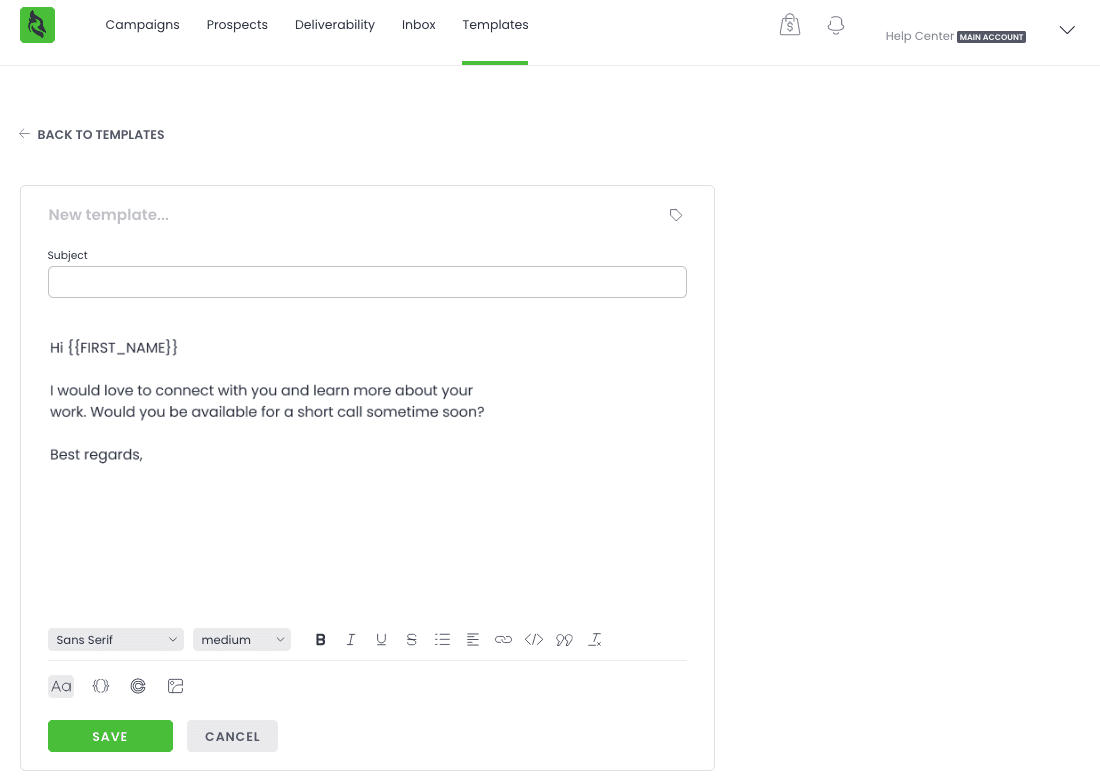
Woodpecker is a tool that automates emails and follow-ups to help individuals connect with ideal clients.
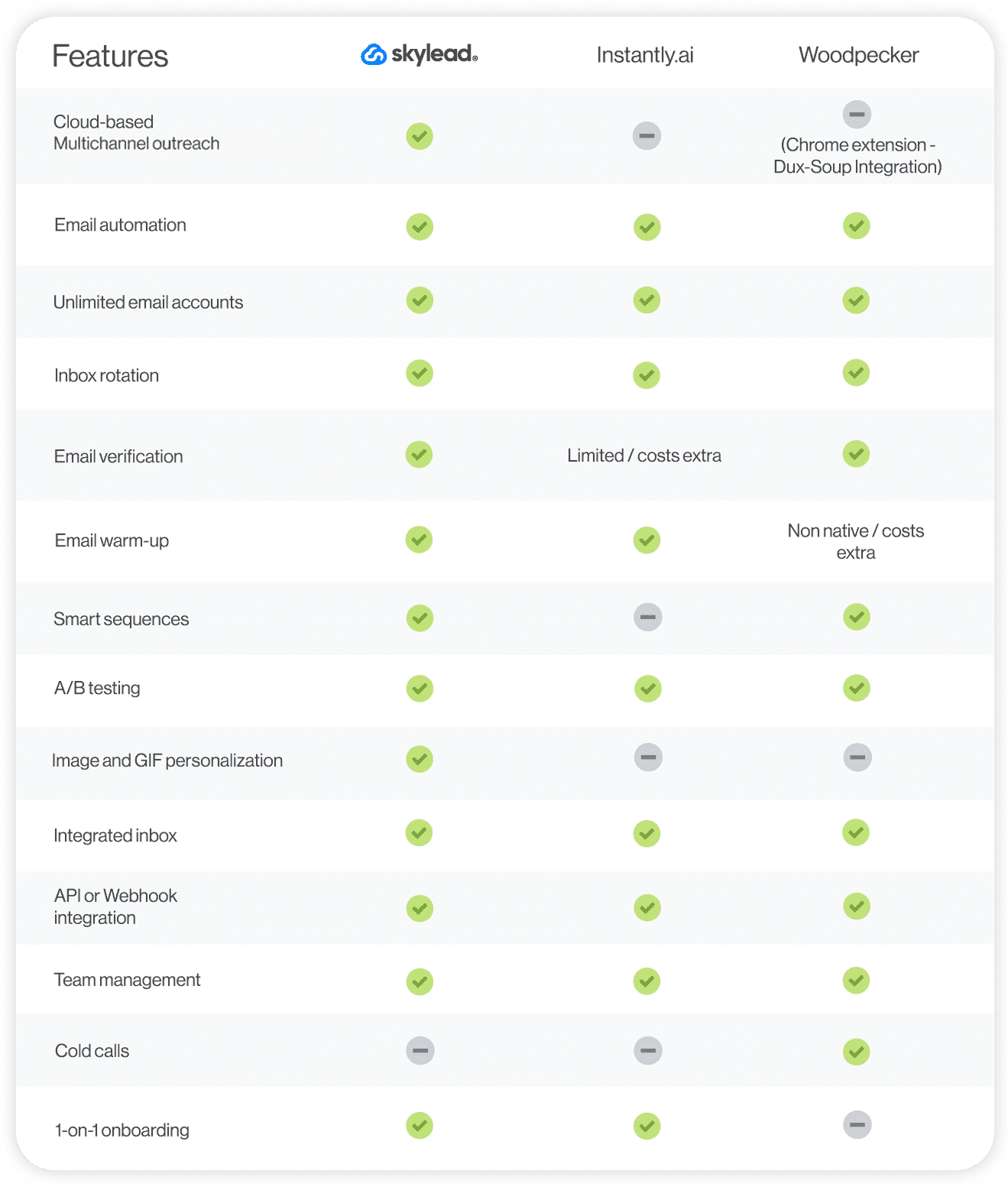
What's great about it is that it lets you connect as many email accounts to it as you want, just as Skylead, Instantly.ai, and Smartlead do. The same can be said about inbox rotation.
Sequences you can create with Woodpecker are condition-based. This means they adapt according to the way your leads behave.
With Woodpecker, you can A/B test up to 5 different variations of your message copy. And if you have trouble writing, its AI writing assistant is there to help.
Moreover, the tool supports plenty of 3rd party integrations, such as the one with Dux-Soup. This integration allows its users to tap into LinkedIn outreach, not just email, but it will cost you more.
That said, not everything's ideal with this tool.
Why, yes, the Dux-Soup integration turns Woodpecker into a multichannel outreach solution. The catch is, however, that they must subscribe to Dux-Soup’s Turbo plan for this to be made possible. This raises the cost of a subscription that's already steep and depends heavily on the number of contacted prospects.
Instantly.ai vs. Woodpecker
Pricing
| Cold Email | Starting at $29/mo per user |
| Agency | Starting at $29/mo per user |
| Custom | Contact sales for pricing details |
The exact cost of the Cold Email and Agency plan is determined by the number of leads contacted. It ranges between $29 for 500 contacted leads and $395 a month for 25,000.
Although price points for these plans are the same, they differ in one thing: the Cold Email plan is designed for individuals, whereas the Agency plan is meant to be used by teams. That said, the latter supports adding additional users at the price of $27 per user.
Additionally, the Dux-Soup integration adds an extra $55 a month to the subscription.
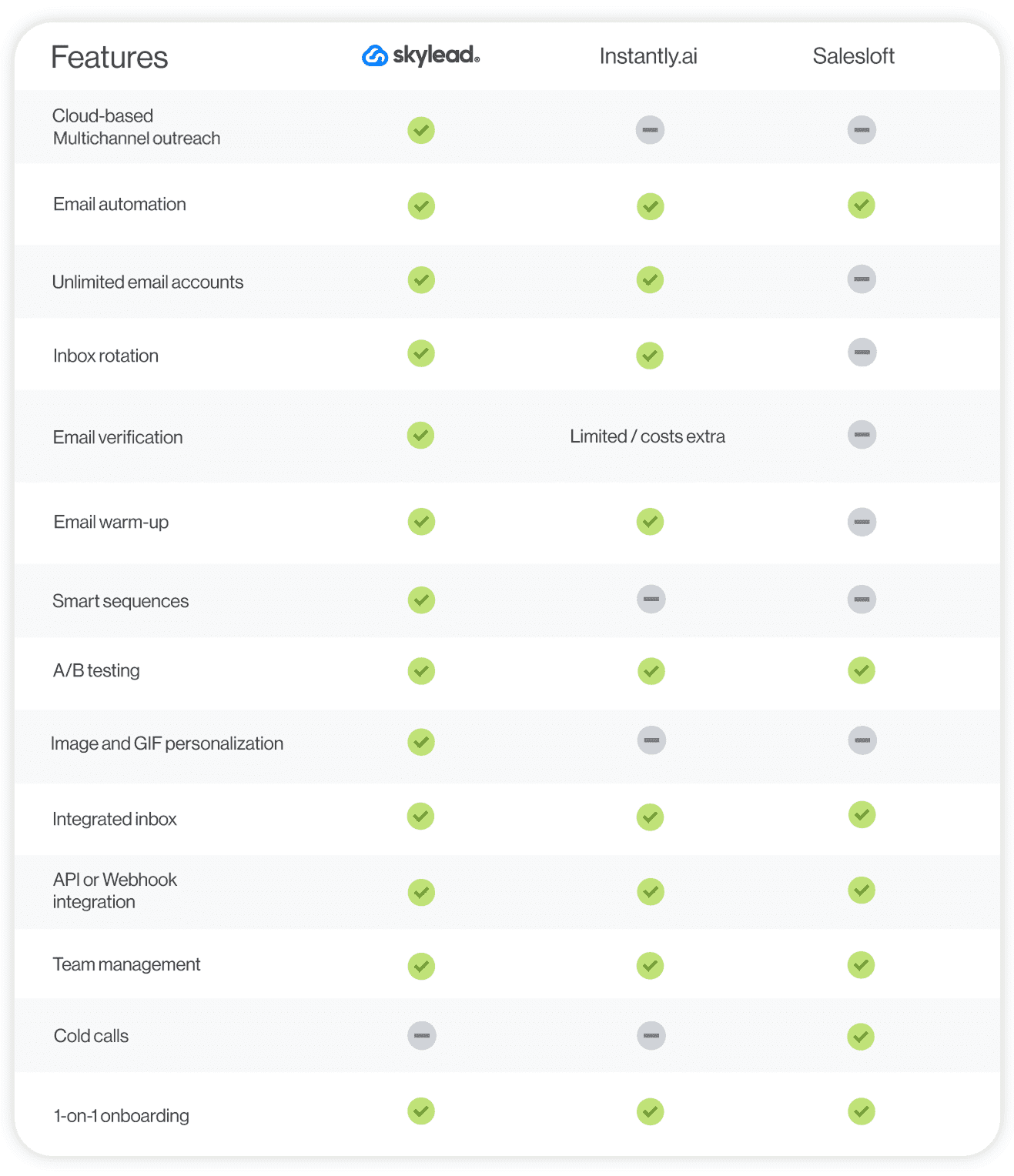
7. Salesloft
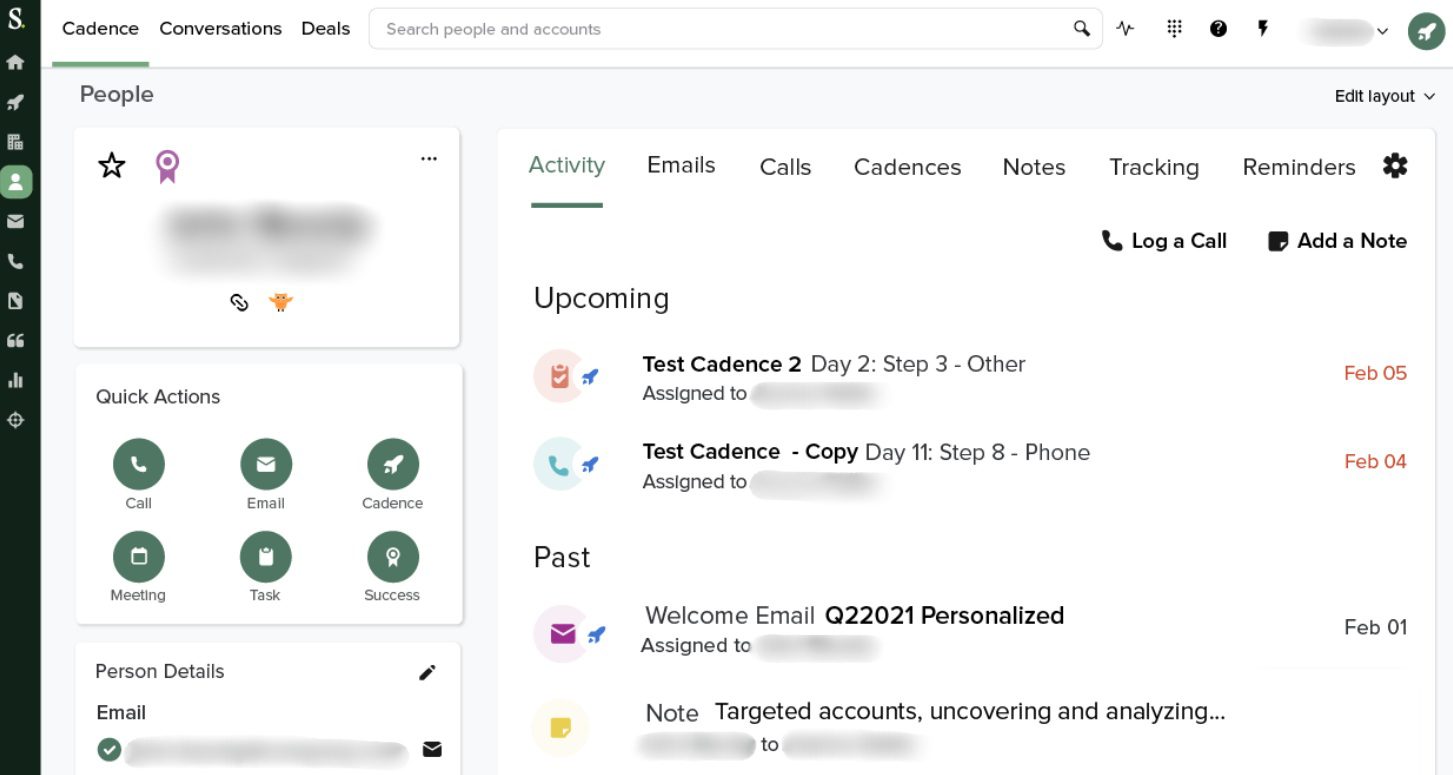
Salesloft is a cloud-based sales engagement platform ideal for sales teams that want to automate workflows and connect with more prospects.
Its Cadences—a form of campaign—integrates email, phone, and Sales Navigator tasks, though only emails are automated.
Nonetheless, the platform shines in email tracking and advanced analytics, offering A/B testing and customizable email templates.
However, Salesloft only integrates with Sales Navigator, missing support for LinkedIn Premium and Recruiter accounts.
Additionally, it lacks the Smart sequences that Skylead has, which limits touchpoints with leads.
Users have also complained about a less user-friendly interface and a buggy dialer.
Instantly.ai vs. Salesloft
Pricing
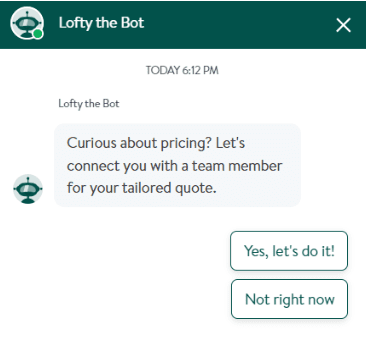
At this time, Salesloft doesn’t disclose its pricing details for either of its plans: Essentials, Advanced & Premier. Instead, upon visiting the "Pricing" page, their bot prompts you to contact their team for a tailored quote.
However, the information on the Internet suggests that users are paying anywhere from $75 to $125 per user a month.
8. Outreach.io
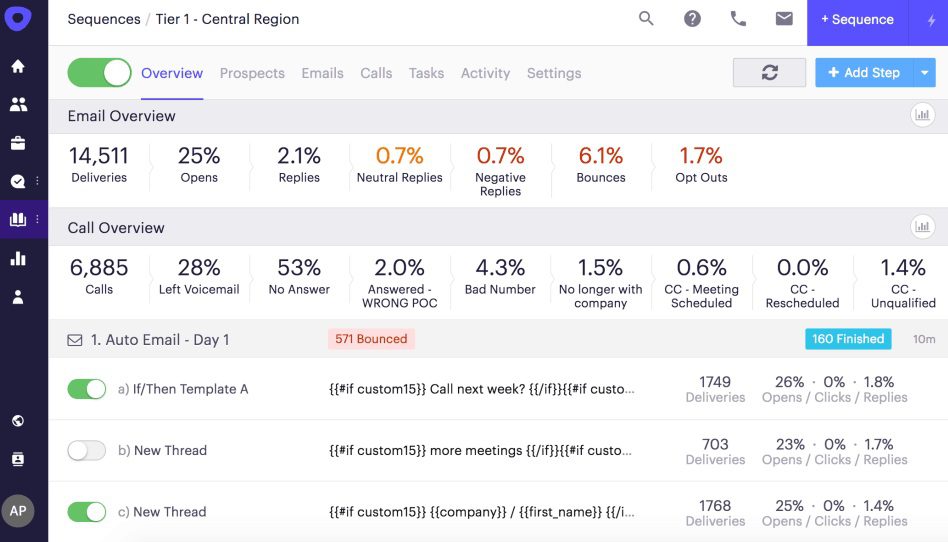
Outreach.io is a complete sales engagement platform designed to streamline the sales process for enterprise teams.
It integrates email, phone, LinkedIn, and live chat into a unified workflow, allowing for seamless multichannel outreach.
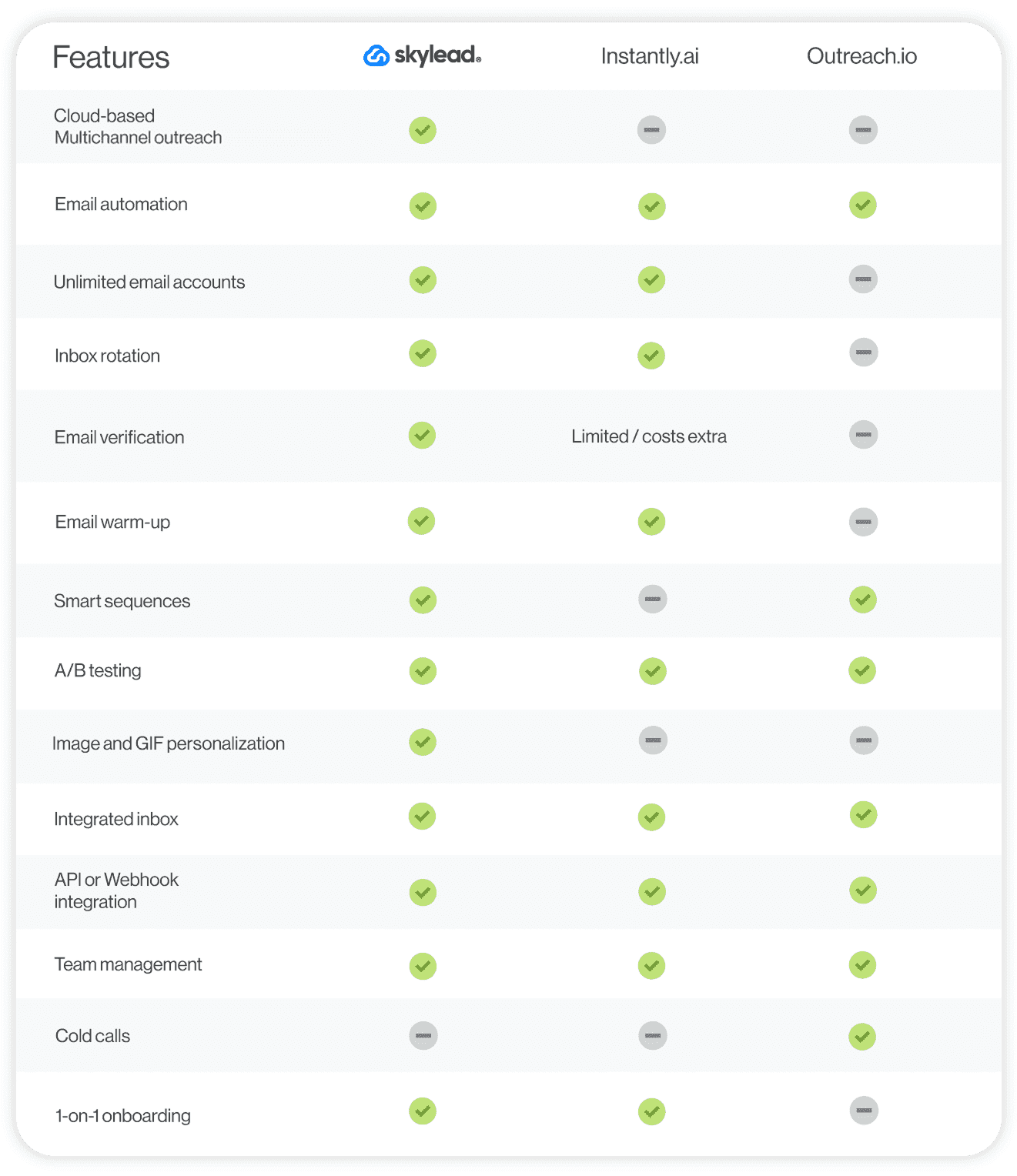
The platform lets you create personalized outreach sequences with automated follow-ups and response-based triggers. However, any actions on LinkedIn that are part of your sequences must be completed manually.
The tool integrates well with popular CRMs like Salesforce and HubSpot for smooth data synchronization.
Key features include robust email tracking, detailed analytics, A/B testing, and a library of customizable email templates.
Outreach.io also provides AI-driven sentiment analysis, call scheduling, and a pipeline calculator to estimate necessary sales expenses.
Its conversation intelligence tool, Kaia, offers real-time call transcription and insights, enhancing sales interactions and coaching.
In terms of cons, it's worth noting that the platform can be expensive for small businesses. Furthermore, no free trial is available, and the interface is complex.
Also, the platform connects to Sales Navigator accounts only and caters primarily to sales professionals. As such, it may lack features that marketing experts and lead generation agencies need, such as email discovery and verification.
Lastly, users can connect a maximum of 2 email accounts to the tool unless otherwise outlined in the contract.
Instantly.ai vs. Outreach.io
Pricing
Much like Salesloft, Outreach.io doesn’t disclose pricing details to non-users. Instead, the price is customized and heavily depends on the number of users within a team.
However, we did some research online and found that one user was quoted $130 per month per user, with a minimum requirement of 20 users.
9. QuickMail
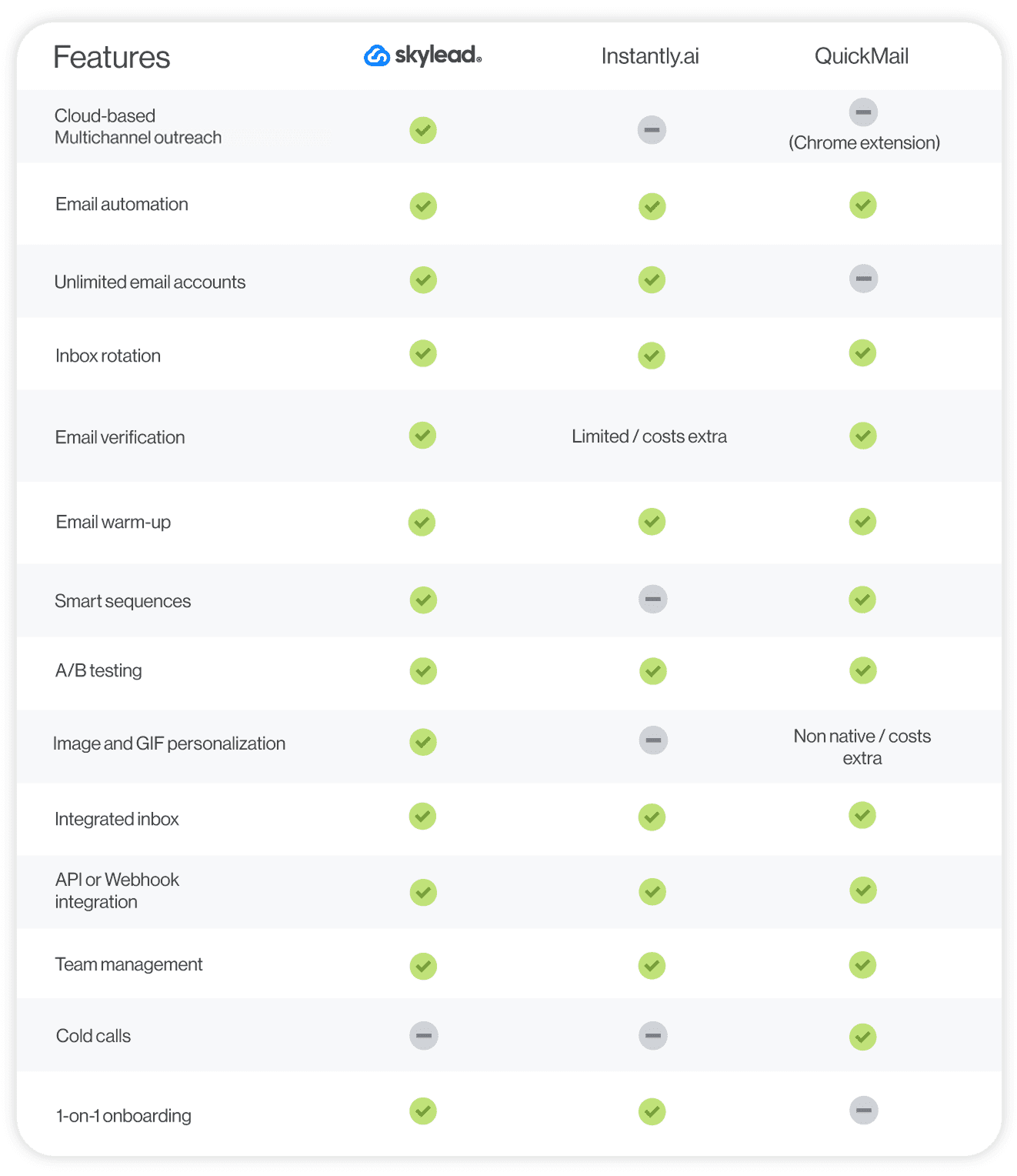
QuickMail is an effective outreach tool that goes beyond email campaigns.
It supports multichannel outreach, combining email, LinkedIn, calls, and SMS to help you reach your prospects where they are.
Linked outreach actions that QuickMail can perform are automatic and include:
- Profile views
- Connection requests
- Messages
Contrary to tools like Skylead, which let you import leads directly from LinkedIn, QuickMail offers 2 import options: a CSV file or Google Drive.
The tool comes with a built-in email warm-up and an inbox rotation feature that maintains high deliverability rates. It supports A/B testing and natively integrates with popular CRMs like Pipedrive and HubSpot. Nonetheless, you can integrate any tool with it via Zapier.
While email verification is available, QuickMail relies on 3rd party tools for this.
Similarly, Image and GIF personalization, while there, isn't native. For this, you’ll need Hyperise, which incurs additional costs.
Moreover, if you want to use LinkedIn in your outreach, you'll need QuickMail’s Chrome extension, which can put your account at risk.
You can add unlimited team members to your QuickMail account. However, you can connect a maximum of 50 email accounts and 15 LinkedIn accounts to the tool. And this is for the highest-tier subscription.
Instantly.ai vs. QuickMail
Pricing
| Basic Plan | $49/mo for 1 LinkedIn account and 5 email addresses |
| Pro Plan | $89/mo for 5 LinkedIn accounts and 20 email addresses |
| Expert Plan | $129/mo for 15 LinkedIn accounts and 50 email addresses |
10. Snov.io
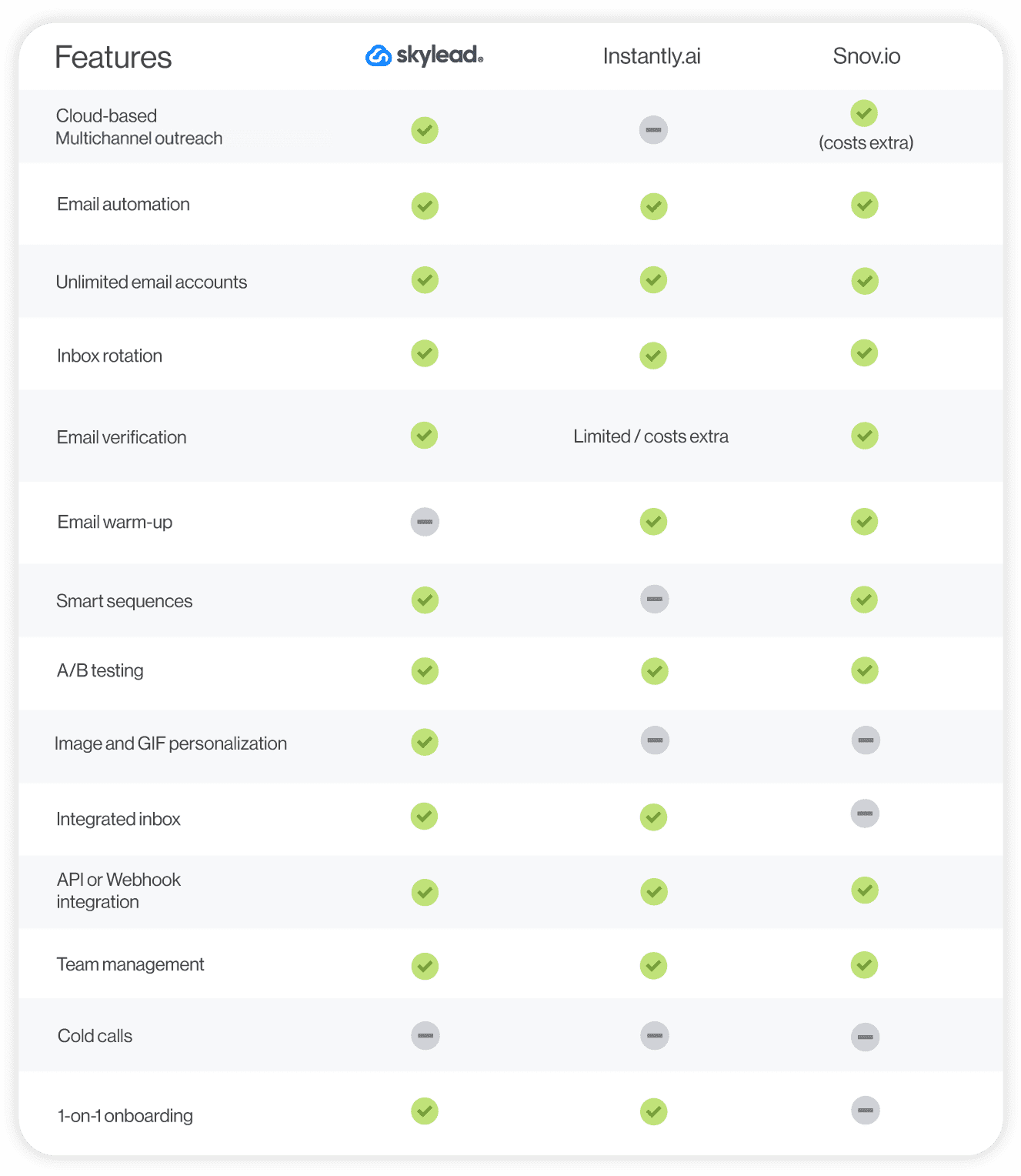
Snov.io is a cloud-based multichannel outreach tool that lets you create automated campaigns that combine emails and LinkedIn touches. These include profile visits, post likes, messages, and connection invites.
The platform lets you add "triggers" to your sequences, similar to Skylead's if/else conditions. These make your outreach smart and adaptable based on how your prospects react.
Additionally, Snov.io comes with a built-in email warm-up tool and a CRM. While the CRM isn’t the most advanced, it has enough functionality to be a good choice for those on a budget.
Snov.io can verify your leads' emails, but this feature isn’t unlimited. In fact, the number of emails you can verify depends on your plan.
Furthermore, for LinkedIn automation, you’ll need to pay an extra $69 per LinkedIn account you want to add to the software.
While Snov.io's LinkedIn automation is cloud-based, the tool prompts you to use their 2 Chrome extensions:
- One for prospecting on LinkedIn
- Another for finding leads' emails across the web.
However, if you choose to use them, be cautious, as a Chrome extension is not the safest way to do prospecting on LinkedIn.
Instantly.ai vs. Snov.io
Pricing
| Starter | $39/mo per account | |
| Pro - has 4 sub-plans that differ in price based on the number of leads you can contact | Pro 5K | $99/mo per account |
| Pro 20K | $189/mo per account | |
| Pro 50K | $369/mo per account | |
| Pro 100K | $738/mo per account | |
| Managed Service | $3,999/mo per account | |
11. Salesblink
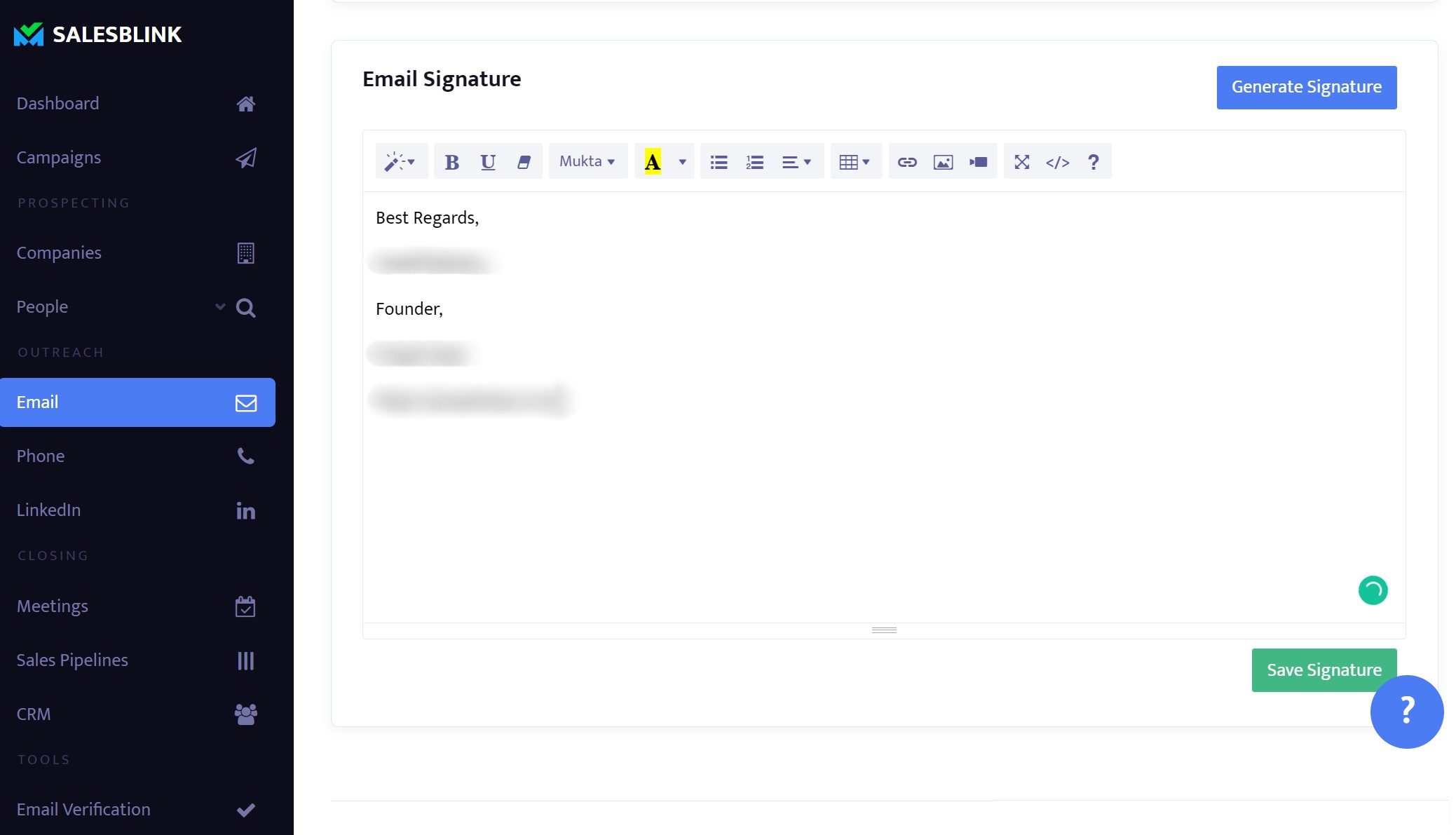
SalesBlink is one of the best Insantly.ai alternatives for cold emailing.
It uses its AI, BlinkGPT, to craft smart email sequences with follow-ups that adapt based on your leads' behavior.
Plus, with its email warm-up feature, your messages are more likely to land in your leads’ inboxes instead of their spam folders.
SalesBlink lets you connect unlimited email accounts and automatically rotates them while sending emails, thus keeping you within safe limits.
Furthermore, it comes with a Unified inbox that keeps all your conversations in one place, similar to Skylead, Instantly.ai, and Smartlead.
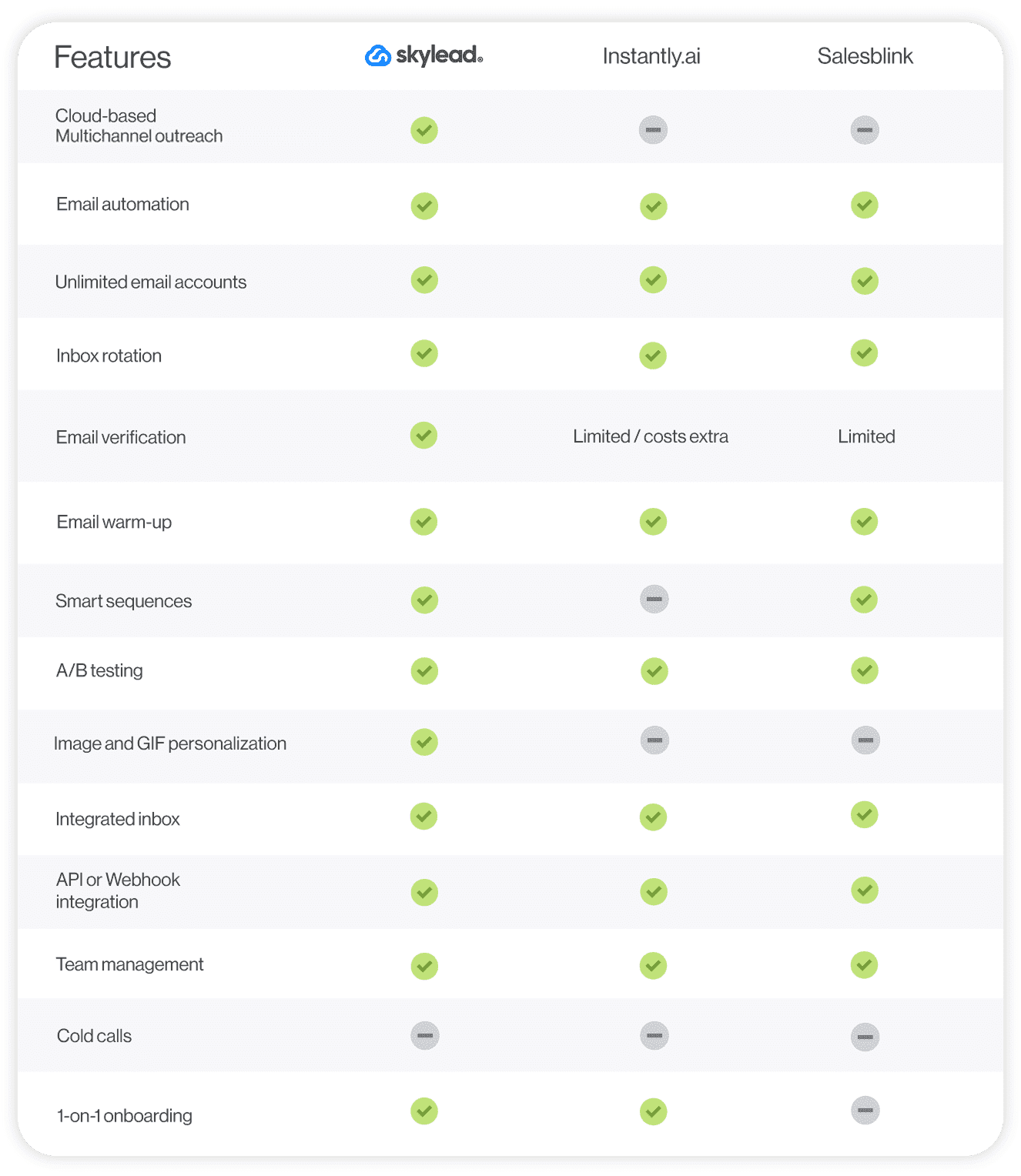
Although SalesBlink supports adding multichannel tasks to your sequences, these tasks need to be done manually, making them compliant with LinkedIn's ToS.
The tool also provides email verification, but this feature is limited. Simultaneously, it isn't available to subscribers to the lowest-tier plan.
Instantly.ai vs. Salesblink
Pricing
The number of emails you can send with the software depends on your plan.
For example, the basic plan lets you send up to 6,000 emails, while the top tier allows up to 100,000.
| Scale | $29/mo per account |
| Growth | $99/mo per account |
| Business | $199/mo per account |
12. Hunter.io
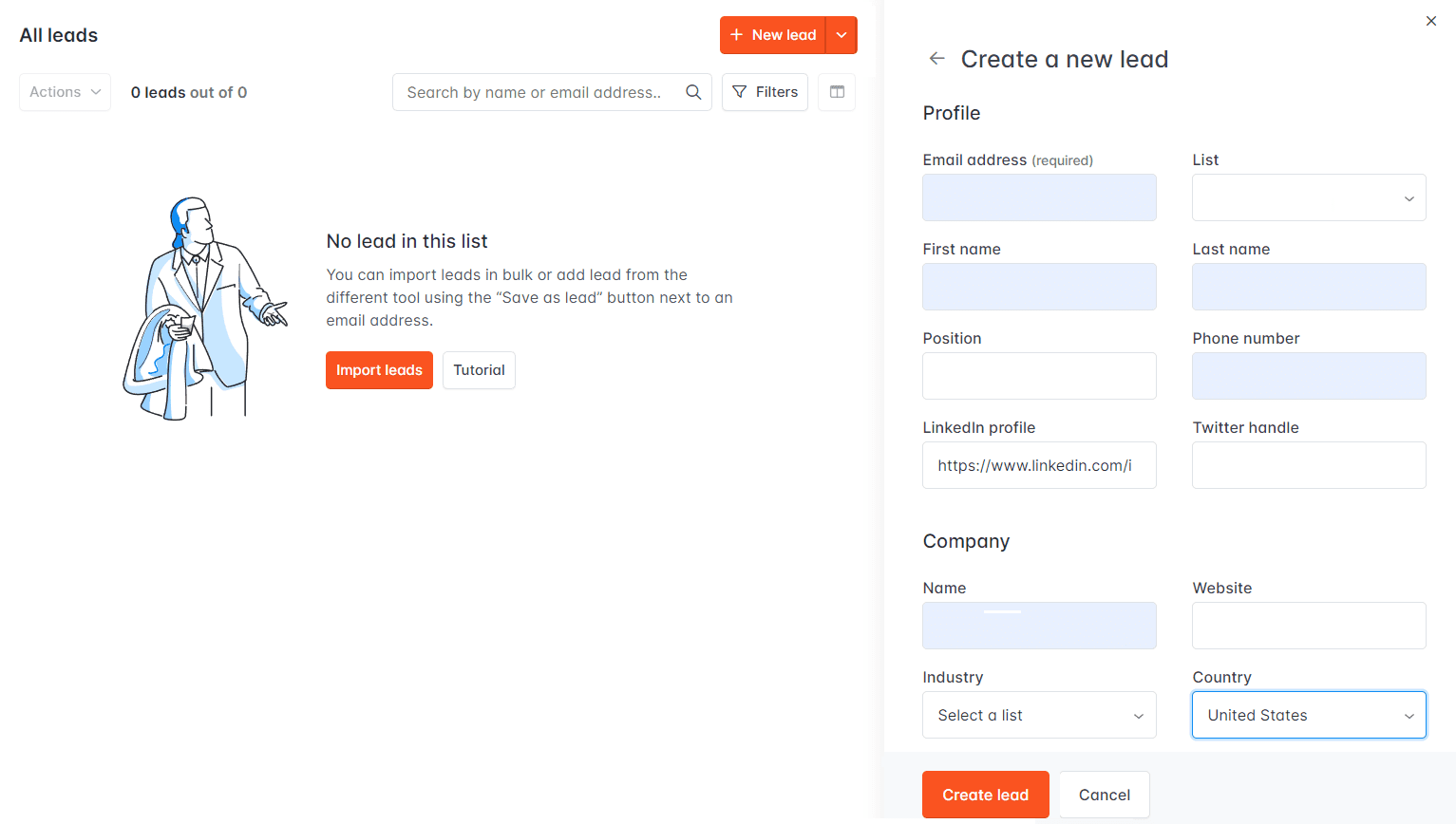
Hunter.io is a tool renowned for its email finding and verification capabilities.
It boasts a user-friendly interface and frequently updates its database with new publicly available emails.
One of its standout features is the ability to invite team members and grant role permissions, which makes team collaboration much easier.
Additionally, Hunter.io offers multiple cold email templates and supports integrations with various CRMs and software via Zapier.
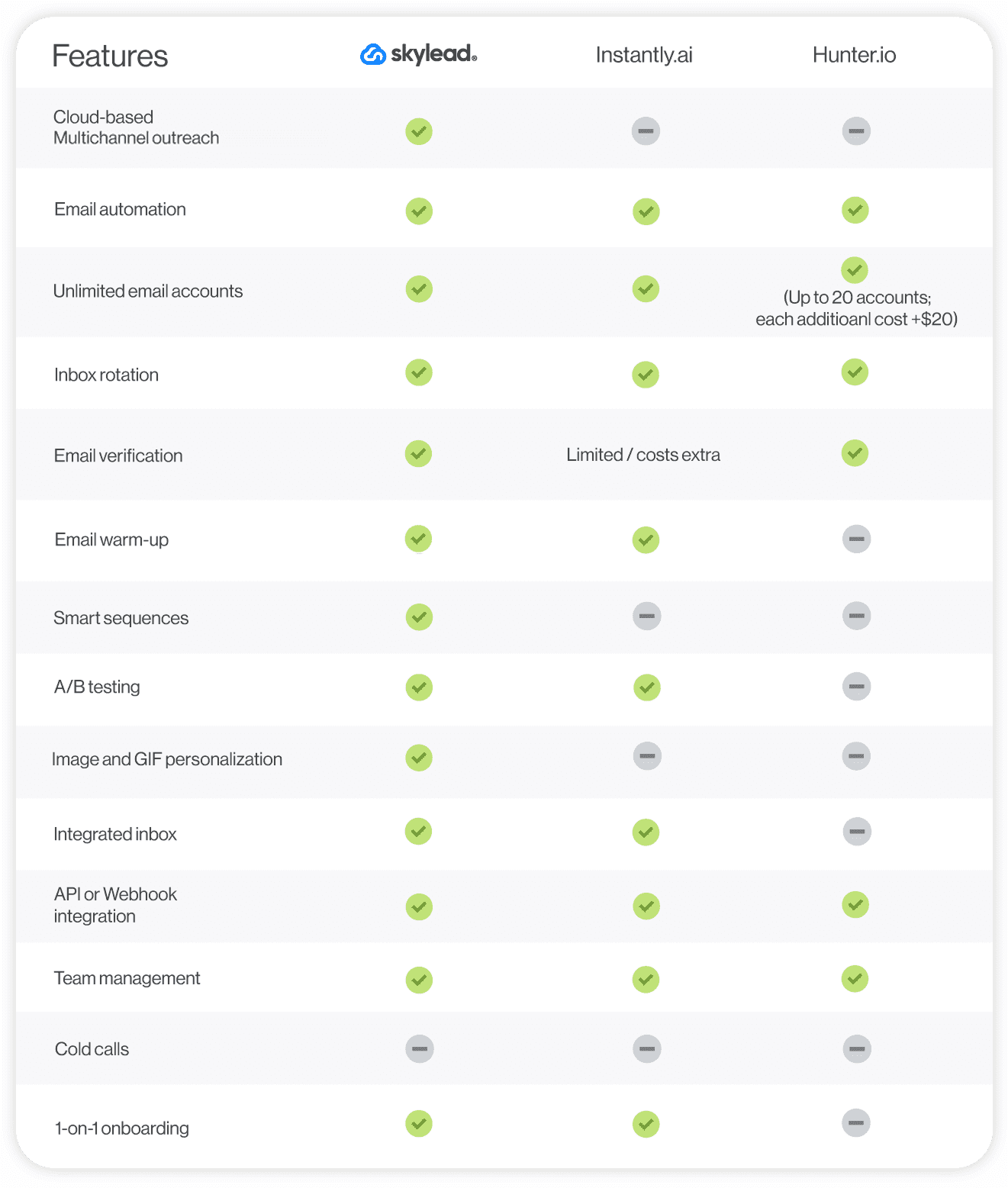
However, there are some limitations. For example, you can only create outreach campaigns if you connect a Gmail or Outlook account. Other email service providers are not supported. It also lacks features like A/B testing, advanced message personalization, and email warm-up.
Furthermore, the tool requires a bit of a learning curve, and the support response time can be slow.
Instantly.ai vs. Hunter.io
Pricing
| Free | 0€/mo per account with 1 sending email address |
| Starter | 49€/mo per account with 3 sending email addresses |
| Growth | 149€/mo per account with 10 sending email addresses |
| Business | 499€/mo per account with 20 sending email addresses |
| Enterprise plan | Contact sales for pricing details |
How to cancel Instantly.ai subscription?
If you’re not satisfied with Instantly.ai, you can cancel your subscription and try another tool from our list.
Here's how:
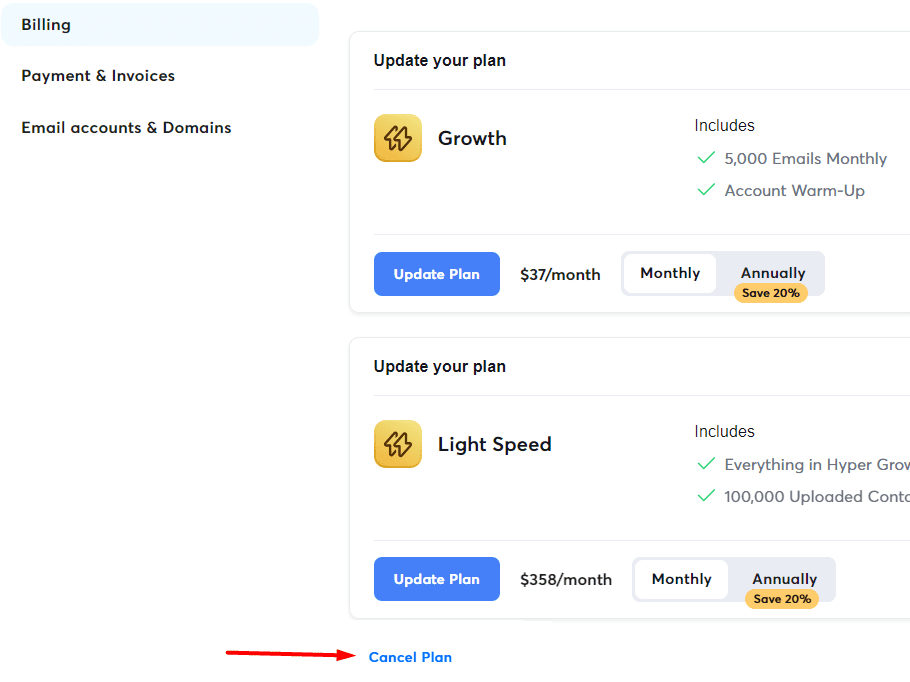
- Log in to your account.
- Go to the Billing page.
- Under your active plan (s), find the "Cancel plan" button. Click it to confirm your cancellation.
If you have one plan only, you can use it until the end of the billing cycle.
However, if you have both a Lead Finder and Email Outreach plan and cancel only one, the cancellation of said plan takes effect immediately.
Also, if you want to cancel multiple plans, keep in mind that you'll need to cancel each one individually.
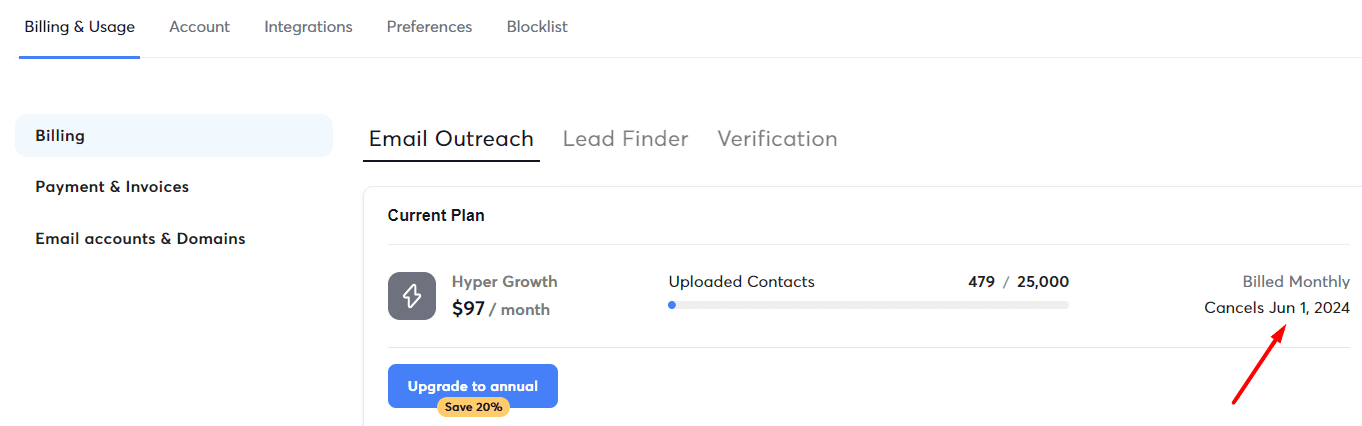
Lastly, to confirm your plan is canceled, look at the date listed next to the plan on the Billings page.
Frequently asked questions (FAQs)
What is instantly.ai?
Instantly.ai is an advanced email automation tool designed to help individuals manage their email campaigns more effectively. It offers a range of features, including unlimited email accounts, email warm-up, B2B Lead Finder, and a Unibox.
What does Instantly AI do?
Instantly.ai automates various aspects of cold emailing and customer relationship management. It helps users manage multiple email accounts, warm up emails to improve deliverability, find new leads, and keep track of them. The platform also consolidates all emails into a single inbox, making it easier to manage conversations and follow-ups.
How to use instantly.ai?
Using Instantly.ai is easy. Just create an account, add and configure email accounts, and use the email warm-up feature to prepare your accounts for sending. Then, create and launch your email campaigns and manage interactions through Unibox. Finally, use the tracking and analytics page to analyze campaign performance.
Is instantly.ai free?
Instantly.ai is not free but offers various pricing plans to suit different needs and budgets. Each plan provides access to a range of features, allowing you to choose the one that best fits your requirements.
Does Instantly AI have a free trial?
Yes, instantly.ai offers a free trial for new users. This allows you to test out the platform and its features before committing to a paid plan.
How many emails can you send with Instantly AI?
The number of emails you can send per month depends on the plan. For instance, the lowest plan limits you to sending 5,000 a month, whereas the Custom plan allows you to send more than 500,000.
Instantly.ai vs. alternatives: What’s the better option?
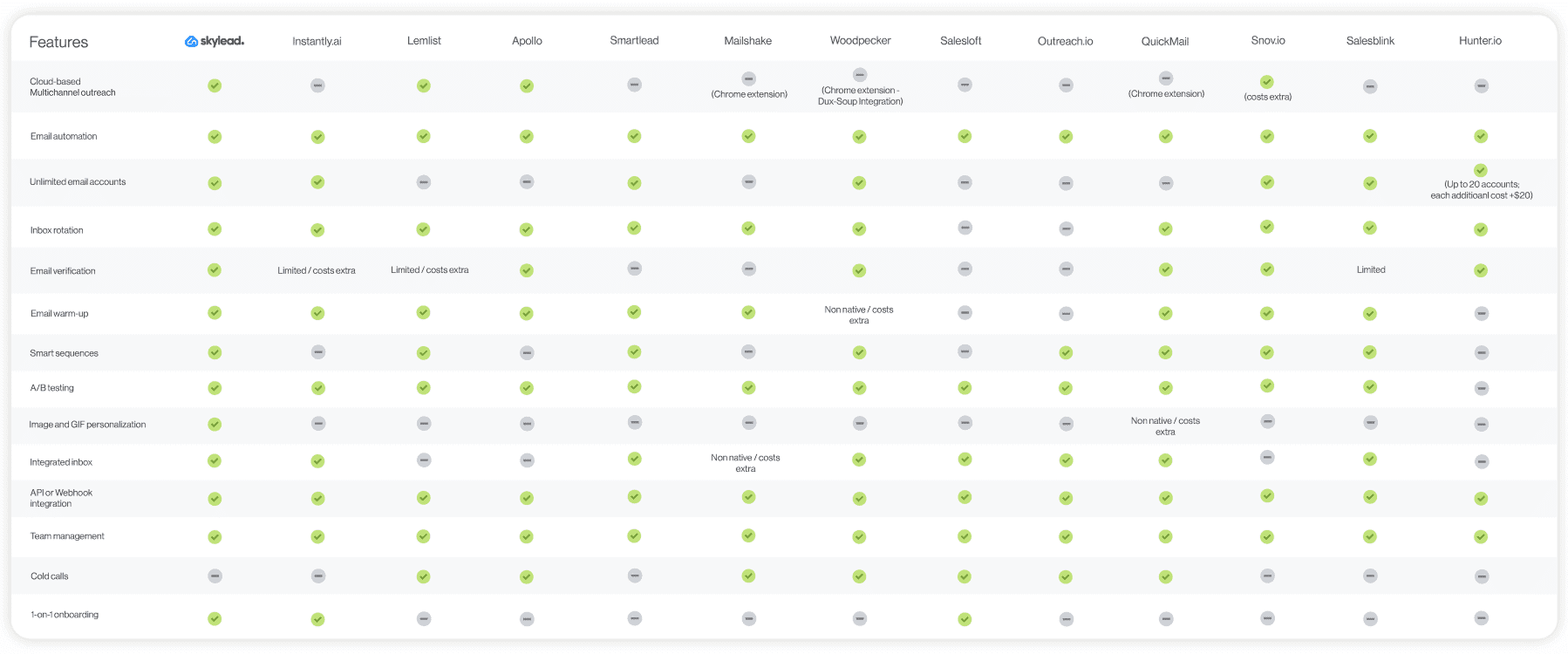
And there you have it—our deep dive into Instantly.ai and its top 12 alternatives.
As you’ve discovered, Instantly.ai has some powerful features. But it's not perfect, mainly because of the lack of multichannel outreach support that tools like Skylead have.
That said, if your strategy relies heavily on engaging prospects across multiple channels, Instantly may not be for you.
Luckily, your perfect alternative is out there, waiting for you to discover it.
We've given you the options. Now, it's up to you to try them out.
But why not start with Skylead?
With a 7-day free trial, you can experience the true power of email and LinkedIn automation combined.
So, come chat with us, sign up, and begin scaling your outreach — to infinity and beyond!
Updated on: September 15th, 2026
Disclaimer: Skylead is not affiliated, endorsed by, or connected with LinkedIn in any way.
Gone are the days of going through business cards, calling prospects left and right, only to close a deal. Over the years, numerous sales outreach tools have emerged, all aimed at streamlining prospecting and lead generation.
Yet, because there are so many of them, today's sales reps are often at a crossroads, wondering which tool they would benefit the most from.
To help you choose, we've tested the top cold outreach solutions on the market and are sharing our two cents.
So, if you are looking for the perfect outreach software for sales, brace yourself—the ultimate breakdown of tools is coming!
Sales outreach tools overview
TL;DR? Here’s a quick comparison table to help you pick your ideal tool complete with what each is best for, its pros and cons, starting price, and user rating.
Updated on 14.5.2025.
| Sales outreach tool ??️? | Best for ? | Pros ? | Cons ? | Pricing ?️ | Rating ? |
| Skylead | Agencies - Smart, hyper-personalized LinkedIn and email outreach | - Smart sequences that combine two channels - Precise email discovery & verification - Image & GIF personalization - Email warm-up at no extra cost -Smart inbox - Available in 7 languages | - No native video personalization | $100/mo per seat | Capterra: 4.8 |
| Expandi | Automated LinkedIn profile engagement | - Auto-post likes and endorsements - Smart sequences | - No image personalization - No paid inMails or full email finder | $99/mo per seat + $69 for Image & GIF personalization (through Hyperise) | Capterra: 4.4 |
| Zopto | Automating likes & greetings on LinkedIn | - AI assistant for message generation - Automates greetings & endorsements | - Free inMails only - No analytics exports | Starts from $156/mo | Capterra: 4.3 |
| Lemlist | Ensuring email deliverability | - Advanced personalization (landing pages, images) - Email warm-up via Lemwarm | - Chrome extension compromises safety - Extra fees for mailboxes, warm-up & email finder | Starts from $69/mo | Capterra: 4.6 |
| Reply | Semi-automated multichannel outreach | - Multi-channel support (email + LinkedIn) - AI SDR automates replies and bookings | - LinkedIn actions can’t be fully automated - Chrome extension for enrichment | Starts from $59/mo | Capterra: 4.6 |
| Snov.io | Email enrichment | - Built-in CRM - Support for multiple LinkedIn accounts | - Chrome extension makes it unsafe - Overpriced at scale | Starts from $39/mo | Capterra: 4.5 |
| Closely | Campaign tracking | - Built-in AI SDR agent - Advanced campaign tracking | - No inMails - Active campaign limit (25 max) | Starts from $189/mo | Capterra: 4.4 |
| Waalaxy | Beginners to multichannel outreach | - Easy-to-use for beginners - Works with multiple lead sources | - Pre-built templates only - Inbox costs extra | Starts from $43/mo | Capterra: 4.4 |
| Instantly | Straightforward email outreach | - Unlimited inboxes + rotation - B2B lead database + CRM | - No multichannel support - Requires 3 separate subscriptions to unlock full capabilities | Starts from $37/mo | G2: 4.8 |
| HubSpot Sales Hub | Building personalized email sequences | - Strong A/B testing support - Native CRM integration | - No multichannel outreach - No email warm-up | Starts from $15/mo | Capterra: 4.5 |
| Dripify | Its ability to integrate with various software | - Email + LinkedIn outreach - Built-in email finder & verifier | - No A/B testing - No image personalization | Starts from $59 | Capterra: 4.7 |
| SalesLoft | Building and managing pipelines | - Robust pipeline tools - Customizable email templates | - No Smart sequences - Only for Sales Navigator | Custom | Capterra: 4.3 |
| Yesware | Gmail & Outlook outreach | - Real-time email & attachment tracking - Calendar integration | - No integrated inbox - Manual LinkedIn tasks | Starts from $19/mo | Capterra: 4.3 |
| Hunter | Finding and verifying professional emails | - High email verification accuracy - Native integrations | - No in-email enrichment flow - No social scraping | Starts from 49€/mo | Capterra: 4.6 |
| Mailshake | Setting up simple drip campaigns | - Easy-to-use interface - Built-in A/B testing | -No smart sequences - No image & GIF personalization | Starts from $29/mo | Capterra: 4.5 |
| SalesBlink | AI-powered email outreach | - AI-generated sequences - Unified inbox + email warm-up | - Email-only automation - Manual multichannel actions | Starts from $29/mo | Capterra: 4.7 |
| Saleshandy | A-Z testing | - Large lead database - A-Z email testing (up to 26 versions) | - No LinkedIn support - Email verification costs extra | Starts from $36/mo | Capterra: 4.5 |
| Woodpecker | Coming up with email copy quickly | - AI email writer - Unlimited inboxes + email rotation | - Dependent on 3rd-party tools (Dux-Soup) for LinkedIn automation - Poor email verification probability | Starts from $29/mo | Capterra: 4.7 |
| Wiza | Extracting lead information from LinkedIn, Sales Navigator & Recruiter | - Instant email verification - Syncs lead data to CRM | - No outreach capability - Unsafe LinkedIn enrichment | Starts from $49/mo | Capterra: 4.3 |
| GrowMeOrganic | Automating hyper-personalized follow-ups | - Native image personalization | - No LinkedIn outreach - Limited export options | Starts from $49/mo | Capterra: 4.2 |
| Lusha | Prospecting around the Web | - AI Playlists, a.k.a. lead lists powered by AI that automatically get updated - Prospect extraction from anywhere | - Only 1 inbox allowed - Limited database outside EU/NA | Starts from $29.90/mo | Capterra: 4.0 |
| MeetAlfred | X (Twitter) outreach | - Supports multi-channel outreach across LinkedIn, email, and Twitter - User-friendly interface suitable for beginners | - Message sequences may require time to optimize for best results | Starts from $59/mo | Capterra: 2.8 |
| LeadConnect | Following up on LinkedIn | - Native HubSpot integration - Forever free plan | - Email automation isn’t supported - Works with Basic LinkedIn accounts and Sales Navigator only | Starts from $25.95/mo | Capterra: 4.4 |
| Evaboot | Scraping leads from Sales Navigator | - Supports CSV lead list exports from Sales Navigator - Email discovery & verification | - Compatible with Sales Navigator only - Uses a Chrome extension for scraping | Starts from $9/mo | Capterra: 4.6 |
| Dux-Soup | Sending free and paid inMails | - Supports sending free & paid inMails - Integrates natively with popular CRM (HubSpot, Pipedrive, etc.) | - Cloud-based LinkedIn automation is available on the highest-tier plan only - Lacks multichannel support | Starts from $14.99/mo | Capterra: 4.0 |
| Salesloop | Expanding your LinkedIn network on autopilot | - Works with all LinkedIn account types - Downloadable CSV reports | - LinkedIn automation only - Doesn’t integrate with other tools | Starts from $49/mo | G2: 3.5 |
What are sales outreach tools?
Sales outreach tools are software or platforms designed to facilitate and streamline the sales outreach process. These tools automate repetitive tasks such as sending messages and follow-up emails, leaving you with more time to focus on researching and nurturing your leads to conversion.
To clarify, with sales outreach tools, sales teams can:
- Get to more prospects faster,
- Maximize touchpoints through multichannel outreach,
- Personalize communication,
- Segment prospects according to their stage in the sales funnel,
- and close more deals.
Benefits of using outreach tools for sales
Why are sales teams increasingly turning to outreach tools? Because of the evident benefits of doing so. For example, McKinnsey’s research confirms that about a third of all sales tasks can and should be automated.
And we agree, but here are other benefits we’ve discovered using sales outreach tools.
Firstly, there's the increased productivity. With an outreach aid that automates manual tasks, sales reps can shift focus to high-value activities like nurturing leads.
Secondly, sales outreach software can often integrate with various platforms. As a result, you get a centralized hub for all sales activities. This reduces the time spent switching between tools and streamlines the entire sales process—from prospecting to conversion.
Lastly, we cannot discuss the benefits of using a sales outreach solution without mentioning scalability. With features like A/B testing, sales teams can optimize their outreach strategies based on data-driven insights. This leads to improved results, as teams can quickly identify what works best and scale with their winning approach accordingly. As a result, you get an influx of leads and customers, all without a drop in performance.
26 Best sales outreach tools
You're sold on using sales outreach tools but aren't sure which one(s) to choose. We've spent extensive time testing top-tier software, so you don't have to! Now, let's review our top picks to bring you closer to the answer!
#1 Skylead - Best overall sales outreach tool for smart, hyper-personalized multichannel outreach
That’s us! Hi! ?
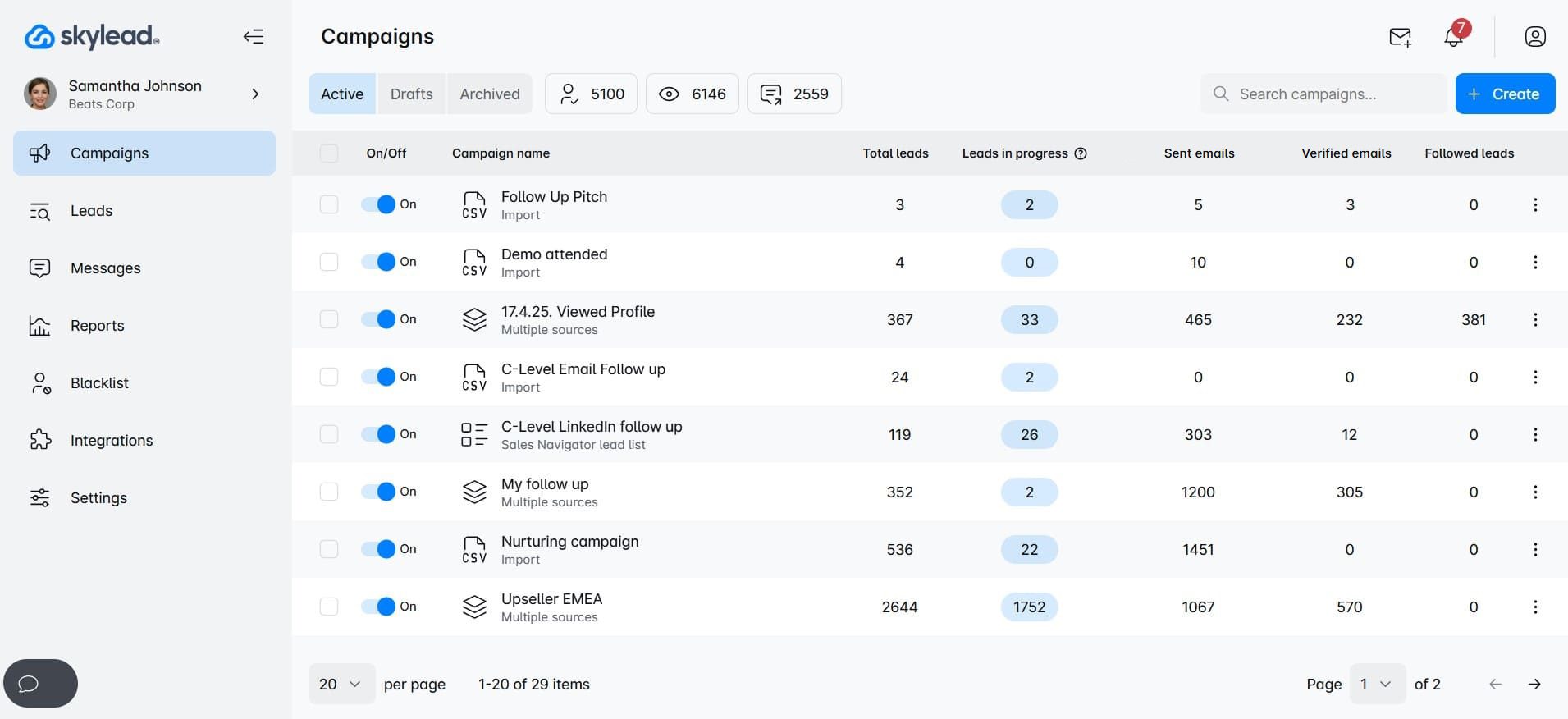
Skylead is a cloud-based LinkedIn automation tool and cold email software, the first on the market to introduce Smart sequences. It's the outreach software for sales teams looking to book 3x more meetings and save +11 hours weekly on manual work.
Pros
Skylead is a one-stop-shop outreach tool, meaning it has everything a salesperson might need — in one place! That said, it comes with solutions for:
- Account-based prospecting
- AI data enrichment
- LinkedIn and email outreach
- Unlimited email automation
- Email discovery & verification
- Image & GIF personalization
- Email warm-up
Its highlight feature is Smart sequences, a revolutionary algorithm that allows you to take full advantage of multichannel outreach. With Smart sequences, you can combine LinkedIn and email outreach actions and if/else conditions. The sequence unfolds based on the prospect's behavior, adapting as it goes to find the fastest path to them.
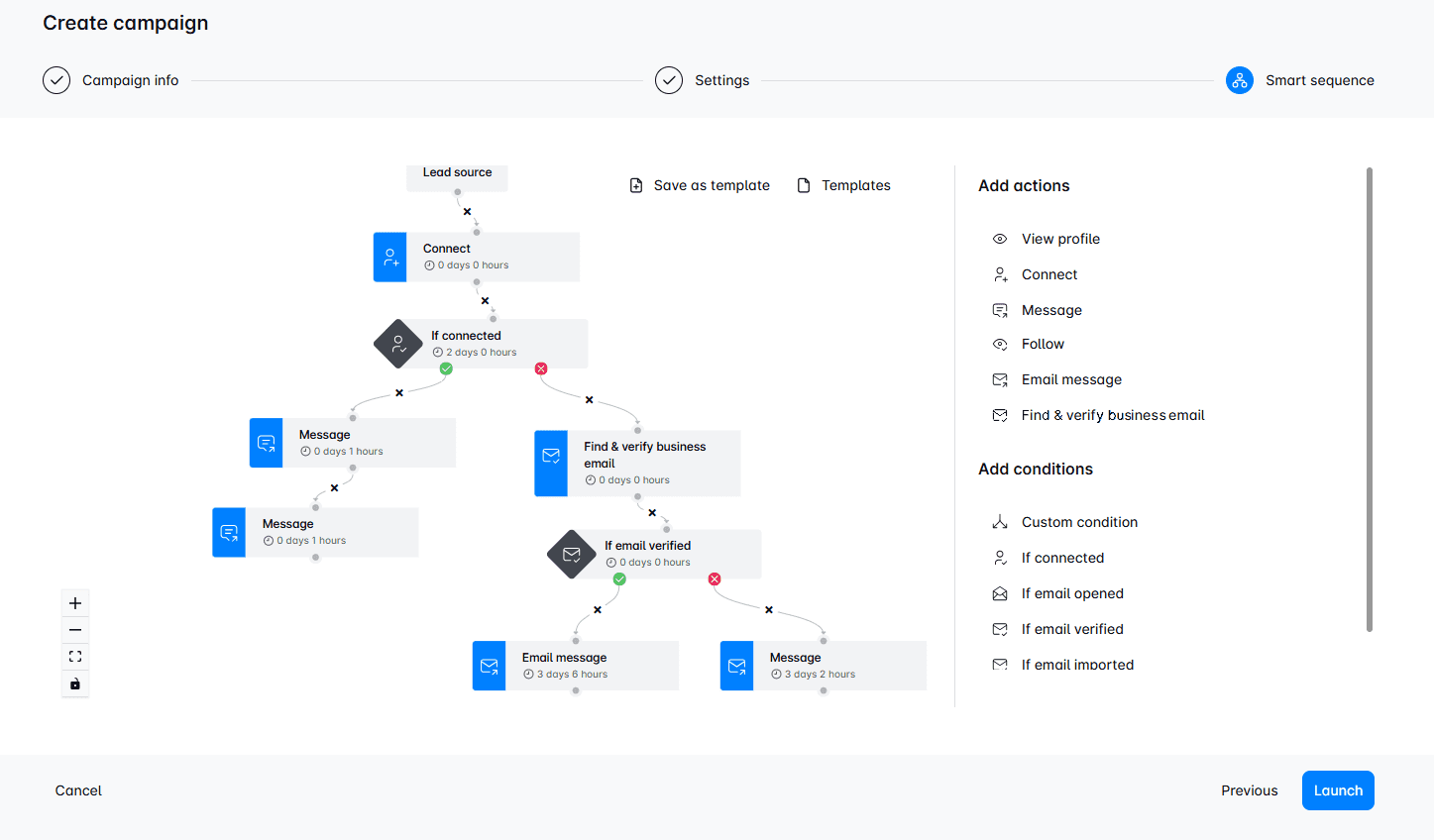
Speaking of email outreach, Skylead lets you connect unlimited email accounts at no extra cost. Moreover, the software supports inbox rotation, which means that you can send tens of thousands of emails per month with it. And to make sure these land in the primary inbox (not spam), we've partnered up with Mailivery -a leading email warm-up tool - to bring you infinite email warm-up. And guess what? It’s completely free for all Skylead users!
Skylead also consolidates all your communications into one Smart inbox, allowing you to manage all messages seamlessly. Furthermore, it lets you organize chats with labels to keep track of conversions and measure ROI.
The software also stands out due to its native image & GIF personalization feature and variables for personalizing messages. We've run the numbers, and as it turns out, these two combined have brought our response rate to 76%!
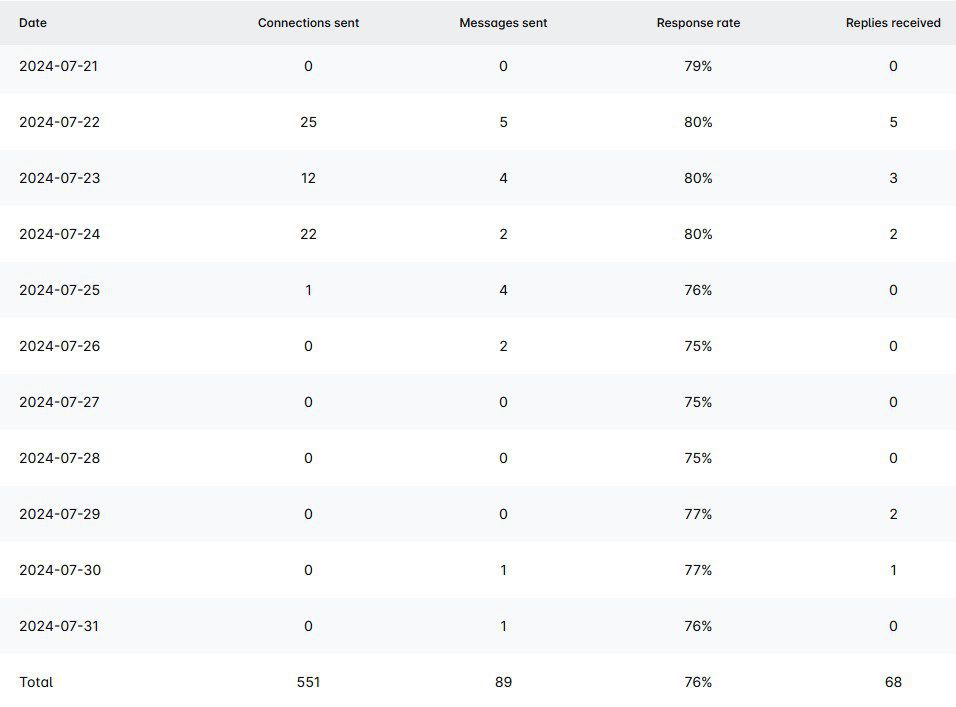
In addition, Skylead offers account-based prospecting. With it you can:
- Create account lists directly in Skylead
- And discover contacts by company to reach them out.
In other words, once you add your companies, Skylead can help you find and match contacts within those selected companies so your pipeline stays aligned to your ICP. This way, you can really zero in on your target companies that are most likely to convert.
Moreover, you can enrich these leads and companies thanks to AI data enrichment. In other words, you can use it to:
- Enrich contact & company data
- Prompt AI to get specified info or generate personalized icebreakers for each contact
- Use all gathered info directly inside your sequences as variables.
It’s Clay-like in what it can uncover, but it’s connected to your outreach workflow, so you avoid constant tool switching and data importing.
This sales engagement platform lets sales reps in on in-depth analytics and allows for A/B testing of different subject lines and messages. Thanks to these, you'll surely find something that strikes a chord with your target audience!
Also, if you want to push lead or campaign data to your CRM, you can! Skylead integrates with any software via webhooks or API.
Lastly, if you're working with an international sales team, you'll love that our tool is available in 7 different languages, including:
- Spanish
- Portuguese
- French
- German
- Italian
- Dutch
- Arabic
…making it even easier to collaborate globally.
Cons
It's not that it's ours, but we truly haven't found any "real" cons to using Skylead. Why, yes, Skylead doesn’t have a video customization feature. Nonetheless, our users can use Sendspark's AI-powered Dynamic Video Functionality to personalize videos on top of images. Moreover, all Skylead users can get 50% off their first month with Sendspark. Just create your account on their platform and use the promo code ''SKYLEAD50'' to claim the offer.
What others said about Skylead
Allen F. shares our enthusiasm for the platform and mentions how Skylead revolutionizes your campaigns! He is particularly fond of the library of campaign templates that are easy to tweak. He even says you can have your first campaign running in about 15 minutes!
Alex S. has also had nothing but good things to say about Skylead. He even went so far as to say that this product has literally changed the way he works! He praises the interface and notes how building detailed sequences with the tool is incredibly easy.
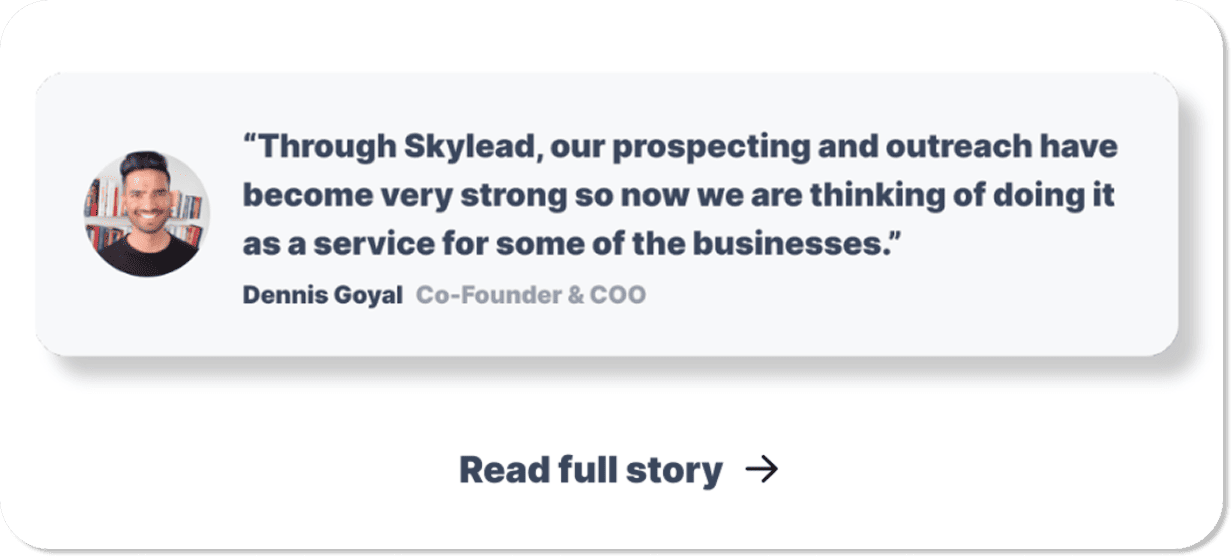
Still wondering whether Skylead can deliver results? Check out everything that our client, Dennis Goyal, had to say about using it! ?
Pricing
Skylead offers an all-in-one solution priced at $100 per seat per month. If you've got a steady seat count, though, you can also opt for our annual plan, which gives you 2 months free.
AI data enrichment acts as an add-on. What makes this pricing truly different is simple: our core value is not to make money from these credits, and it will never be our business model. Credits are priced based on the actual costs of our third-party providers (OpenAI, Bright Data, etc), and we offer a special rate of $1 for 100 credits. We also negotiate volume discounts with our providers. This means that, as overall usage across all users increases, costs will decrease and will be passed back to our users. This makes AI data enrichment up to 95% more cost-effective compared to similar tools on the market. This makes it the most cost-effective and the most comprehensive tool on this list.
And if you’re an agency looking to white label Skylead, reach out to our sales team to get more details on how that can be done.
Rating
Skylead overview
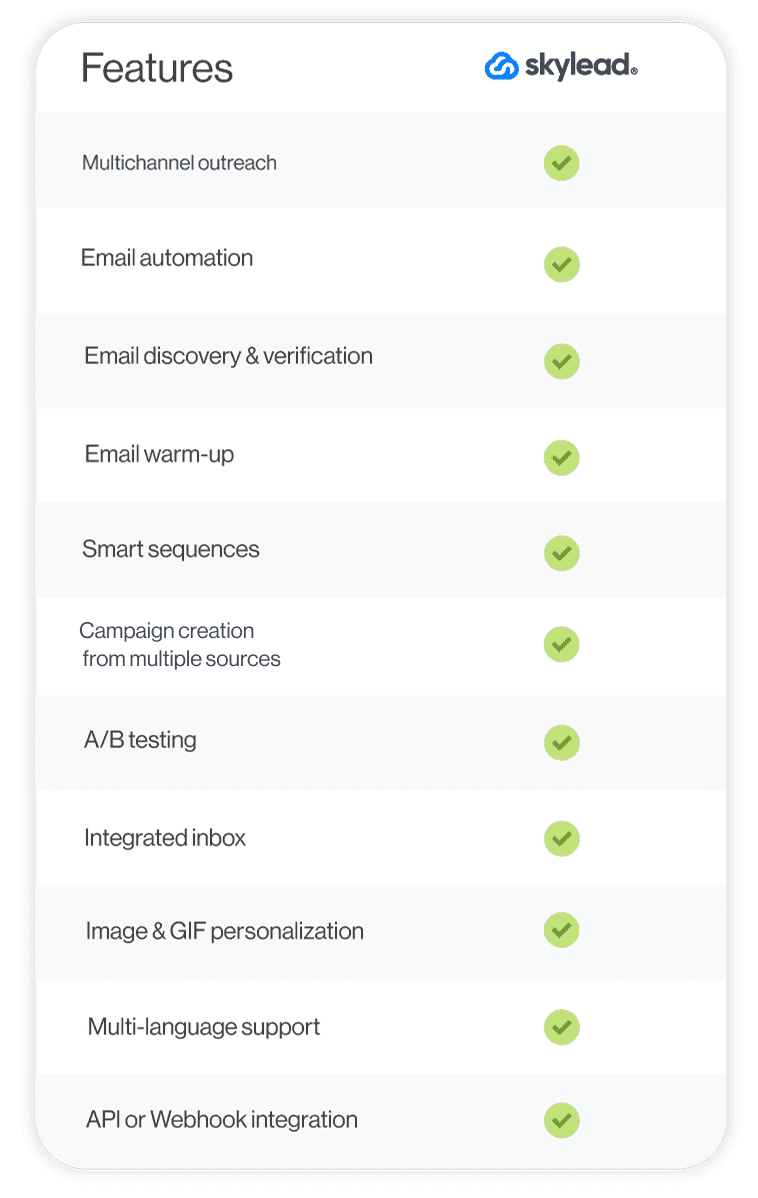
Now, let’s compare Skylead to the remaining 25 sales outreach tools!
#2 Expandi - Best for automated LinkedIn profile engagement
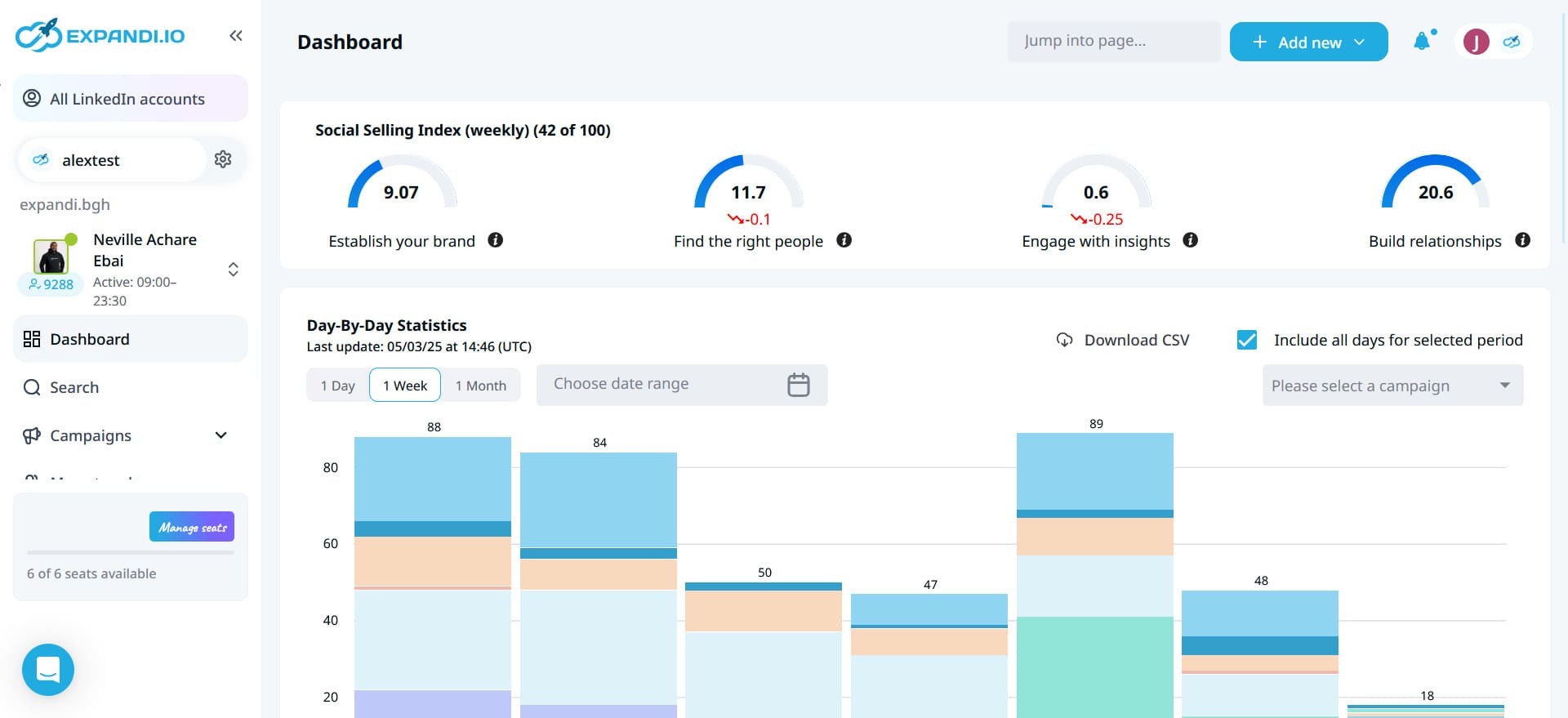
Expandi is another cloud-based sales outreach platform designed for LinkedIn and email automation.
Pros
We discovered that, much like Skylead, Expandi comes equipped with Smart sequences. These allow for multichannel outreach and support additional LinkedIn actions that engage users’ profiles, such as auto-post likes and auto-endorsements.
Expandi automates sending personalized LinkedIn messages, emails, and free inMails. There are also a variety of templates to choose from, many of which can be extremely useful.
Cons
While playing around with Expandi, we noticed that it lacks a native image and GIF personalization feature. Although we were able to personalize images thanks to their integration with Hyperise, we had to pay extra for it.
Finally, the tool cannot discover and verify email addresses unless they are publicly available on someone's LinkedIn profile. In other words, this makes it an incomplete tool for seamless email outreach and positions Expandi alternatives as superior.
What others said about Expandi
Overall, the reviews are somewhat similar to our conclusions. For example, Adi R. notes that Expandi is easy to use, intuitive, and good for automating tasks. However, he isn't overly happy about having to perform certain tasks manually since the tool doesn't handle them.
Pricing
- Business: $99/mo per seat + $69/mo per seat for image & GIF personalization (via Hyperise)
- Agency: Custom
Rating
- Capterra: 4.4 (31)
Skylead vs. Expandi
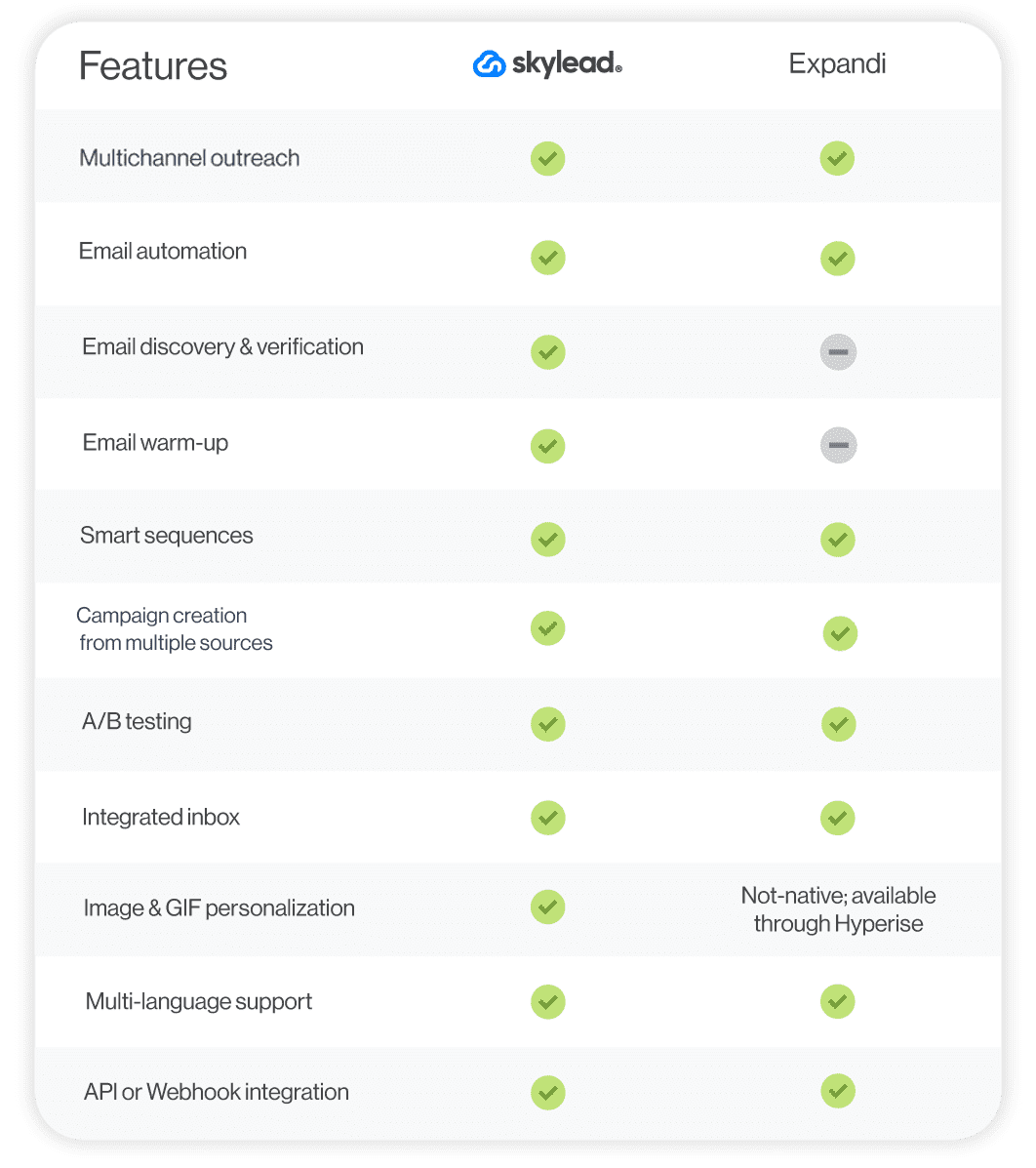
#3 Zopto - Best for automating likes & greetings on LinkedIn
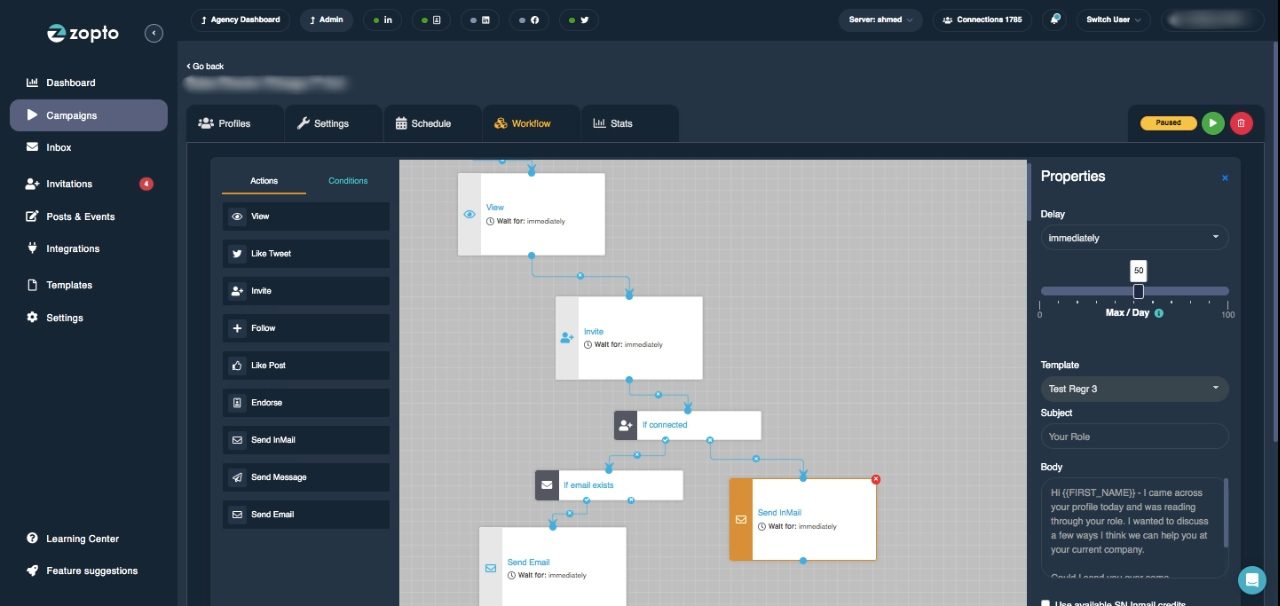
Zopto falls into the category of cloud-based multichannel sales outreach tools.
Pros
Zopto has a Smart Sequences feature, which is fairly new to the market. We tested it out and noticed that we can form outreach flows from different LinkedIn and email actions and conditions.
Speaking of LinkedIn actions, in addition to automating standard ones (e.g., View profile, Follow, Invite to connect, etc.), the tool can also automate likes, endorsements, and even greetings (birthdays, anniversaries, job changes).
Cons
Despite its email enrichment capabilities, Zopto is limited to discovering 5,000 contacts a month, as compared to Skylead, which has an unlimited email discovery feature. Additionally, the latter has a higher success rate in finding verified emails.
One of Zopto's main selling points is Zhoo, its AI assistant. Yes, it sounds innovative, but it's essentially just a ChatGPT 4 integration used for generating emails and messages. We found it more cost-effective to use a different sales outreach tool and simply pay for a ChatGPT Plus subscription.
But do you truly need one? It depends. Our sales team has compared GPT-generated sales copy against our own and saw better results with the latter. However, we're not opposed to using ChatGPT for sales—it can be quite helpful, especially when inspiration is lacking.
As Zopto’s final con, when we wanted to analyze our campaign results, we found no option to export a report.
What others said about Zopto
Eldar L.mentions that Zopto makes creating and running several campaigns at a time easy. Nevertheless, he finds it inconvenient that the tool lacks detailed analytics. And he’s right. We noticed that statistics are only presented as pie charts, which, frankly, don't offer much clarity on the campaign's performance.
Pricing
- Basic: $197/mo per seat
- Pro: $297/mo per seat
- Agency & Enterprise Basic: Starting at $156/mo per seat (minimum 2 users)
- Agency & Enterprise Pro: Starting at $237/mo per seat (minimum 2 users)
Rating
- Capterra: 4.4 (66)
Skylead vs. Zopto
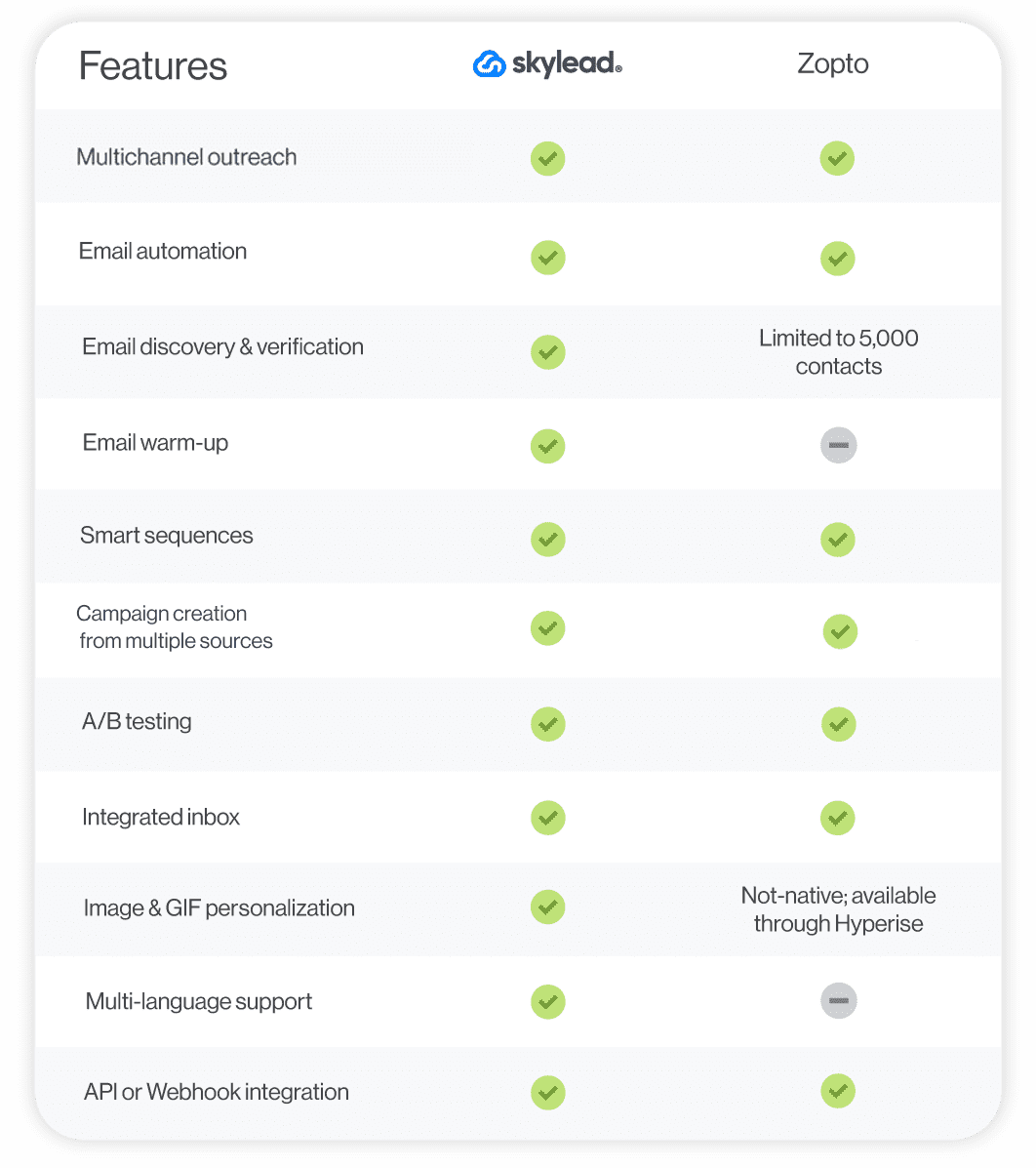
#4 Lemlist - Best for ensuring email deliverability
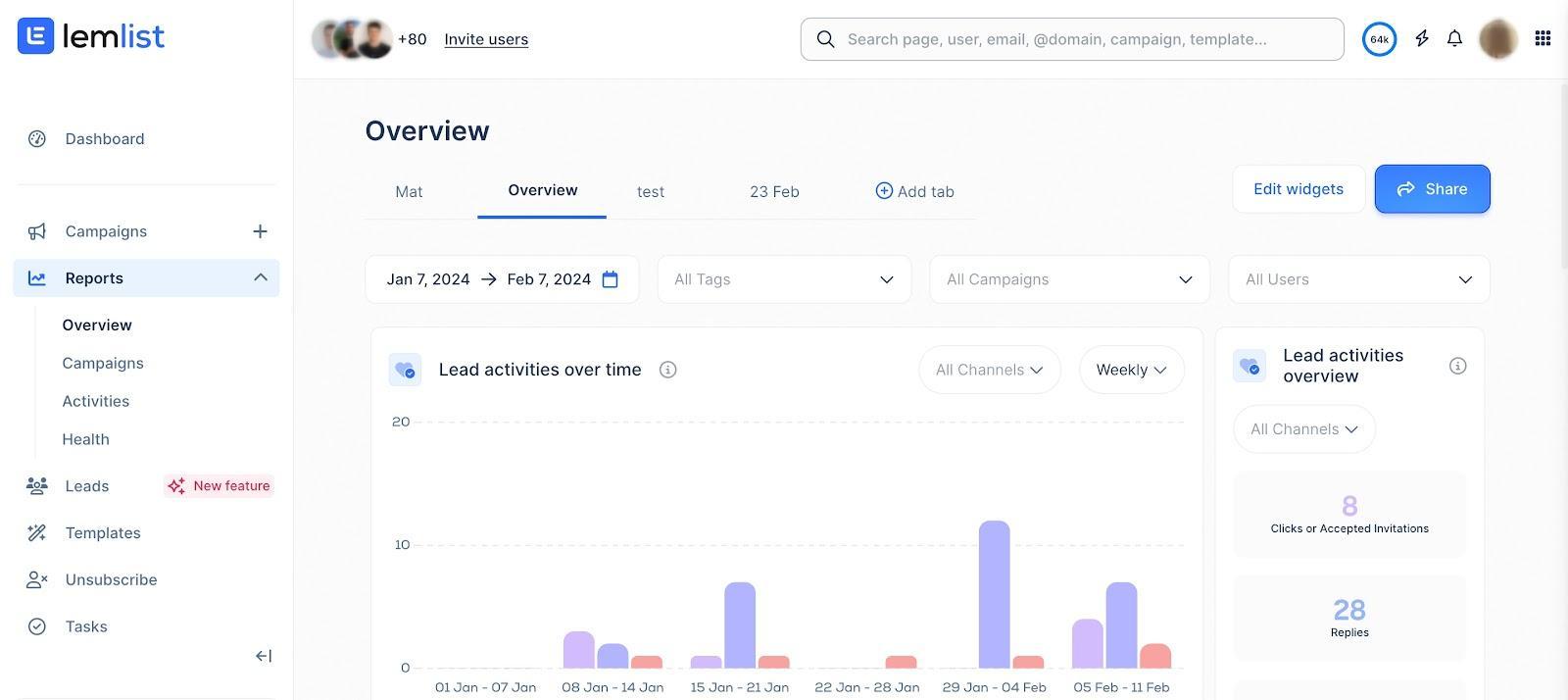
Lemlist is a cloud-based email outreach tool. However, when we tested it, we noticed that it has a Chrome extension for LinkedIn prospecting and outreach.
Pros
Lemlist is primarily an email outreach tool that sales teams can use to set up unlimited email campaigns. It also supports multichannel campaign creation, making it possible to incorporate LinkedIn actions and calls (through AirCall integration) into your outreach flow.
This tool allows for advanced personalization thanks to custom intro lines, images, and engaging landing pages.
Lemlist also has Lemwarm, a warm-up and deliverability booster designed to prevent your emails from ending up in spam.
What we found particularly interesting is their integration with the website tracking tool, Snitcher. This means you can identify company-level traffic on your website and, based on that, send relevant prospects to a Lemlist campaign.
They’ve also recently added an AI helper to their offerings, which helps users segment leads, create outreach sequences, write messages, and analyze replies.
Cons
We don't like how Lemlist uses a Chrome extension to scrape information from LinkedIn. Chrome extensions inject code into LinkedIn that this platform can easily detect and penalize you for. Therefore, it compromises the safety of your LinkedIn account.
Also, Lemlist can indeed find and verify leads’ email addresses. However, it’s worth noting that the highest plan includes only 1,000 credits. If your requirements exceed this limit, you’ll need to pay extra to have the tool find and verify additional emails. The same goes for using Lemwarm, as it’s not included in the pricing.
The last thing we didn’t like is that we needed to pay per email account (mailbox), compared to Skylead, which supports adding unlimited email accounts at no extra charge. With it, you just need to pay per LinkedIn account.
What others said about Lemlist
Darpan C. thinks Lemlist is a complete email outreach tool. He loves the interface, variables, and A/B testing capabilities. Nonetheless, he believes analytics could be more extensive.
Pricing
- Free Plan: $0 (available as Chrome extension / LinkedIn scraper)
- Email Pro: $69/mo per 3 mailboxes
- Multichannel Expert: $99/mo per 5 mailboxes (billed annually)
- Enterprise: Custom
If you require additional mailboxes, you can add them to your plan at $9 per mailbox.
You can also purchase additional email verification credits, where 1 credit costs $0.01. Keep in mind that you can’t purchase fewer than 5,000 credits, though.
Contrary to Mailivery- which Skylead users get access to for free - Lemlist’s email warm-up feature, Lemwarm, is also billed separately and starts at $29 per mailbox per month.
Rating
- Capterra: 4.6 (388)
Skylead vs. Lemlist
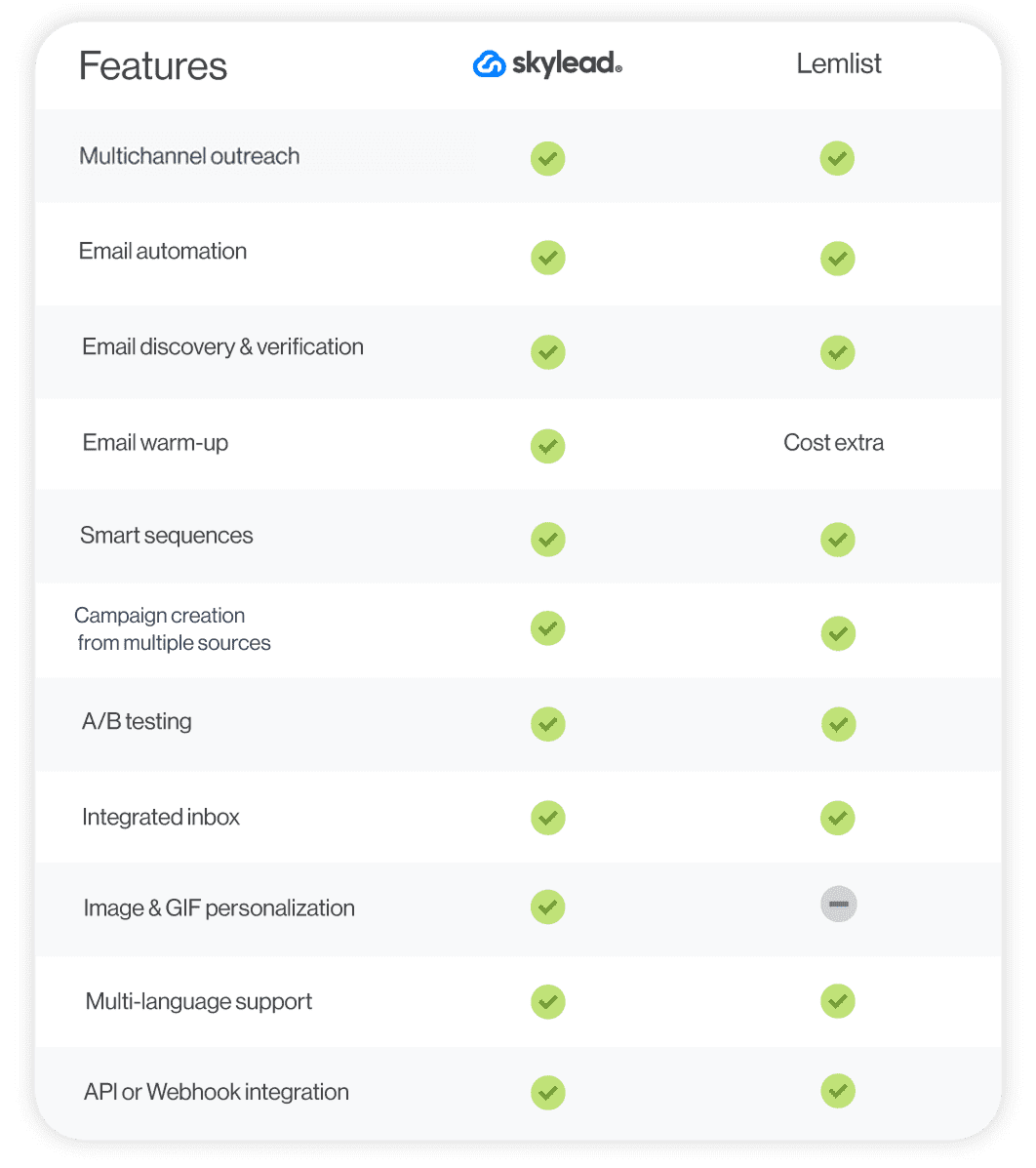
#5 Reply - Best sales software for semi-automated multichannel outreach
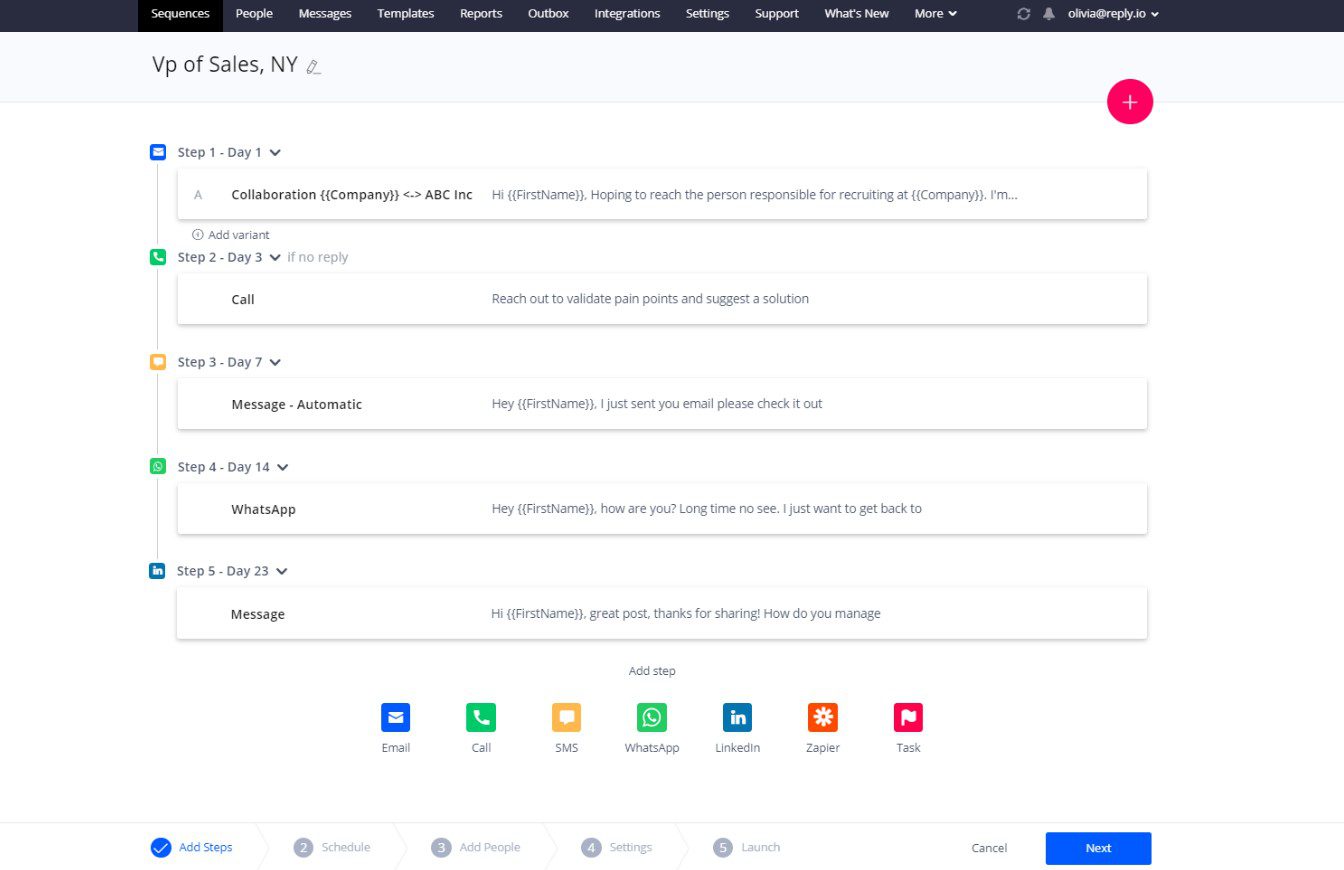
Reply is a multichannel, cloud-based outreach software. Nonetheless, it also has a Chrome extension for contact enrichment and outreach automation.
Pros
We’ve discovered that Reply can handle tasks across multiple channels, both automated and semi-automated.
When it comes to automated actions, it can:
- Send emails
- Like recent posts (LinkedIn)
Meanwhile, actions like:
- Profile views,
- Connection requests,
- LinkedIn messages,
- And inMails.
…can be both automated and semi-automated, depending on how you set them up.
Setting up a campaign with Reply is straightforward: you decide on the steps, then add your prospects. You can also add triggers to your sequence, similar to the conditions you’d find in Skylead. Plus, every mailbox you connect gets email warm-up included, which helps improve deliverability.
It's also worth mentioning that Reply supportsA/B testing for email copy and offers pre-made email and sequence templates, like Skylead. Alternatively, you can create sequences from scratch or have AI generate them for you.
Speaking of AI, their new SDR feature, Jason AI, can even identify your ideal leads, write your initial outreach messages, handle replies, and book meetings. Though this is part of the AI SDR plans only.
Finally, Reply also lets you track your campaign performance step-by-step, supports integrations via Zapier, and natively integrates with Pipedrive and HubSpot.
Cons
Reply’s smart inbox allows users to manage their emails efficiently. However, it doesn't support the management of messages received from other platforms as Skylead does.
At the beginning, we mentioned that Reply has a Chrome extension for discovering and enriching contacts. While this may seem like a pro, it's not particularly useful, especially when enriching contacts via LinkedIn. As already said, Chrome extensions inject code into LinkedIn, which the platform can detect, making them unsafe to use.
What others said about Reply
Terry L. loves Reply's multi-step campaign builder that can automate the email-sending process and semi-automate LinkedIn actions. Although the platform was buggy initially, he admits the team quickly resolved issues.
However, Terry wasn’t the only one to report issues with the platform. Multiple users had the same complaints. Some have even said that the support team isn’t equipped to handle them.
Pricing
- Email Blast: Starts from $59/mo per user / 1 mailbox
- Multichannel: Starts from $99/mo per user / 5 mailboxes
- AI SDR Starter: Starts from $300/mo
- AI SDR Growth: Starts from $1,500/mo
- Agency Starter: Starts from $166/mo
- Agency Advanced: Tailored
Reply also charges extra for its add-ons:
- LinkedIn automation: $69/month per account
- Calls & SMS: $29/month per account
- AI & Live Data: Starts at $39/month for 200 credits
- Email Validation: Starts at $20/month for 5,000 validations
Rating
- Capterra: 4.6 (96)
Skylead vs. Reply
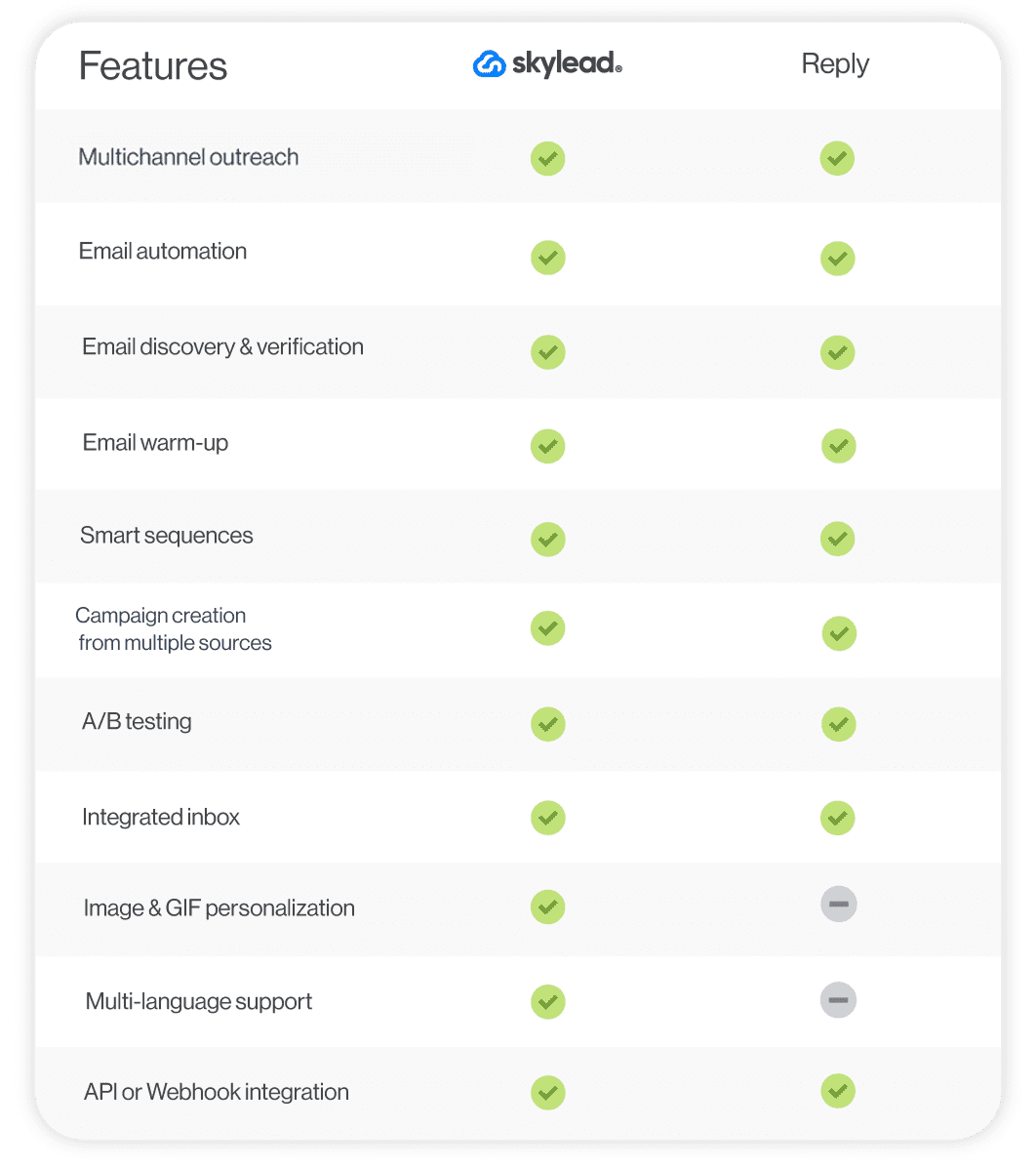
#6 Snov.io - Best for email enrichment
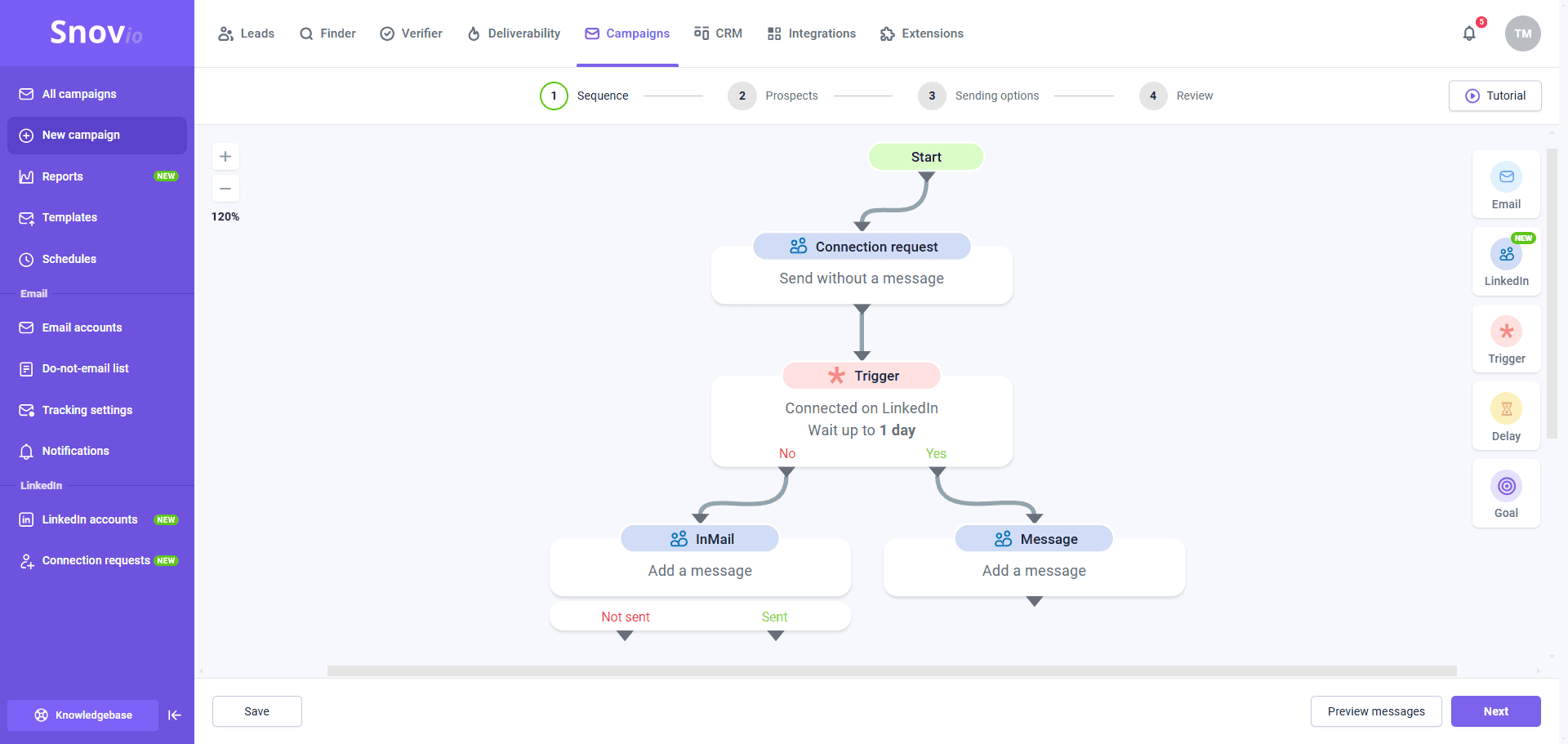
Snov.io is a cloud-based multichannel outreach tool, though it started as an email-only platform.
Nonetheless, it comes with a Chrome extension, a.k.a. LinkedIn prospect finder.
Pros
While testing Snov.io, we've concluded that its email verifier produces fairly accurate data.
Snov.io also eliminates the need for email warm-up tools. Namely, the tool has an email warm-up feature, like Lemlist and Reply.io, which automatically initiates realistic email conversations on your behalf. Furthermore, it marks emails as important, reads them, and moves them from spam to the inbox to enhance the sender’s reputation.
We also liked that it’s conditional, multichannel campaigns are easy to set up, and you can play around with different variables and email templates while doing so. Like Skylead, the software lets you connect as many email accounts as you want and supports mailbox rotation.
Snov.io recently added LinkedIn account rotation, as well, making it possible to distribute actions across multiple LinkedIn accounts (up to 5).
It even has a built-in CRM, which saves you money by eliminating the need to pay for additional software.
Cons
Since the tool uses a Chrome extension to find prospects on LinkedIn, it isn't the safest to use.
What’s more, if you're looking to discover a large number of emails or contact many leads, this tool might not be the best fit. Their top-tier subscription offers 100,000 email finder credits and lets you reach out to 100,000 recipients. However, we found it overly expensive — especially when compared to Skylead, which allows for unlimited email discovery and sending at a cost 7x lower.
What others said about Snov.io
Yevhen B. praises Snov.io’s drip campaigns and the ability to track open, click, and reply rates. Nonetheless, he says that the interface can overwhelm new users and that the email enrichment process can be slow.
Pricing
- Trial: $0
- Starter: $39/mo per seat
- Pro: $99 / $189 / $369 / $738/mo per seat, depending on the number of credits (1 credit = 1 prospect found, 1 email found, or 1 email verified).
- Managed Service: Starting at $3,999/mo
Rating
- Capterra: 4.5 (215)
Skylead vs. Snov.io

#7 Closely - Best sales outreach tool for campaign tracking
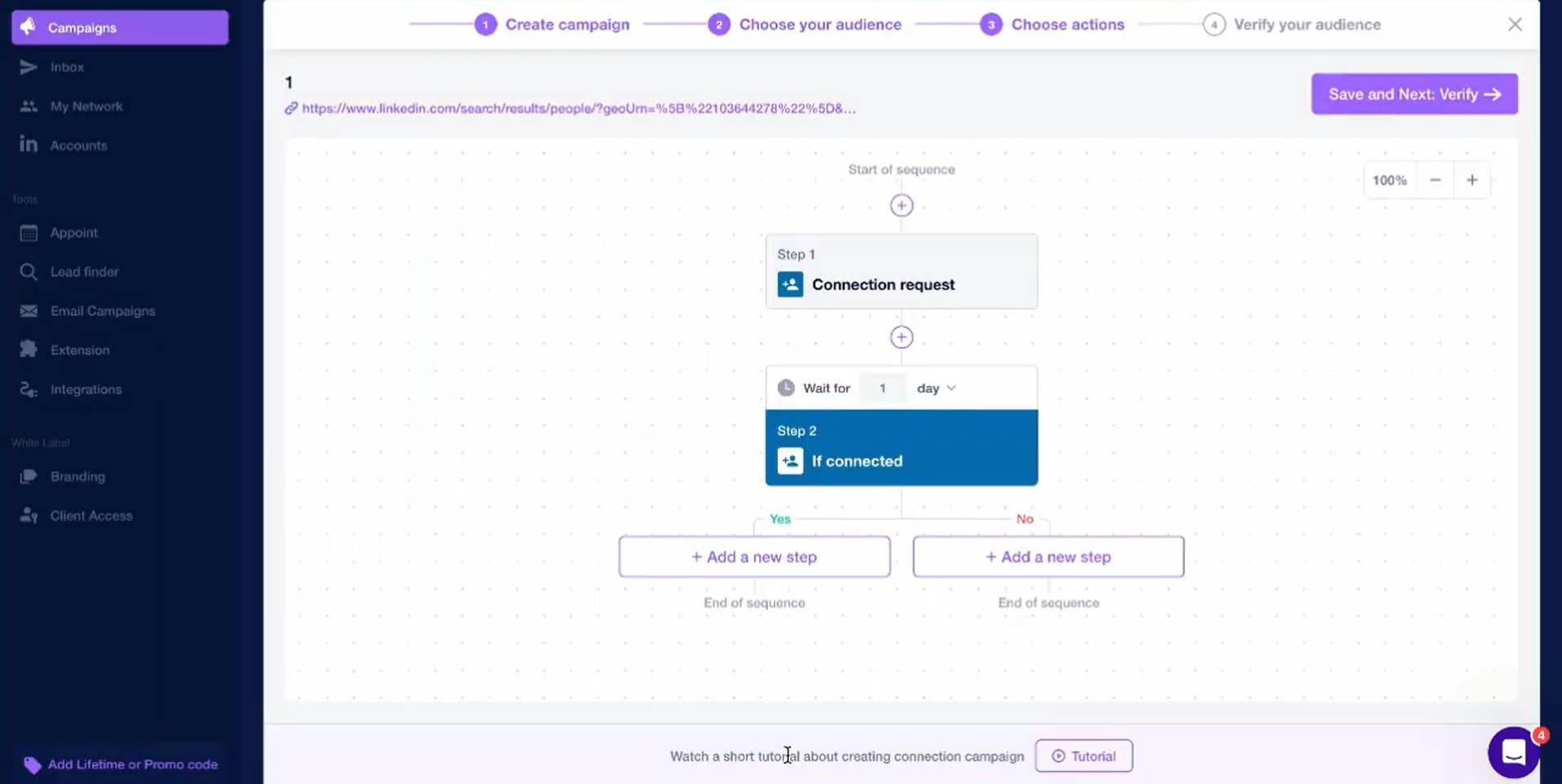
Closely is another cloud-based multichannel sales outreach tool with a Chrome extension for finding emails on LinkedIn and data scraping.
Pros
We liked its intuitive dashboard. From there, it’s easy to navigate to the multichannel campaign builder, where you can combine different LinkedIn actions and emails into a Smart sequence.
The tool also comes with an AI agent that acts like a virtual SDR. It can qualify your leads, perform company research, and personalize your message automatically.
Moreover, Closely makes campaign tracking effortless thanks to its streamlined stats page. It also makes it possible to export stats to a CSV file. In the meantime, if you wish to send the data to another software, you can do it via webhooks.
Cons
As opposed to Skylead, the lead source for email outreach campaigns can only be a CSV file with leads’ information. Speaking of CSV files, while the tool enables you to export statistics in this format, it does not support PDF exports like Skylead does.
Yes, the software can automate profile views, post likes, endorsements, connection requests, and messages on LinkedIn. Still, the crucial outreach component is missing: inMails.
We also noticed you can have no more than 25 campaigns running simultaneously.
Lastly, since a Chrome extension is involved, the safety of your LinkedIn account can be compromised when using the tool.
What others said about Closely
Muhammad Abdullah A. believes Closely is easy to set up, like us. The only problem is he can’t use it to contact his 1st LinkedIn connections.
Pricing
- Starter: $189/mo for 1 sender*
- Growth: $389/mo for 3 senders + 15,000 credits**
- Essential: $769/mo for 10 senders + 50,000 credits
- Enterprise: Custom
*1 sender = 1 LinkedIn + 1 email account
**Credits can be used for finding emails, LinkedIn enrichment, or AI-powered tasks.
Rating
- Capterra: 4.4 (155)
Skylead vs. Closely
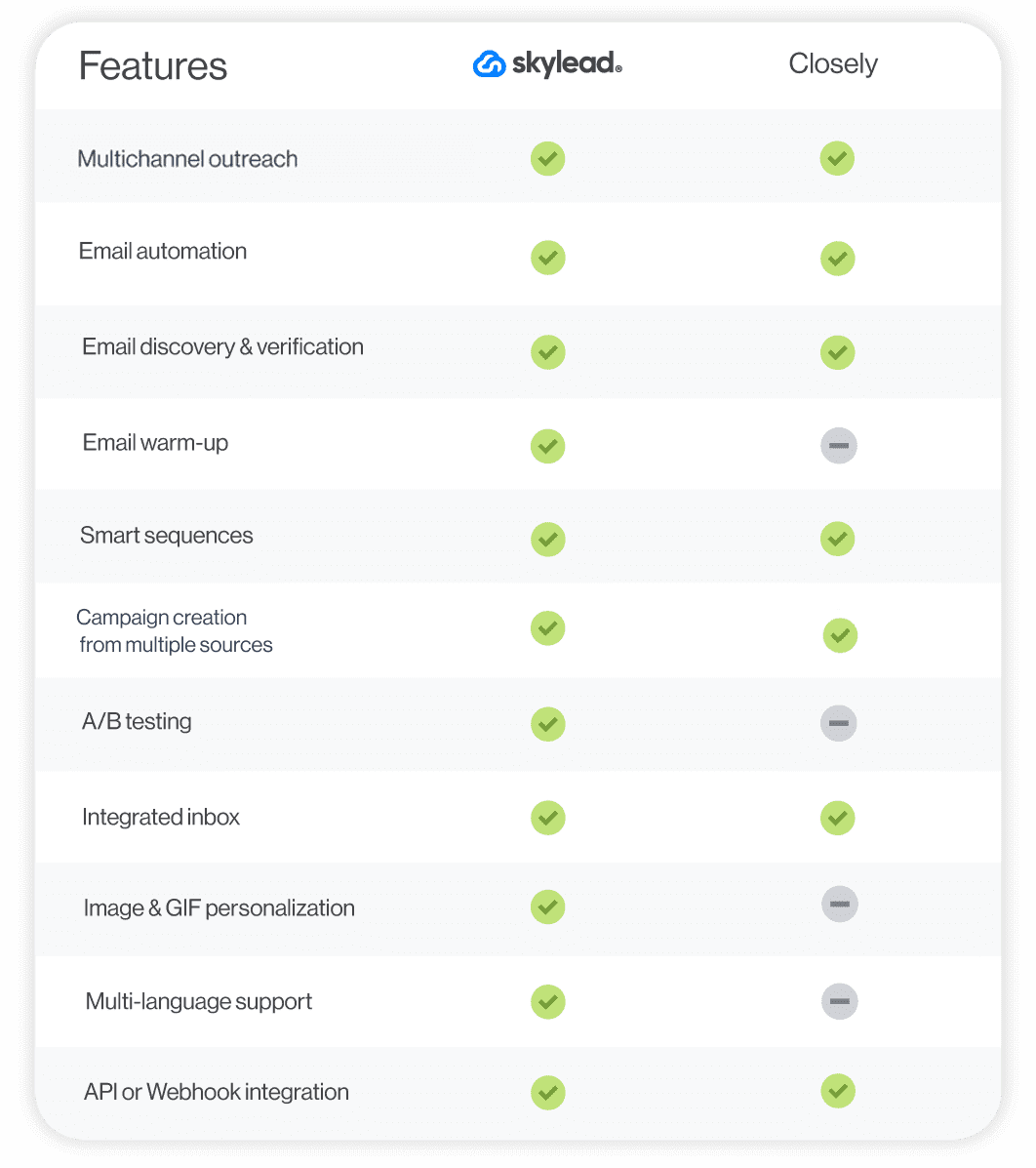
#8 Waalaxy - Best tool for beginners to multichannel outreach
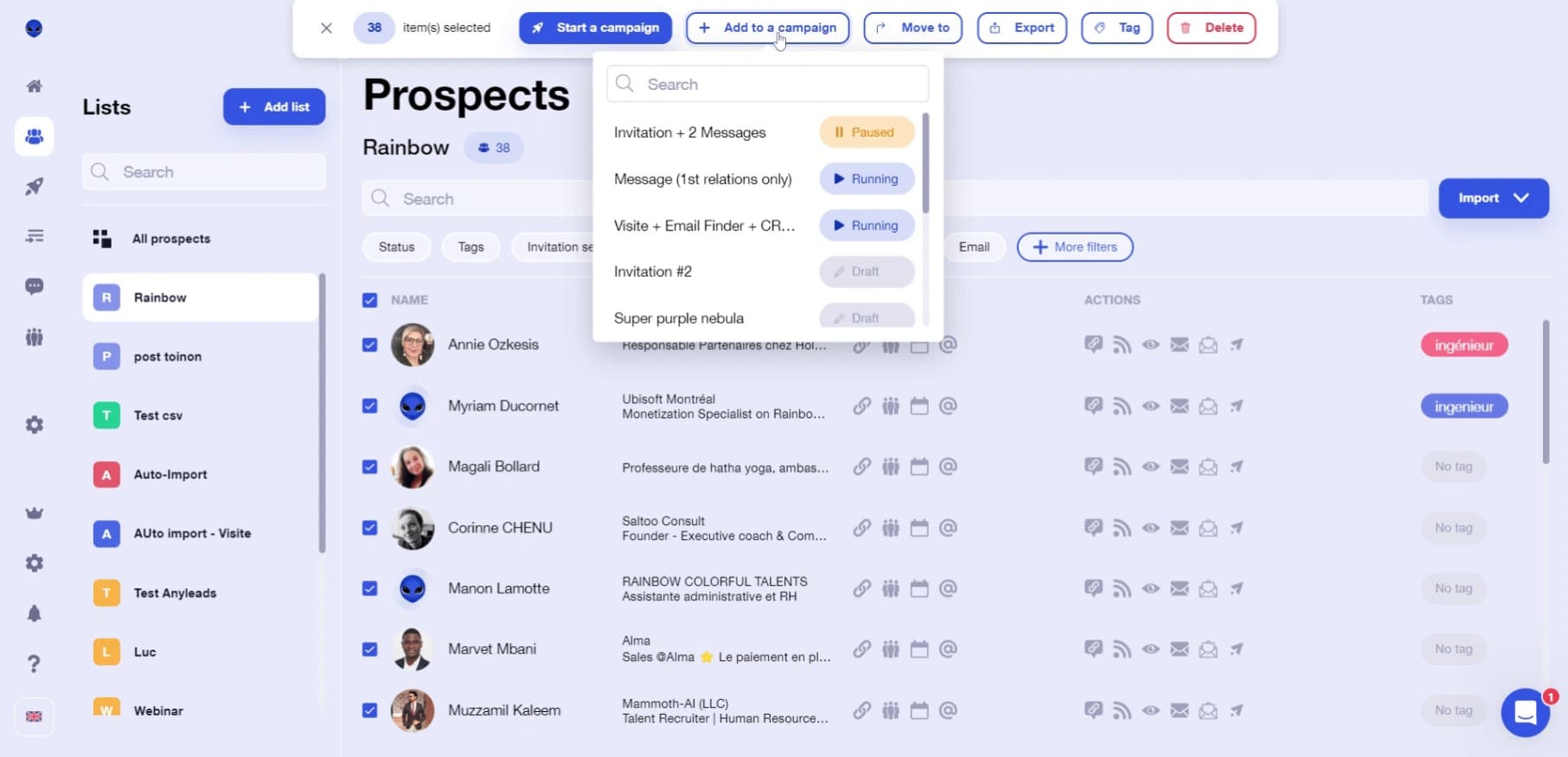
Waalaxy is a cloud-based software with a LinkedIn Chrome extension, aimed at automating sales teams’ LinkedIn and email outreach.
Pros
Waalaxy is great for beginners to outreach who don’t have much technical knowledge. With it, you can create a multichannel campaign from a:
- LinkedIn search URL
- Sales Navigator search URL
- Recruiter search URL
- LinkedIn post URL
- Sales Navigator lead list
- CSV file
The tool also supports A/B testing and message personalization, courtesy of variables. Plus, it has customizable pre-filled message templates and an AI writing assistant, Waami.
Additionally, we found pushing leads from Waalaxy to a CRM using Zapier webhooks straightforward.
Cons
Unlike Skylead, which offers customizable sequence templates and the opportunity to create a sequence from scratch, Waalaxy limits users to pre-built options.
Waalaxy charges extra for the inbox, too, which makes it less cost-effective.
Finally, the tool connects via a Chrome extension to your LinkedIn account. Naturally, we don’t recommend using it if you want to keep your LinkedIn account restriction-free.
What others said about Waalaxy
Shekh Riazul I. swears Waalaxy's UI is extremely easy to use and navigate. Nonetheless, the software sometimes has a hard time detecting the account. He also frequently has to wait for the Dashboard to load.
Pricing
- Pro: $43/mo per seat
- Advanced: $88/mo per seat
- Business: $131/mo per seat
- Elite: $538/mo per seat
- Enterprise: Custom
Waalaxy also charges $34/month for access to the LinkedIn inbox.
Rating
- Capterra: 4.4 (252)
Skylead vs. Waalaxy
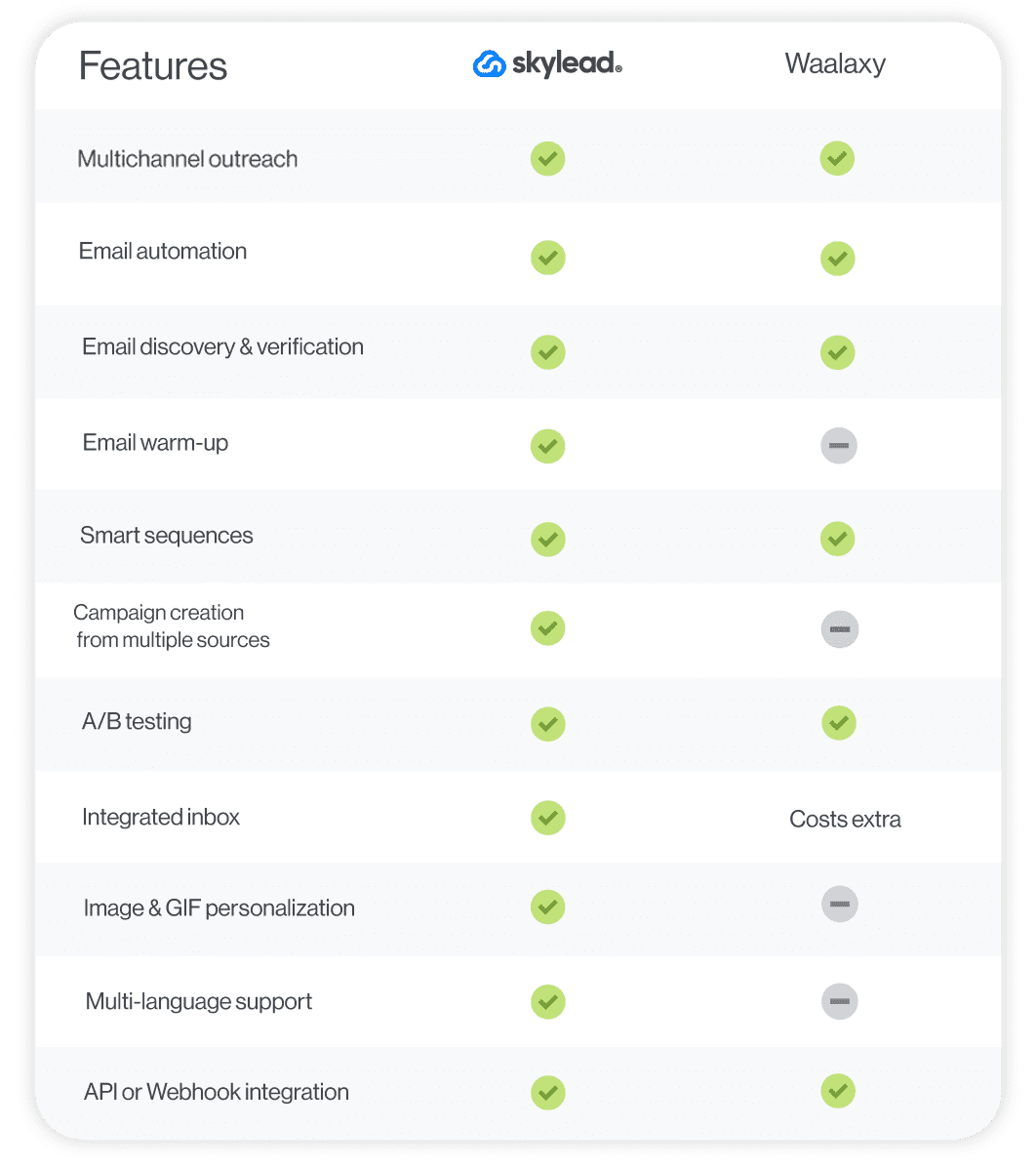
#9 Instantly - Best for straightforward email outreach
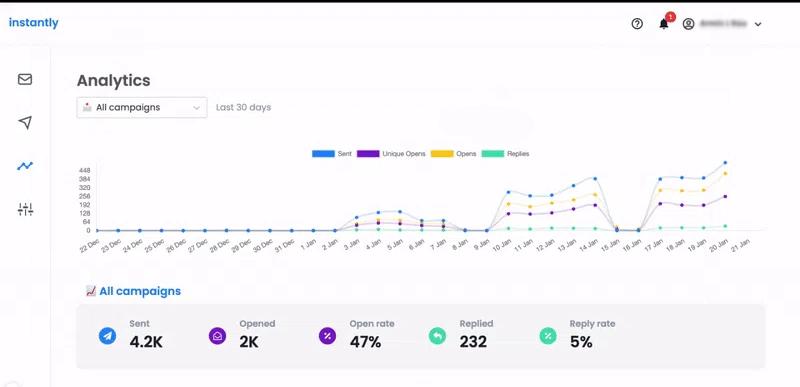
Instantly is a cloud-based software for email outreach at scale.
But it actually offers more than that. Namely, it comes with a built-in B2B lead database of over 160 million contacts and a lightweight CRM that includes a Unibox, where you can manage conversations across all your connected inboxes.
Pros
Instantly allows you to connect unlimited email accounts and supports inbox rotation, like Skylead, which helps safeguard and protect your domain.
Moreover, it features an unlimited email warm-up function to guarantee email deliverability. The tool also enables you to personalize your emails with variables and schedule them as needed.
We couldn’t help but notice how straightforward Instantly.ai is. And if you aren’t interested in leveraging LinkedIn outreach, this might just be one of the best tools.
Cons
Instantly isn't designed for multichannel outreach.
Why, yes, the tool can verify email addresses. However, verification credits aren’t part of the subscription plan. As such, they incur an additional cost.
What others said about Instantly
James O. states that Instantly helped him increase his outreach at a low price compared to other sales tools. However, he thinks the software is a bit limited in terms of salesflow customization, and we agree.
Pricing
Instantly has 3 different pricing categories depending on the solutions offered. This means that, if you want to access their full suite, you’ll need to subscribe to each category separately.
Sending & Warmup plans (for email warm-up and outreach):
- Growth: $37/mo per seat
- Hypergrowth: $97/mo per seat
- Light Speed: $358/mo per seat
Leads plans (grant access to the B2B lead database):
- Growth Leads: $47/mo per seat
- Supersonic Leads: $97/mo per seat
- Hyperleads: $197/mo per seat
- Light Speed: $492/mo per seat
CRM plans:
- Growth CRM: $47/mo per seat
- Hyper CRM: $97/mo per seat
Rating
- G2: 4.8 (3,668)
Skylead vs. Instantly
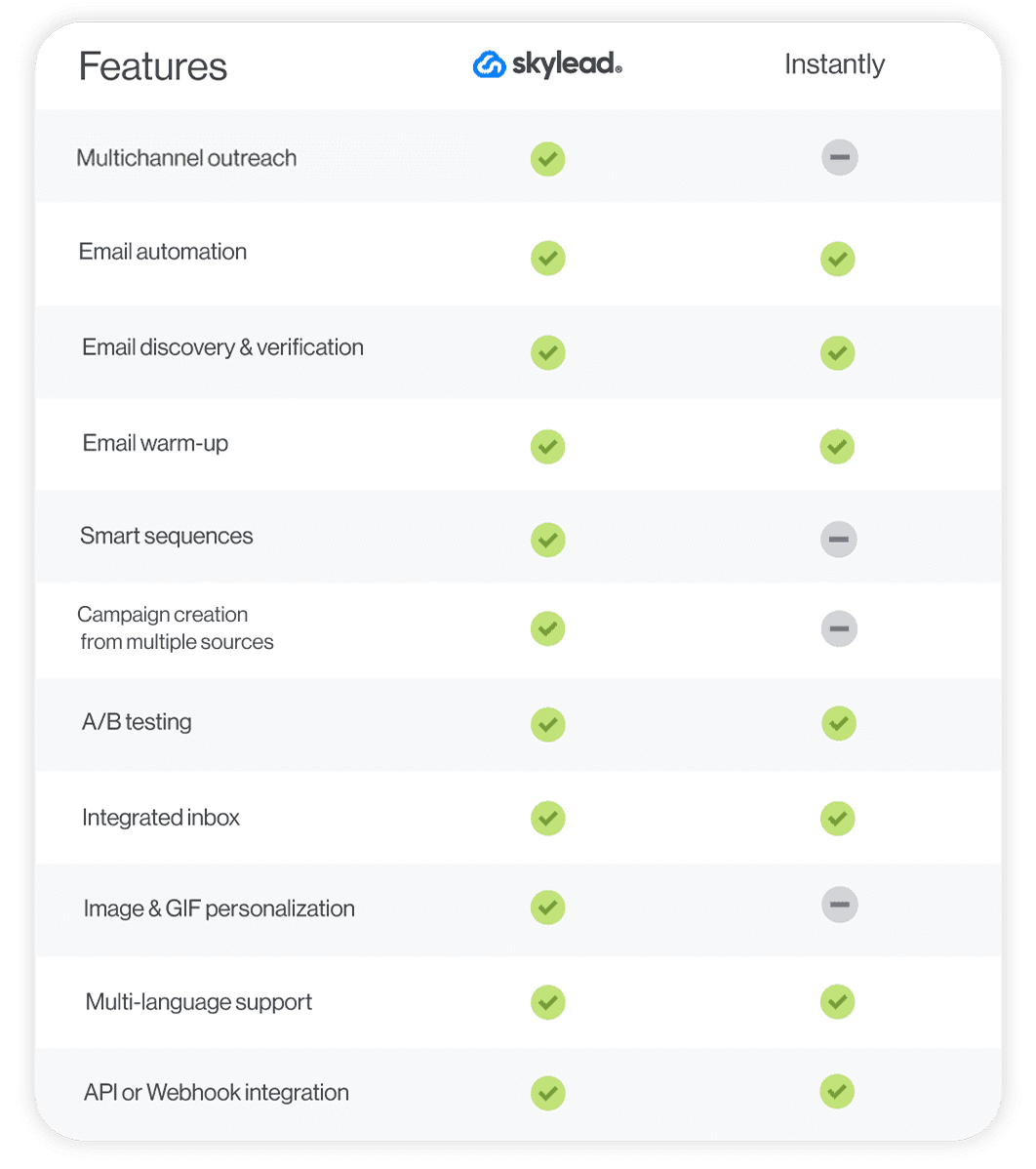
#10 HubSpot Sales Hub - Best for building personalized email sequences
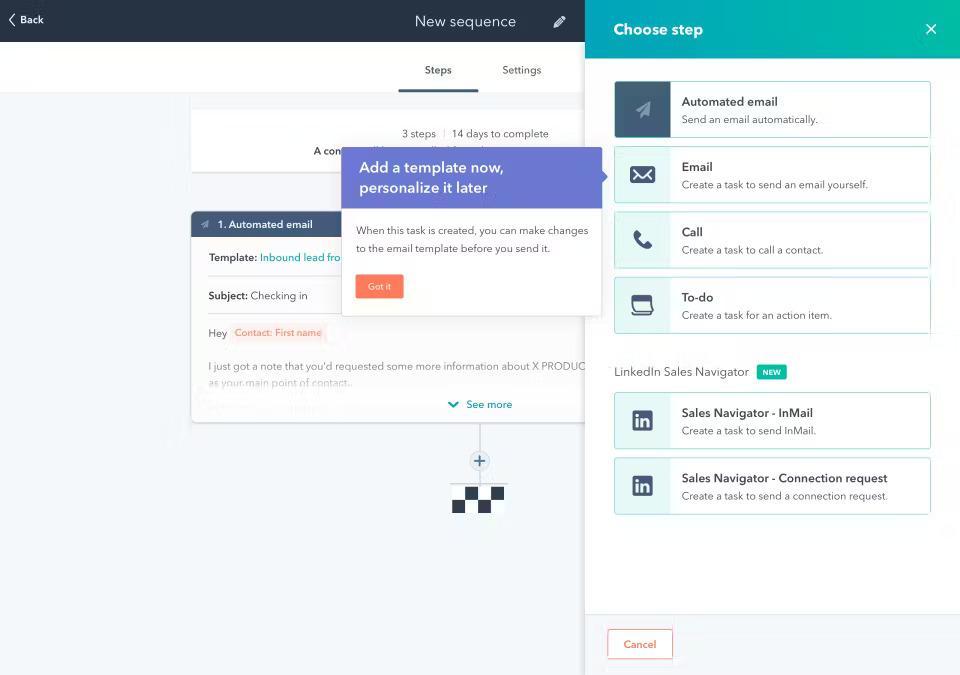
HubSpot Sales Hub is HubSpot’s powerful, cloud-based outreach solution for sales teams.
Pros
The tool is great for building personalized email sequences. With it, you can automate emails and follow-ups. However, you can also set reminders to send emails or inMails manually, make calls, or send invites to connect on LinkedIn.
In addition, the software lets you run multiple A/B tests on your email sequences.
Cons
Building multichannel campaigns with HubSpot Sales Hub isn’t possible at this time.
At the same time, this isn’t a complete sales outreach software. You could use it if you’re a complete novice to outreach. But why not subscribe to Skylead and integrate it with HubSpot instead?
Hungry for multichannel sales tactics, Smart sequence blueprints, and tried-and-tested outreach templates you can use alongside Skylead and HubSpot? Grab the free Sales Playbook packed with the exact recipes we used to grow our user base from 2,500 to 10,000+ in just 9 months!

What others said about HubSpot Sales Hub
Fernando P. finds HubSpot's interface and customer support great. He loves having all leads and customer journeys under one system. Still, he notes the tool could be improved with AI so as to provide more valuable insights.
Pricing
HubSpot Sales Hub divides its plans into 2 categories based on company size:
For individuals & small teams
- Sales Hub Starter: Starts at €15/mo per seat
- Starter Customer Platform: Starts at €15/mo per seat
- Sales Hub Professional: Starts at €90/mo per seat
For businesses & enterprises
- Sales Hub Professional: Starts at €90/mo per seat
- Sales Hub Enterprise: Starts at €150/mo per seat
Rating
- Capterra: 4.5 (481)
Skylead vs. HubSpot Sales Hub
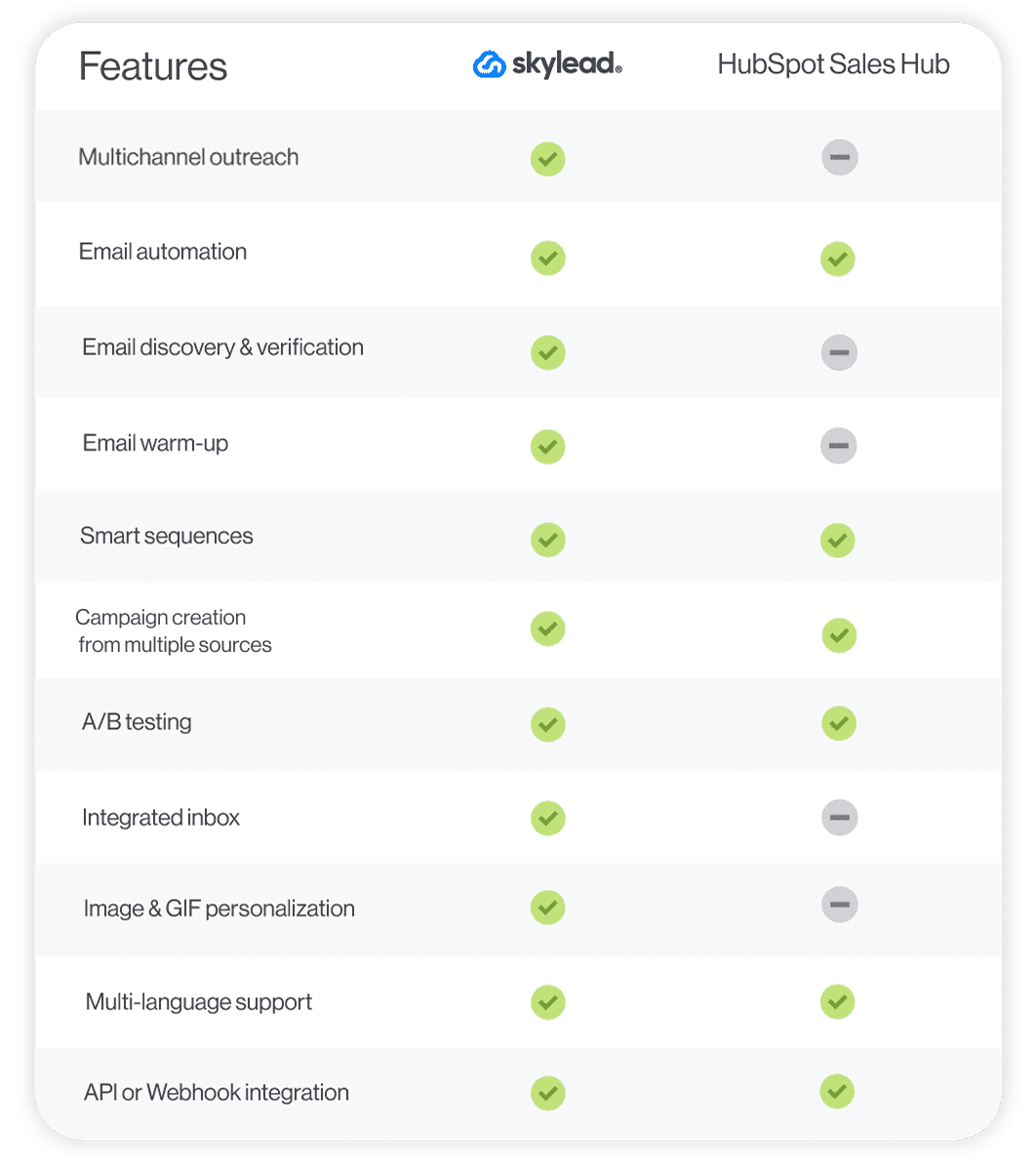
#11 Dripify - Best sales outreach tool for its ability to integrate with various software
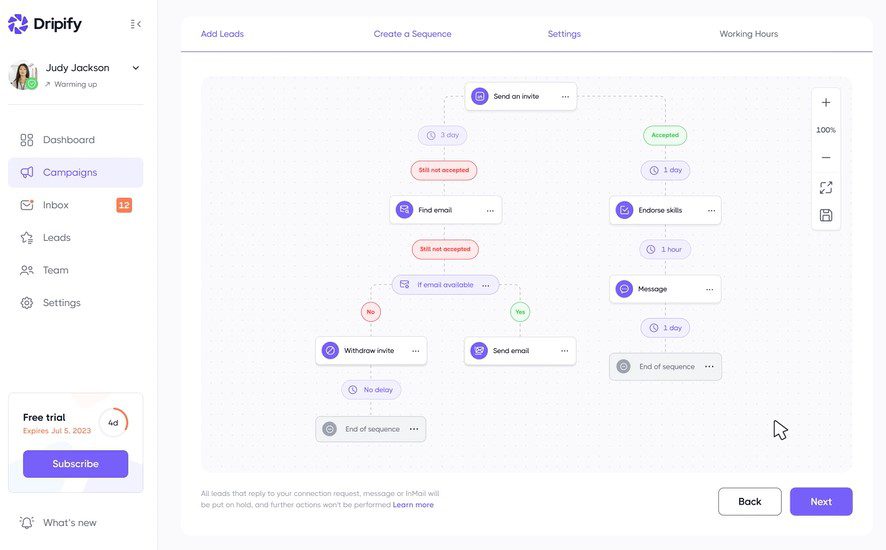
Originally a cloud-based LinkedIn automation tool, Dripify has since evolved into a full-blown multichannel sales outreach platform by adding the email channel into the mix.
Pros
Dripify is a great tool for anyone interested in social selling on LinkedIn.
The software can connect to LinkedIn Premium, Sales Navigator, and Recruiter Lite accounts. It can extract leads from LinkedIn search URLs, LinkedIn events, LinkedIn groups, CSV files, or your network.
It now also supports email outreach, making it a more well-rounded solution. What’s more, you can find and verify email addresses directly inside the platform without the need for external tools.
Its notable feature is drip campaigns, which rely on a sequence of different actions, conditions, and delays. It’s also praised for its ability to integrate with numerous software thanks to webhooks.
Cons
While Dripify now supports multichannel outreach, in contrast to Skylead, it’s still missing some important features. For one, it doesn’t offer A/B testing, which limits your ability to experiment with different subject lines and message/email copy.
Furthermore, you can’t bring your A-game to personalization with it since no image personalization feature is available.
At the same time, the tool doesn’t support campaign creation from LinkedIn posts or Sales Navigator lead lists, as some Dripify alternatives do. And while you can automate it to send free inMails, the same doesn’t apply to paid ones.
Finally, Dripify’s team doesn’t provide one-on-one onboarding, so you’re left to figure out the tool’s functionalities on your own.
What others said about Dripify
Don F. believes Dripify is a solid communication platform for keeping in touch with LinkedIn connections.
Pricing
- Basic: $59/mo per user
- Pro: $79/mo per user
- Advanced: $99/mo per user
- Enterprise: Custom
Rating
- Capterra: 4.7 (475)
Skylead vs. Dripify
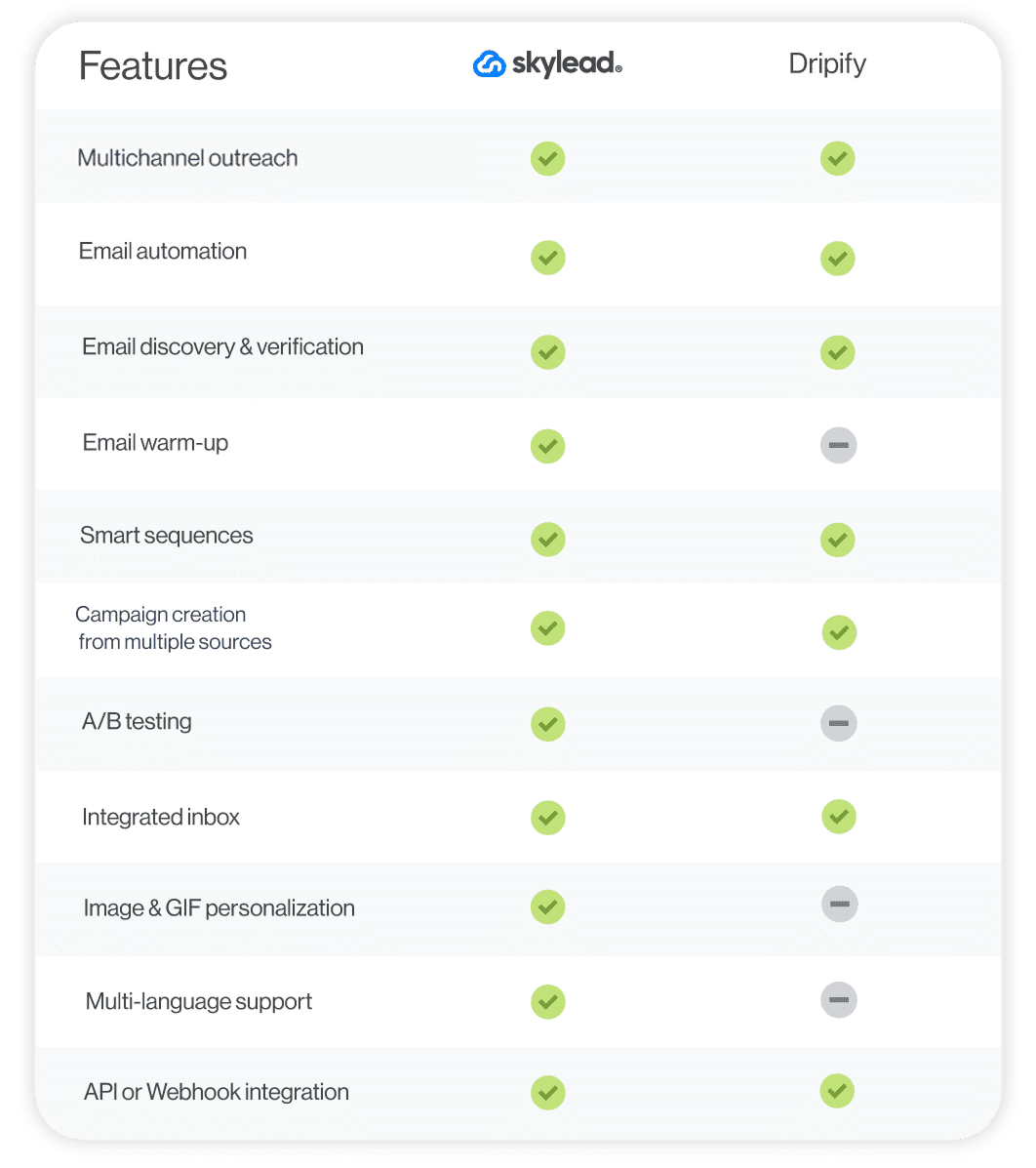
#12 SalesLoft - Best sales outreach solution for building and managing pipelines
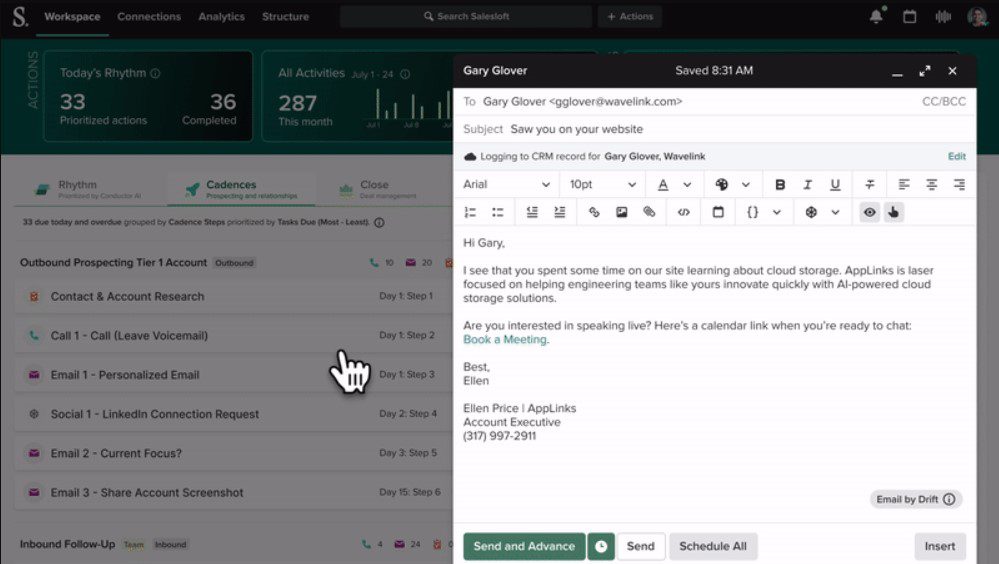
SalesLoft isn’t your typical sales outreach tool. It’s a cloud-based platform used for sales engagement.
Pros
The platform combines multiple tools that help salespeople increase and manage pipelines. As such, it goes beyond outreach. Nevertheless, SalesLoft's cadences (campaigns, if you will) that combine email, phone, and Sales Navigator steps make it one of the best sales outreach tools.
We have found the tool’s email tracking, analytics, and A/B testing a boon! We were also happy to find out that the software comes with nifty email templates that can be customized for added personalization. There’s also an option to save new ones!
Cons
The tool only integrates with Sales Navigator, no LinkedIn Premium and/or Recruiter accounts.
Furthermore, unlike Skylead, Salesloft lacks Smart sequences. Consequently, its users are unable to maximize touchpoints with leads, resulting in less personalized outreach flows and lost opportunities for lead generation.
What others said about SalesLoft
James W. is absolutely sold on the customer support that the SalesLoft team provides. However, he admits the platform can become slow.
Many people have also mentioned that the SalesLoft dialer isn’t up to par. Additionally, they've pointed out that the tool is quite expensive.
Pricing
- Advanced: Available upon contact
- Premier: Available upon contact
SalesLoft doesn’t publicly disclose its pricing because it’s tailored to each company based on its size and requirements. We’ll respect their decision and won’t say how much we’ve paid during our short time with them. However, the word on the street is that people are paying anywhere from $120 to $165 per account.
Rating
- Capterra: 4.3 (221)
Skylead vs. SalesLoft
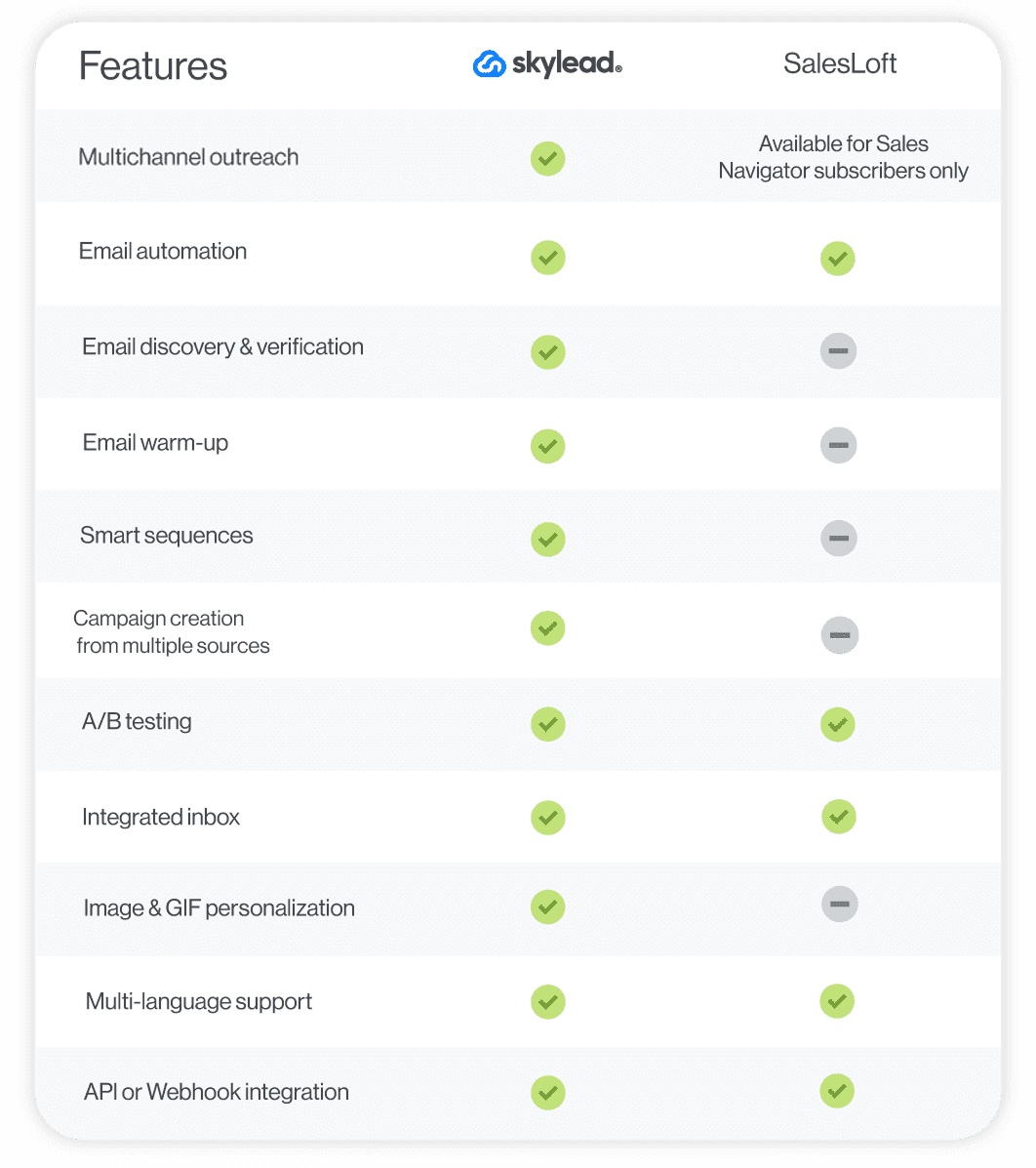
#13 Yesware - Best sales software for Gmail & Outlook outreach
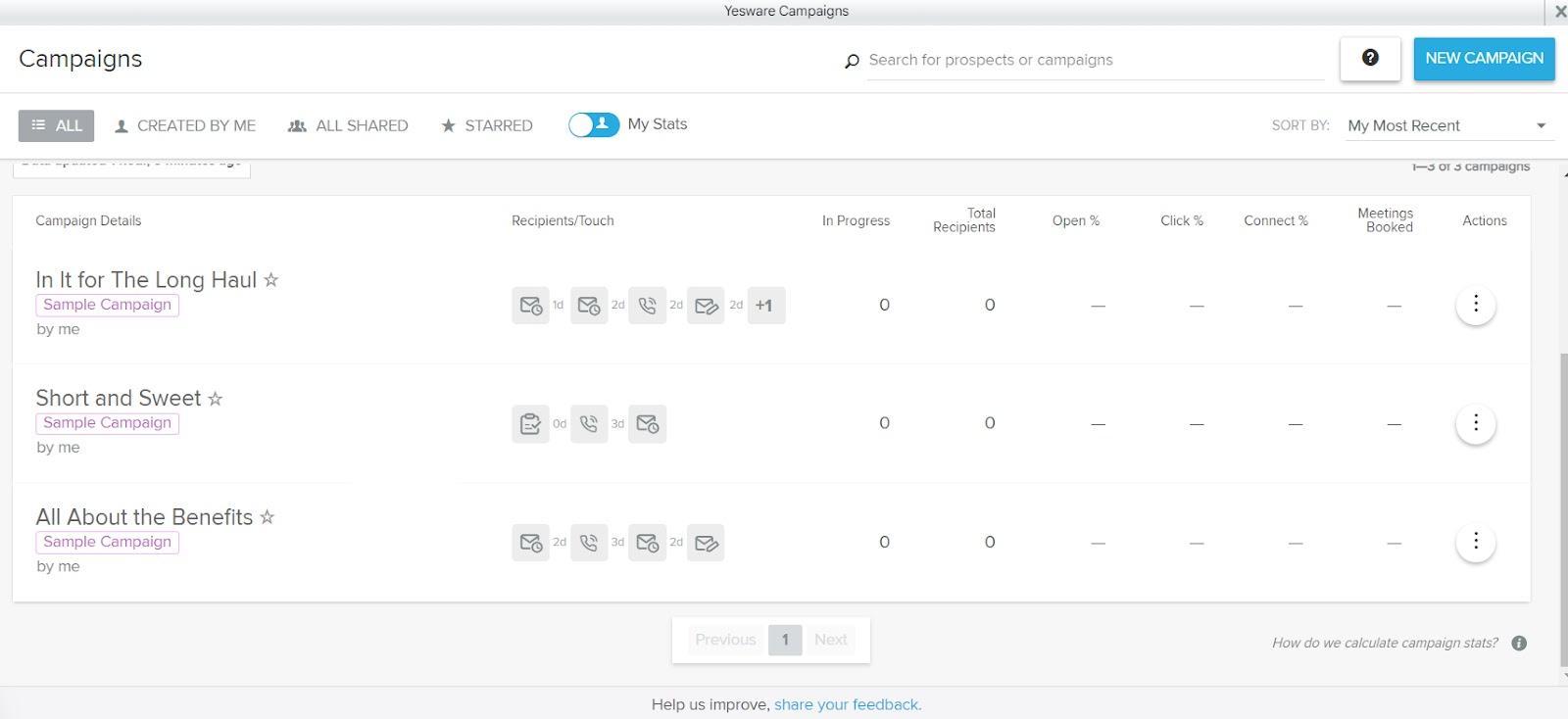
Yesware is a sales outreach platform that integrates directly with Gmail & Outlook through a Chrome extension.
Pros
Yesware, like Skylead, allows for:
- Multichannel campaign creation (you can connect your Sales Navigator account to the tool),
- Automated follow-ups in case of no reply,
- Email & attachment tracking (open rate),
- Advanced email performance analysis.
Additionally, it supports:
- Scheduling meetings and calls,
- Setting follow-up reminders.
The platform also has email templates available to personalize as you see fit. We also like how it lets you save your own templates.
Cons
Based on our personal experience with the tool, we can tell you that Yesware doesn't track email deliverability rates.
In addition, its primary focus is email outreach, while LinkedIn outreach takes a backseat. This is clear because the tool only works with Sales Navigator accounts. LinkedIn Basic, Premium, and Recruiter users can’t do much with it—other than automate their cold emailing.
Also, when setting up a multichannel campaign with Yesware, you are limited to 2 Sales Navigator actions: sending a connection request and an InMail. The tool doesn’t perform these actions automatically, either! Instead, it simply alerts you when it's time to complete them manually.
What others said about Yesware
Kim R. believes Yeware is decent, easy-to-use software. She is happy with the customer support provided and likes its real-time reporting and analytics features. Yet, she thinks it’s expensive and not so easy to integrate with other programs. Also, she found some features too complex.
Pricing
- Free
- Pro: $19/mo per seat
- Premium: $45/mo per seat
- Enterprise: $85/mo per seat
- Custom Plan: Contact sales
Rating
- Capterra: 4.3 (175)
Skylead vs. Yesware
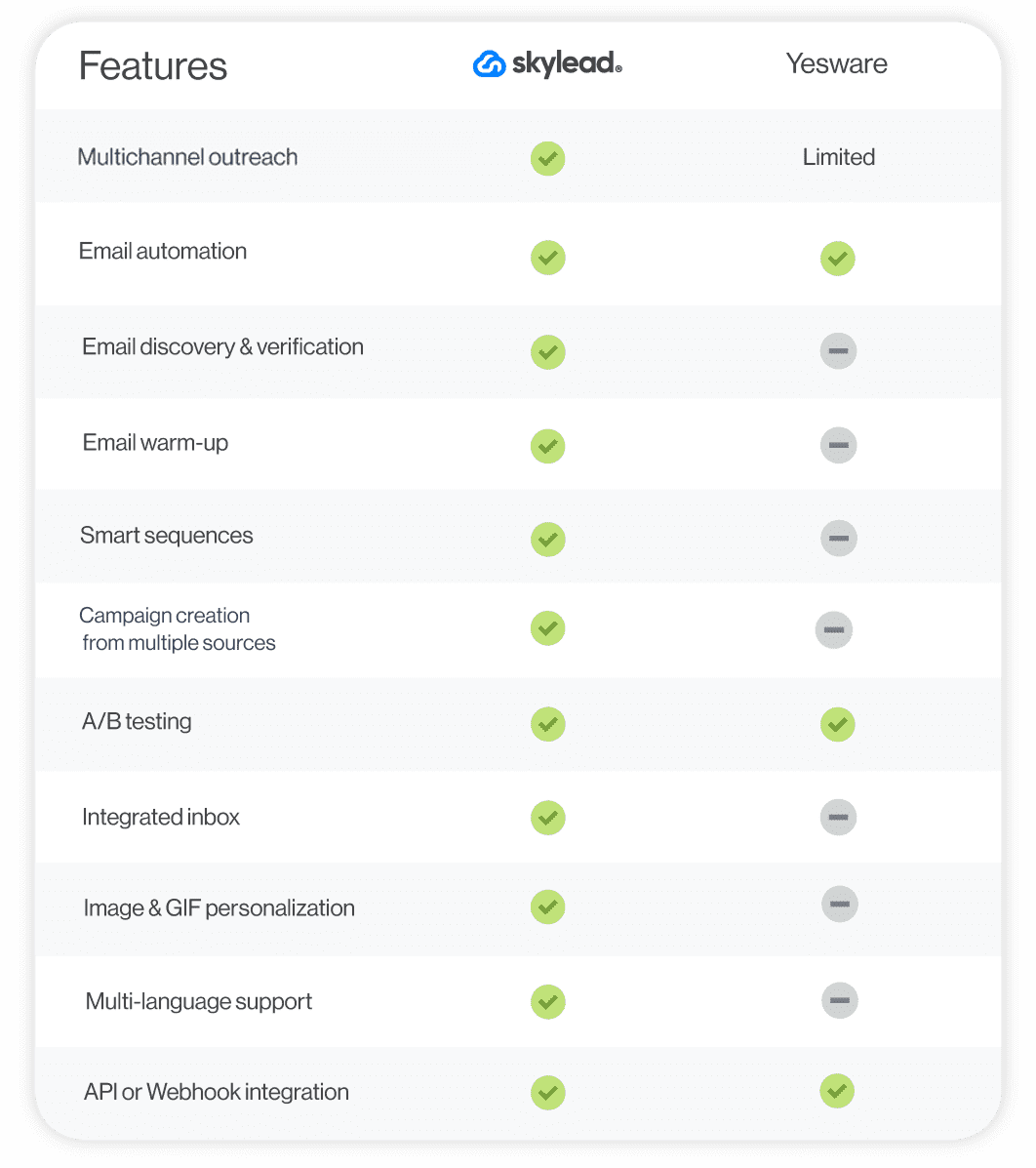
#14 Hunter - Best sales outreach tool for finding and verifying professional emails
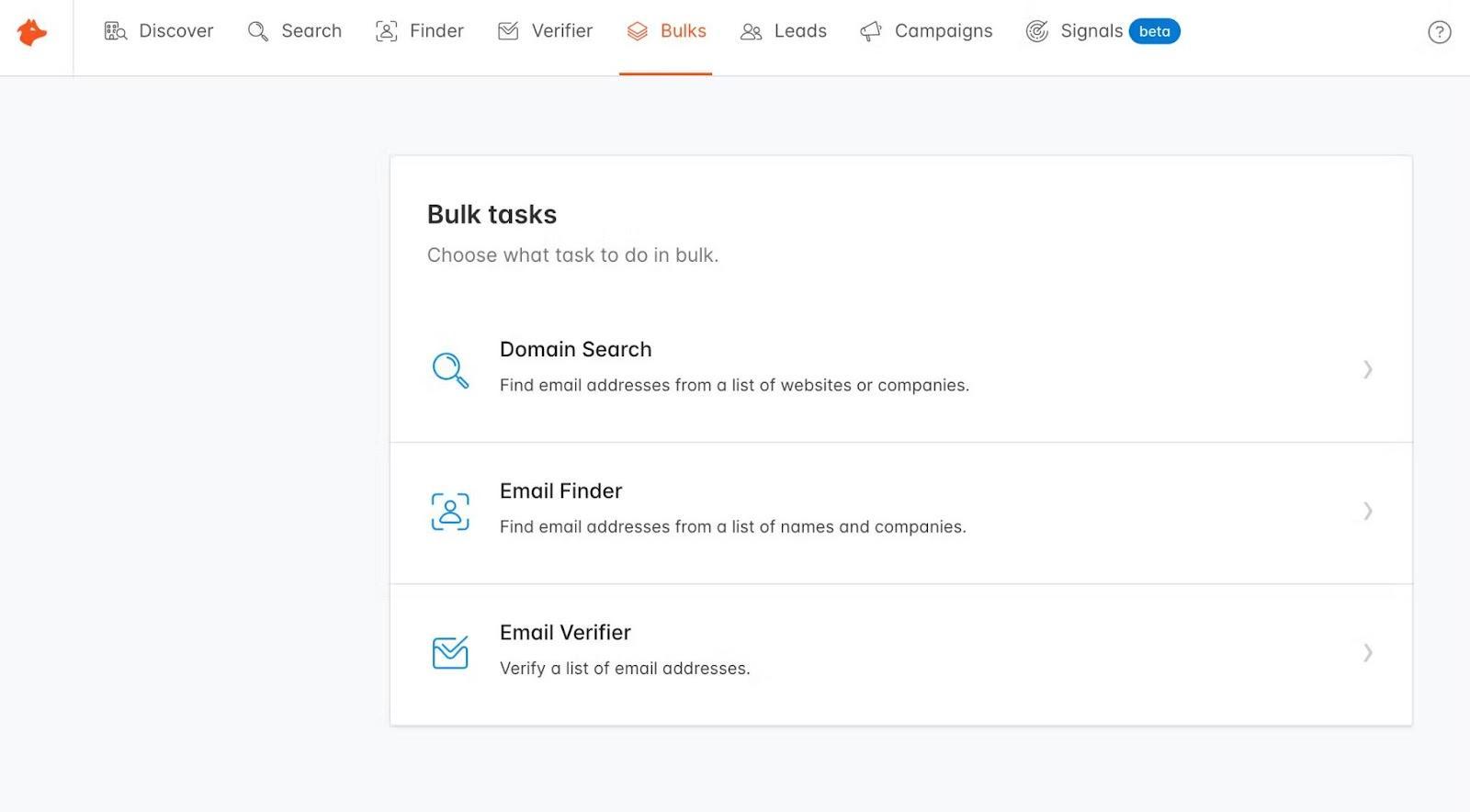
Hunter is a well-known cloud-based prospecting, data enrichment, and email lead generation software.
Pros
Hunter is the outreach tool for you if you're a sales professional looking to find verified prospect data — in seconds! In doing so, it boosts email deliverability and protects the sender’s reputation.
With Hunter, we found out that setting up an email outreach campaign is straightforward. Meanwhile, readily available variables help you craft emails that feel highly personal and induce replies.
Finally, Hunter seamlessly fits into your workflow through native integrations with different tools and Google Sheets. Alternatively, you can send over data to a software of your choice using Zapier webhooks or API.
Cons
Hunter is strictly an email outreach tool, which means it lacks features for social selling.
Although the tool can find and verify your leads' emails, these features are not integrated into the outreach flow as they are in Skylead. In other words, the tool needs to discover and verify emails first. Only once it returns results can you start an email outreach campaign.
Lastly, the tool can’t extract emails from social media profiles.
What others said about Hunter
Pedro A. believes that Hunter is one of the best sales outreach tools for email scraping. He's noticed a high accuracy in finding and verifying European email addresses. He thinks it'd be great if Hunter made it possible to enrich a person based on their LinkedIn URL, though.
Pricing
- Free: €0
- Starter: €49/mo / 3 email accounts
- Growth: €149/mo / 10 email accounts
- Scale: €299/mo / 20 email accounts
- Enterprise: Contact sales
Each plan comes with a limited number of email verification credits. You can purchase additional credits, but keep in mind that the cost will depend on your subscription plan.
Rating
- Capterra: 4.6 (687)
Skylead vs. Hunter
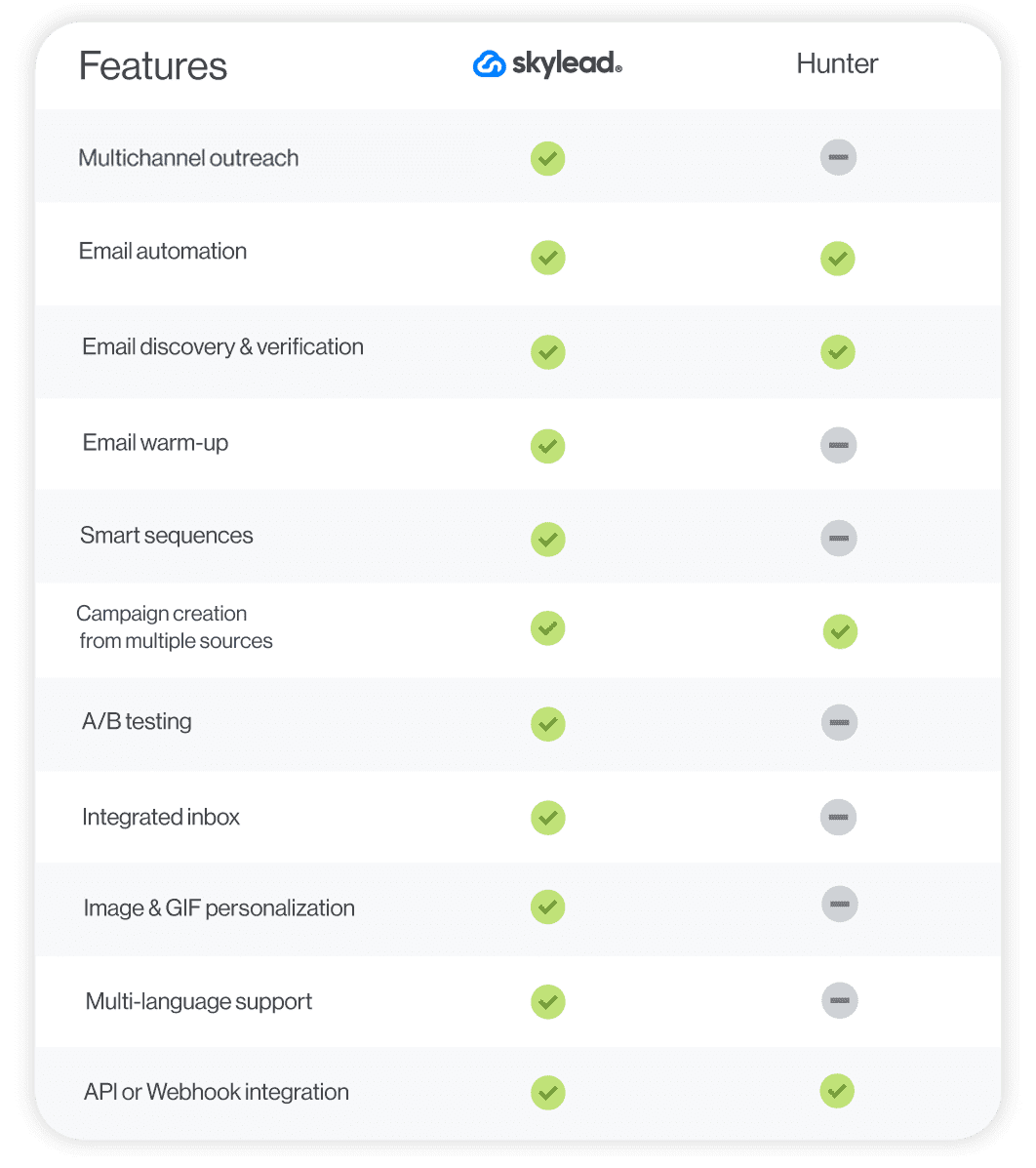
#15 Mailshake - Best outreach tool for setting up simple drip campaigns
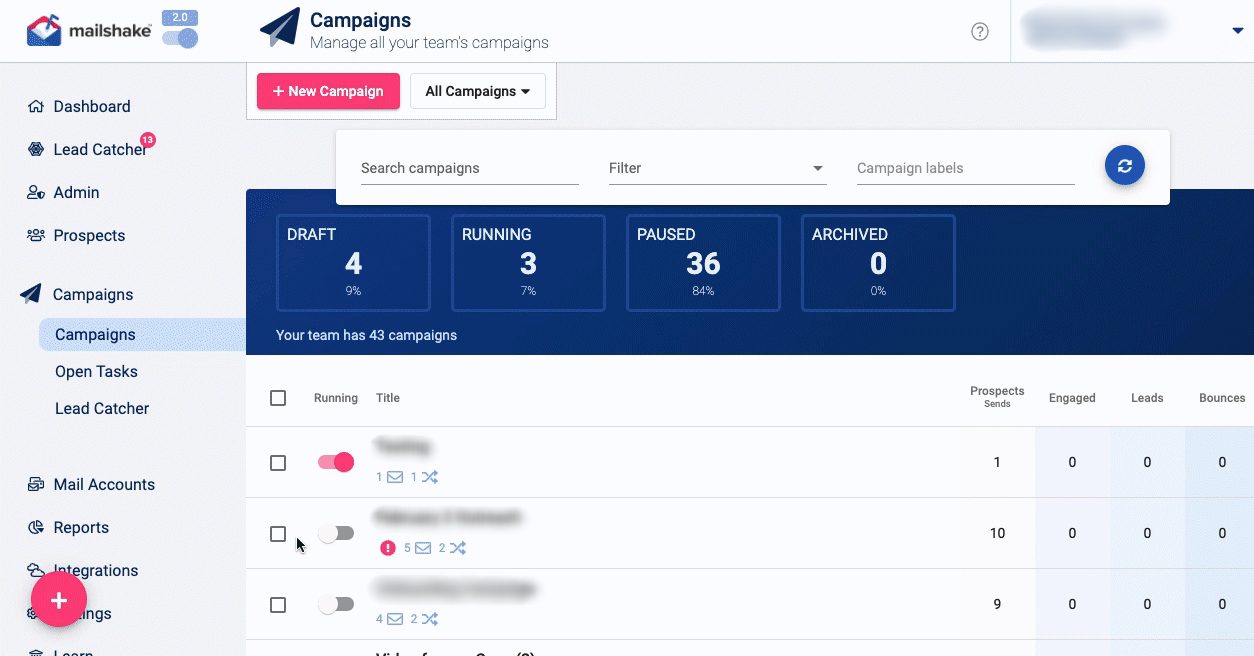
Mailshake is a cloud-based sales engagement platform with a Chrome extension for LinkedIn automation and an AI email writer.
Pros
Mailshake has an intuitive sequence builder that you can use to automate parts of the sales engagement process, like sending cold emails and follow-ups. Unlike other tools, where sequences stop when the prospect responds, Mailshake has the option to continue its campaign even if the lead responds. In other words, other tools like Skylead have an option to manually get leads back to a campaign once they respond. However, if you wish that the sequence just continues despite your leads’ response, you’ll like this option.
You can also use Mailshake to automate profile views on LinkedIn, along with invites to connect and messages.
Clearly, Mailshake supports multichannel outreach, and it even makes it possible to add calls into the mix, courtesy of the built-in dialer. Although this is a manual task.
Cons
LinkedIn automation, which isn’t even complete, and cold calling are exclusive to the highest-tier subscription.
Additionally, Mailshake automates LinkedIn actions through a Chrome extension. That said, it may not be the safest option for your LinkedIn outreach.
What others said about Mailshake
Engin A. is impressed by how easy this sales outreach platform is to use. He is also satisfied with the onboarding process. However, he says that Mailshake can prove expensive for medium to large teams.
Meanwhile, more than one person has noted you have to be very careful about daily sending limits for email accounts connected to Mailshake, as Gmail tends to flag emails sent in bulk as spam. That’s why Skylead has inbox rotation—a feature that has caused many Mailshake users to turn to Skylead!
Pricing
- Starter: $29/mo per user / 1 mailbox
- Email Outreach: $49/mo per user / 2 mailboxes
- Sales Engagement: $99/mo per user / 10 mailboxes
Rating
- Capterra: 4.5 (123)
Skylead vs. Mailshake
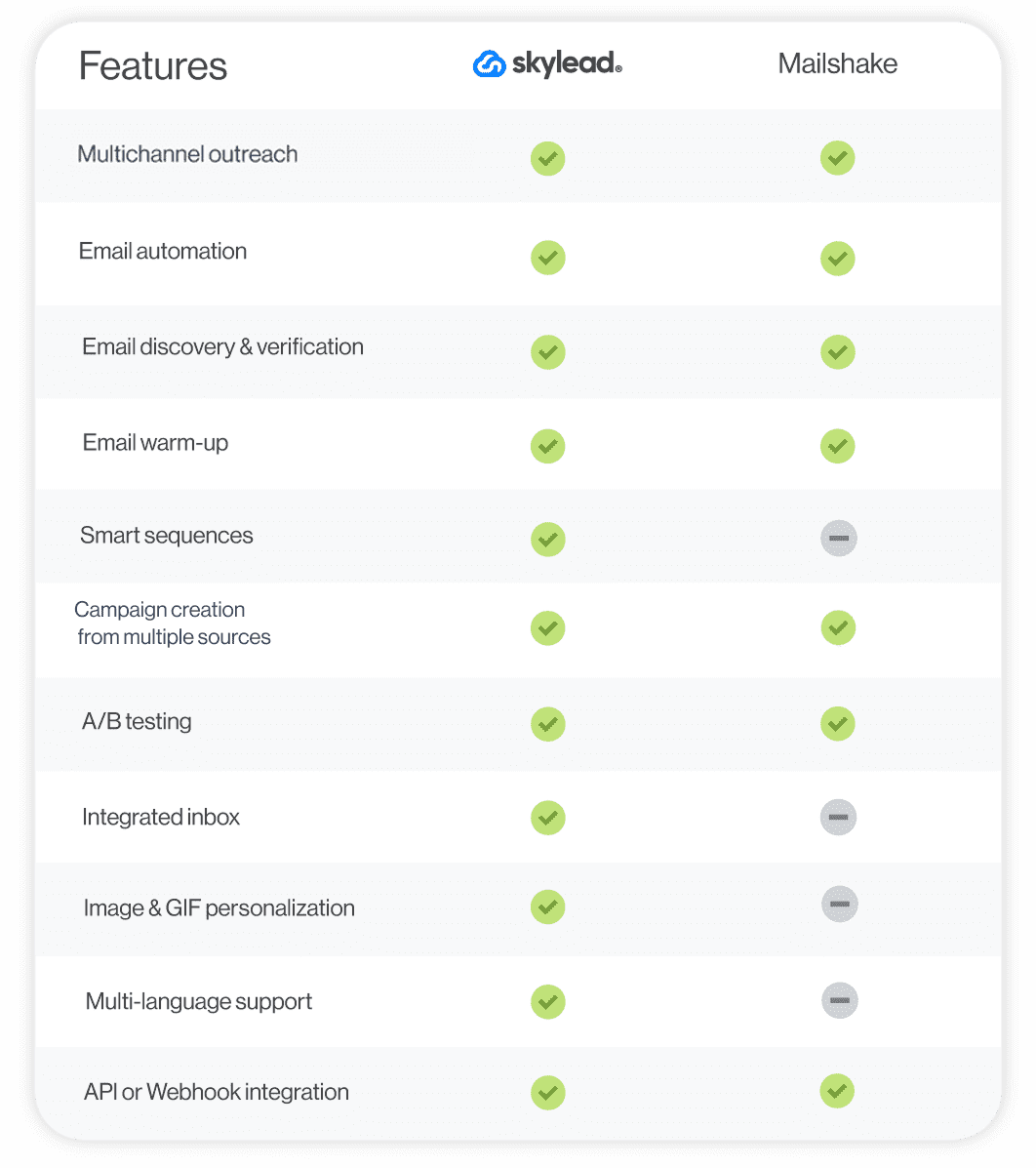
#16 SalesBlink - Best sales tool for AI-powered email outreach
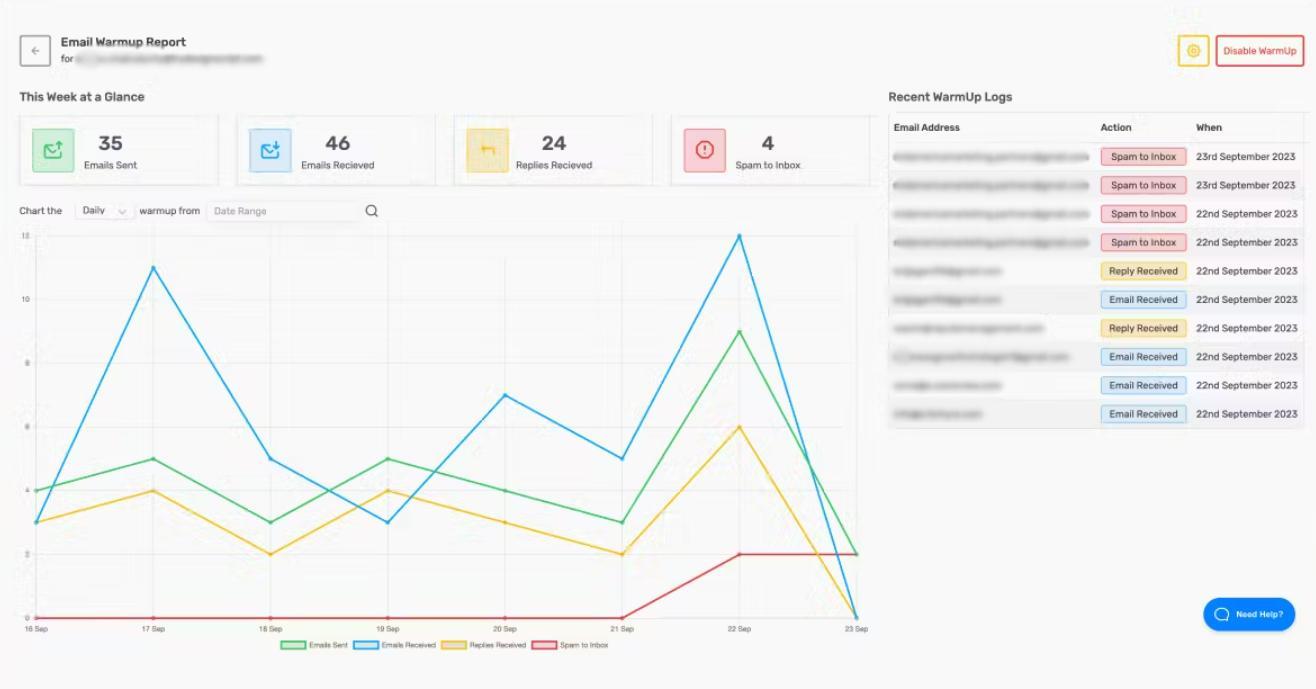
SalesBlink is a cloud-based sales outreach tool for cold emailing.
Pros
SalesBlink lets you take advantage of its AI, BlinkGPT, to create smart email sequences with follow-ups adjusted to the outcome. It also lets you enrich your emails with variables and personalized images.
What’s more, thanks to the software’s email warm-up feature, your emails are sure to land in your leads’ inboxes, not spam.
Additionally, SalesBlink allows you to connect multiple sender accounts and automatically rotates them while sending emails to ensure you stay within limits.
Finally, the tool makes managing conversations effortless, keeping them all in a unified inbox.
Cons
We found it inconvenient that the tool limits the number of emails you can send depending on your subscription plan. With the highest subscription, you can send up to 100,000 emails.
However, if you don’t want to pay the highest subscription for this, sales outreach tools like Skylead and Instantly, which allow you to send unlimited emails, may be better suited.
Moreover, while you can add multichannel tasks to your sequences, you have to complete them manually. Therefore, no real multichannel outreach is supported. Email sequences are smart, unfolding based on your prospect’s behavior. Nevertheless, Skylead is superior in this regard as well, as it comes with Smart sequences and support for multiple channels.
What others said about SalesBlink
SalesBlink is Alfred R.'s go-to tool for email outreach, and he proudly talks about it! The absolute best for him is its top-notch AI email assistant, which saves him immense time and optimizes his email management. The only downside he could think of is that you can't add a lot of information when describing a business to the AI, which tells us that the AI feature is not that complete.
Pricing
SalesBlink plans are split into 2 categories:
For Own Business
- Starter: $29 /mo per account
- Growth: $99 /mo per account
- Business: $199 /mo per account
For Lead Generation Agencies
- Agency Starter: $99 /mo / up to 3 clients
- Agency Growth: $199 /mo / up to 10 clients
- Agency Business: $299 /mo / up to 25 clients
Rating
- Capterra: 4.7 (223)
Skylead vs. SalesBlink
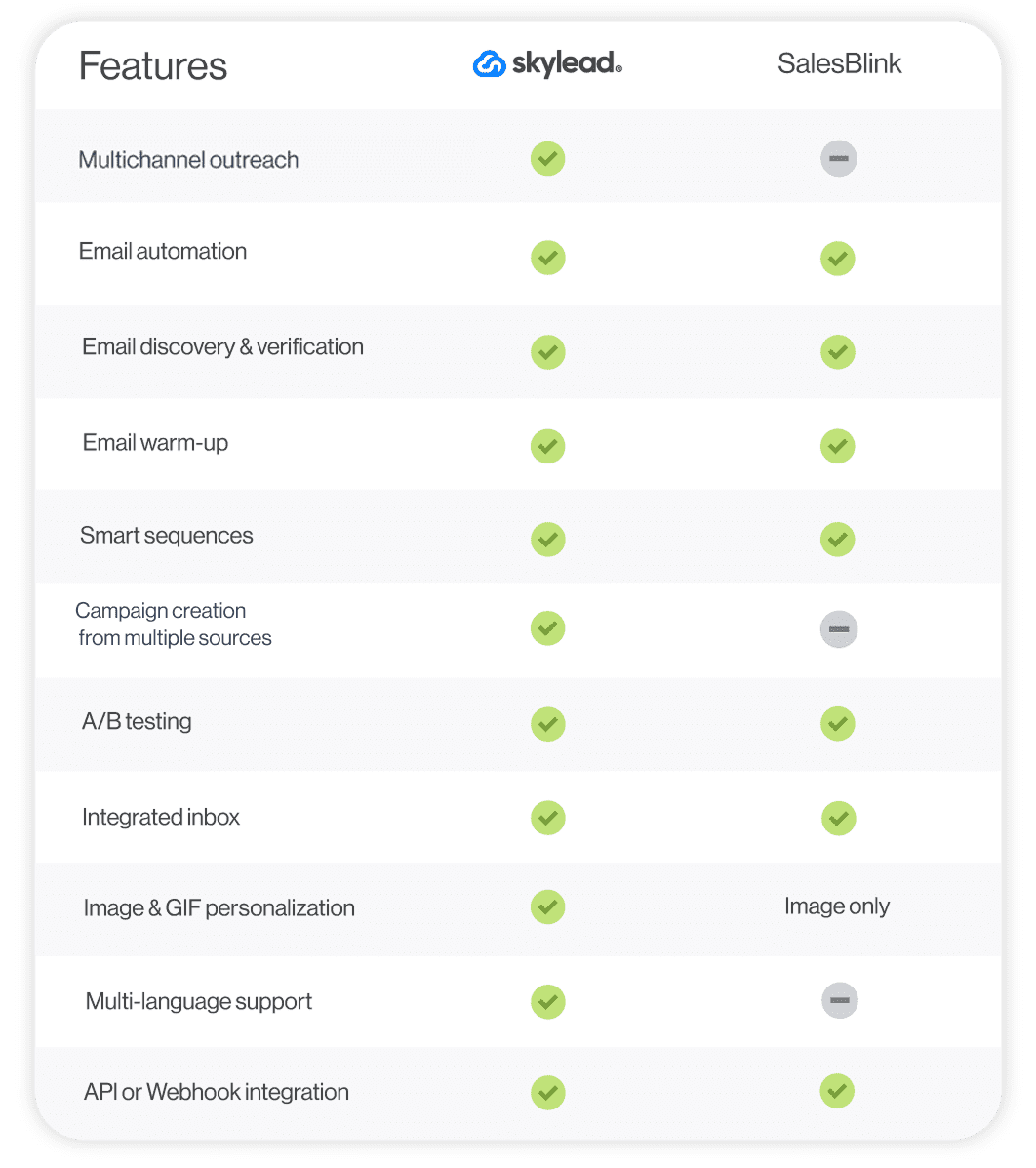
#17 Saleshandy - Best outreach tool for A-Z testing
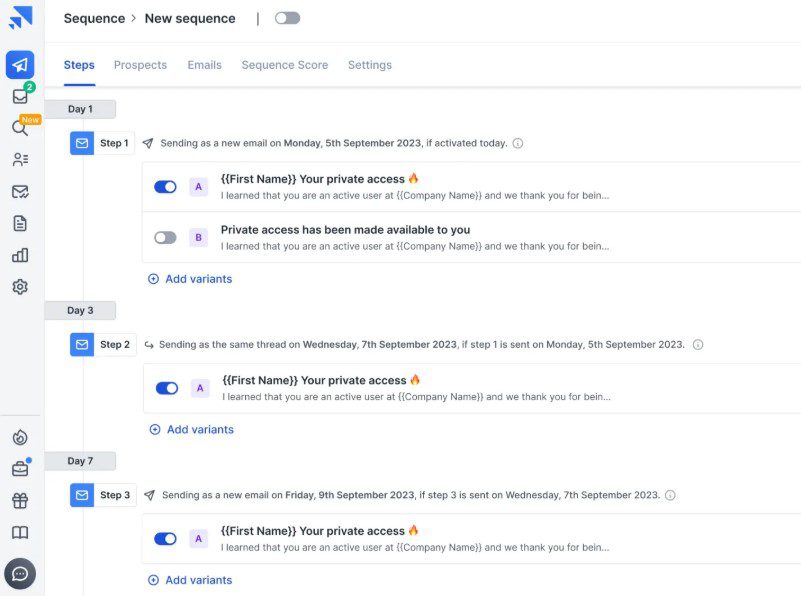
Saleshandy is a cloud-based software for email automation and prospecting.
Pros
The software has an up-to-date pool of over 700 million verified leads that you can search through and include in your outreach. It also has a Chrome extension that finds prospects’ emails on LinkedIn (phone numbers also, but at a higher cost).
Its highlight features, such as simple (not smart) email sequences, email scheduling, email tracking, and email warm-up, streamline your cold email outreach, enhance deliverability, and help you generate more leads.
What really caught our attention, though, were the A/Z tests. The software allows users to test up to 26 different subject lines, email bodies, and CTAs.
Cons
Saleshandy doesn't support reaching out to prospects via LinkedIn and channels that aren’t email. While you can identify leads’ emails on this social networking site, be cautious; using its Chrome extension might compromise the safety of your LinkedIn account.
There’s an add-on for email verification, too. However, it costs extra.
What others said about Saleshandy
To Shamim Ahmed A., Saleshandy is one of the best and most affordable sales software for email outreach. He praises its many features, such as unlimited email warm-up, email automation, and analytics. Still, he hopes the warm-up feature will be further improved in the future.
Pricing
- Email Outreach Plans: From $36/month for the Outreach Starter to $299/month for the Outreach Scale Plus per account.
- B2B Lead Database Plans (emails only): From $29/month for the Lead Starter to $1299/month for the Lead Scale Plus per account.
Saleshandy’s email verification add-on will cost you an extra $79 for 25,000 recipients.
Rating
- Capterra: 4.5 (125)
Skylead vs. Saleshandy
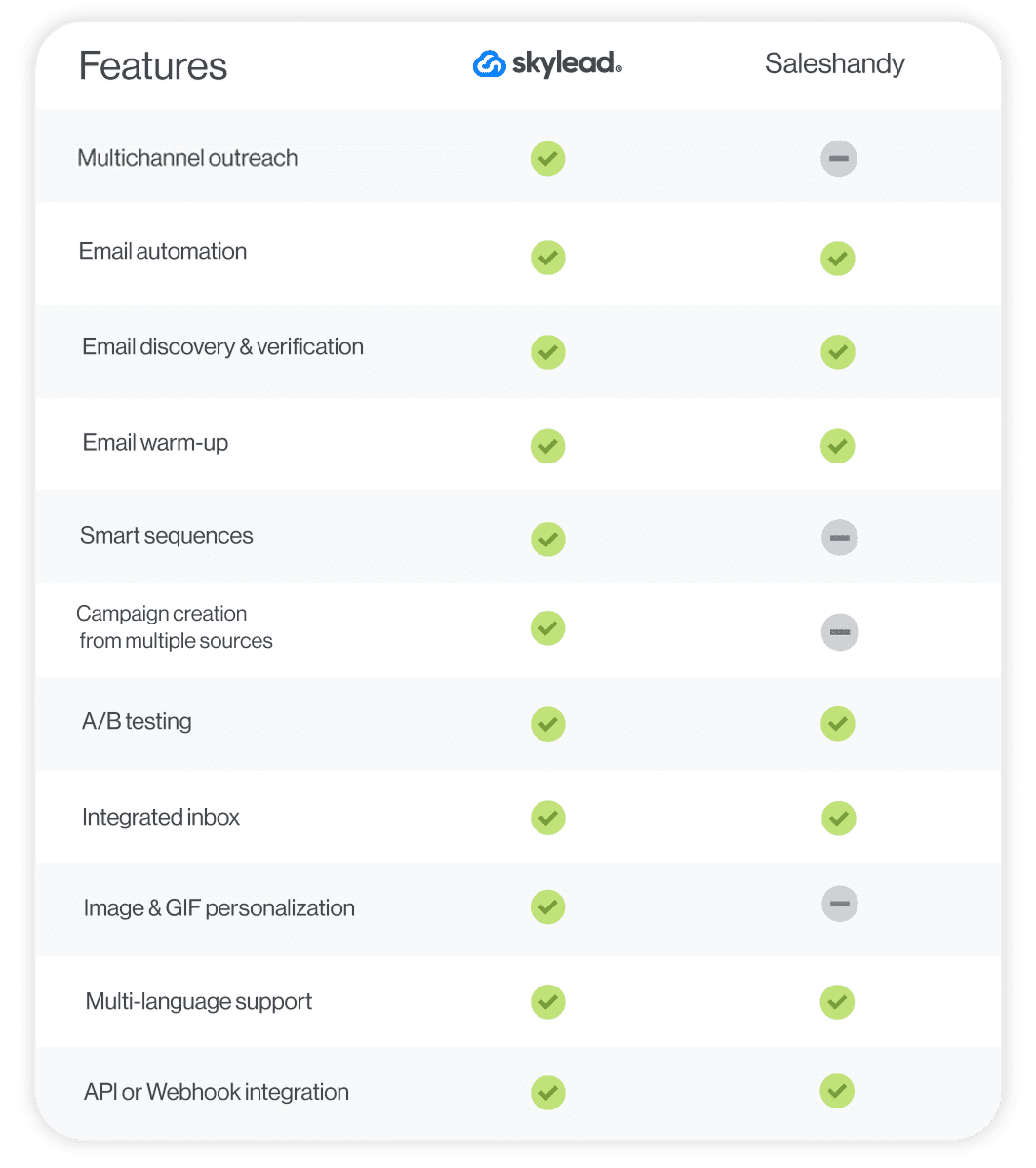
#18 Woodpecker - Best sales outreach tool for coming up with email copy quickly
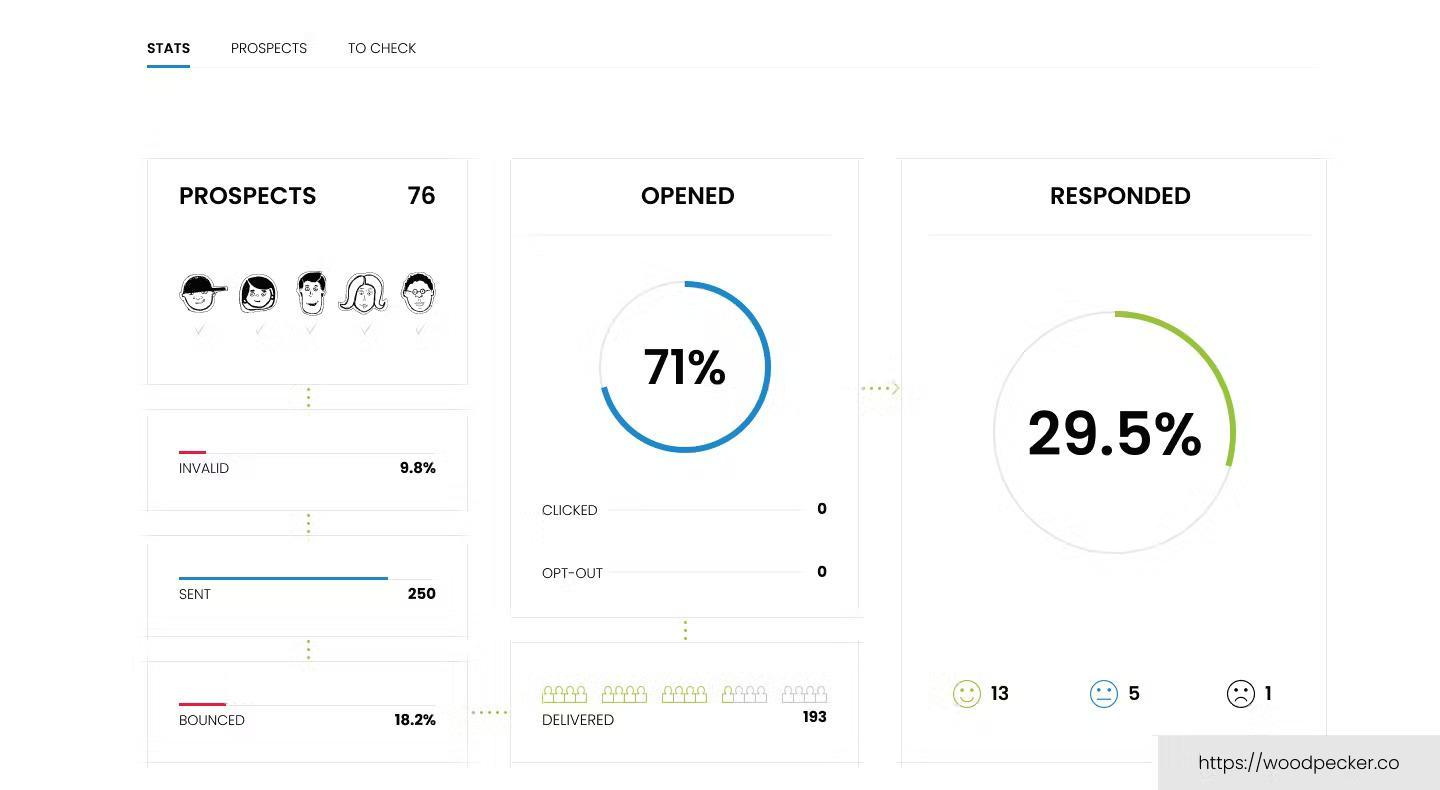
Woodpecker is one of the best cold email software with add-ons that turn it into an all-in-one sales outreach platform.
Pros
Woodpecker is natively an email outreach tool. Nonetheless, it supports creating multichannel campaigns with LinkedIn actions and calls through built-in integrations with Dux-Soup and AirCall.
The platform allows you to connect unlimited email accounts and auto-rotates them to keep email deliverability high.
Woodpecker can also warm up your mailboxes, verify your leads’ emails, and also lets you A/B test up to 5 different email variants.
It even comes with an AI assistant that generates copy for your campaigns. However, as we said previously, we tested out AI-generated copies, and the results weren’t much better than our own. In some cases, the results were even worse.
Cons
Woodpecker relies on 3rd party tools for its multichannel outreach, which incurs additional costs.
Additionally, its email verification probability isn’t as high as Skylead’s or Hunter.io’s.
What others said about Woodpecker
Woodpecker is a standout software in Michael L.'s eyes due to its ease of use and great support. While not as advanced as some other sales outreach tools, he states it fares well in the cold emailing department.
Pricing
- Starter: From $29mo per account
- Growth: From $188/mo per account
- Scale: From $1,354/mo per account
- Max: From $9,999/mo prt account
Rating
- Capterra: 4.5 (33)
Skylead vs. Woodpecker
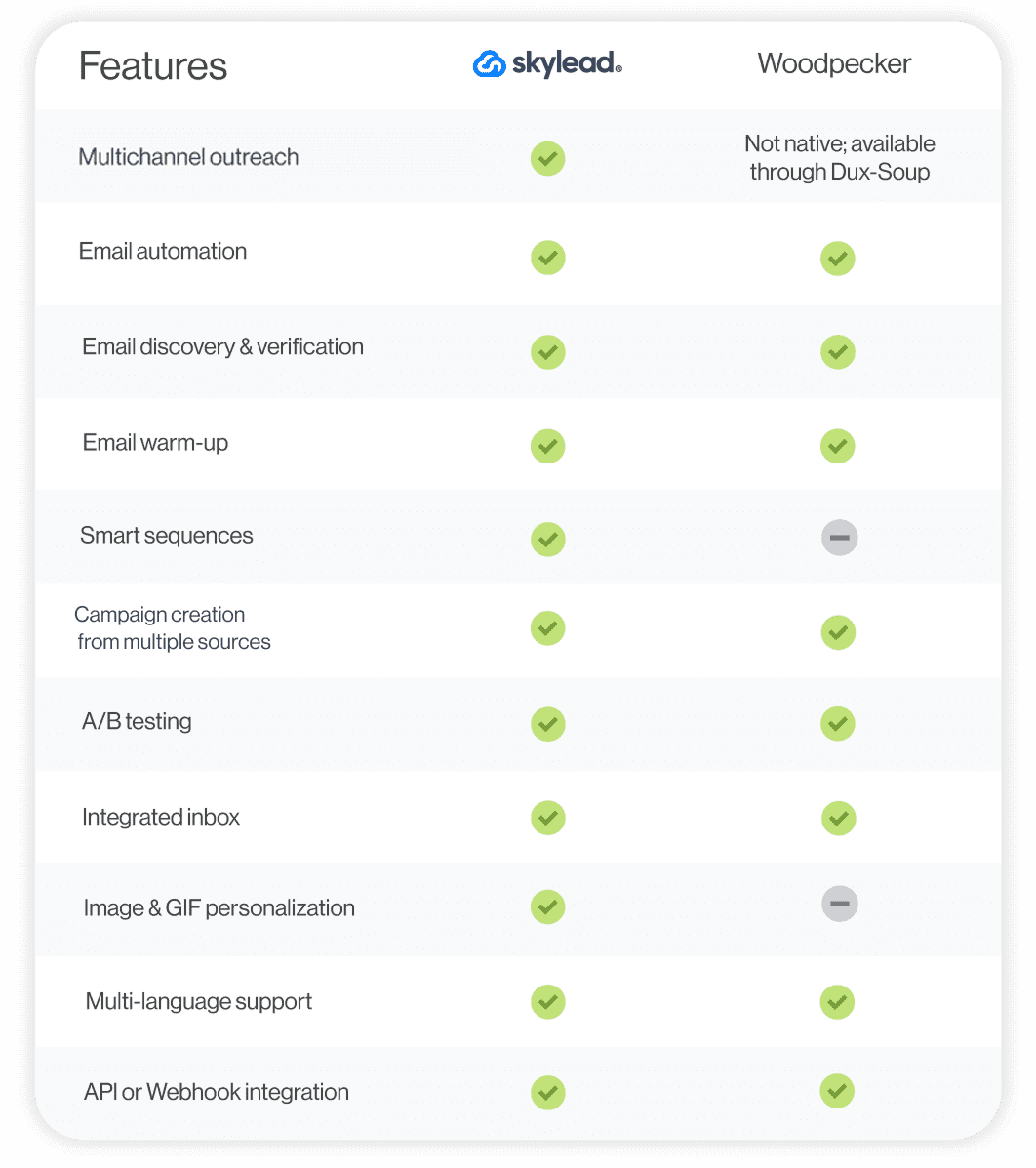
#19 Wiza - Best for extracting lead information from LinkedIn, Sales Navigator & Recruiter
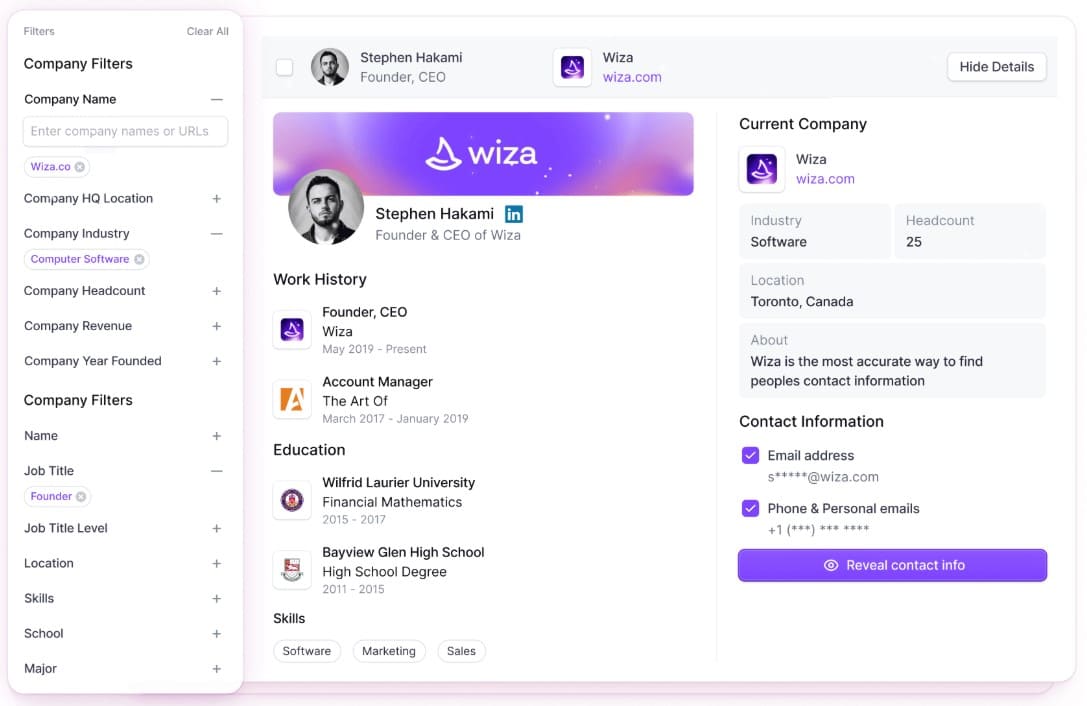
Wiza is a Chrome extension that is used to scrape prospect information from LinkedIn.
Pros
Wiza is compatible with LinkedIn Premium, Sales Navigator, and Recruiter accounts. It’s notable for its instant email verification capabilities. At the same time, it allows you to export prospecting lists from LinkedIn to CSV or sync them to your CRM.
On top of extracting verified work and personal emails from LinkedIn, Wiza can also extract work and cell phone numbers that are publicly available on LinkedIn.
FIY, the software will use up your verification credits only if it manages to find valid prospect information.
Cons
We can’t say that Wiza is a real sales outreach tool, even though some categorize it as such. Instead, it’s a prospecting tool that can only inform your outreach strategy.
Also, since this is another Chrome extension on the list that injects code into LinkedIn, it could lead to a ban on the platform.
What others said about Wiza
As per Prerana B., Wiza is convenient, fast, and accurate. She also likes how the tool can scrape leads' information from LinkedIn. On the flip side, she finds it a bit expensive. However, while Prerana praises Wiza for its email discovery and verification capabilities, we’ve found Skylead to have a much higher email enrichment success rate.
Pricing
- Free: $0
- Starter: $49/mo per user
- Email: $99/mo per user
- Email + Phone: $199/mo per user
- Team plan: Starting at $399/mo (annual commitment)
Rating
- Capterra: 4.6 (20)
Skylead vs. Wiza
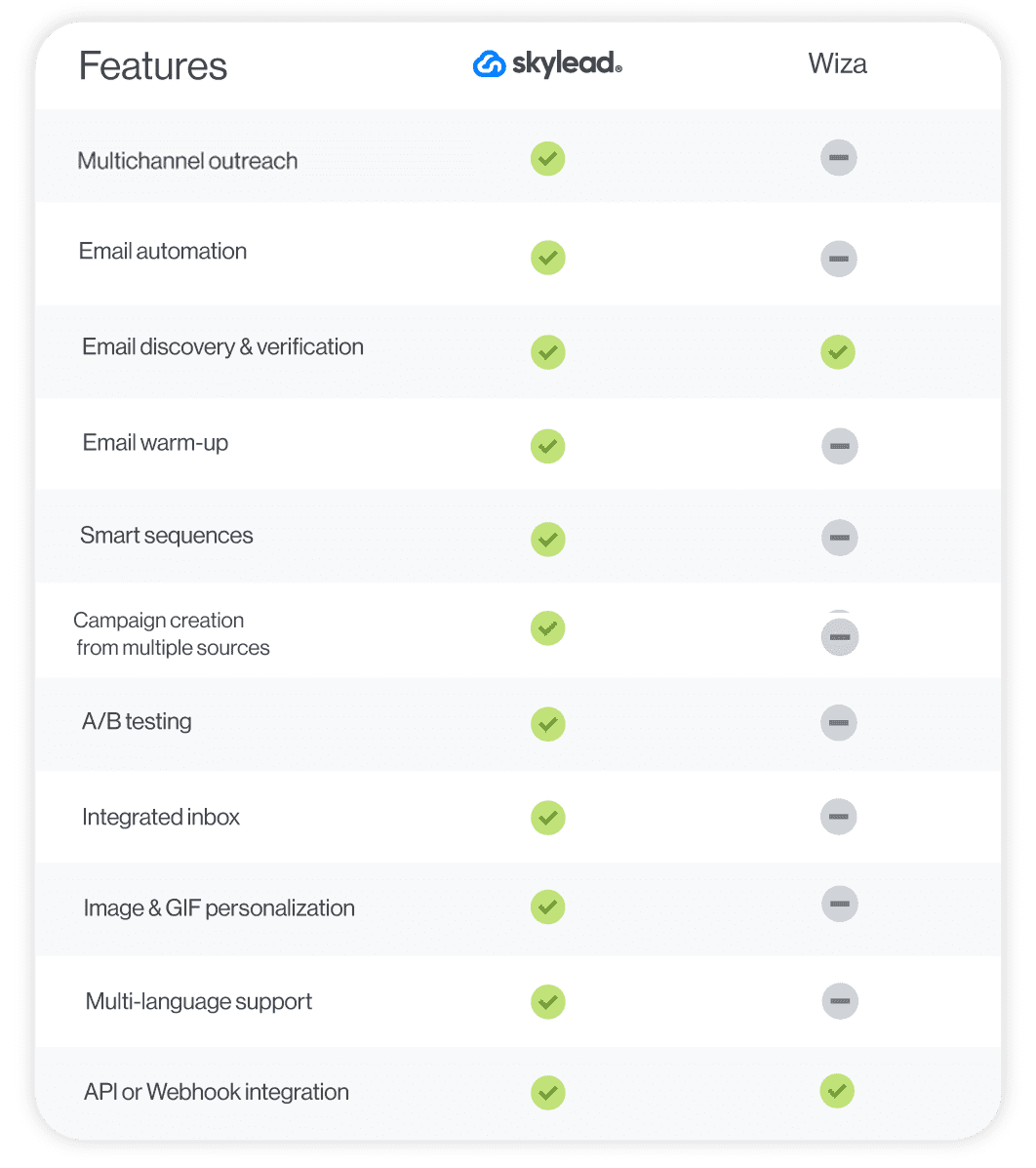
#20 GrowMeOrganic - Best sales outreach tool for automating hyper-personalized follow-ups
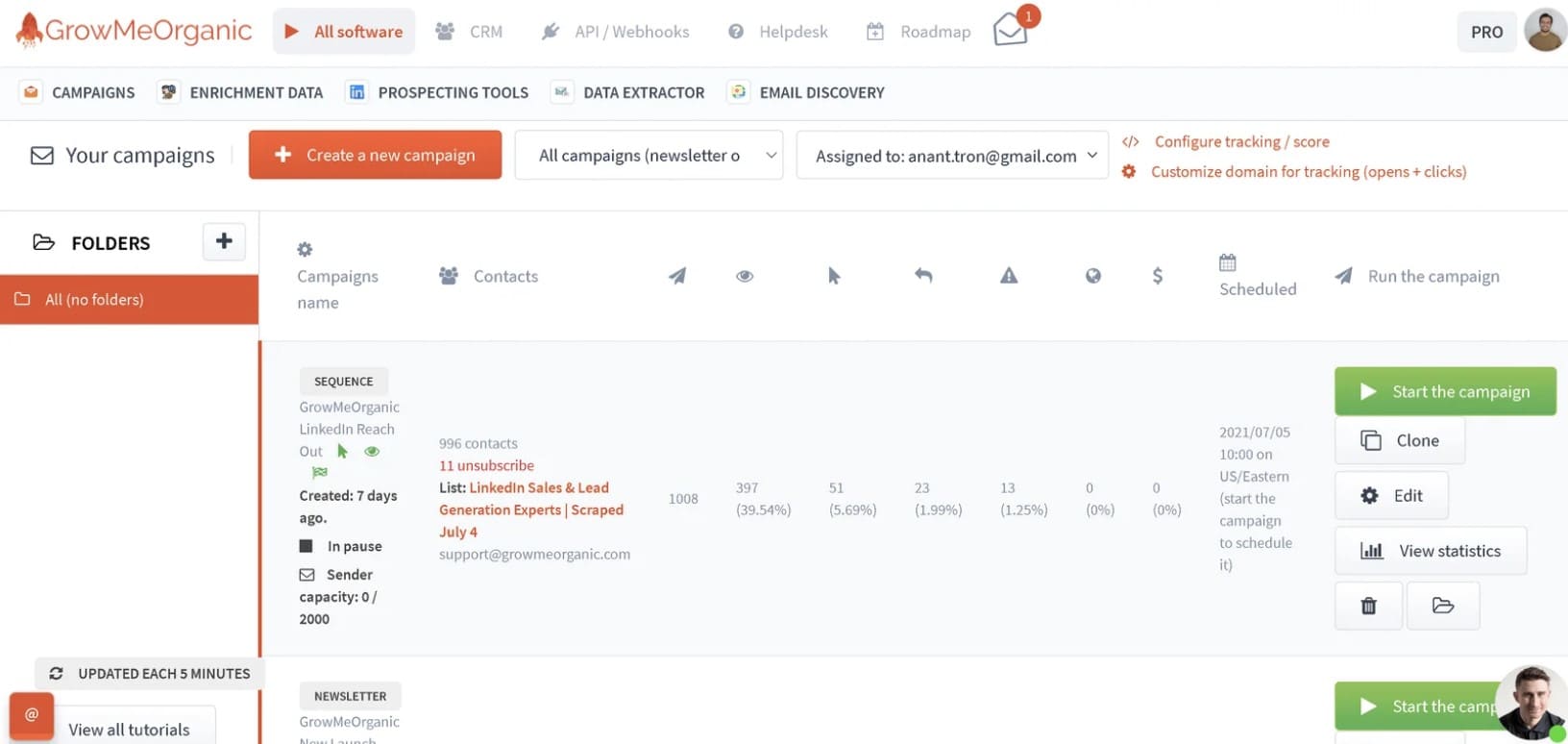
GrowMeOrganic is a cloud-based outreach solution for cold emailing. It also features a Chrome extension that can extract verified emails and phone numbers from LinkedIn.
Pros
GrowMeOrganic is great for automating cold emails and follow-ups based on your prospects’ behavior. We liked that the tool has a native image personalization feature and can track open, click, reply, and conversion rates.
GrowMeOrganic is compatible with email accounts from all providers.
Cons
Another Chrome extension, another major downside. To preserve your LinkedIn account, you are better off choosing another tool, at least for prospecting and email enrichment.
GrowMeOrganic also lacks support for LinkedIn outreach. As such, it misses out on the opportunities the greatest platform for social selling holds.
Furthermore, we noticed it’s impossible to download a PDF report. Only CSV and XLS exports are available.
What others said about GrowMeOrganic
Raghavendra D. has been using GrowMeOrganic for a while and says it's an excellent tool for sales automation. She finds its LinkedIn and Google My Business email scraper incredibly useful! Nonetheless, she doesn't like that this is a Chrome extension, nor do we. She’d like it better if there were an option to search for leads directly through the platform.
Pricing
- Starter: $49/mo / 1 user
- Growth: $99/mo / 5 users
- Pro: $199/mo / unlimited users
Rating
- Capterra: 4.2 (10)
Skylead vs. GrowMeOrganic
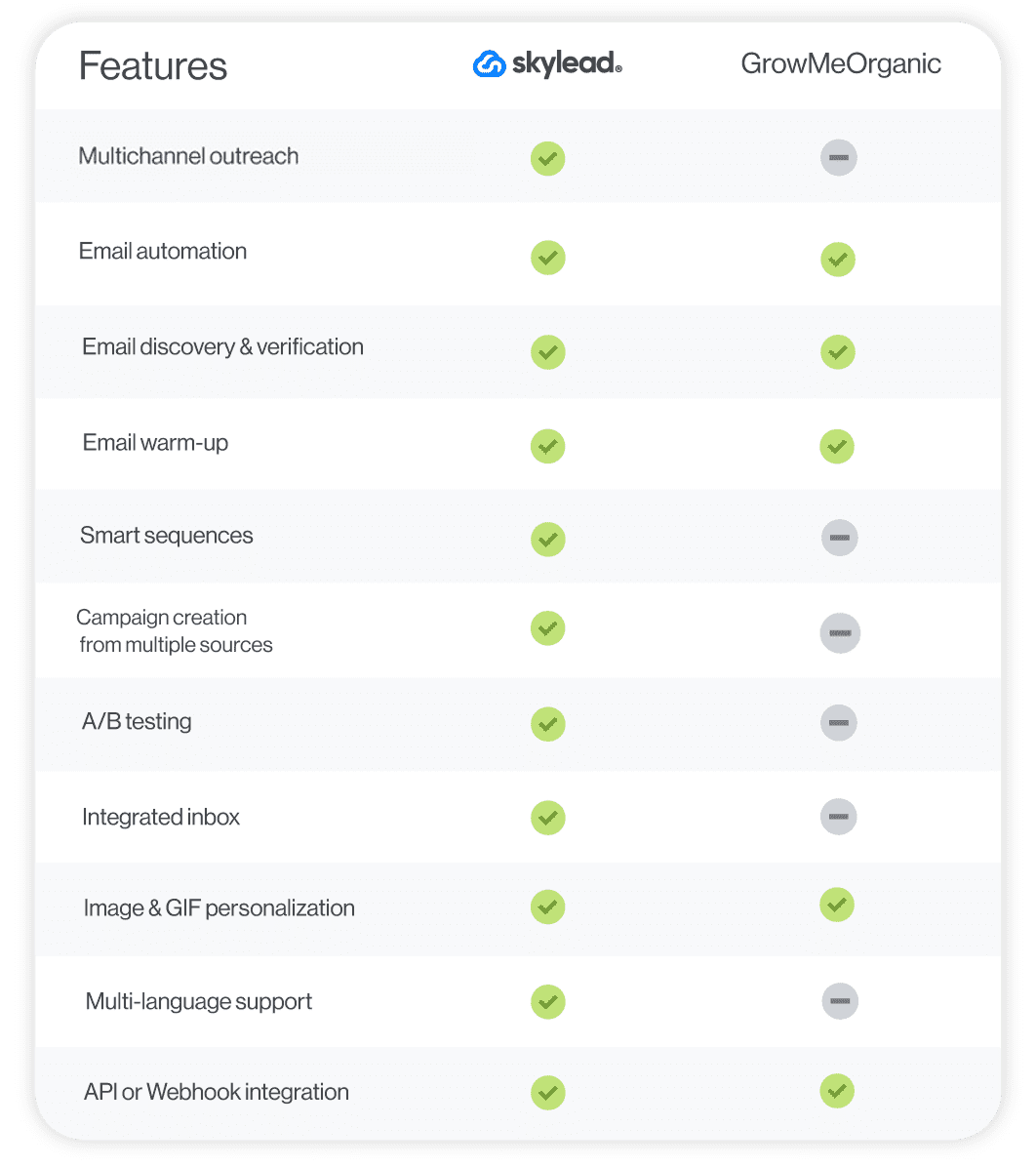
#21 Lusha - Best for prospecting around the Web
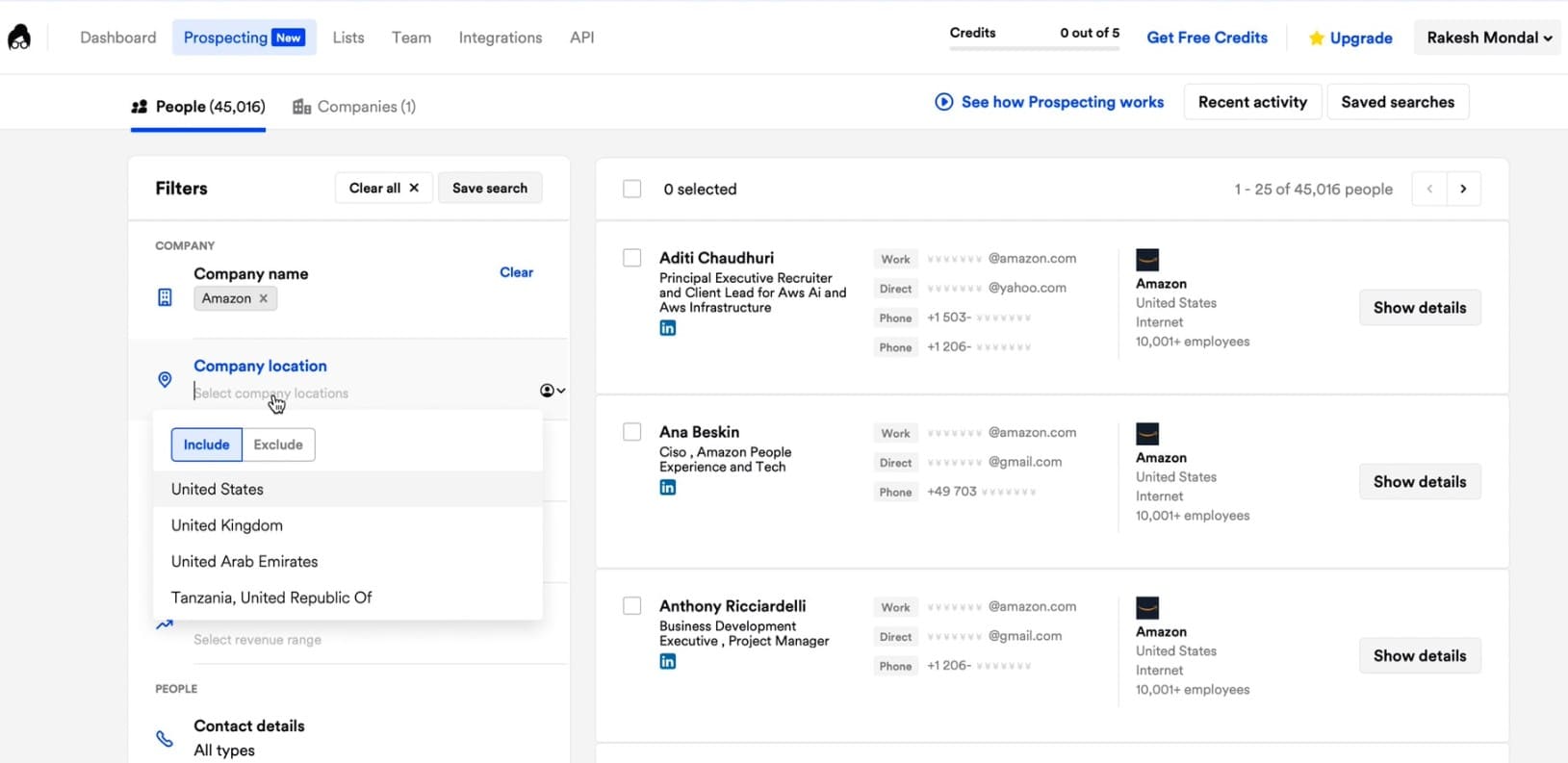
Like Wiza, Lusha is primarily a cloud-based prospecting tool, although salespeople can also use it for email outreach.
Pros
Lusha has a handy Chrome extension, which can extract prospects from anywhere. It also has a built-in B2B prospecting tool with filters that can get you up to 1,000 leads in one go.
Furthermore, you don’t have to resort to another software for your outreach; you can automate Lusha to send emails. Rather than relying on your time zone when doing so, the tool, like Skylead, lets you set different time zones for different email sequences. In other words, it reaches out to your leads when the time is right...for them!
To top it off, Lusha added an AI Playlists feature, a.k.a. lead lists that automatically update based on your saved filters to keep your pipeline consistently full of new, high-potential contacts.
Cons
Lusha uses a Chrome extension to extract prospects from different sites. If you are prospecting on LinkedIn, it could threaten your account’s existence.
Moreover, this tool is only compatible with Gmail and Outlook accounts. If your email account is with a different provider, you won’t be able to use it for your outreach. Also, you can only connect one email account to Lusha, and it must be the one you used to register on the platform.
Lastly, its built-in database of B2B leads includes 45 million contacts in North America and 21 million in Europe. If your target audience is based on other continents, this may result in missed outreach opportunities.
What others said about Lusha
Ben B. reports that Lusha speeds up his prospecting and lead generation and offers great value for money. The only problem is that the quality of data found could sometimes be better.
Pricing
- Free: $0 / 1 seat
- Pro: Starts from $29.90/mo / 3 seats
- Premium: $69.90/mo / 5 seats
- Scale: Custom
Rating
- Capterra: 4.1 (383)
Skylead vs. Lusha
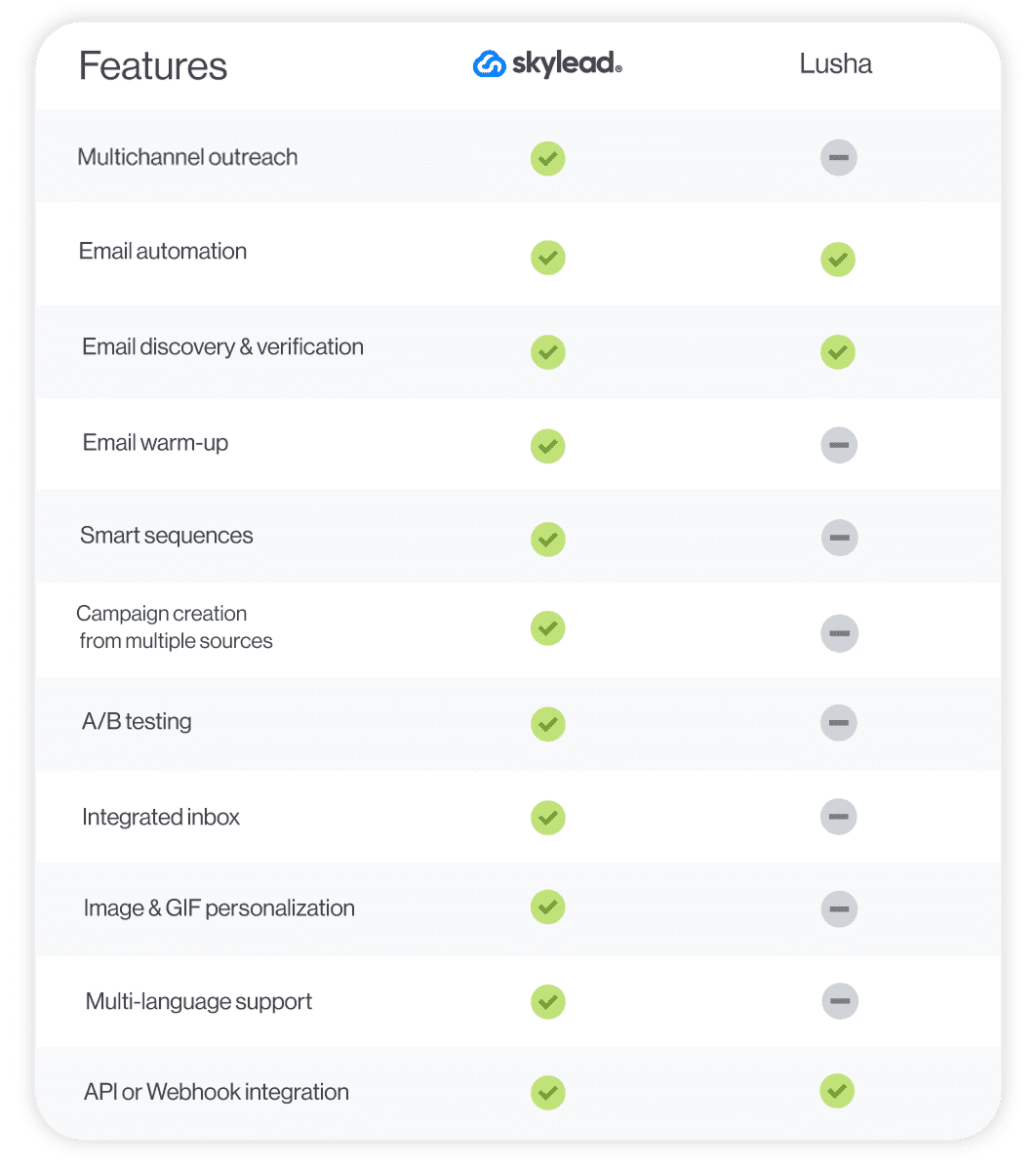
#22 MeetAlfred - Best sales automation tool for X outreach
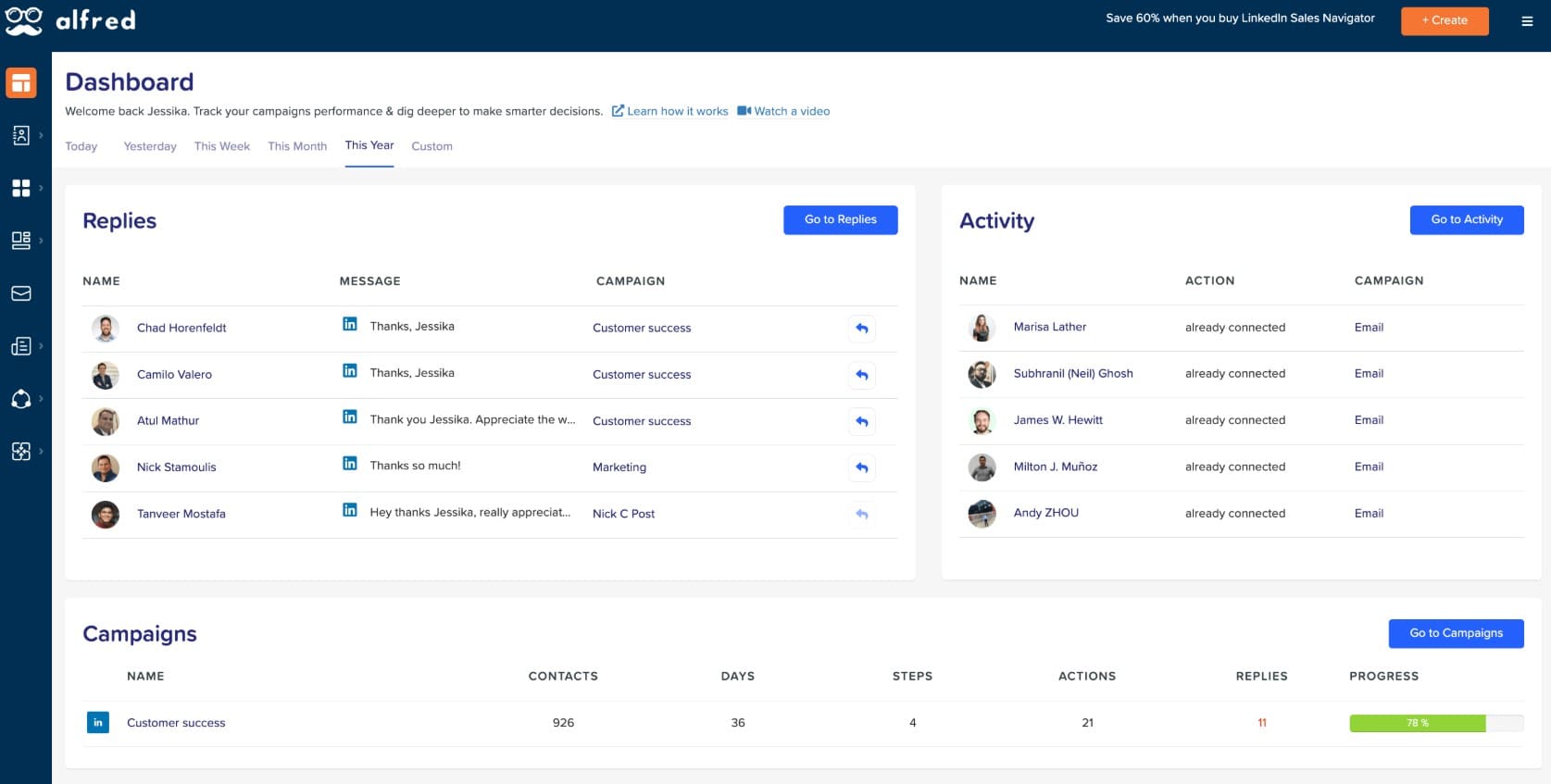
MeetAlfred is a cloud-based sales outreach platform designed for LinkedIn, email, and X outreach.
Pros
MeetAlfred is different from other multichannel sales outreach tools in that it also integrates with X (formerly Twitter). As such, you can use it to automate different activities on three fronts: LinkedIn, email & X.
The tool’s campaign builder allows for adding infinite steps — from profile views and invites to connect to follow-up messages, inMails, emails, and X DMs. At the same time, it lets you set up delays between steps and personalize your messages with customizable templates and variables.
We also found it convenient that you can connect the tool to your Facebook and Instagram accounts. Although MeetAlfred can't be used to message prospects on these platforms, you can use it to create and schedule posts.
Cons
Unlike Skylead, MeetAlfred doesn’t have Smart sequences. Consequently, the software’s integrated inbox only shows your LinkedIn/Sales Navigator messages. If your campaign includes emails and DMs, you must manually check for new ones.
What others said about MeetAlfred
Martin P. considers MeetAlfred a perfect sales tool for someone with experience using this type of outreach software. He is fond of its simple interface and lots of customizable templates. Nevertheless, he believes it might be difficult for beginners to use.
Pricing
- Free: $0
- Individual: $59/mo per user
- Business: $99/mo per user
- Team: $79/mo per user
Rating
- Capterra: 2.8 (13)
Skylead vs. MeetAlfred
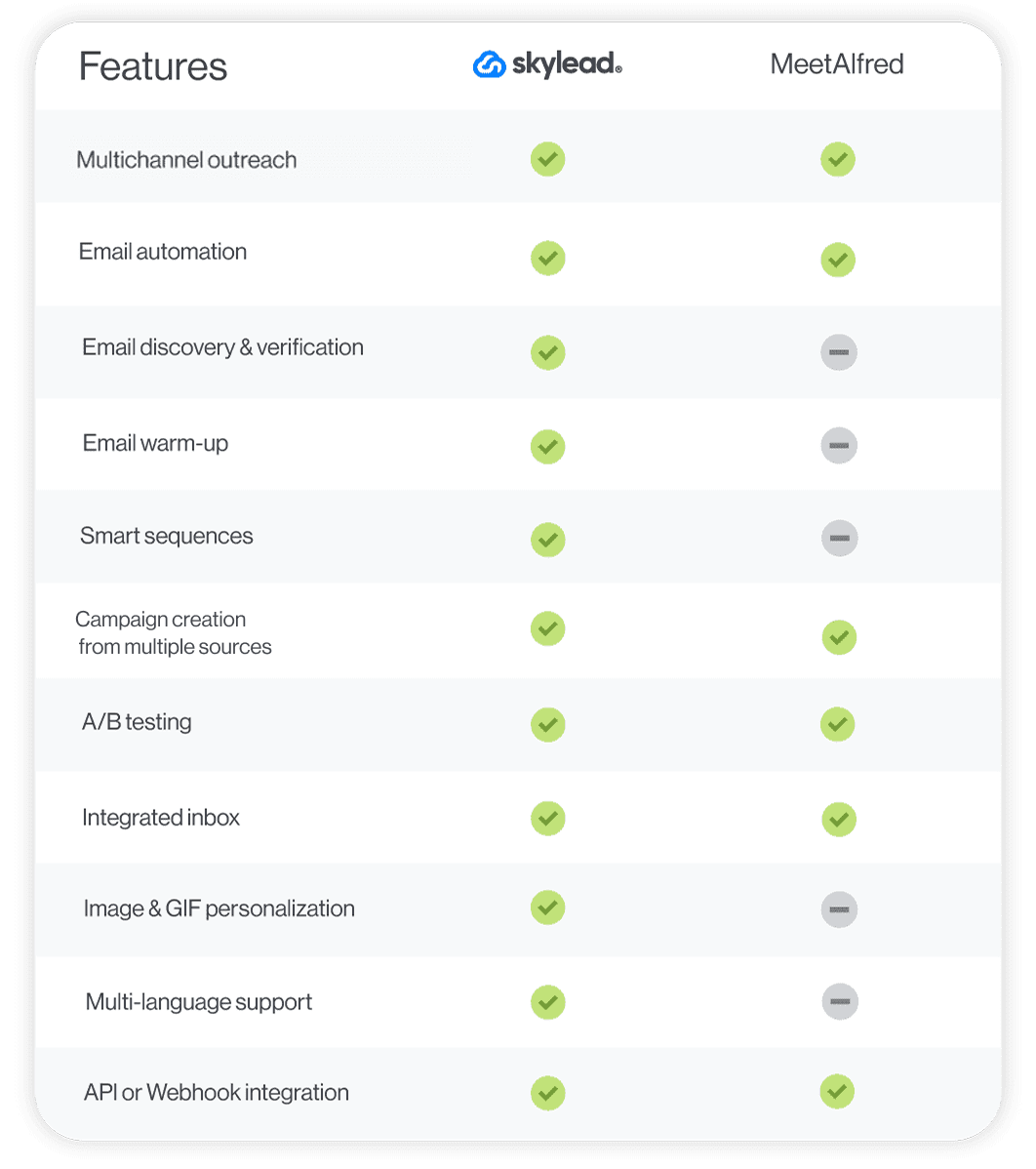
#23 LeadConnect - Best outreach solution for following up on LinkedIn
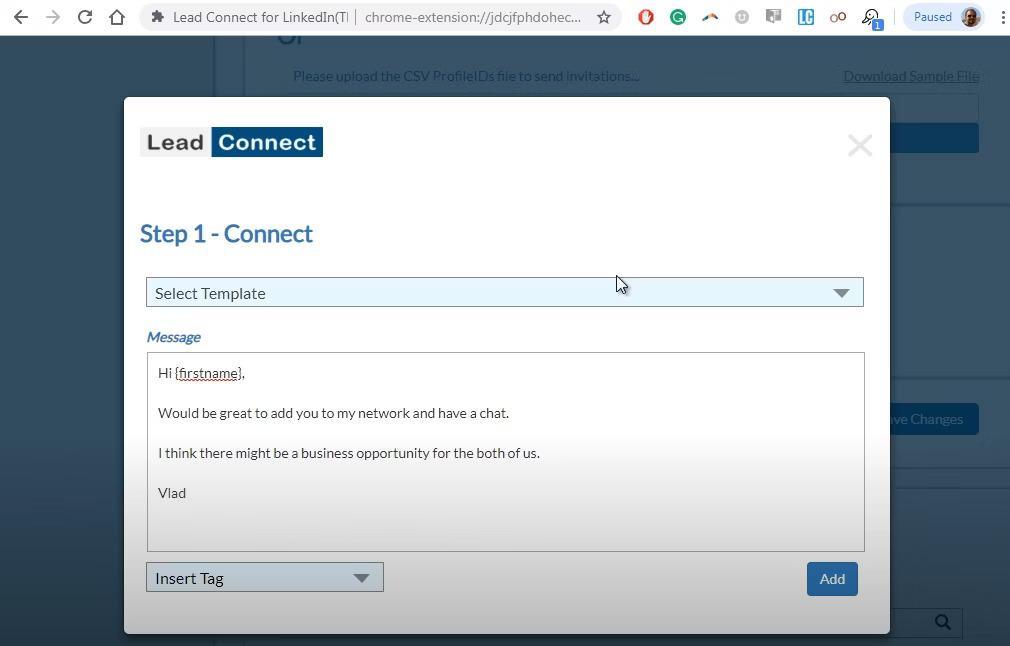
LeadConnect is a Chrome extension used for prospecting and outreach on LinkedIn.
Pros
LeadConnect connects to LinkedIn Basic and Sales Navigator accounts and pulls leads’ information from a LinkedIn search or a CSV file.
This tool lets you send personalized connection requests along with up to 6 automated follow-up messages.
Additionally, thanks to its native integration with HubSpot, pushing leads and conversations to the latter is as simple as a single click.
The tool also works with Findthatlead, Hunter.io, and Anymailfinder to discover your prospects’ email addresses. This is especially handy, as it gives you another channel to contact users who haven’t responded: email.
Cons
You can only use LeadConnect to contact users via LinkedIn. The tool doesn’t support sending inMails and emails, either.
The platform works only with LinkedIn Basic and Sales Navigator accounts. So, it cannot be used by anyone subscribed to LinkedIn Premium or a Recruiter plan.
With LeadConnect, you can only automate connection requests and LinkedIn messages.
Plus, given that LeadConnect is a Chrome extension, it could lead to account restrictions.
What others said about LeadConnect
In Sheryl S.'s opinion, LeadConnect is a great sales outreach platform for growing her LinkedIn network. She also mentions that it's quite easy to use. The only issue is that when there are a lot of prospects to discover, she sometimes has to refresh the URL.
Pricing
- Free Forever: $0
- Professional: $ 25.95/mo per account
- Grow: $ 45.95/mo per account
- Ultimate: $ 85.95/mo per account
Rating
- Capterra: 4.4 (98)
Skylead vs. LeadConnect
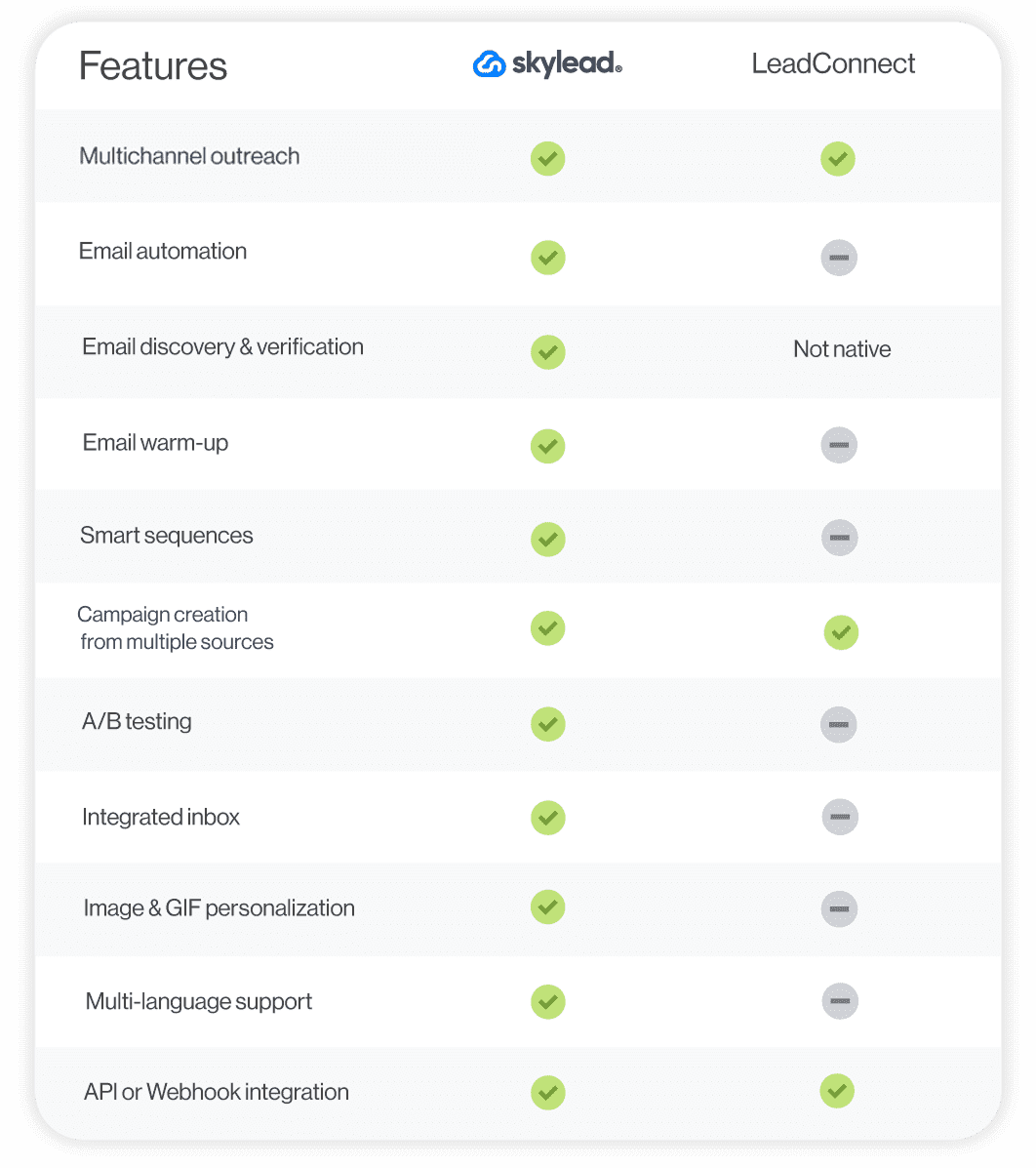
#24 Evaboot - Best tool for scraping leads from Sales Navigator
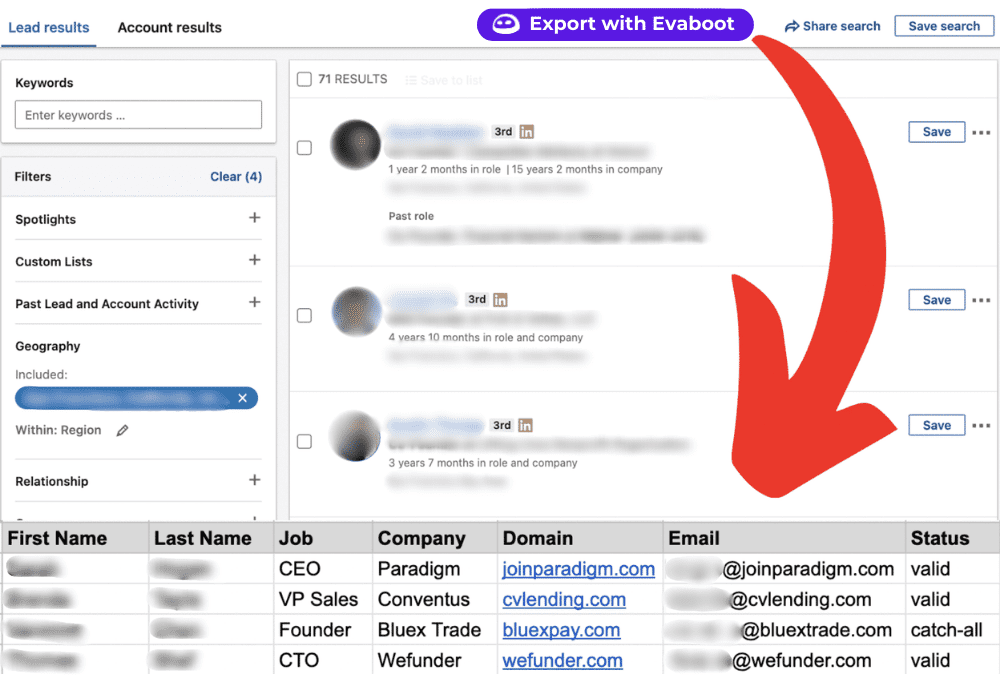
Like Wiza or Lusha, Evaboot is a Chrome extension for Sales Navigator prospecting.
Pros
Evaboot allows users to build lead lists from Sales Navigator in seconds and export them to CSV.
In addition to scraping leads, the tool can also find and verify professional emails.
Cons
Evaboot is only compatible with Sales Navigator, rendering it useless for LinkedIn Basic, Premium, or Recruiter subscribers.
Furthermore, this is a Chrome extension that, as you already know, can harm your Sales Navigator account.
We’ve tested the tool and can also tell you that their email discovery feature frequently provides inaccurate information or no information at all.
Lastly, this isn’t an email automation tool or any other type of outreach software. Yes, you can use the information gathered to contact leads. However, you’d need to subscribe to an Evaboot alternative that provides this functionality to do so.
What others said about Evaboot
Ky K. says Evaboot is easy to use and effective at what it does. However, the slight downside is that it doesn't allow him to select the number of leads to export.
Pricing
| LinkedIn data & professional email finder credits | Price (monthly / per account) |
| 100 | $9 |
| 500 | $29 |
| 1,500 | $49 |
| 4,000 | $99 |
| 8,000 | $149 |
| 20,000 | $299 |
| 50,000 | $499 |
| 100,000 | $899 |
| 200,000 | $1,699 |
| Custom | |
Rating
- Capterra: 4.6 (14)
Skylead vs. Evaboot
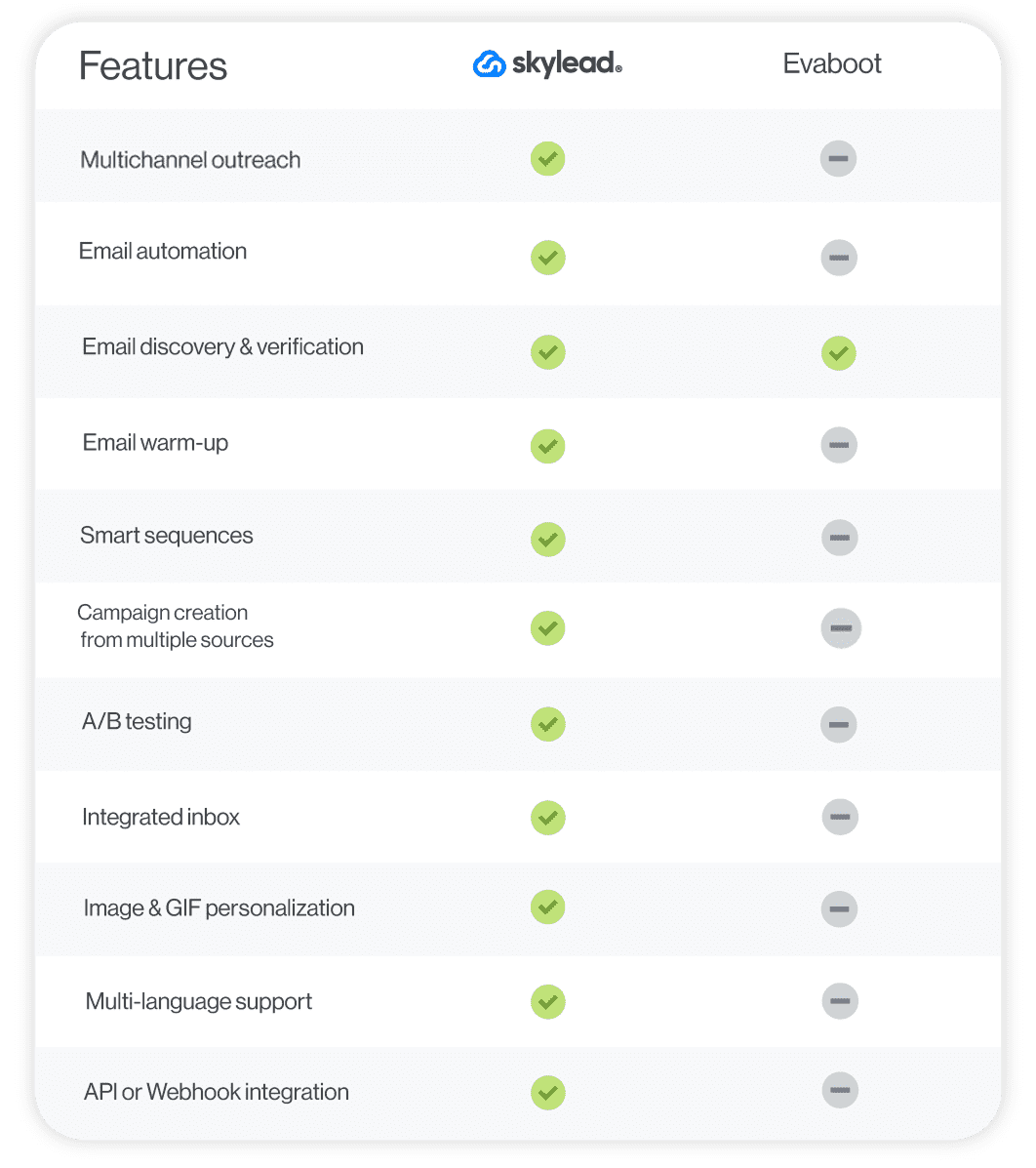
#25 Dux-Soup - Best LinkedIn automation tool for sending free and paid inMails
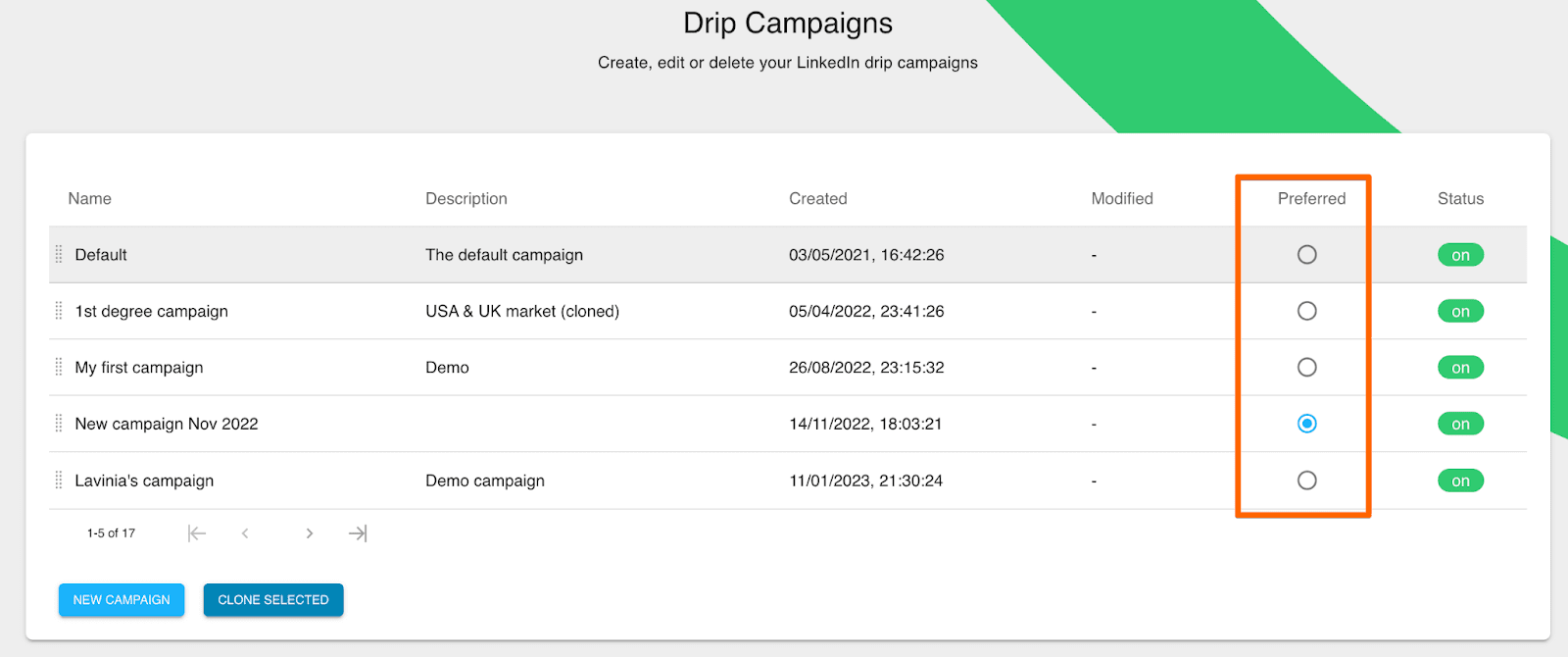
Initially a Chrome extension for LinkedIn automation, Dux-Soup now also offers a cloud-based sales outreach solution.
Pros
Dux-Soup can automate the following LinkedIn, Sales Navigator, and Recruiter actions:
- Endorsements
- Follows
- Profile visits
- Personalized connection requests
- Personalized messages to 1st connections
- inMails (free & paid)
With it, you can mix and match different actions to create unique drip campaigns that stop once your prospects respond.
We like that you can also customize time delays between individual steps and monitor campaign statistics once the campaign is live.
The software natively connects to Pipedrive, HubSpot, and SharpSpring. Nonetheless, you can also connect it to another CRM using Zapier webhooks.
Cons
Dux-Soup has a cloud-based solution for LinkedIn outreach, but it’s only available under their most expensive subscription plan. Those on lower plans have to rely on their Chrome extension for automation, which could compromise their LinkedIn accounts. Not to mention, the tool can only run while the browser is open.
Moreover, the software can’t be used for email outreach or any other type of outreach.
What others said about Dux-Soup
Leilani S. finds that Dux-Soup simplifies prospecting on LinkedIn. Her favorite feature is the X-ray tool, which enables her to discover LinkedIn profiles via Google. However, she notes that the software occasionally disrupts her workflow by randomly refreshing her page.
Pricing
Dux-Soup has 3 different plan categories:
Individual & Team Plans
- Pro Dux: $14.99/mo per seat
- Turbo Dux: $55/mo per seat
- Cloud Dux: $99/mo per seat
Agency Plans
- Pro Dux: from $337.50/mo for 30+ seats
- Turbo Dux: from $412.50/mo for 10+ seats
- Cloud Dux: from $371/mo for 5+ client seats
Rating
- Capterra: 4.0 (16)
Skylead vs. Dux-Soup
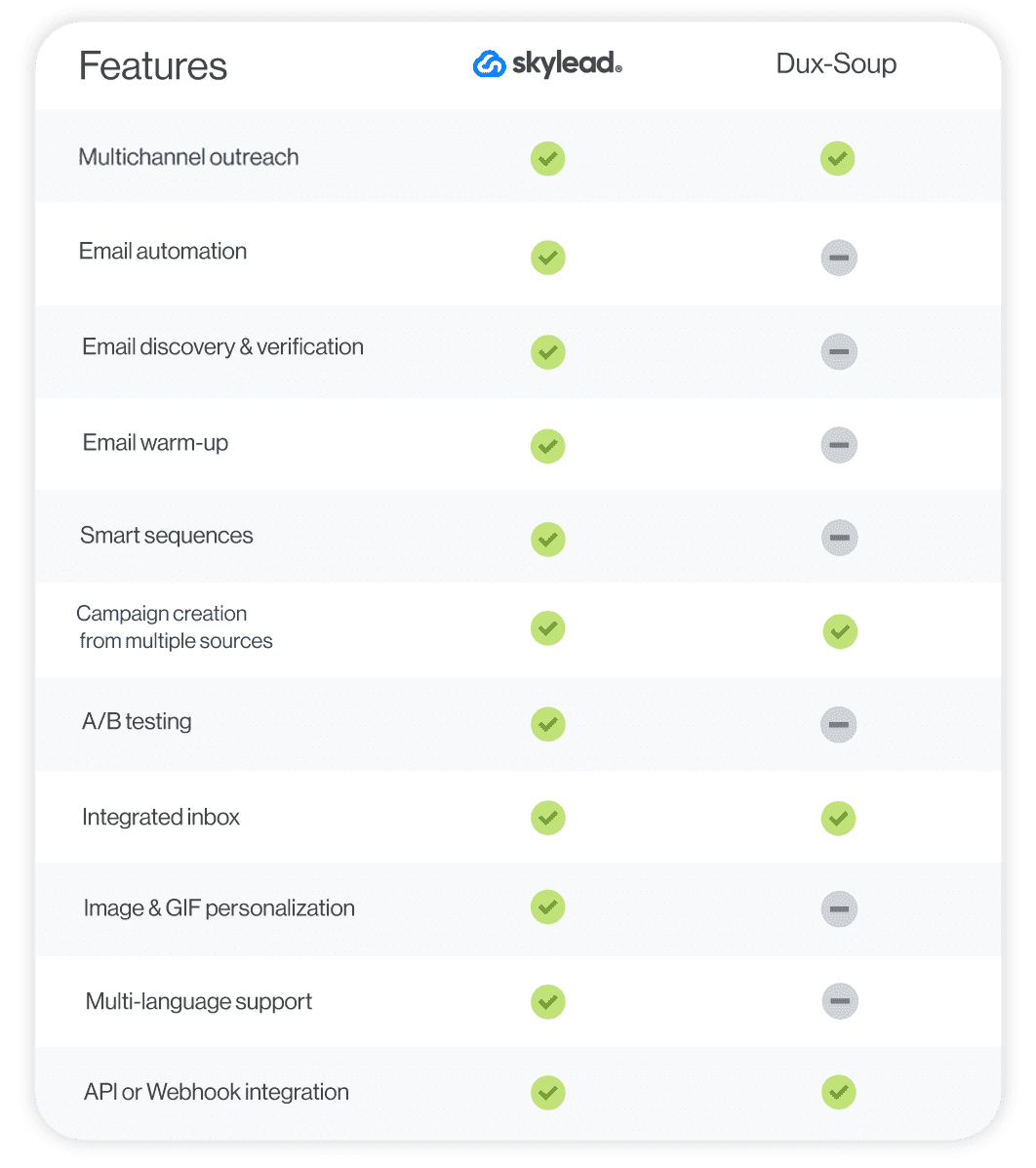
#26 Salesloop - Best for expanding your LinkedIn network on autopilot
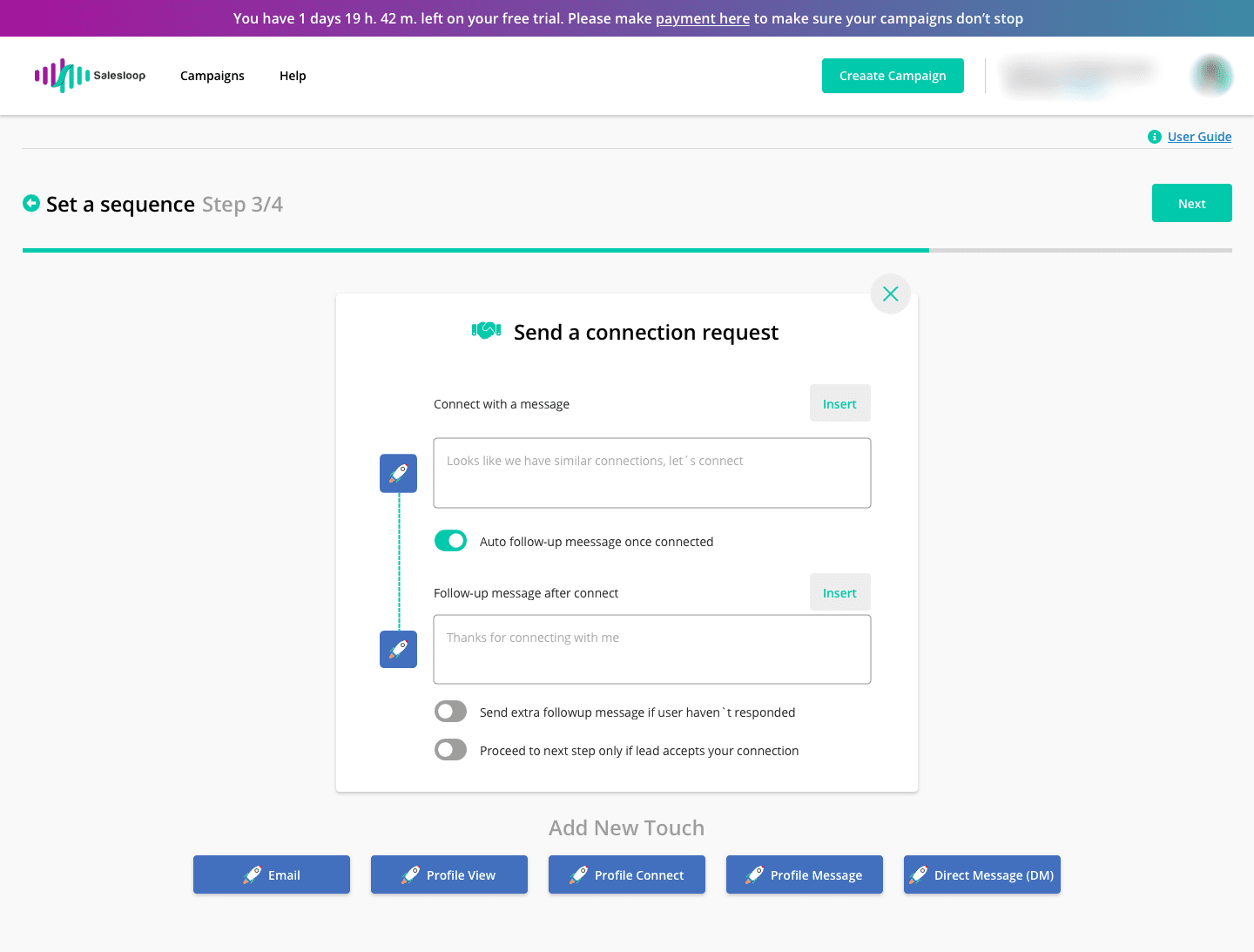
Salesloop is designed to work with all types of LinkedIn accounts: Basic, Premium, Sales Navigator, and Recruiter.
The software allowed us to build campaigns using LinkedIn search and by uploading lead lists in CSV format. Should you decide on the latter, you can also enrich your messages with custom variables for an added dash of personalization (on top of pre-set ones).
To make campaign tracking easier, Salesloop lets you download CSV reports.
Cons
Currently, the software supports LinkedIn automation only, although email and X (Twitter) integration are supposedly in the works. It also misses out on Smart sequences and, instead, relies on simple campaigns for its automation.
Additionally, Saleloop doesn’t integrate with any CRM natively. We were also disappointed to find out you can’t connect it to other tools via webhooks or API.
Lastly, unlike Skylead, which is one of the best sales outreach tools to support image & GIF personalization, Salesloop doesn’t currently offer this feature.
What others said about Salesloop
Krishan Kant S. is grateful for Salesloop because it improves his productivity and increases business performance. On top of that, it brings about financial benefits. He doesn't think the tool has any flaws.
Pricing
- Solo: $49/mo per 1 user
- Team: $199/mo per 6 users ($39 per user with a minimum of 3; tailored plans for more than 6 users)
- Managed Service: $2,000/mo
Rating
- G2: 3.5 (3)
Skylead vs. Salesloop
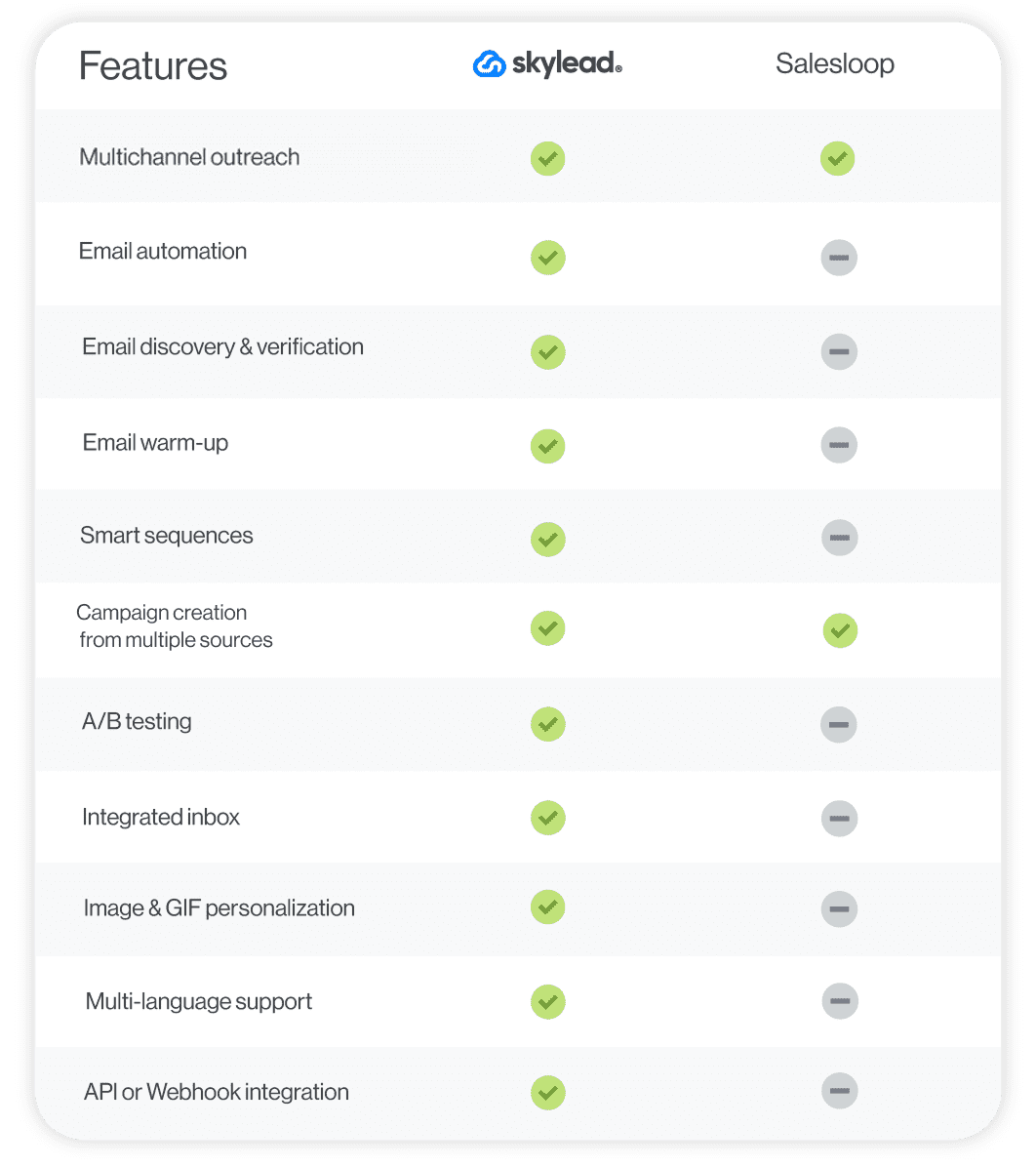
Frequently asked questions (FAQs)
Are sales outreach tools the same as CRM?
No. Sales outreach tools are designed to automate the initial contact with potential customers through various channels (e.g., email, phone). On the other hand, CRM software is all about tracking interactions, managing sales pipelines, and storing information about leads and customers.
Can you use sales outreach tools without a CRM?
You can definitely use sales outreach tools without a CRM, especially if your business is small or just starting to build its sales process. Nonetheless, pairing these tools with a CRM is a smart move as your business grows and interactions with customers increase. This combo ensures a smooth workflow.
How do sales outreach tools ensure data privacy and security?
Sales outreach tools use various methods to safeguard sensitive information. This includes data encryption and compliance with GDPR. Many tools also manage consent and preferences to comply with privacy laws. Furthermore, trustworthy vendors have clear privacy policies and security protocols displayed on their websites.
Select the perfect tool and seal your sales deals easier than ever!
Here's the thing: the sales game has seriously leveled up from the old-school days. Today, we've got a whole arsenal of sales outreach tools at our disposal. Sure, choosing the right one from the bunch can feel like finding a needle in a haystack. But that's what you've got us for! So, if you feel indecisive after all this talk about the top software on the market, choose Skylead.
Start your 7-day free trial now and close more deals than ever—way faster!
Updated on: September 15th, 2026
Disclaimer: Skylead is not affiliated, endorsed by, or connected with LinkedIn in any way.
Is Dripify falling short of your expectations for LinkedIn outreach? Or maybe you're starting to question if another tool can deliver better results? LinkedIn automation has come a long way, and today, we don’t have just 1 Dripify alternative but many more.
And guess what? They all come with distinct features, integrations, and pricing models to suit different preferences.
Curious to know more about these tools? We've compared the top 9 Dripify competitors to help you find the ideal match.
| Dripify alternative ? | Best for ? | Link ? |
| Skylead | Agencies - Hyper-personalized, smart, LinkedIn and email outreach | Read more… |
| Expandi | Automated LinkedIn profile engagement | Read more… |
| Dux-Soup | Automating free and paid InMails | Read more… |
| Meet Alfred | Multichannel outreach across LinkedIn, email, and X | Read more… |
| Waalaxy | Beginners to LinkedIn and email automation | Read more… |
| Apollo | Its extensive lead database | Read more… |
| HubSpot Sales Hub | Scalable outreach with advanced email automation | Read more… |
| Salesrobot | Keeping leads and responses organized | Read more… |
| Lemlist | Email warm-up | Read more… |
But first, let’s:
- Learn more about Dripify and its features.
- Discover the pros and cons of using Dripify.
- Go through user reviews and pricing details.
What is Dripify?
As per their official website, Dripify is a:
"LinkedIn autopilot that works while you sleep."
In other words, it's a LinkedIn automation tool that allows users to manage their lead generation and outreach with automation. LinkedIn automation serves for LinkedIn lead generation purposes.
Dripify connects to free and Premium LinkedIn accounts and enables you to create search or CSV-based drip campaigns to automatically:
- Send invites to connect
- Message your leads
- Send free inMails
- View leads’ profiles
- Follow them
- Endorse their skills
- Like their content
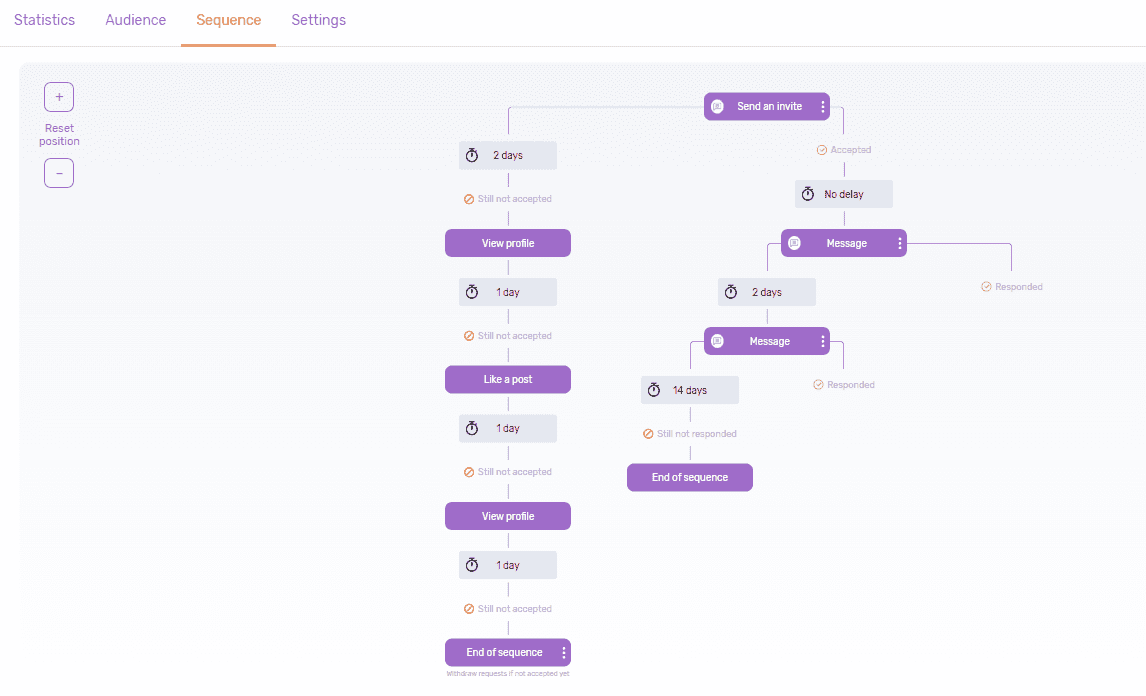
Moreover, the tool allows you to personalize messages with over 15 variables to give your outreach a more human feel.
Beyond outreach, Dripify also serves as a lead extraction tool. It scrapes your leads’ data from LinkedIn, including their:
- Full name
- Company
- Position
- Number of connections
- Phone number
- Website URL
All this information can be compiled into a CSV file that you can download at your convenience.
Dripify also has you covered if you want to collaborate with your team. Namely, you can invite team members directly from the tool, assign them roles, set permissions, and track their performance. Important metrics like conversion rates are displayed on the Analytics page, giving you a bird's-eye view of how everyone performs.
There’s also the integrated inbox that lets you reply to all your LinkedIn messages straight from the platform. Plus, it lets you mark important conversations for easy access later and even add notes to your leads’ profiles to keep everything organized.
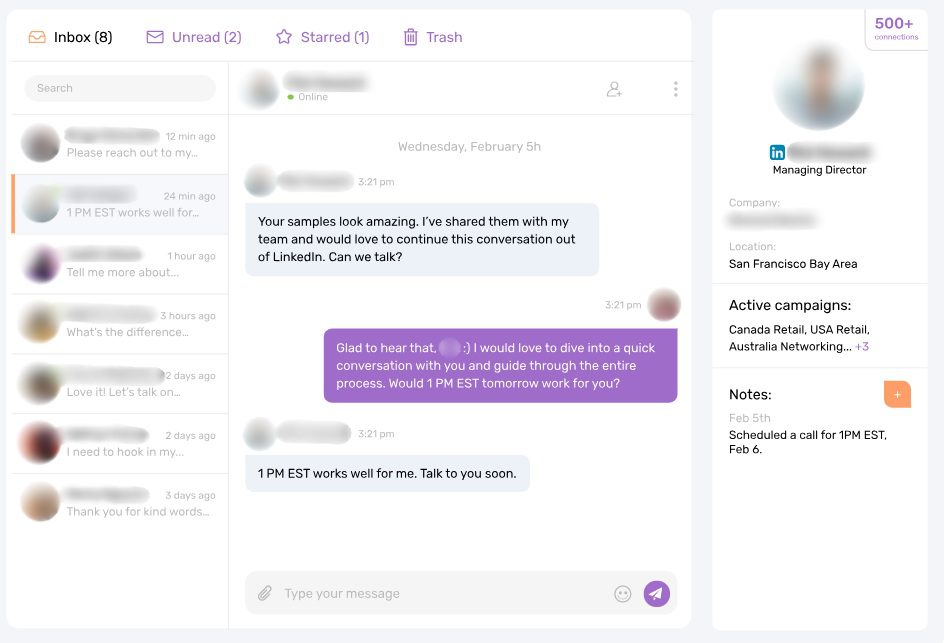
Not to mention, Dripify supports over 1000 integrations via Zapier webhooks, making it incredibly flexible for any workflow.
Who is Dripify for?
Although anyone can use Dripify, the tool is primarily aimed at:
- Business owners
- Sales teams
- Marketing agencies
- Recruiters
For business owners, it’s primarily a tool that takes over the grunt work associated with prospecting, lead generation, and outreach.
In the meantime, sales teams typically use Dripify to automate lead-generation campaigns and track team performance.
Since Dripify supports multiple LinkedIn accounts, it’s a good option for marketing agencies that are managing multiple clients.
As for recruiters, they can use the software to scale their talent acquisition. Want to fill the open roles faster? Dripify automates the entire process.
Is Dripify allowed on LinkedIn?
Generally speaking, LinkedIn is against automation. But that doesn't mean all tools are created equal.
That said, there are 3 types of LinkedIn automation tools you’ll come across:
- Cloud-based tools
- Desktop apps
- Chrome extensions
Dripify falls under the cloud-based category, which is considered the safest. And since it does, the chances of getting your LinkedIn account restricted when using it are a lot lower compared to when using, say, Chrome extensions.
However, the question is, is it as perfect as it seems, or are you better off with a Dripify alternative?
Dripify cons
While good in some aspects, Dripify is far from perfect. The biggest limitation? It supports just 1 channel: LinkedIn.
Many sales outreach tools nowadays (and outreach tools in general) offer the ability to reach leads across multiple platforms. Why is this valuable, though? Because with support for multichannel outreach, you can reach prospects where they’re most active.
Say someone you’re targeting isn’t active on LinkedIn. Dripify can still send them a connection request, but what good is it if they never see it? If you could send them an email, however—which they’re likely to check—the chances of getting a response would be much higher.
That said, here are some other areas where Dripify falls short that may warrant looking for an alternative solution:
- No email finding or verification – While it scrapes LinkedIn data, the software can’t find or verify your leads' emails.
- Lacks A/B testing – Although you can create multiple campaigns and compare their results, Dripify doesn’t have real in-campaign A/B testing.
- Limited personalization options – There’s no support for advanced personalization, like using images or GIFs in your messages, which can make them feel more engaging.
- No one-on-one onboarding– Their customer support team is available 24/7. Nonetheless, Dripify doesn’t offer personalized onboarding. This can be a drawback for users who prefer more hands-on help when getting started.
So, if you find any of these functionalities essential, Dripify may not be the most ideal option.
But a Dripify alternative just might!
What do Dripify reviews say?
During our research, we came across both positive and negative Dripify reviews.
As for the positives, a lot of users appreciate the software’s ease of use and the effectiveness of its automation features.
For instance, Jong Chan C., a Venture Manager, said:
‘’I tried Dripify, which revolutionized my LinkedIn outreach strategy with its rich features and automation.’’
Conversely, some users have pointed out areas where Dripify could improve.
Although he mentioned how intuitive the tool is, Zach E. mentioned that it:
‘’Would be great if they had the ability to use the paid InMail credits through campaigns.’’
Meanwhile, Laurens V. noted that:
‘’Inbox is a bit slow in updating. Not super easy to see where your converted leads come from.’’
Dripify pricing
Dripify offers 3 distinct pricing plans:
| Basic | $59/mo per seat |
| Pro | $79/mo per seat |
| Advanced | $99/mo per seat |
If you opt to pay for the annual subscription, you’ll get a 35% discount.
As for the differences, with the Basic plan, you can run 1 drip campaign at a time. Meanwhile, Pro & Advance plans let you run as many as you want.
That said, if you're managing multiple campaigns or clients, the Pro or Advanced plan may be better suited.
Or another Dripify alternative, that is.
9 Dripify competitors to help you find a perfect alternative
Dripify is not the only outreach player in the game. With that in mind, we’ve rounded up 9 Dripify competitors that exist on the market.
Let’s break them down one by one to help you find your ideal Dripify alternative!
Dripify alternative #1: Skylead
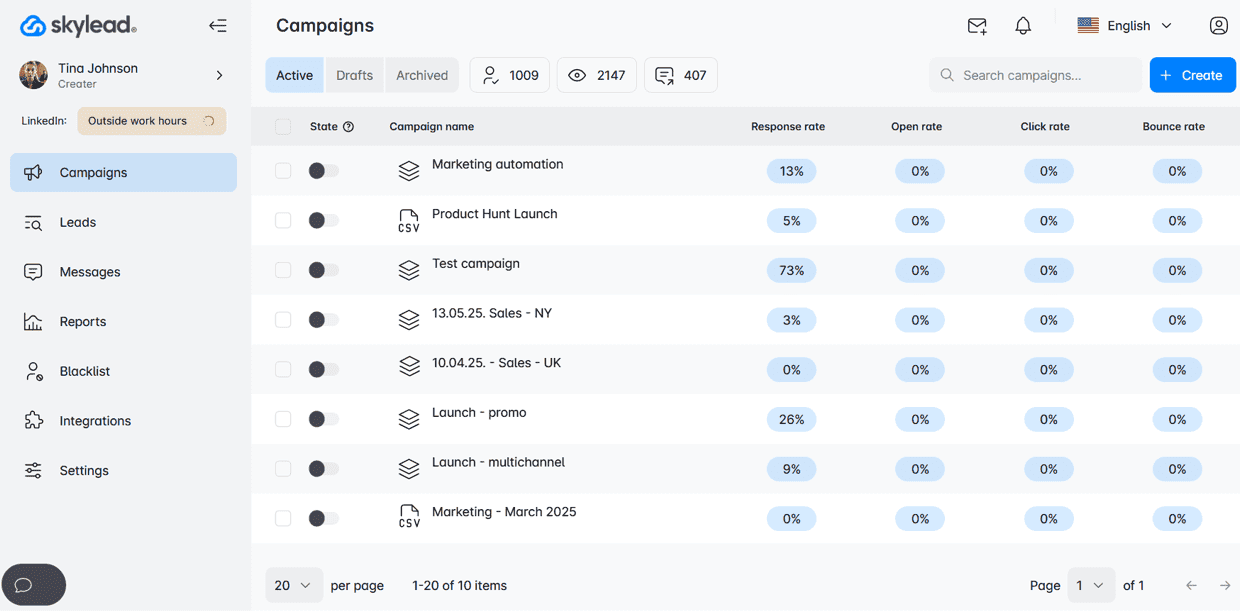
Why, yes. That’s us! ?
Skylead is your ultimate LinkedIn automation tool and cold email software that supports both LinkedIn and email automation.
It’s designed to help sales teams, marketers, founders, agency owners in particular, and recruiters scale their outreach while saving +11 hours a week.
It’s an All-In-One platform that offers every tool you need in one package—and at a single price.
That said, our Skylead is a combination of a:
- LinkedIn prospecting (account-based prospecting)
- LinkedIn automation tool
- Cold email software
- Email finder & verifier
- AI data enrichment
Compared to Dripify, Skyleads supports email outreach as well. This means you can use it to connect with leads thanks to our first-to-market Smart sequences.
Speaking of email outreach, Skylead lets you send tens of thousands of emails a month at no extra cost. How? It allows you to connect unlimited email accounts and auto-rotates between them when sending emails, all while protecting your domain.
Thanks to our partnership with an email warm-up tool, Mailivery, you also get to warm up infinite mailboxes to keep your emails away from spam.
Skylead also supports A/B testing, helping you fine-tune your campaigns by testing the impact of different message variations and subject lines.
Personalization-wise, there are different message variables for you to try alongside our native image & GIF personalization.
And, with the Smart Inbox, you can keep all your conversations in one place, making it easy to track, label, and manage responses.
Finally, if you need to integrate Skylead with another tool, you can do so. The tool can connect to any CRM or software via Zapier webhooks or API.
Exciting, right?
Now, let’s cover the features that make Skylead truly shine in greater detail!
Account-based prospecting
The best way to find your ideal leads is to find your ideal companies first. That is exactly what Skylead offers - account-based prospecting. With it you can:
- Create account lists directly in Skylead
- And discover contacts by company to reach out to them.
In other words, once you add your companies, Skylead can help you find and match contacts within those selected companies so your pipeline stays aligned to your ICP. This way, you can really zero in on your target companies that are most likely to convert, are your true partners, and have greater lifetime value.
Smart sequences
Smart sequences are algorithms that combine LinkedIn and email outreach actions with if/else conditions. Actions in the sequence unfold according to your prospects’ behavior with the goal of finding the fastest path to them.
As mentioned, Smart sequences react to the way your prospects behave. And they do it in real-time.
Here’s one Smart sequence.
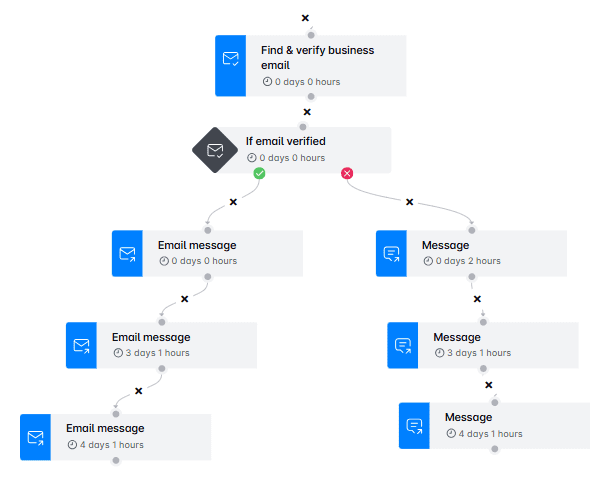
Of course, this is just one scenario. You can create a Smart sequence any way you like to cover an infinite number of them.
Email finder & verifier
So, you’ve set up your perfect Smart sequence, but what if you also want to reach your prospects via email and you’re missing their contact details?
That’s where our email discovery and verification feature comes in to save the day. Add it as a step while creating your outreach campaign, and the tool will provide you with double-verified emails.
But why is our email finder and verifier so powerful? Because it reduces bounce rates and increases the chances of your messages being actually seen. Moreover, unlike other tools that rely on risky Chrome extensions to find emails, we use a safer, more reliable method. Combine that with our market-leading email verification accuracy, and you’ve got a winning solution.
Not to mention, this functionality is built right into the platform. So, yes, it doesn’t rely on third-party tools, as is the case with some other tools that offer it.
AI data enrichment
Apart from email discovery and verification, we introduced a game-changing feature - AI data enrichment, which you can use to:
- Enrich contact & company data
- Prompt AI to get specified info or generate personalized icebreakers for each contact
- Use all gathered info directly inside your sequences as variables.
It’s Clay-like in what it can uncover, but it’s connected to your outreach workflow, so you avoid constant tool switching and data importing.
Image & GIF personalization
Your leads are more likely to pay attention to—and remember—messages that stand out visually.
And what better way to ensure that than with our very own image and GIF personalization feature?
Instead of sending a plain message, add an image to it. Then, use our built-in editor to enrich it with your prospect's name, company logo, or another detail that feels like it was created just for them. The same goes for GIFs.

Choose to use it, and you’ll see an increase in response rate of 63% or more.
Who knows? You may even beat this result!
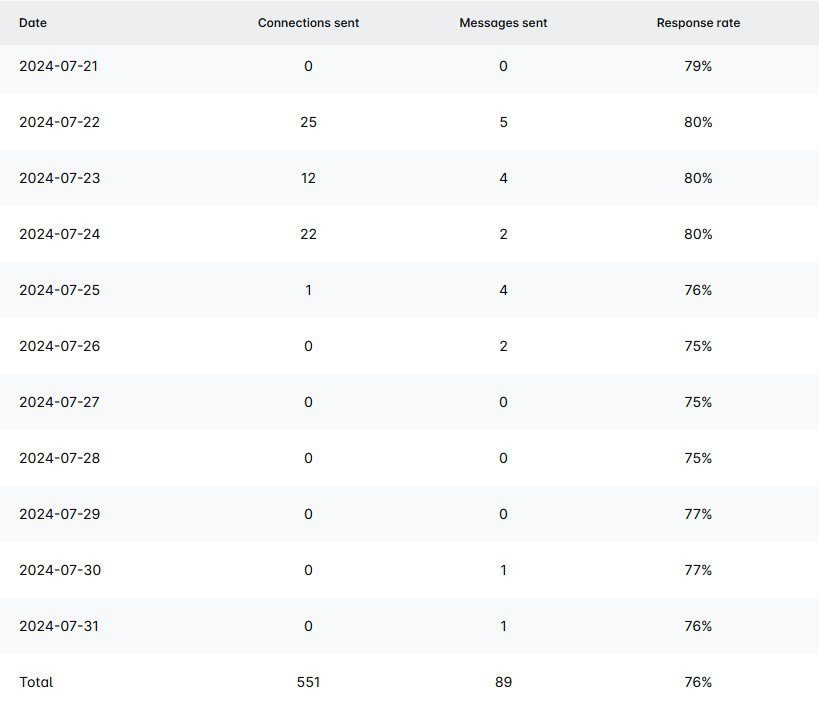
Smart inbox
No more bouncing between platforms to keep track of messages,. Everything is right here, in Skylead’s Smart inbox.
What sets our Smart Inbox apart, however, is its labeling feature. You can label chats to monitor your leads’ journey, track conversions, and even measure ROI.
That said, feel free to create custom ones that fit seamlessly into your workflow. Whether you want to categorize based on lead status, priority, or custom tags, the flexibility is all yours.
Advanced reporting
Do you feel like digging deeper into your outreach campaigns to see what’s working and what needs tweaking? The Reports page has got you covered!
Here, you can analyze your campaigns in:
- Graph view – This view helps you quickly spot oscillations to assess your campaigns at a glance.
- Table view – The table format makes it easy to observe how your metrics fluctuate day by day, giving you insights into which days perform best.
- Step-by-step view – This is especially useful for A/B testing, as it shows precisely how recipients engage at each stage of your sequence.
Skylead also lets you export these reports in 2 different formats: CSV and PDF. You can download them to share results with your team or keep track of your progress over time.
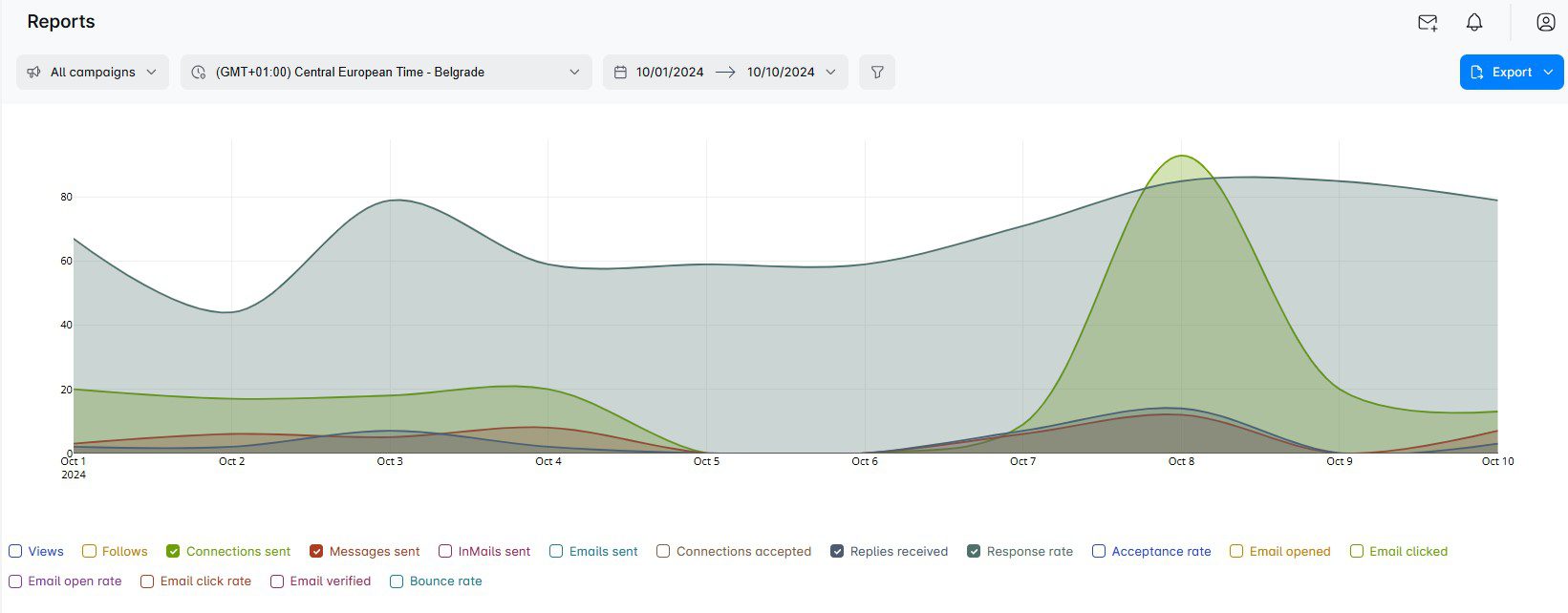
What do Skylead reviews say?
If you think we’re biased—with Skylead being ours and all—look at all the glowing reviews that we’ve got!
For example, Ian B. said we have:
‘’Full, rich features combined with a logical interface and 24-hour customer care. Easy to set up and manage. This platform has important features others are missing.’’
Tony B. has also praised us, our customer success team in particular. He said:
‘’Customer service is fantastic, response time is excellent, I have sent thorough screenshots when I have hit a snag, and they are all over it. This has saved me a huge amount of time, and there is no way that I could ever connect with 60 new people a day without this automation.’’
Skylead pricing
Skylead comes with a single pricing plan.
For just $100 a month per seat, you’re getting a one-stop-shop tool for your outreach.
No confusing tiers, no hidden fees—just one price for all the tools you need to supercharge your outreach.
And what more could you ask for?
Dripify vs. Skylead
| Features | Skylead | Dripify |
| Cloud-based multichannel outreach | ✅ | ✅ |
| Email automation | ✅ | ❌ |
| Email verification | ✅ | ❌ |
| Email warm-up | ✅ | ❌ |
| Smart sequences | ✅ | ✅ |
| A/B testing | ✅ | Limited |
| Integrated inbox | ✅ | ✅ |
| Image & GIF personalization | ✅ | ❌ |
| API or Webhook integration | ✅ | ✅ |
| 1-on-1 Onboarding | ✅ | ❌ |
Dripify alternative #2: Expandi
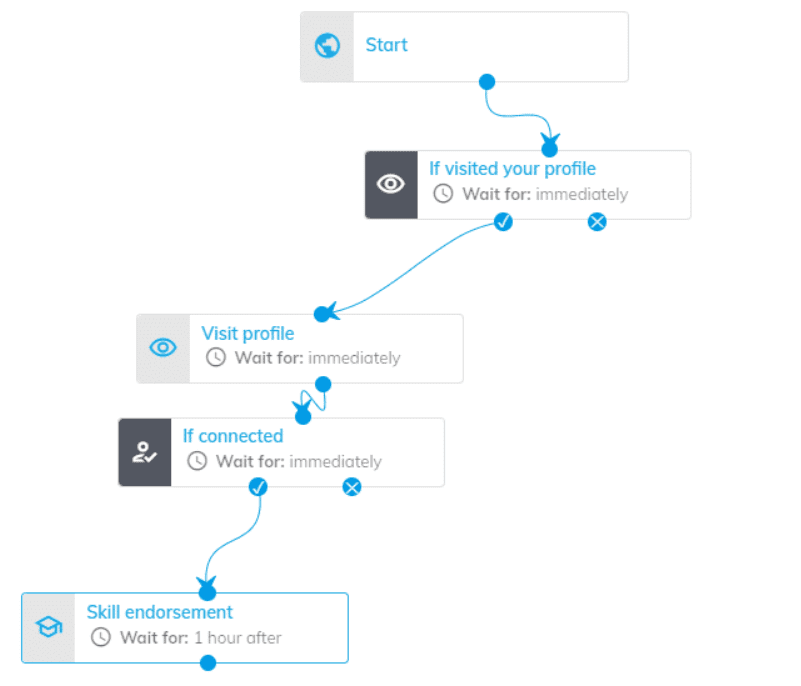
Expandi is a cloud-based Dripify alternative.
Much like Skylead, it comes with Smart sequences for your multichannel campaigns.
However, you can send automated LinkedIn connection requests, messages, and free inMails. The tool can also perform additional automatic actions, which include auto-liking posts and endorsing skills.
But it’s not all rainbows and sunshine.
Although Expandi technically allows users to enrich outreach messages with personalized images and GIFs, this feature isn’t natively built into the platform. Instead, it’s integrated through a third-party tool called Hyperise and costs an additional $69 a month.
Furthermore, if you need to verify emails or find contact information outside of LinkedIn, don’t count on Expandi to help. It doesn’t offer this functionality.
Expandi pricing
| Business | $99/mo per seat |
| Agency | Custom |
Dripify vs. Expandi
| Features | Skylead | Dripify | Expandi |
| Cloud-based multichannel outreach | ✅ | ✅ | ✅ |
| Email automation | ✅ | ❌ | ✅ |
| Email verification | ✅ | ❌ | ❌ |
| Email warm-up | ✅ | ❌ | ❌ |
| Smart sequences | ✅ | ✅ | ✅ |
| A/B testing | ✅ | Limited | ✅ |
| Image & GIF personalization | ✅ | ❌ | Not-native; through Hyperise |
| API or Webhook integration | ✅ | ✅ | ✅ |
| 1-on-1 Onboarding | ✅ | ❌ | ❌ |
Dripify alternative #3: Dux-Soup
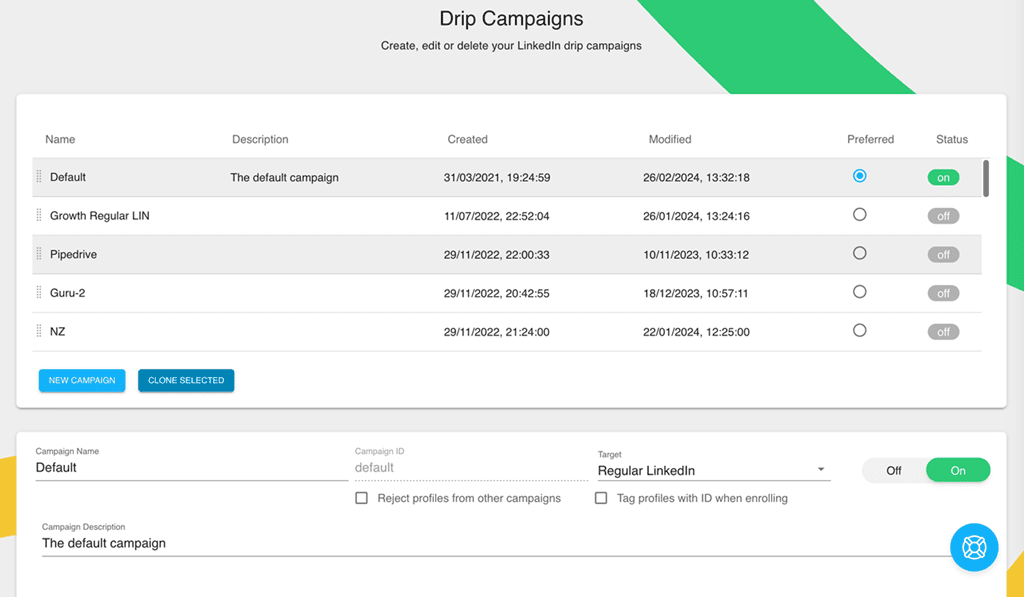
Dux-Soup is another LinkedIn automation tool on our list.
Originally a Chrome extension, it’s now available as a cloud-based solution, but only if you opt for their highest-tier plan.
With Dux-Soup, you can automate actions like:
- Follows
- Profile views
- Connection requests
- Messages to 1st-degree connections
- Free & paid inMails
- Endorsements
You can combine these into simple drip campaigns that stop when your prospects respond. Plus, you can customize time delays between actions to make your outreach appear more natural.
Dux-Soup offers real-time performance tracking so you can keep an eye on your campaign results. It integrates directly with Pipedrive and HubSpot, and you can connect it to other CRMs through Zapier webhooks.
However, the tool has some limitations. It doesn’t support email outreach, so your outreach efforts are restricted to LinkedIn.
And, if you’re not on their highest-tier plan, you’ll have to rely on the Chrome extension, which comes with its own risks. Not only does it run the risk of getting your LinkedIn account flagged, but it also only works while your browser is open, limiting how hands-free your campaigns can be.
Dux-Soup pricing
| Individual & Team plans | |
| Pro Dux | $14.99/mo per seat |
| Turbo Dux | $55/mo per seat |
| Cloud Dux | $99/mo per seat |
| Agency plans | |
| Pro Dux | from $337.50/mo, 30+ seats |
| Turbo Dux | from $412.50/mo, 10+ seats |
| Cloud Dux | from $371/mo, 5+ seats |
Dripify vs. Dux-Soup
| Features | Skylead | Dripify | Dux-Soup |
| Cloud-based multichannel outreach | ✅ | ✅ | Higher subscription required |
| Email automation | ✅ | ❌ | ❌ |
| Email verification | ✅ | ❌ | ❌ |
| Email warm-up | ✅ | ❌ | ❌ |
| Smart sequences | ✅ | ✅ | ❌ |
| A/B testing | ✅ | Limited | ✅ |
| Image & GIF personalization | ✅ | ❌ | ❌ |
| API or Webhook integration | ✅ | ✅ | ✅ |
| 1-on-1 Onboarding | ✅ | ❌ | ❌ |
Dripify alternative #4: Meet Alfred
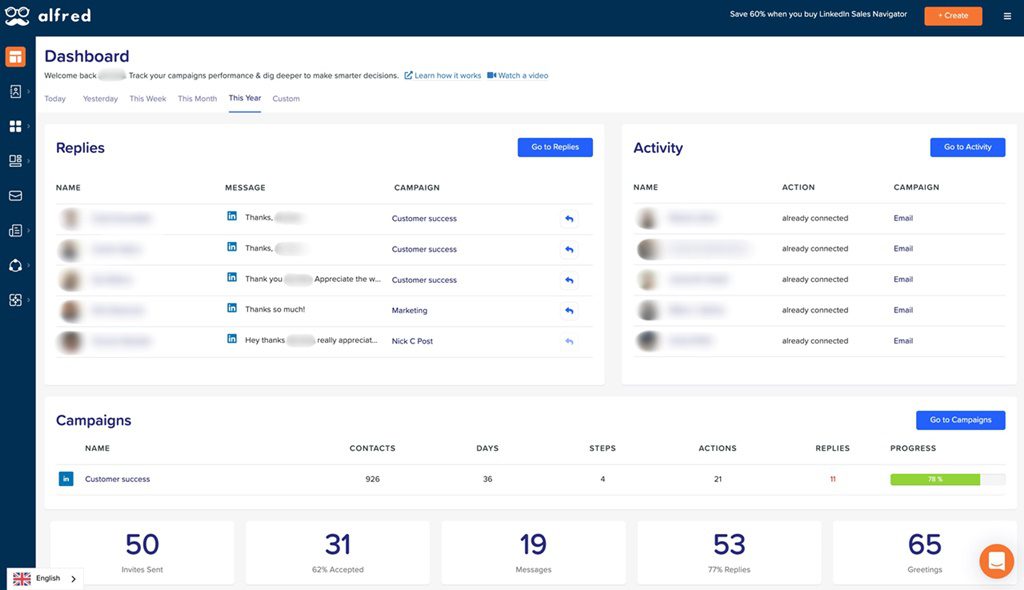
Meet Alfred is a cloud-based Dripify alternative that takes multichannel outreach up a notch.
It supports outreach across LinkedIn, email, and X (formerly Twitter). But here’s the catch: you’ll need to be on the Pro or Teams plan to access all those channels. The Basic plan leaves you to work with LinkedIn alone.
With Meet Alfred, you can build campaigns with unlimited steps, including:
- Profile views
- Connection requests
- Follow-up messages
- inMails
- Emails
- X DMs
To keep things looking natural, you can also set delays between actions.
When it comes to personalization, the tool offers message variables and templates to save you time crafting messages.
While you can connect your Instagram and Facebook accounts, you won’t be able to run outreach campaigns on those platforms. Instead, you can use them to schedule posts and manage content.
Another limitation is that Smart sequences aren’t available.
Lastly, Meet Alfred has an integrated inbox, but it only shows LinkedIn messages. If you need to check your DMs or emails, you'll have to do that manually.
Meet Alfred pricing
| Basic | $59/mo per user |
| Pro | $99/mo per user |
| Teams | $79/mo per user *3 users minimum |
Dripify vs. Meet Alfred
| Features | Skylead | Dripify | Meet Alfred |
| Cloud-based multichannel outreach | ✅ | ✅ | ✅ |
| Email automation | ✅ | ❌ | ✅ |
| Email verification | ✅ | ❌ | ❌ |
| Email warm-up | ✅ | ❌ | ❌ |
| Smart sequences | ✅ | ✅ | ❌ |
| A/B testing | ✅ | Limited | ❌ |
| Image & GIF personalization | ✅ | ❌ | ❌ |
| API or Webhook integration | ✅ | ✅ | ✅ |
| 1-on-1 Onboarding | ✅ | ❌ | Higher subscription required |
Dripify alternative #5: Waalaxy
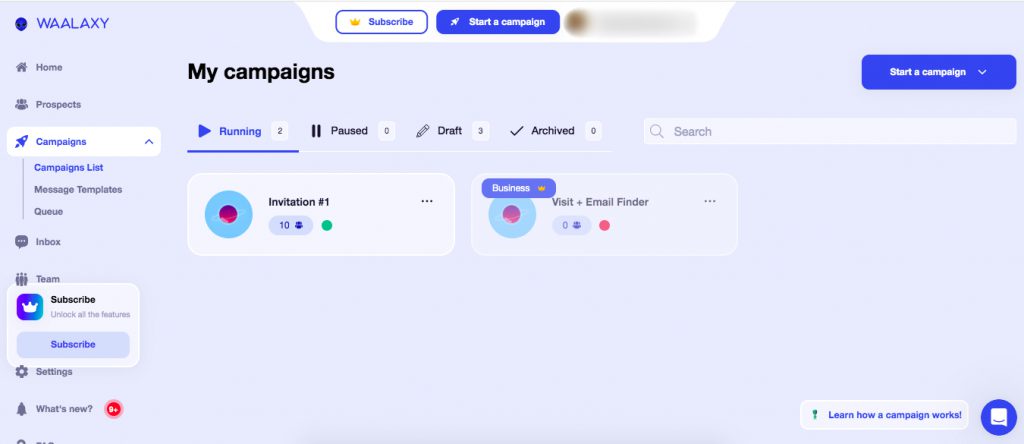
Waalaxy is a cloud-based solution. It supports multichannel outreach, combining both LinkedIn and email, so you can connect with your prospects on the platforms they prefer.
With message variables and A/B testing, Waalaxy lets you personalize and fine-tune your outreach to see which versions get the best responses.
Plus, if you need help crafting those messages, the platform has an AI writing assistant. It could potentially replace ChatGPT for sales and marketing copywriting.
But, as with any tool, there are a few limitations.
One of the biggest downsides is that you can’t create outreach sequences from scratch. Instead, you’ll have to work within pre-made templates, which can feel restrictive if you want more control over your campaigns.
Also, the email discovery and verification feature isn’t natively built into Waalaxy. It relies on a third-party integration with Dropcontact, which adds extra cost.
Speaking of extra costs, Waalaxy’s inbox feature—which consolidates your messages—requires an additional payment.
Finally, while Waalaxy does offer a free version, it runs as a Chrome extension. As with other extensions, this can potentially put your LinkedIn account at risk. So, be cautious if using the free plan.
Waalaxy pricing
| Free | |
| Advanced | $88/mo per seat |
| Business | $131/mo per seat |
| Team | From $88/mo *The final price depends on the payment term, number of seats, and selected features. |
Waalaxy charges an extra $44 a month for the LinkedIn inbox.
Also, if you need additional email finder credits, you can purchase them. However, expect to pay another $0.01 for each email address found.
Dripify vs. Waalaxy
| Features | Skylead | Dripify | Waalaxy |
| Cloud-based multichannel outreach | ✅ | ✅ | ✅Free version / Chrome extension |
| Email automation | ✅ | ❌ | ✅ |
| Email verification | ✅ | ❌ | Not native; through Dropcontact |
| Email warm-up | ✅ | ❌ | ❌ |
| Smart sequences | ✅ | ✅ | ❌ |
| A/B testing | ✅ | Limited | ✅ |
| Image & GIF personalization | ✅ | ❌ | ❌ |
| API or Webhook integration | ✅ | ✅ | ✅ |
| 1-on-1 Onboarding | ✅ | ❌ | ❌ |
Dripify alternative #6: Apollo
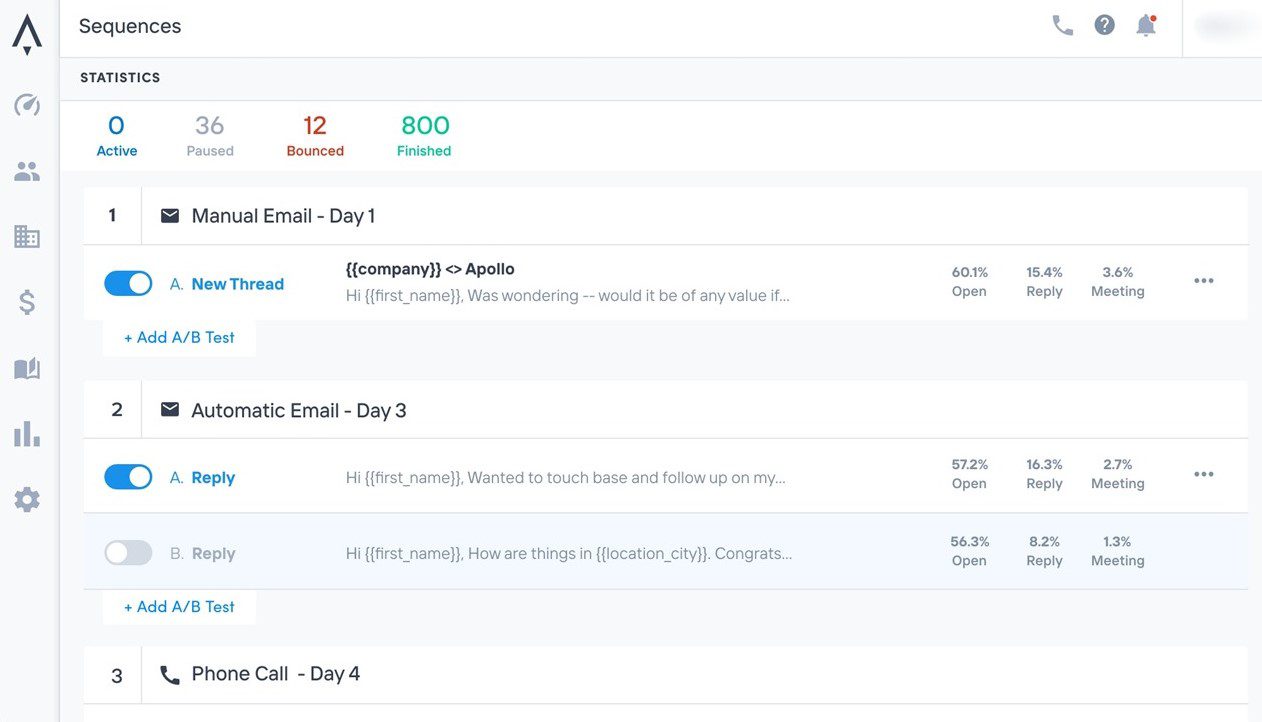
Apollo is a multichannel sales engagement platform that’s primarily cloud-based.
Its multichannel sequences—Playbooks—let you mix emails, LinkedIn, and calls into a single workflow. However, the Playbooks aren’t "smart," meaning they won’t adjust automatically based on your prospect’s responses.
On the bright side, Apollo integrates with tools like PipeDrive, HubSpot, and Slack.
It comes with A/B testing to help you optimize your campaigns. Moreover, if you’re ever stuck on how to write a message, Apollo’s built-in AI assistant is there to help.
Apollo also gives you access to its internal lead database of over 275 million contacts. But, fair warning—some users have found the lead quality to be a bit inconsistent.
Another downside is that Apollo scrapes new leads from LinkedIn using a Chrome extension, which isn’t ideal. Using it can be risky and might put your LinkedIn account in jeopardy.
Apollo pricing
| Free | $0/mo per user with 1 mailbox / 2 sequences |
| Basic | $59/mo per user with 1 mailbox / 2 sequences |
| Professional | $99/mo per user with 5 mailboxes / Unlimited sequences |
| Organization | $149/mo per user with 15 mailboxes / Unlimited sequences *3 users minimum, billed annually |
Dripify vs. Apollo
| Features | Skylead | Dripify | Apollo |
| Cloud-based multichannel outreach | ✅ | ✅ | ✅ |
| Email automation | ✅ | ❌ | ✅ |
| Email verification | ✅ | ❌ | ✅ |
| Email warm-up | ✅ | ❌ | ✅ |
| Smart sequences | ✅ | ✅ | ❌ |
| A/B testing | ✅ | Limited | ✅ |
| Image & GIF personalization | ✅ | ❌ | ❌ |
| API or Webhook integration | ✅ | ✅ | ✅ |
| 1-on-1 Onboarding | ✅ | ❌ | ❌ |
Dripify alternative #7: HubSpot Sales Hub
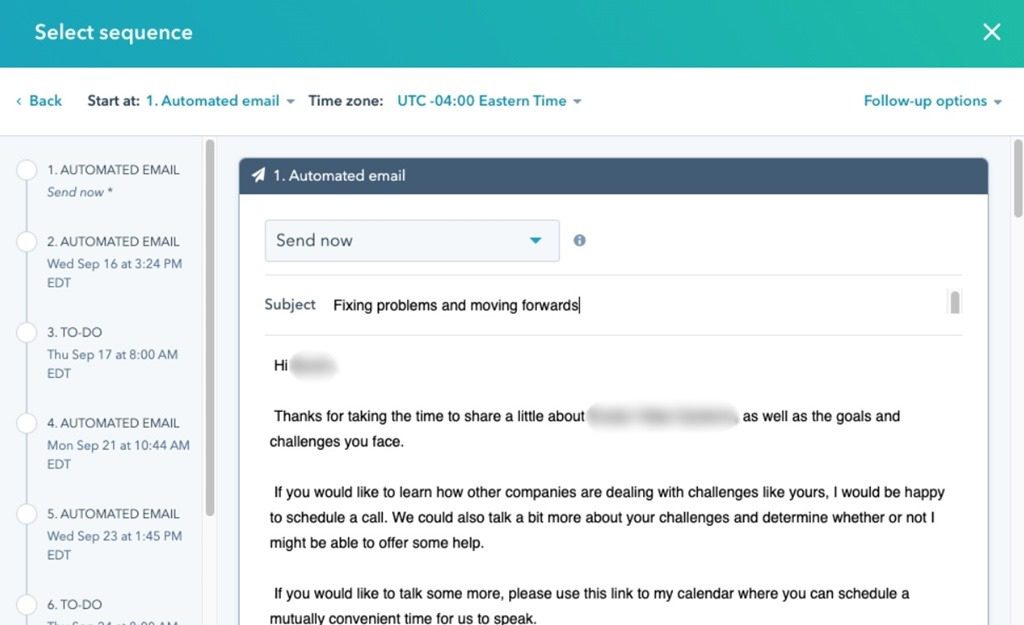
HubSpot Sales Hub is a cloud-based platform built with sales professionals in mind.
With it, you can connect up to 200 mailboxes (100 on a lower-tier plan) and send up to 1,000 emails daily (500 on a lower plan). Plus, the platform lets you create up to 5,000 sequences, albeit not smart, that include automated emails and follow-ups—ideal for scaling your outreach.
While HubSpot offers multichannel capabilities, they’re somewhat limited. You can add cold calling and LinkedIn outreach to your sequences.
When it comes to LinkedIn, HubSpot only supports connection requests and inMails. Not to mention, you’ll need a Sales Navigator subscription to access those features. While HubSpot does offer a relatively high limit on connected mailboxes, it’s still a bit limiting. Skylead, however, gives you the freedom to connect an unlimited number of email accounts.
HubSpot Sales Hub pricing
| Sales Hub Professional | $100/mo per seat / up to 100 mailboxes |
| Sales Hub Enterprise | From $150/mo per seat / up to 200 mailboxes |
Dripify vs. HubSpot Sales Hub
| Features | Skylead | Dripify | HubSpot Sales Hub |
| Cloud-based multichannel outreach | ✅ | ✅ | ✅ |
| Email automation | ✅ | ❌ | ✅ |
| Email verification | ✅ | ❌ | ✅ |
| Email warm-up | ✅ | ❌ | Costs extra |
| Smart sequences | ✅ | ✅ | ❌ |
| A/B testing | ✅ | Limited | ✅ |
| Image & GIF personalization | ✅ | ❌ | ❌ |
| API or Webhook integration | ✅ | ✅ | ✅ |
| 1-on-1 Onboarding | ✅ | ❌ | Costs extra |
Dripify alternative #8: Salesrobot
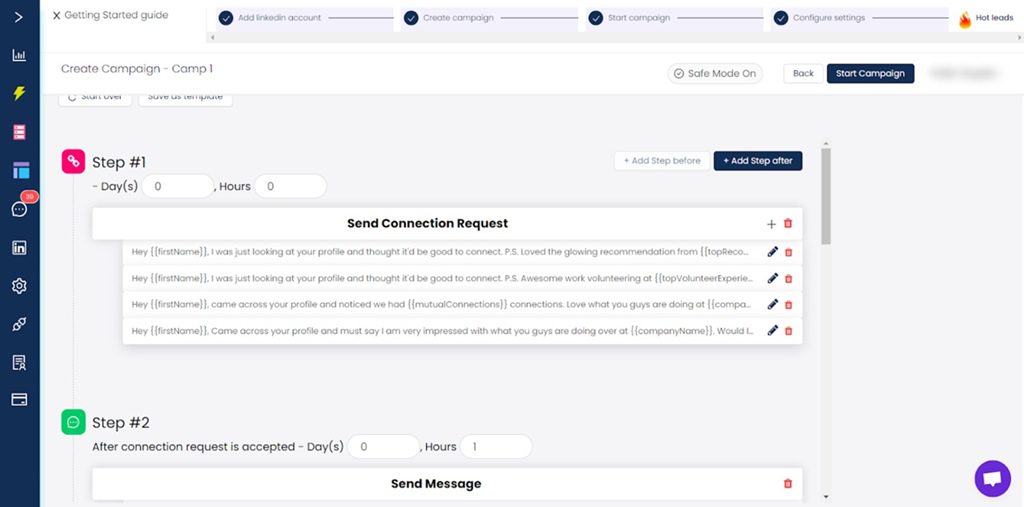
Salesrobot is a cloud-based LinkedIn and email automation tool that uses a Chrome extension to execute tasks.
It allows you to pull prospects from:
- CSV files
- Sales Navigator search URL
- LinkedIn search URL
- LinkedIn groups
- LinkedIn events
- Post comments
When it comes to LinkedIn actions, with Salesrobot, you can automatically:
- Like your prospect’s most recent post
- Leave an automated comment
- Follow them
- Send a connection request
- Endorse their skills
The tool supports 2-way integrations with all CRMs and outreach tools through webhooks. Not to mention, there are direct integrations with popular platforms like Salesforce, Pipedrive, and HubSpot.
Its mini CRM, equipped with smart reply detection, lets you handle everything in one place. Here, you can reply to messages, tag positive leads, and apply advanced filters to keep your outreach organized.
Downsides-wise, Salesrobot only supports free inMails, so if you need paid inMails, you’re out of luck.
It also can’t find prospects’ or verify leads’ emails unless they’re publicly available.
Lastly, since it uses a Chrome extension for executing tasks, it can potentially lead to LinkedIn account restrictions. Therefore, it isn’t a perfect Dripify alternative.
Salesrobot pricing
| Starter | $99/mo per user / 1 LinkedIn & 1 email account |
| Pro | $397/mo per user / 1 LinkedIn & 10 email accounts *billed quarterly |
| Pro+ | $497/mo per user / 1 LinkedIn & 10 email accounts *billed quarterly |
Dripify vs. Salesrobot
| Features | Skylead | Dripify | Salesrobot |
| Cloud-based multichannel outreach | ✅ | ✅ | ❌ |
| Email automation | ✅ | ❌ | ✅ |
| Email verification | ✅ | ❌ | ❌ |
| Email warm-up | ✅ | ❌ | ❌ |
| Smart sequences | ✅ | ✅ | ❌ |
| A/B testing | ✅ | Limited | Limited |
| Image & GIF personalization | ✅ | ❌ | ❌ |
| API or Webhook integration | ✅ | ✅ | ✅ |
| 1-on-1 Onboarding | ✅ | ❌ | Higher subscription required |
Dripify alternative #9: Lemlist
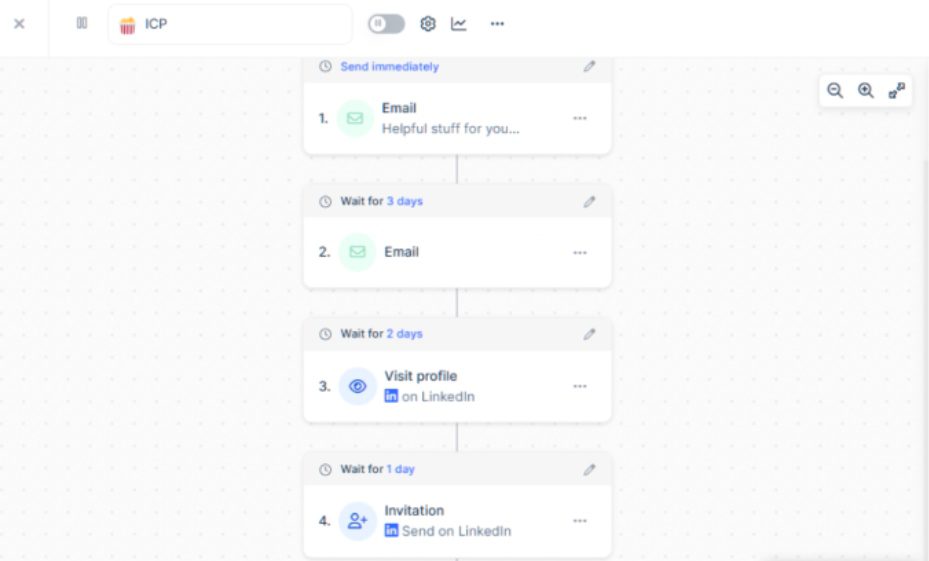
Lemlist is a cloud-based platform primarily designed for email outreach. However, with the higher-tier subscription, it expands to multichannel outreach, specifically supporting LinkedIn outreach and cold calling.
On LinkedIn, Lemlist can automatically:
- Visit leads' profiles,
- Send them connection invites,
- Send messages.
If you want to perform additional actions on LinkedIn (and make calls) using Lemlist, you can. However, you’ll have to do it manually once the tool reminds you to.
Nonetheless, this is somewhat compensated for with the ability to add conditions to your sequences. These make it possible to cover several different outreach scenarios.
When it comes to the key Lemlist feature, we must mention the so-called Lemwarm, its email warm-up. Using email warm up tools like Lemwarm, you can boost your email deliverability and keep emails from landing in the spam folder.
But where does Lemlist fall short?
For starters, its email finder and verifier, albeit useful, is quite limited. Even on the highest subscription, you're capped at finding and verifying up to 1,000 emails only. You can purchase more of these, but this will cost you extra.
Likewise, connecting up to 15 mailboxes is restricted to the top-tier plan. Not to mention, this is quite far from the unlimited number of mailboxes Skylead lets you add.
Finally, while Lemlist is cloud-based, its reliance on a Chrome extension for LinkedIn prospecting is concerning. So, if you're focused on keeping your LinkedIn account safe, this might be a dealbreaker that pushes you toward a different Dripify alternative.
Lemlist pricing
| Free | |
| Email Starter | $39/mo per user / 1 email account / 100 email verification credits |
| Email Pro | $69/mo per user / 3 email accounts / 150 email verification credits |
| Multichannel Expert | $99/mo per user / 5 email accounts & 1 LinkedIn account / 300 email verification credits |
| Outreach Scale | $159/mo per user / 15 email accounts & 1 LinkedIn account / 1,000 email verification credits |
Need more email verification credits? You can get an additional 20 for $1.
Dripify vs. Lemlist
| Features | Skylead | Dripify |
| Cloud-based multichannel outreach | ✅ | ✅ |
| Email automation | ✅ | ❌ |
| Email verification | ✅ | ❌ |
| Email warm-up | ✅ | ❌ |
| Smart sequences | ✅ | ✅ |
| A/B testing | ✅ | Limited |
| Integrated inbox | ✅ | LinkedIn inbox only |
| Image & GIF personalization | ✅ | ❌ |
| API or Webhook integration | ✅ | ✅ |
| 1-on-1 Onboarding | ✅ | ❌ |
Frequently asked questions (FAQs)
1. What does Dripify do?
Dripify is a LinkedIn automation tool that streamlines outreach, lead generation, and prospecting. It automates tasks like sending connection requests, messages, and free inMails while also helping personalize messages with 15+ variables.
2. Does Dripify offer a free trial?
Yes, Dripify offers a free trial, allowing potential users to explore the platform and its features before committing to a paid plan.
3. How long is Dripify free trial?
Dripify’s free trial lasts for 7 days.
Find your ideal Dripify alternative
We’ve gone through all the Dripify alternatives on the list. Now, it’s time to choose the one to level up your outreach.
As you make your decision, keep in mind—the right tool should save you time, optimize your workflow, and deliver real, measurable results.
Skylead checks all these boxes!
With Smart sequences, powerful personalization, and built-in analytics, it gives you everything you need—all in one platform.
Ready to supercharge your outreach, save +11 hours a week, and drive more conversions?
Give our 7-day free trial a chance and discover a smarter, more efficient way to connect with leads.
Updated on: September 15th, 2026
Are you looking for the top sales engagement platforms in 2026? Well, you’re in the right place! In fact, we tested the most widely used tools to see how they actually perform in real-life scenarios.
Having spent years in the sales automation space, we’ve seen firsthand that the biggest challenge isn’t in fact finding a sales engagement tool. It’s finding one that actually fits the way your team sells.
Some platforms work best for enterprise teams running multichannel outreach, while others are better suited for cold email campaigns, Gmail-native workflows, or straight-up prospecting.
So, to help you figure out which one makes the most sense for you and your team, we’ll be breaking down 13 platforms in total, starting with their:
- Main use cases
- Standout features
- Tradeoffs
- Pricing
So, grab your popcorn and let’s begin!
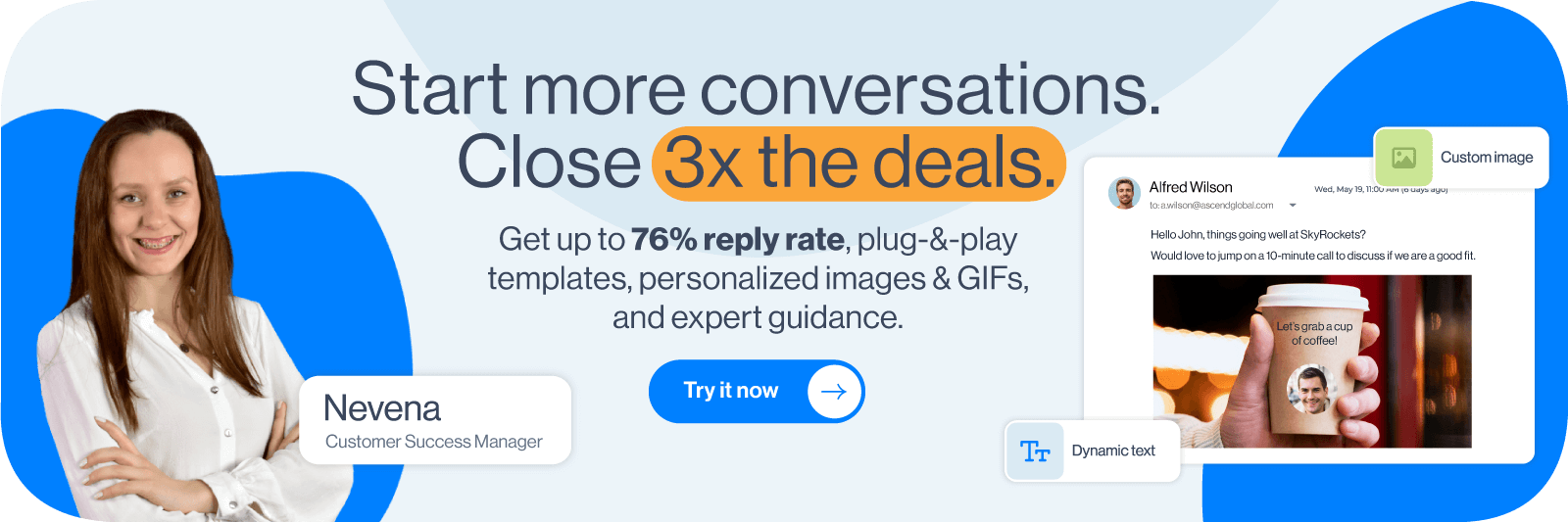
What is a sales engagement platform?
A sales engagement platform is software that helps salespeople automate and manage their sales outreach.
These tools allow reps to:
- Create outreach sequences
- Track prospect engagement
- Automate follow-ups
- Personalize communication at scale
If you want a deeper breakdown of how these tools work, read our complete guide on what a sales engagement platform is, where we also tackled why your sales engagement process depends on using one.
But now, let’s get straight to the chase and introduce you to the top sales engagement platforms in 2026.
How we evaluated the sales engagement platforms
Before the roundup, let’s briefly explain how we determined which platforms deserve a spot on the list.
Basically, we’ve tested these tools ourselves over the course of several days using the following evaluation criteria:
- Multichannel outreach features
- Sequencing capabilities
- Email deliverability
- CRM integration
- Personalization features
- Scalability
- Pricing and overall value for money
Each platform was used in a simulated outreach workflow, all so we could evaluate how well it performs in real scenarios.
Overview of top sales engagement platforms
TL;DR? In that case, here’s a quick comparison table you can reference.
If any of the platforms tickle your fancy, you can also jump straight to their section by clicking on their name in the table below.
| Sales engagement platform | Best for | Key features | Pricing | Average user rating (Aggregated through G2, Capterra & ProductHunt) |
| Skylead | Sales teams and agencies | • Smart sequences • Unlimited email outreach • Email discovery & verification • Infinite email warm-up • Image & GIF personalization • Account-based prospecting • AI data enrichment | $100/month per seat | ⭐ 4.8 |
| Outreach | Enterprise sales teams | • Automated sequences & playbooks • AI-powered engagement insights • Salesforce CRM integration | Undisclosed | ⭐ 4.4 |
| Salesloft | Sales coaching | • Advanced sequence builder • Conversation intelligence • Deal analytics • Sales coaching dashboard | Undisclosed | ⭐ 4.4 |
| Lemlist | Testing out AI message personalization | • Built-in B2B lead database • Waterfall email enrichment • Multichannel outreach sequences • AI personalization • Lemwarm | Starts from $79/month per user | ⭐ 4.5 |
| Apollo | Uncovering prospect data | • Built-in B2B database • Outbound automation • AI Assistant • Deal execution features | Free version available. Paid plans start at $59/month per user | ⭐ 4.4 |
| Instantly | Cold email campaigns | • Unlimited email accounts • Automated email warm-up • Built-in B2B Lead Finder • Unibox and CRM • AI Copilot | Starts from $47/month per user | ⭐ 4.8 |
| Reply.io | AI-powered multichannel outreach | • Multichannel conditional sequences • AI-generated outreach • Audience discovery and enrichment • Deliverability toolkit • Unified inbox and meeting scheduler | Starts from $59/month per user | ⭐ 4.3 |
| MixMax | Gmail-native sales engagement | • Gmail-native workflow • Meeting Copilot • One-click meeting scheduler | Free plan available. Paid plans start at $34/month per user | ⭐ 4.6 |
| Klenty | AI-powered outbound workflows | • Agentic Cadences • Parallel and Power Dialers • AI account research • Email deliverability suite | Starts from $60/month | ⭐ 4.7 |
| SmartReach | Unlimited email outreach | • Unlimited sending accounts • Multichannel outreach • Deliverability toolkit • Shared team inbox • AI-generated sequences | Starts from $29/month per user | ⭐ 4.7 |
| HubSpot Sales Hub | CRM and sales engagement in one place | • Lead and pipeline management • Automated multichannel outreach • Call tracking and meeting scheduler • Conversation intelligence and forecasting | Free plan available. Paid plans start at $15/month per seat | ⭐ 4.4 |
| Clari | Forecasting and revenue execution | • Forecasting and revenue insights • AI-guided sales engagement • Automatic CRM activity capture • Call intelligence • Manager coaching tools | Undisclosed | ⭐ 4.7 |
| Salesforce | Salesforce-native sales teams | • Sales cadences •Work Queue task management • Engagement intelligence • Conversation insights | $50/month per user* *Add-on | ⭐ 4.4 |
Quick summary
- Best overall: Skylead
- Best for enterprise sales teams: Outreach
- Best Gmail-native solution: MixMax
- Best for built-in prospect data: Apollo
13 top sales engagement platforms to drive more sales in 2026
1. Skylead: Best for sales teams and agencies
Overview
Skylead is a LinkedIn automation tool and cold email software built for those who want to book 3x the meetings in less time.
But the functionalities far exceed what you would normally find in such software. Since it also comes with the account-based prospecting and AI data enrichment features, plus the AI SDR, it's practically a full-blown sales engagement platform.
The star feature of Skylead is Smart sequences - dynamic outreach flows that combine outreach actions with if/else conditions and adapt in real time based on prospect behavior.
That means your team doesn’t have to guess what comes next or manually juggle follow-ups. Skylead handles the execution of steps while reps stay focused on strategy, conversations, and revenue-generating work.
With Skylead, users can also discover and verify leads’ emails, warm up infinite mailboxes at no extra cost, personalize messages using images and GIFs, liquid syntax and spintax, keep track of replies through a Smart inbox, and much more.
That makes it especially useful for:
Key features
- Smart sequences that combine outreach actions with if/else conditions to form coherent outreach flows.
- Unlimited email outreach with inbox rotation, so you can send tens of thousands of emails a month.
- Email discovery & verification. Use it without breaking your outreach flow and avoid bounces by sending emails to valid addresses only.
- Infinite email warm-up to maintain strong deliverability and keep emails away from spam at no extra cost.
- Account-based prospecting to help you discover your ideal companies and the right contacts within them.
- AI data enrichment so you get up-to-date lead data that you can use as variables in your outreach.
- Advanced personalization features, including Image & GIF personalization, spintax, and liquid syntax, which can increase the reply rate to up to 76%.
- Advanced reporting to analyze the performance of outreach campaigns.
- Smart inbox that holds all correspondence in one place and simplifies conversion and ROI tracking.
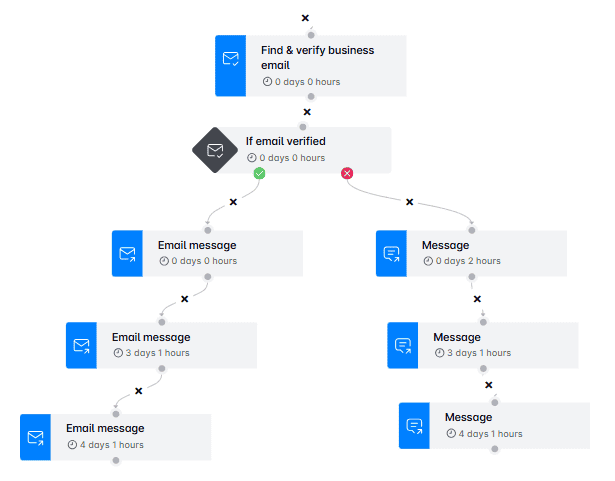
Potential tradeoffs
Because Skylead focuses heavily on outbound sales automation, teams looking for deep CRM analytics or forecasting features may still rely on tools like Salesforce or HubSpot alongside it.
Nonetheless, the software comes with 3-click integrations with popular CRM -HubSpot, PipeDrive, and Salesforce. Thus, it’s simple to include in the larger sales ecosystem.
Pricing
Skylead has a single price of $100 per seat per month. You can also subscribe to the Annual plan, which gets you 2 months free.
AI data-enrichment credits are billed separately. Though the cost of credits is 95% lower than that of similar tools on the market.
2. Outreach: Best for enterprise sales teams
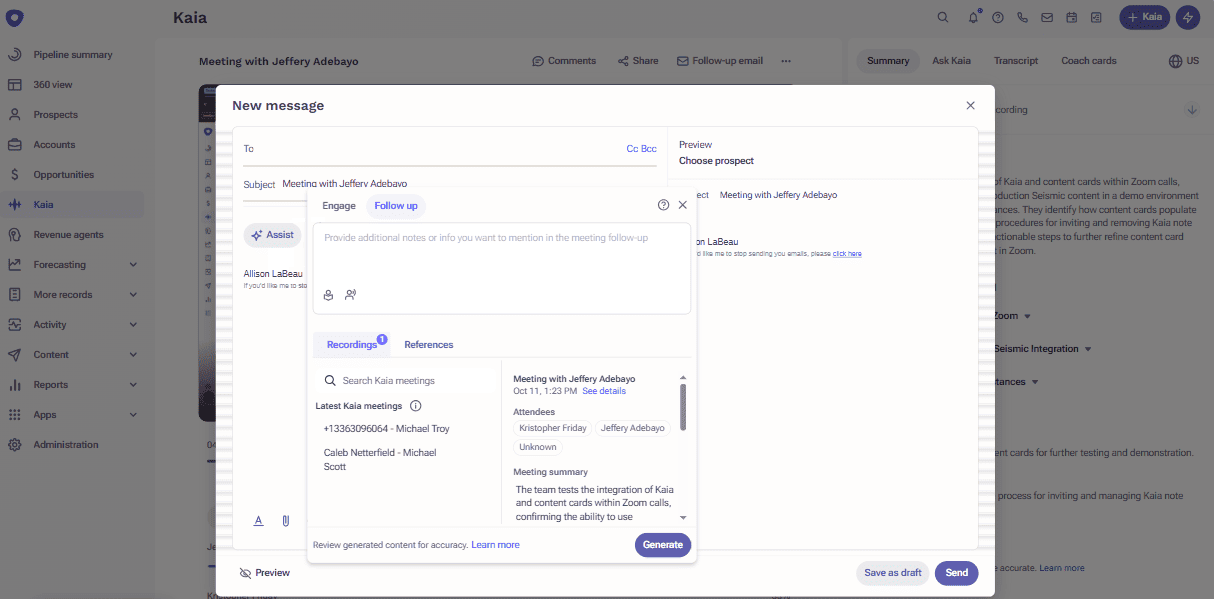
Overview
Outreach is one of the most widely used enterprise sales engagement platforms, designed for large sales organizations.
The platform focuses heavily on sales execution and pipeline management, helping teams manage multichannel outreach while tracking engagement across large prospect databases.
From our experience, Outreach works best when multiple teams - SDRs, AEs, and revenue leaders - need a centralized platform to coordinate outreach and monitor pipeline activity.
Because of its enterprise focus, Outreach includes advanced features like AI-driven deal insights powered by Kaia AI, sales forecasting support, and workflow automation across large sales teams.
Key features
- Automated sequences and playbooks that standardize outreach processes.
- AI-powered engagement insights that analyze historical interactions to recommend optimal send times and follow-up strategies.
- Sales analytics that track pipeline activity, rep performance, and engagement metrics across campaigns.
- Direct integration with Salesforce CRM to sync prospect activity automatically.
Potential tradeoffs
Outreach is designed primarily for mid-market and enterprise organizations.
So, for smaller sales teams or startups, the platform can feel:
- Overly complex
- Expensive
- Slower to implement
Thus, many smaller teams prefer simpler platforms, such as Skylead, that require less onboarding.
Pricing
Outreach lets users choose between 3 plans:
- Amplify Core
- Amplify Plus
- Amplify Pro
Unfortunately, they don’t disclose their pricing publicly, meaning you’ll need to reach out to their team for details.
From our experience, though, we can tell you that their pricing is volume-based, like in Skylead. So the higher the number of seats you need, realistically, the lower the cost per one.
3. Salesloft: Best for teams focused on sales coaching
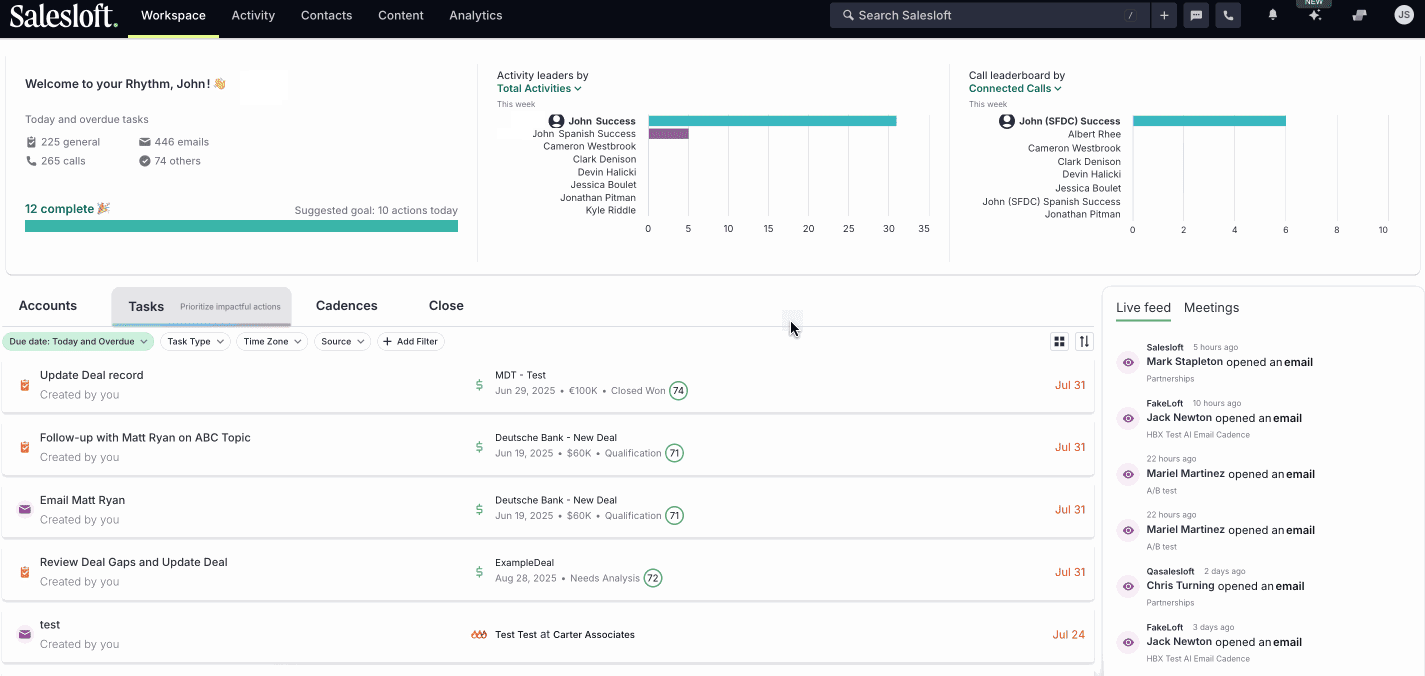
Overview
Salesloft is another enterprise-focused sales engagement platform that combines outreach automation with conversation intelligence and sales coaching tools.
While platforms like Outreach focus heavily on execution workflows, Salesloft places a strong emphasis on helping sales leaders analyze conversations and improve rep performance.
The platform captures engagement data from emails, calls, and meetings, then uses that data to provide insights into how deals progress through the pipeline.
That said, Salesloft can be a specifically strong fit for organizations that prioritize rep training, deal inspection, and sales management.
Key features
- Sequence builder that allows you to create automated outreach sequences that combine emails, calls, and social touches.
- Conversation intelligence technology that records and analyzes sales calls to identify coaching opportunities and deal risks.
- Deal analytics across accounts and deals.
- Sales coaching dashboard where users and team members can review calls and messages to improve their outreach.
Potential tradeoffs
Similarly to Outreach, Salesloft is built primarily for enterprise sales organizations, which means that:
- Pricing can be high
- The setup requires onboarding
- Smaller teams may not use all features
So, if you want a simpler automation tool, lighter sales engagement platforms may be easier to adopt.
Pricing
Depending on your needs, or rather, your team size, you can choose between the Advanced or the Elite plan.
But much like Outreach, Salesloft also doesn’t disclose the pricing. To get the exact details, you also need to request a demo with their team.
4. Lemlist: Best for testing out AI message personalization
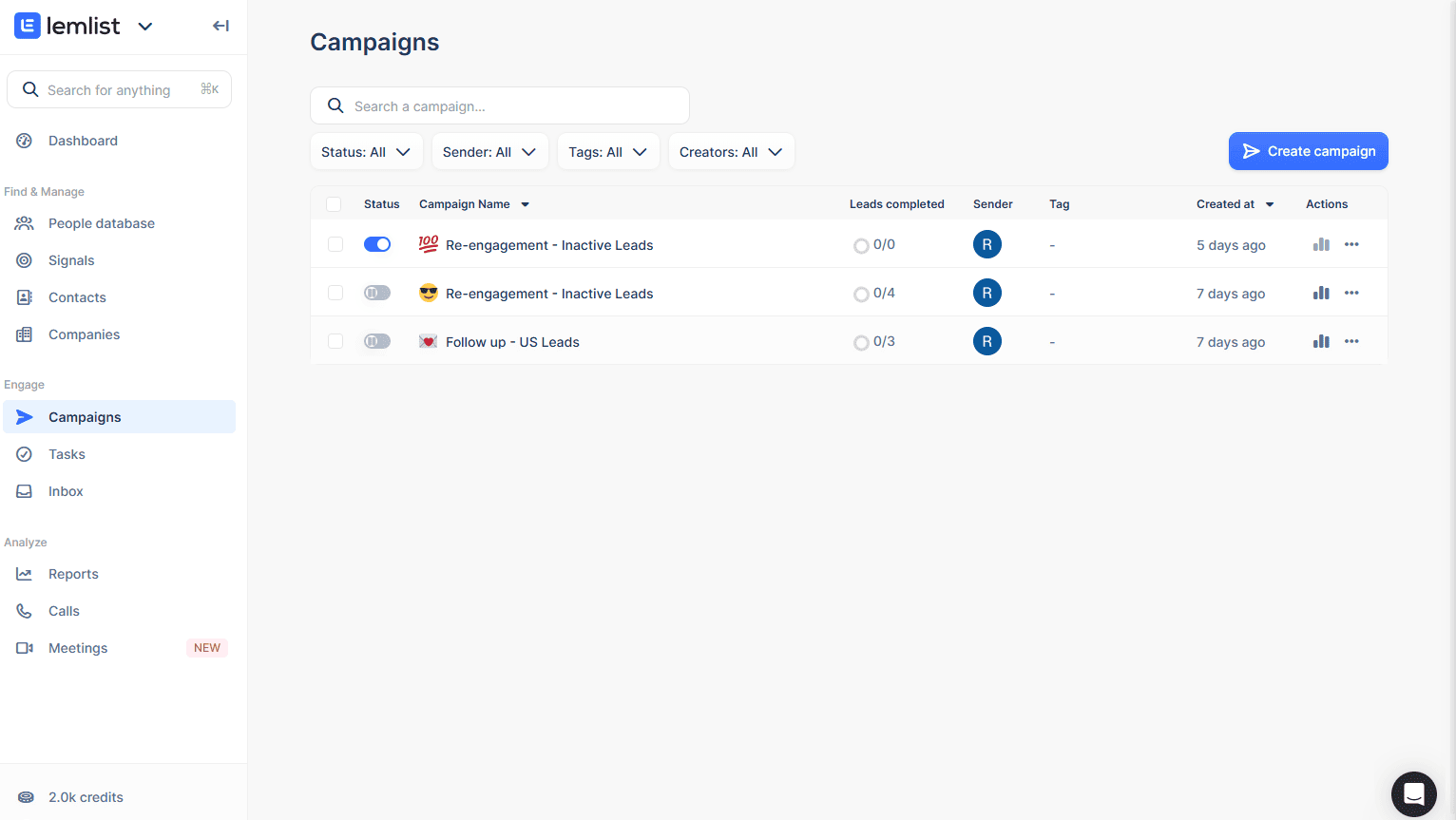
Overview
Lemlist is a sales engagement platform built for those who want to find leads, enrich contact data, and run multichannel outreach from one place.
Instead of relying on separate tools for prospecting, enrichment, and outreach, Lemlist combines these steps into a single workflow. This means you can search for prospects in its built-in database, enrich their contact details, and then immediately add them to automated campaigns.
The platform supports email, LinkedIn, calls, and even WhatsApp outreach, all managed inside one sequence. It also includes AI-powered personalization that pulls insights from LinkedIn profiles, company websites, and other data sources to help customize messages automatically.
Key features
- Built-in B2B lead database with over 600 million contacts across 65 million companies.
- Waterfall email enrichment, a.k.a. a feature that automatically checks multiple data providers to find and verify prospect emails, similar to what Skylead does.
- Multichannel outreach sequences that combine email, LinkedIn, calls, and WhatsApp steps.
- AI personalization that helps generate message variables and icebreakers using data pulled from LinkedIn and company websites.
- Unified inbox to track all prospect interactions across channels in a single conversation thread.
- Lemwarm - an email warm-up tool that helps improve email deliverability (though it costs extra).
Potential tradeoffs
No Lemlist feature is truly unlimited. Many depend on credits and add-ons, which means the monthly price can easily skyrocket.
For example, this is exactly the case with Lemwarm, their email warm-up tool, which you need to pay extra to use. Not to mention, pricing is based per mailbox. So if you want to warm up a new email domain with multiple accounts, you’re looking at shelling out hundreds of dollars!
That’s a major drawback compared to Lemlist alternatives like Skylead, which offer infinite email warm-up at no additional cost and let you warm up as many mailboxes as you need.
Pricing
Lemlist lets users choose between their 3 plans:
- Email Pro - $79/month per user (Grants access to email features only)
- Multichannel Expert - $109/month per user (Adds multichannel functionality)
- Enterprise - Custom pricing (Includes all Multichannel features + advanced support)
They also offer a number of paid add-ons, as seen in the picture below, which further raise the cost of the subscription.
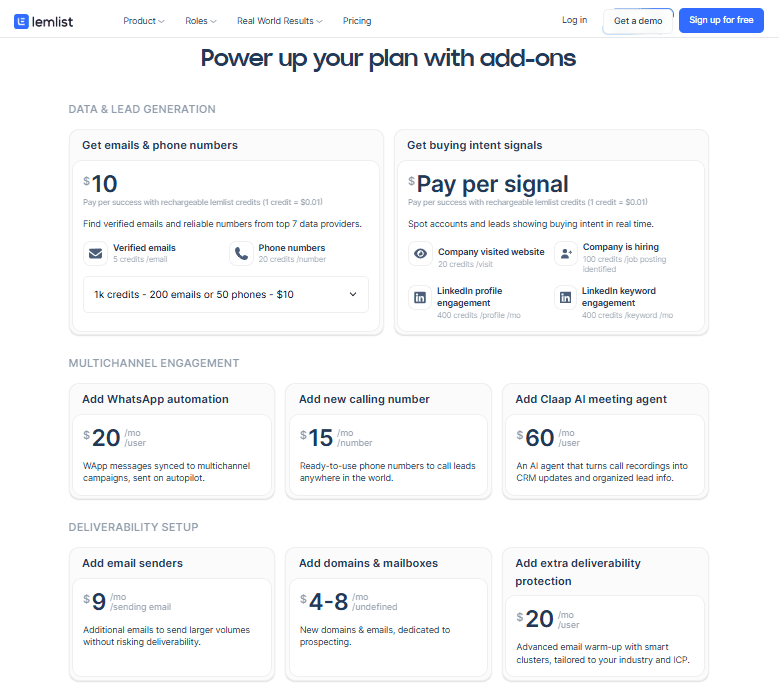
Additionally, should you choose to use Lemwarm, you’re looking at spending the added:
- $29/month per mailbox under their Essential plan
- $49/month per mailbox under their Smart plan
5. Apollo: Best for uncovering prospect data
Overview
Apollo is another sales engagement tool that helps you find leads and their data and run outreach.
That said, it’s very similar to Lemlist in that, rather than stitching together a data provider, sequencing tool, dialer, and enrichment platform, it tries to cover the whole workflow inside one product.
That includes outbound, inbound lead conversion, data enrichment, and even deal execution features like call summaries, meeting prep, and follow-up automation.
Key features
- Built-in B2B database with 65 filters for targeting, updated monthly with new 5.3M contacts.
- Outbound automation to build multichannel campaigns, automate follow-ups, and manage prospecting tasks.
- AI Assistant that helps with list building, research, messaging, sequence creation, and workflow automation.
- Deal execution features such as call summaries, task creation, and pipeline boards.
Potential tradeoffs
Apollo is broad, which is also the problem. Because it tries to cover data, outreach, enrichment, and deal execution in one platform, some features are not as developed as others, as we found out while testing it.
For example, advanced personalization options, such as image and GIF personalization, or liquid syntax and spintax, are missing. There is no integrated inbox, either, which users can use to directly reply to outreach messages.
Not to mention, while they offer a free plan, serious use usually means moving to a paid tier and keeping an eye on credits for enrichment and related actions. That’s also what positions some other Apollo alternatives as superior options.
Pricing
Apollo adopts a Freemium model, meaning you can use it for free… theoretically. In reality, the Free version is for testing purposes only, given that it grants only 75 monthly credits, which you can use to enrich emails, phones, and other prospect data.
If you’d like to experience Apollo fully, you can subscribe to the following tiers:
- Basic - $59/month per user. Includes 2,500 credits.
- Professional - $99/month per user. Includes 4,000 credits.
- Organization - $149/month per user. Includes 6,000 credits.
Additional credits can be bought, though the rate varies depending on the amount needed.
They also offer 2 paid add-ons:
- Inbound - $149/month per team (Identifies up to 50,000 companies visiting your website and enriches form contacts)
- Advanced dialer - $149/month per team
6. Instantly: Best for cold email campaigns
Overview
Instantly is a sales engagement platform designed primarily for high-volume cold email outreach.
Its strongest angle is simple: help teams send at scale, land in the primary inbox, and manage deliverability without turning setup into a full-time job. That’s why Instantly is especially popular with agencies, outbound teams, recruiters, and founders running aggressive cold email campaigns.
Beyond email sequencing, Instantly also includes a lead database, AI-powered personalization, pipeline analytics, inbox management, website visitor identification, and its own lightweight CRM.
Key features
- Unlimited email accounts.
- Automated email warm-up and deliverability optimization tools.
- Built-in B2B Lead Finder, which gives access to a 450M+ lead database with filters and AI-based prospecting workflows.
- Unibox and CRM. Users can manage replies, calls, SMS, and tasks from one inbox, while the CRM adds salesflows and AI-based lead handling.
- AI Copilot that can suggest campaigns, build lead lists, summarize analytics, as well as help write sequences.
Potential tradeoffs
Is Instantly.ai worth it? Why, yes, but the tool comes with a couple of downsides. For example, plenty of features are available, but they’re spread across separate products like Outreach, Lead Finder/SuperSearch, and CRM. So if you want the full setup, the total cost can add up fast.
Also, while Instantly has expanded beyond email, it still feels most native to cold email-first workflows rather than full multichannel sales engagement.
Pricing
Instantly sells 3 solutions (Outreach, SuperSearch, and CRM), as mentioned earlier, with each having its own separate plans.
That said, Outreach plans grant access to email automation features and warm-up, and include the following:
- Growth - $47/month per user
- Hypergrowth - $97/month per user
- Light Speed - $358/month per user
Meanwhile, SuperSearch turns Instantly into a B2B prospecting tool by unlocking the built-in lead database. Plans include:
- Growth - $47/month per user
- Supersonic - $97/month per user
- Hyper Credits - $197/month per user
And for those who prefer keeping their tech stack minimal, Instantly also offers a mini CRM, with 2 different tiers available:
- Growth CRM - $47/month per user
- Hyper CRM - $97/month per user
So, if you want to use all 3 of their sub-products, you’re looking at spending a minimum of $141/month per user. But realistically, probably a lot more.
7. Reply.io: Best for AI-powered multichannel outreach
Overview
Reply.io is a sales engagement platform built for teams that want to automate multichannel outreach with a stronger AI layer.
It combines prospecting, sequence building, email deliverability, LinkedIn outreach, calls, SMS, WhatsApp, meeting scheduling, and AI-generated messaging in one platform.
On top of that, Reply also offers Jason AI SDR, which turns the product into a more AI-led outreach system for those who want to automate even more of the process.
From what we’ve seen, Reply is a strong fit for those who want more than cold email alone, but don’t necessarily want an enterprise-heavy tool like Outreach or Salesloft.
Key features
- Multichannel conditional sequences with email, LinkedIn, calls, SMS, WhatsApp, and even Zapier-connected channels inside one sequence.
- AI outreach feature-set with AI-generated sequences, AI email personalization, AI variables, and AI response generation.
- Audience discovery, contact enrichment, validation, and access to large prospect databases through integrated data sources.
- Deliverability toolkit with warm-up, Gmail API sending, Postmaster integration, and domain health tools.
- Unified inbox and scheduler to manage conversations in one inbox and book meetings directly from sequences.
Potential tradeoffs
Reply comes with AI email personalization, but that’s where the personalization stops. There’s no way to personalize images and GIFs, and the advanced options like spintax and liquid syntax are visibly absent, too.
Also, most of the functionality depends on add-ons and credits. So, while Reply starts at a reasonable price, the full setup can get more expensive.
Finally, team management capabilities aren’t included in the product unless you’re subscribed to their Agency tiers. If that’s a big deal to you, a Reply.io alternative, such as Skylead, might suit you better.
Pricing
Reply.io has 3 categories of pricing (Sales Outreach, AI SDR & Agencies).
To start with, they offer 2 Sales Outreach plans:
- Email Volume - Starts from $59/month per user
- Multichannel - Starts from $99/month per user
Then, there are also AI SDR plans that include access to their AI sales agent, Jason:
- AI SDR Starter - Starts from $800/month
- AI SDR Growth - Starts from $2,500/month
- AI SDR Enterprise - Custom
Finally, Agencies are granted 2 plans, including:
- Agency Core - Starts from $210/month per client
- Agency AI SDR - Starts from $500/month per client
Hybrid plans are available, too, though they require a talk with the sales team.
And much like Lemlist and Apollo, Reply.io relies on add-ons to complete its sales engagement functionality, especially when it comes to Sales Outreach plans that only have the basic features included.
More specifically, they offer:
- Channel add-ons - LinkedIn automation at $69/month per account and Calls & SMS automation at $29/month per account
- AI & Live Data add-on for prospect information. Pricing is dependent on the number of credits, but it starts from $39/month.
- Email Validation add-on for validating prospect emails. Pricing is dependent on the number of credits, but it starts from $20/month.
8. MixMax: Best for Gmail-native sales engagement
Overview
Some sales teams don’t want to jump between dashboards all day. They live in their inbox, run conversations from email threads, and schedule meetings directly from there. That’s exactly the environment Mixmax is designed for.
Instead of pushing users into a separate workspace, Mixmax keeps most of the sales workflow inside Gmail (though it also supports Outlook). Sequences, scheduling links, CRM syncing, and follow-ups all operate from the inbox itself.
The platform has recently leaned heavily into AI as well, introducing a Copilot ecosystem made up of Inbox Copilot, Meeting Copilot, and Engagement Copilot. Together, these tools recognize buying signals, help reps prioritize conversations, and recommend the next action needed to move prospects further down the funnel.
Key features
- Inbox-native interface that allows users to run sequences, manage replies, and schedule meetings directly from Gmail
- Meeting Copilot that helps reps prepare for calls, capture notes automatically, and generate summaries with clear next steps.
- One-click scheduler that allows users to send availability links and coordinate meetings without back-and-forth emails.
- Workflow automation for CRM updates, follow-ups, reminders, and sequence enrollment.
Potential tradeoffs
Mixmax works best when the inbox is the center of your sales workflow. Teams that prefer a dedicated outreach platform with built-in prospecting databases or deeper pipeline management might find the tool slightly narrower in scope.
Pricing
MixMax plans are structured around their 3 copilots:
- Inbox Copilot - $34/month per user
- Meeting Copilot - $34/month per user
- Engagement Copilot - $65/month per user
If you’d like to use all 3, you can also subscribe to the MixMax Suite at $105 /month per user.
A free plan is available as well, although it’s quite limited and, therefore, not enough for professional use.
9. Klenty: Best for AI-powered outbound workflows
Overview
Klenty takes a slightly different approach to sales engagement. Instead of focusing purely on email sequences, the platform centers its workflow around AI-driven outbound execution.
The idea is simple: let AI handle the heavy lifting while reps focus on conversations. Klenty’s Agentic Cadences can research accounts, generate personalized emails, and execute outreach steps automatically across multiple channels.
At the same time, the platform supports the more traditional parts of outbound as well, including dialers, CRM integrations, deliverability monitoring, and multichannel sequences. Calling is particularly important here, with Klenty offering both Parallel Dialer and Power Dialer capabilities for teams that rely heavily on outbound calls.
Key features
- Agentic Cadences. AI researches accounts, personalizes messaging, and executes outreach steps automatically.
- Parallel and Power Dialers to call multiple prospects simultaneously or work through contact lists sequentially.
- AI account research with insights pulled from over 150 data sources for a more personalized outreach.
- Email deliverability suite that includes inbox rotation, warm-up, validation, and domain health monitoring.
Potential tradeoffs
Klenty is a powerful tool, but we noticed it’s not as user-friendly compared to other sales engagement platforms out there. The learning curve is steep, especially when dealing with more complex cadences.
While we didn’t personally have issues with their support team, many users on G2 and other review sites mention slow response and resolution times. We can see that being a major drawback when choosing between top sales engagement platforms, considering Skylead’s support team, for example, has a 7-second average response time.
Pricing
Klenty offers 3 Sales Engagement plans, billed quarterly:
- Starter - Credit-based, starts from $60/month
- Growth - $85/month per user
- Plus - $119/month per user
Dialer plans are billed separately and come in 2 forms:
- Basic - $45/month per user, billed quarterly
- Advanced - $119/month per user, billed quarterly
10. SmartReach: Best for unlimited email outreach
Overview
Running large-scale cold outreach often comes down to infrastructure: multiple sending domains, inbox rotation, deliverability monitoring, and careful campaign scheduling. SmartReach focuses on that side of the equation.
The platform is widely used by agencies and outbound teams that need to manage campaigns across many email accounts without paying per-seat fees for each mailbox. SmartReach allows unlimited sending accounts, which makes scaling campaigns significantly easier.
Beyond cold email, the platform also supports LinkedIn tasks, calling steps, shared inbox management, and AI-generated sequences. Everything is organized into multichannel workflows that guide prospects through email, social, and phone interactions.
Key features
- Unlimited sending accounts to run campaigns across multiple inboxes without additional costs.
- Multichannel outreach across email, LinkedIn, WhatsApp, and calls.
- Deliverability toolkit that includes warm-up, inbox rotation, spam tests, and built-in email verification.
- Shared team inbox that centralizes conversations and helps teams manage replies collaboratively.
- AI-generated email sequences.
Potential tradeoffs
While testing SmartReach, we found their reporting and analytics were slightly underdeveloped.
Unquestionably, they let you connect unlimited email accounts. But they fail to explicitly mention that they cap the number of active prospects you can have monthly.
On top of that, lower-tier plans are missing several features that Skylead, for instance, includes out of the box, such as inbox rotation, ESP matching for email warm-up, and integrations with other platforms.
Pricing
SmartReach has Email Outreach, Sales Engagement & Agency plans.
They offer 4 Email Outreach plans:
- Email Outreach Basic - $29/month per user
- Email Outreach Plus - $89/month per user
- Email Outreach Pro - $199/month per user
- Email Outreach Scale - $499/month per user
Meanwhile, Sales Engagement plans include:
- Sales Engagement Basic - $39/month per user, with 1 calling seat & 1 LinkedIn manual seat
- Sales Engagement Plus - $99/month per user, with 3 calling seats & 3 LinkedIn manual seats
- Sales Engagement Pro - $249/month per user, with 10 calling seats & 10 LinkedIn manual seats
- Sales Engagement Scale - $599/month per user, with 100 calling seats & 100 LinkedIn manual seats
Finally, Agencies can choose between:
- Email Outreach Pro - $199/month per user
- Email Outreach Scale - Credits-based, starts from $499/month per user
- Sales Engagement Pro - $249/month per user, with 10 calling seats & 10 LinkedIn manual seats
- Sales Engagement Scale - Credits-based, starts from $599/month per user, with 100 calling seats & 100 LinkedIn manual seats
11. HubSpot Sales Hub: Best for teams that want CRM and sales engagement in one place
Overview
Some teams don’t want a separate sales engagement tool layered on top of their CRM, but one system that handles outreach, lead management, pipeline tracking, reporting, and forecasting under the same roof. That’s exactly the kind of audience HubSpot Sales Hub is built for.
As a matter of fact, HubSpot combines sales engagement features with its CRM, which makes it particularly appealing to growing companies that care about ease of use just as much as functionality.
On top of the usual sales tools like sequences, call tracking, deal pipelines, and scheduling, HubSpot now relies heavily on AI as well, with features like Breeze Prospecting Agent, guided selling, forecasting, and conversation intelligence.
Key features
- Lead and pipeline management from a single workspace.
- Automated multichannel outreach that adapts based on prospect engagement.
- Call tracking and meeting scheduler to keep deals moving.
- Conversation intelligence and forecasting with AI-powered projections.
- CRM-native experience.
Potential tradeoffs
HubSpot is one of the best CRM software for sales, so their Sales Hub software will naturally fit into the workflow of their users.
However, if you are already using a different CRM and just want a sales engagement platform to run your outreach from, Sales Hub may feel broader (and pricier) than necessary once you move beyond the free or Starter tiers.
Pricing
Although HubSpot provides a free version of the Sales Hub software, given the limited features provided, we can’t consider it one of the top sales engagement platforms.
Thus, to get real value, you need to subscribe to one of their 3 paid tiers:
- Starter - $15/month per seat
- Professional - $100/month per seat
- Enterprise - $150/month per seat
12. Clari: Best for forecasting and revenue execution
Overview
Clari plays in a slightly different lane than most tools on this list. It’s not merely trying to help reps send more outreach. It’s trying to help revenue teams see every signal across the pipeline, forecast more accurately, and act on risk before deals slip.
That’s why Clari is often used by larger revenue organizations that need more than just sequences and call tracking. The platform combines sales engagement, pipeline management, forecasting, revenue insights, and customer growth workflows under what it calls a Predictive Revenue System.
Meanwhile, on the sales engagement side, Clari focuses primarily on productivity. Its AI helps reps prioritize next steps, automate CRM updates, personalize outreach, and apply insights from calls and deal activity in real time.
Key features
- Forecasting and revenue insights to improve forecast accuracy and pipeline visibility.
- AI-guided sales engagement that provides next-step recommendations, message personalization, and helps with activity prioritization.
- Automatic CRM activity capture to reduce admin work.
- Call intelligence technology that automatically identifies objections, intent signals, and next steps from sales conversations.
- Manager coaching tools that help managers inspect deals and coach reps more effectively.
Potential tradeoffs
Clari is much broader than a typical sales engagement platform, which is both a benefit and a catch. Teams looking for a lightweight outreach tool may find it too enterprise-heavy, while smaller sales orgs may not need the full forecasting and revenue system.
Pricing
Clari provides a total of 4 subscription packages:
- Out-of-the-box
- RevAI
- RevDB
- Expert Support
However, pricing is undisclosed, meaning you need to get a quote from their team directly.
13. Salesforce: Best for Salesforce-native sales teams
Overview
Salesforce Sales Engagement is the obvious option for teams that already use their Sales Cloud and want outreach built directly into their CRM.
Rather than acting as a separate platform, Sales Engagement works as part of the broader Sales Cloud ecosystem. That means reps can manage cadences, tasks, emails, calls, scheduling, conversation insights, and AI recommendations without constantly switching between tools.
This setup is particularly handy for larger companies that already rely on Salesforce for pipeline management, reporting, and process automation. In those environments, keeping sales engagement inside the CRM in general means less friction, cleaner data, and stronger visibility for managers.
Key features
- Sales cadences with structured outreach steps across email, calls, and social touches.
- Work Queue and to-do management of tasks and cadence steps.
- Engagement intelligence powered by AI recommendations and customer signals. Helps identify high-priority prospects and next best actions.
- Conversation insights that you can use to analyze calls and surface objections for improved objection handling. You can also use them to create coaching playlists from successful calls.
Potential tradeoffs
Salesforce Sales Engagement makes the most sense if Salesforce is already the center of your sales process. If it isn’t, the product can feel overly complicated compared to simpler tools that are faster to roll out.
It’s also not really a standalone sales engagement platform in the same way that tools like Skylead, Instantly, or Reply.io are. To get the most value from it, you generally need the broader Salesforce setup around it, which can end up costing hundreds of dollars per user.
Pricing
Sales Engagement is part of Salesforce’s Sales Cloud, so you’ll need a Sales Cloud subscription to use it.
There are 6 in total, including:
- Free suite
- Starter suite - $25/month per user
- Pro suite - $100/month per user
- Enterprise - $175/month per user
- Unlimited - $350/month per user
- Agentforce 1 Sales - $550/month per user
However, Sales Engagement is included out of the box with the Unlimited and Agentforce 1 Sales plans only. For all other plans, it’s available as a paid add-on that costs $50/month per user.
Frequently asked questions
What is the best sales engagement platform?
In truth, there’s no single best sales engagement platform. The right choice depends on your use case, team size, as well as your outreach strategy. For example, enterprise sales teams often prefer platforms like Outreach for structured workflows, while teams focused on cold outreach may choose tools like Skylead for scalable LinkedIn and email campaigns.
What features should a sales engagement platform have?
A good sales engagement platform should include multichannel outreach, automated sequences, engagement tracking, personalization capabilities, and CRM integration. Many teams also look for built-in prospect data, email deliverability tools, analytics, and collaboration features that help sales reps manage outreach and follow-ups efficiently.
How to choose a sales engagement platform?
Start by defining your outreach channels, team size, as well as existing tools. Then compare platforms based on automation capabilities, personalization options, CRM integrations, pricing, and scalability. Testing the platform through a free trial or demo is the best way to see if it fits your sales workflow.
What is the difference between a CRM and a sales engagement platform?
A CRM stores and organizes customer data, tracks deals, and manages pipelines. A sales engagement platform, on the other hand, focuses on executing outreach - automating emails, calls, and follow-ups while tracking prospect interactions. In practice, sales engagement tools often integrate with CRMs to help teams manage both relationships and outreach workflows.
Which sales engagement platform should you opt for?
We’ve reached the very end of our top sales engagement platforms roundup, and now it’s time to answer the final question:
Which option should you go with?
Truth be told, no one can answer that but you. In general, it all boils down to your use case, your personal preferences, your workflow, tech stack, and ultimately, your budget.
For example, if you are looking for a sales engagement platform with a primary focus on cold email functionality, an ideal tool for you could be Instantly.ai.
On the other hand, if you’re a Gmail user who likes to keep things inside Gmail, you’ll probably be happy with MixMax.
And if you’re after a complete solution that allows for:
- Multichannel outreach
- Unlimited email outreach
- Email discovery & verification
- Infinite email warm-up
- Native image and GIF personalization
- Account-based prospecting
- AI data enrichment
…and more, Skylead’s got you completely covered.
It also comes with a 7-day free trial that you can take advantage of immediately. So, what are you waiting for? Sign up now to claim it and experience how simple sales engagement can be with a reliable tool by your side.
Updated on: September 15th, 2026
Disclaimer: Skylead is not affiliated, endorsed by, or connected with LinkedIn in any way.
Are you thinking of launching your first automated outreach campaign to reach out to your leads, book meetings, distribute content, or find new clients, ideal candidates, and backlinking partners?
We’ve got your back!
In this blog, we’ll take you through the entire campaign creation process using our powerful LinkedIn automation tool and cold email software - Skylead - as an example.
We’ll even throw in some tips and tricks on achieving outreach success and cover use cases and outreach messages for every profession.
Let’s dive into it.
What is an outreach campaign?
An outreach campaign is an automated campaign that uses tools to streamline all outreach activities, thus allowing individuals to connect with their target audience faster. People may initiate these for email and/or LinkedIn lead generation purposes. However, they also use outreach campaigns to find new clients, nurture relationships with existing clients/customers, increase brand visibility, or promote content.
In the past, outreach campaigns revolved around individuals contacting other individuals manually, typically over the phone. Fast forward to now, we have outreach tools like Skylead to handle the reaching out part — over multiple channels, nonetheless!
The benefits of setting up an outreach campaign
Outreach automation has revolutionized the workflow of countless people! Here’s why!
Firstly, there’s the time-saving aspect. Automated outreach campaigns can be real game-changers, saving you as much as 11+ hours per week on manual work. That’s an extra 6 days each month to focus on other tasks!
What’s more, with outreach campaigns running on autopilot, you can reach a larger audience in a shorter period. This allows you to allocate resources more effectively and, thus, improve overall productivity. You can even reach people you thought were unreachable before, as email enrichment features like Skylead’s email discovery & verification can be included in the campaign flow.
Yes, as your business grows, so will your outreach. But that’s not a reason to worry! You can automate multiple campaigns at the same time and scale without compromising quality.
Finally, automated campaigns ensure no lead falls through the cracks. The system keeps things moving, whether through personalized emails, follow-ups, LinkedIn messages, or inMails.
Outreach campaign use cases
Salespeople
Sales professionals are often seen juggling multiple leads at a time. With so many leads to manage, little time is left for other tasks, plus the risk of missing important messages increases. Outreach campaigns streamline the process and ensure consistent communication across multiple channels.
Sales reps can continuously create campaigns with thousands of leads to keep their calendars consistently full. These campaigns also allow them to automate various outreach tasks, leaving them only to respond to messages and book calls.
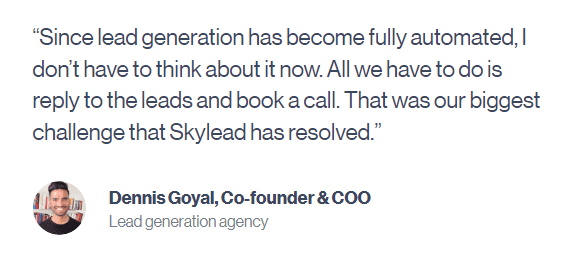
Why does this matter, though?
Because automating outreach tasks such as sending LinkedIn connection requests, inMails, messages, and emails helps sales professionals save +11 hours a week—hours they can now focus on lead nurturing.
Lastly, outreach campaigns permit salespeople to A/B test their messages. This allows them to see what works and what doesn’t, which in turn helps them optimize their campaigns for better results.
Marketers
When it comes to marketers, they can use outreach campaigns to:
- Generate leads for their sales teams;
- Find backlinking partners faster;
- Distribute content and reach wider audiences;
- Increase conversion — Marketers can leverage Skylead’s email discovery and verification feature to find their leads' email addresses. Once the tool finds and verifies emails, they can use them to create a lookalike audience on LinkedIn, Google Ads, and/or Facebook, which will result in better targeting and increased conversions;
- Expand their network and become thought leaders.
Recruiters
Manual cold outreach can be time-consuming for recruiters who are constantly scouting for the best talent. Thankfully, automation simplifies candidate engagement.
That said, recruiters can set up automated sequences to:
- Generate a large pool of candidates and pick the best from the crowd;
- Speed up the hiring process;
- Target individuals attending specific job fairs;
- Personalize outreach to keep candidates’ interest high.
Company founders and agency owners
Company founders and agency owners typically have a full plate of managing daily operations, strategizing business development, ensuring financial health, and more. Automated outreach campaigns lighten the load and accelerate revenue growth.
If you are a company founder and have a B2B product or service to sell, outreach campaigns can help you reach out to a wider pool of leads and find clients faster on autopilot.
Meanwhile, if you are offering lead generation services as an agency, you can often white-label the tool used for campaign creation and thus help yourself to another stream of income. Moreover, outreach campaigns can also help you generate new leads for yourself and your clients!
How to conduct an outreach campaign: Step-by-step guide
Now that we’ve covered the basics, it’s time to launch your first campaign! We’ll use our own tool, Skylead, to show you how you can use outreach tools to create one.
When you don’t know where to start…choose LinkedIn.
Jokes aside, in this blog, we will make a LinkedIn search-based campaign to ease you into the entire outreach campaign creation process.
However, you should know that, when it comes to Skylead, options are far more extensive. Aside from LinkedIn search, you can target leads from a:
- Sales Navigator search
- Sales Navigator lead list
- Recruiter search, Talent pool, and Pipeline URL
- LinkedIn post
- LinkedIn event
You can also import them through:
- API,
- And a CSV file.
That said, here’s how to start creating your outreach campaign.
#1 Target your audience
Start by typing a keyword in the search area.
We went by a job title.

After you click "People", choose the LinkedIn connection type you want your outreach campaign to target.

1st-degree connections are members with whom you are already connected on LinkedIn. Choose this connection type if you want to run a LinkedIn message campaign.
Meanwhile, 2nd-degree connections are leads you aren’t connected to but with whom you have mutual connections. You can’t send them a message right away. Instead, you need to connect with them first or reach out to them via LinkedIn inMail or email.
As for 3rd-degree connections, you aren’t connected to them either, but you also don’t have any mutual connections. Similarly to 2nd-degree connections, you can also reach them via email and/or InMail (free or paid).
Back to pinpointing your audience, you can also apply other filters to narrow down your search further (see the ‘’All Filters’’ option on the right).

Your search can result in thousands of leads, but LinkedIn limits the results to 100 pages, with 10 leads per page. So, if you create a LinkedIn search-based campaign, you can reach a maximum of 1000 people. However, if you're using Sales Navigator, the limit increases to 2,500 leads per campaign. Therefore, it is recommended that you narrow the list down as much as possible.
This is where defining your Ideal Customer Profile (ICP) and buyer persona comes in handy.
Your ICP is the type of company that would benefit most from your product/service, and your buyer persona is a fictional representation of your ideal customer within that company, as informed by market research and actual customer data.
That said, define your ICP and buyer persona first and use the corresponding LinkedIn filters to find them. That's how you'll target the best leads!
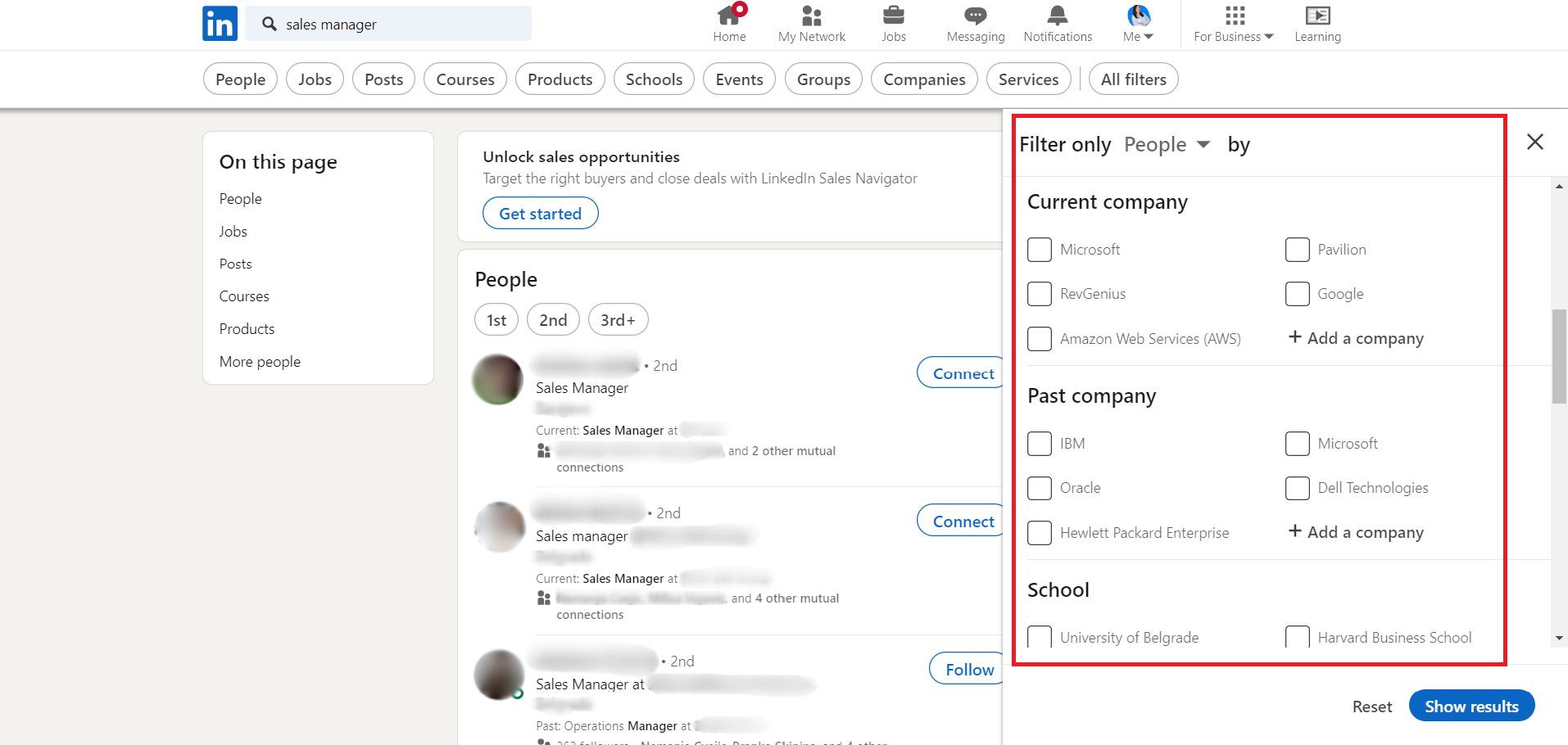
#2 Import your leads
You’ve completed LinkedIn prospecting and carefully chosen your audience. What now?
You proceed to build an outreach campaign!
To do so, firstly, go to your Skylead dashboard and locate the Campaigns page.
Once there, click ‘’Create new campaign’’.
Now, go back to LinkedIn and copy the search result URL.

Return to Skylead, insert your campaign name, and paste the link you just copied.
Then, under the URL, you’ll see a connection-type button. If you’ve selected the connection type on LinkedIn, Skylead will automatically recognize it. If not, you can select it now.
Click ‘’Next’’.
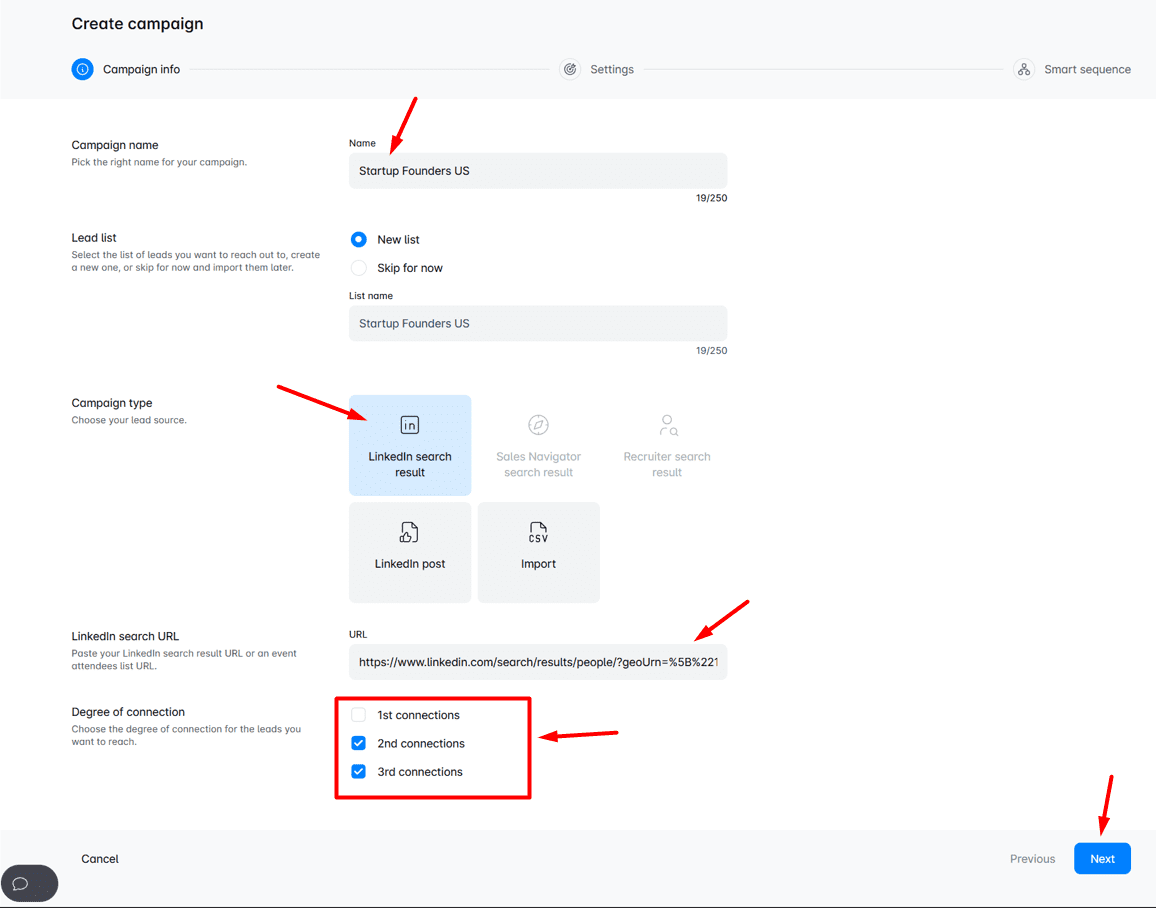
#3 Define outreach campaign settings
Now comes the time to define the settings for your outreach campaign.
LinkedIn settings
In terms of LinkedIn-specific settings, you can turn on/off:
- Discover Premium LinkedIn accounts only — Turning this one on singles out leads that have a LinkedIn Premium account;
- Discover Leads with Open Profile status only — Select this, and the tool will exclude leads whose profile is set to ‘’Private’’ (aka leads who can only receive paid inMails).
- Discover leads' InMail status — Turn on if you wish to check whether your leads can receive free InMails.
- Collect contact information — With this option on, Skylead will collect all publicly available information from the lead’s LinkedIn profile. This option implies a “View profile” step. You don’t need to add it to your outreach campaign, though; it will be executed in the background.
- Remove leads with pending connection requests to exclude unresponsive leads.
- Refresh search automatically — Turn it on, and Skylead will periodically refresh your search results URL for new leads. Moreover, if they emerge, it will automatically add them to your campaign.
Targeting settings
As for targeting options, you can choose to (or not):
- Include leads that replied to your messages—applies to leads you had a conversation with via LinkedIn messages, inMails, or emails.
- Include leads found in other campaigns from your and your team's seats—this is not applicable to your first campaign, so feel free to keep it turned off. However, if anyone on your team has run outreach campaigns in Skylead in the past, we suggest turning this option off.
- Discover new leads only—If turned off, this option can also include leads from other campaigns under your seat. As such, it’s not applicable to your first campaign. However, if this is your second campaign, keep it turned on to ensure you don’t have any duplicates.
Email settings
If you plan to use email outreach for your campaign, you'll also have the option to select the email address(es) you wish to use in your outreach. Provided you've previously connected them to your Skylead account, that is.
Skylead lets you add an unlimited number of email accounts at no extra cost.
Once added, the software will auto-rotate them so you can send tens of thousands of emails per month. This way, you can bypass the email limit while protecting your domain.
Schedule settings
Here, you can select your default schedule or create a new one. You can also manage your team’s schedule (unless you are a one-person team).
Tracking settings
Now, it’s time to set up your email tracking preferences.
With these options on, you can:
- Track the number of email link clicks
- Track the number of opened emails
- Authorize Skylead to send text-only emails (no HTML) with no visuals. However, if you turn this option on, you won’t be able to track opened emails and email link clicks.
With everything set up, select the date and time when your campaign will kick off and click ''Next''.
#4 Build a Smart sequence
Multichannel outreach is currently the most effective way of generating leads, and Smart sequences represent a groundbreaking realization of that path!
It’s precisely these Smart sequences that make our outreach campaign flow. We are talking about an algorithm that lets you combine different actions and if/else conditions that unfold depending on the prospect’s behavior. But what for? To make sure you get to each of them as quickly and efficiently as possible.
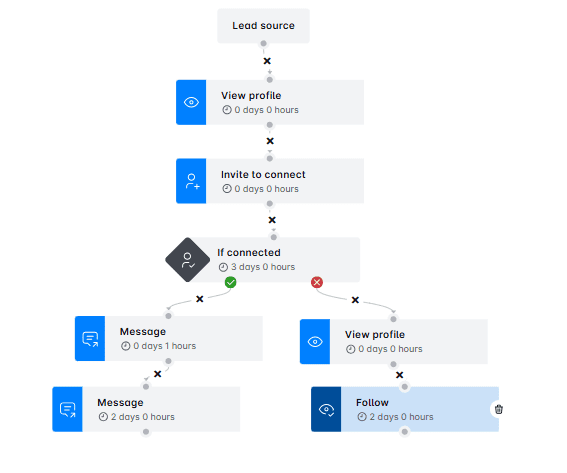
Now, let’s create one, shall we?
Upon entering the Smart sequence builder, this is what your dashboard will look like.
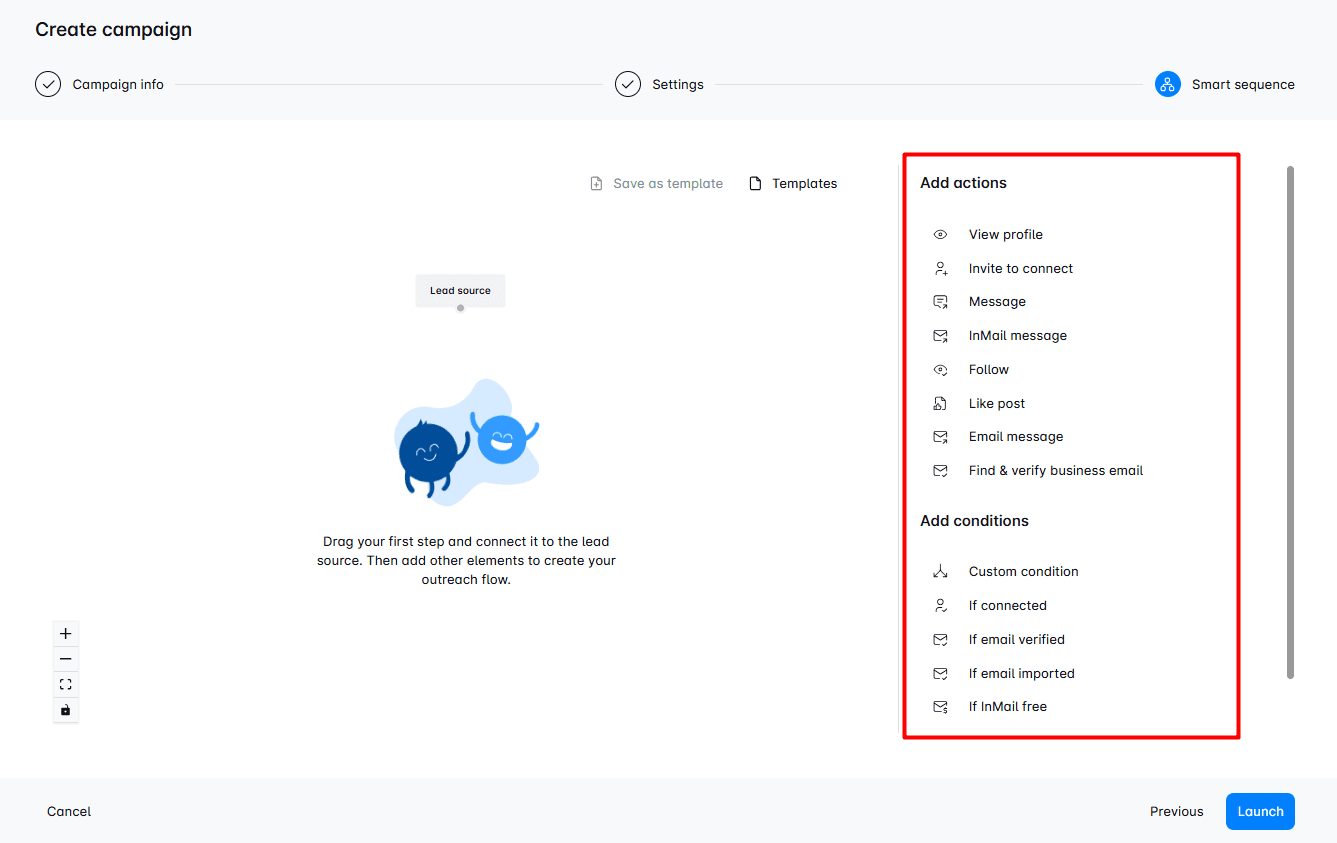
As you may see, there are actions and conditions on your right.
Drag them one by one to the workspace dashboard and connect them in a coherent way to create your outreach flow! Don’t forget to set delays between the actions because they ensure human-like behavior and enhance your account security.
Certain actions let you insert the message (Invite to Connect, Message, inMail, Email) and personalize it further using all the variables you need (preset and custom ones). You can also A/B test up to 5 different variants of your copy to determine which one resonates best with your leads.
If you wish to further personalize inMails, emails, and LinkedIn messages, you can do so with Skylead’s native Image and GIF hyper-personalization feature.
To access it, click the Image icon below the message editor.

Then, you’ll be taken to a library of templates. Hit the ''Create new template''.
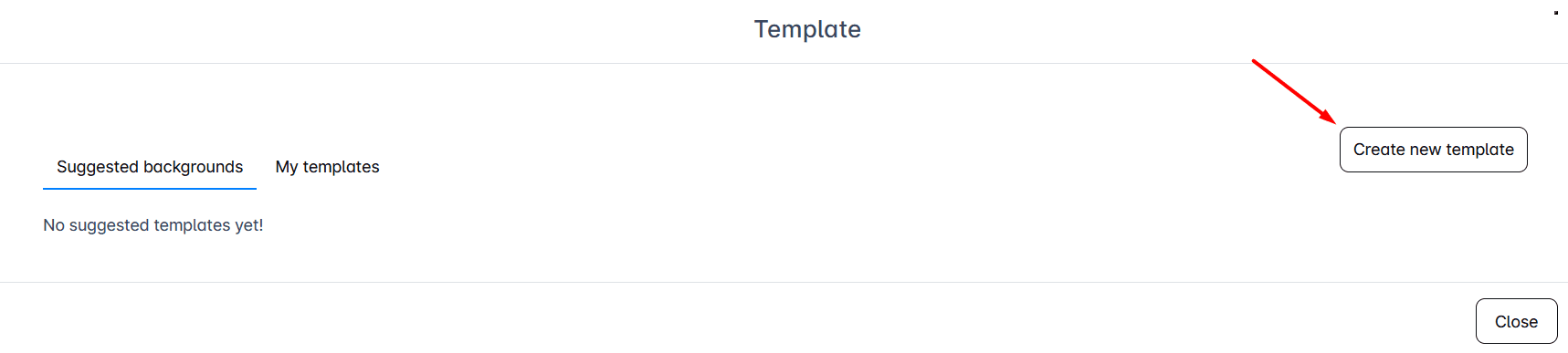
Next, upload the image you wish to edit.

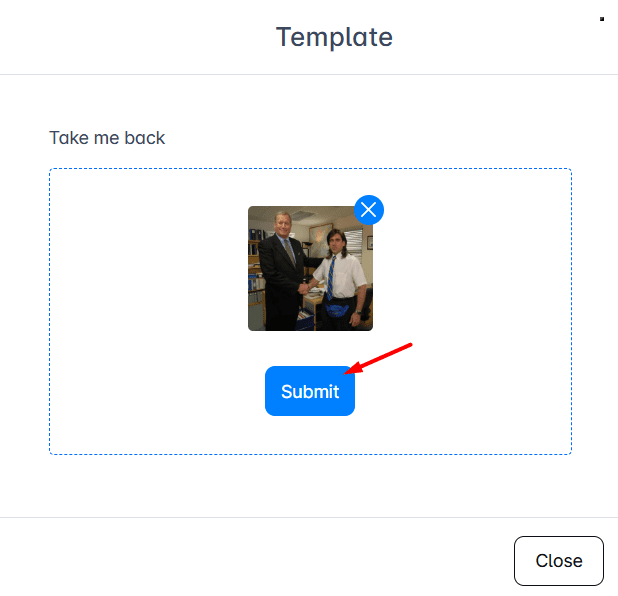
Then, a new window will open where you’ll have the option to add:
- Your profile picture (extracted from LinkedIn)
- Your lead’s profile picture
- A custom logo
- Your lead’s logo
- Text

…and here’s what the final result can look like.

Of course, feel free to play around with the image editor as you see fit and create something that will keep those replies coming!
Once you are happy with the steps, your copy, and delays, you can save your sequence as a template to reuse at a later date.
Finally, click ‘’Launch’’ and that’s it! Your outreach campaign has been successfully launched!
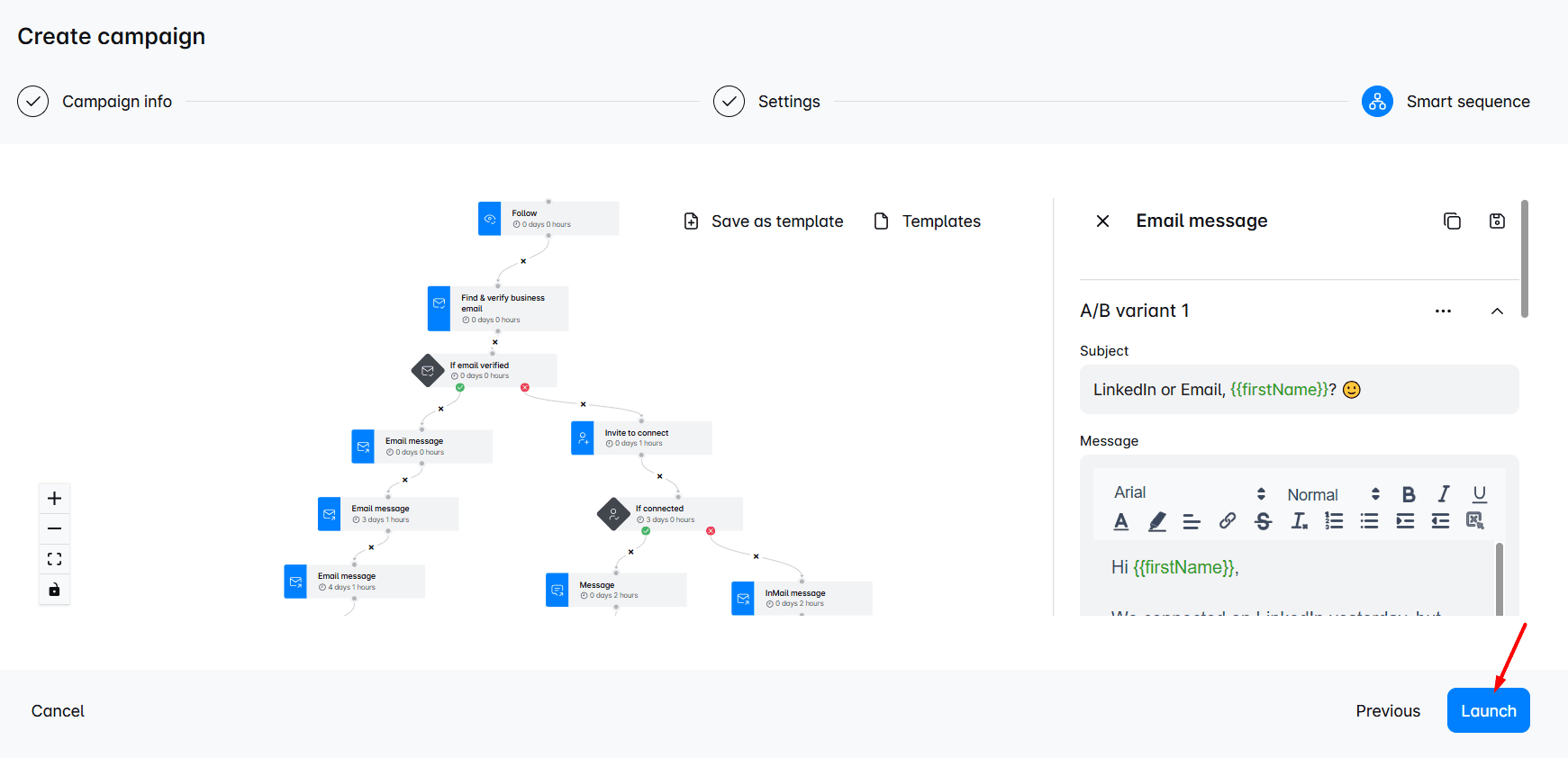
#5 Analyze and optimize your outreach campaign
The work doesn’t stop the moment you hit the ‘’Start campaign’’ button. In fact, after putting your outreach campaign in motion, it’s time to sit back and observe the results.
Luckily, Skylead has a nifty Reports page that lets you track performance in three different view modes:
- Graph
- Tabular
- Step-by-step
Here, you can monitor different metrics, such as your connection request acceptance rate, email open and click rates, response rate, and more.
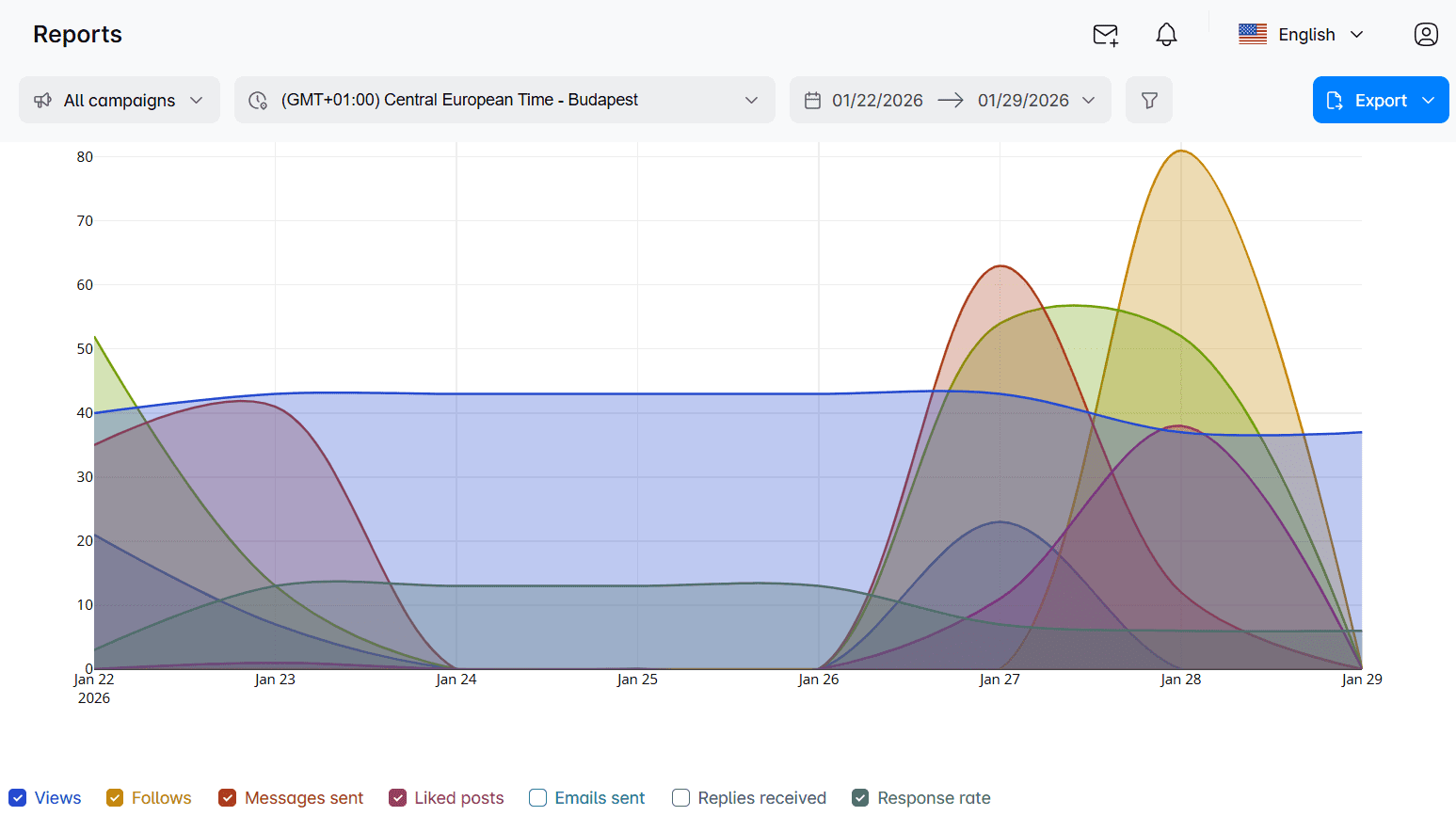
The graph and table view differ from step-by-step campaign analysis in that they show daily fluctuations in metrics. As a result, they make it easy to spot patterns and trends. Once you’ve got a handle on these, you can fine-tune your ongoing campaign and make informed choices for the ones down the line.
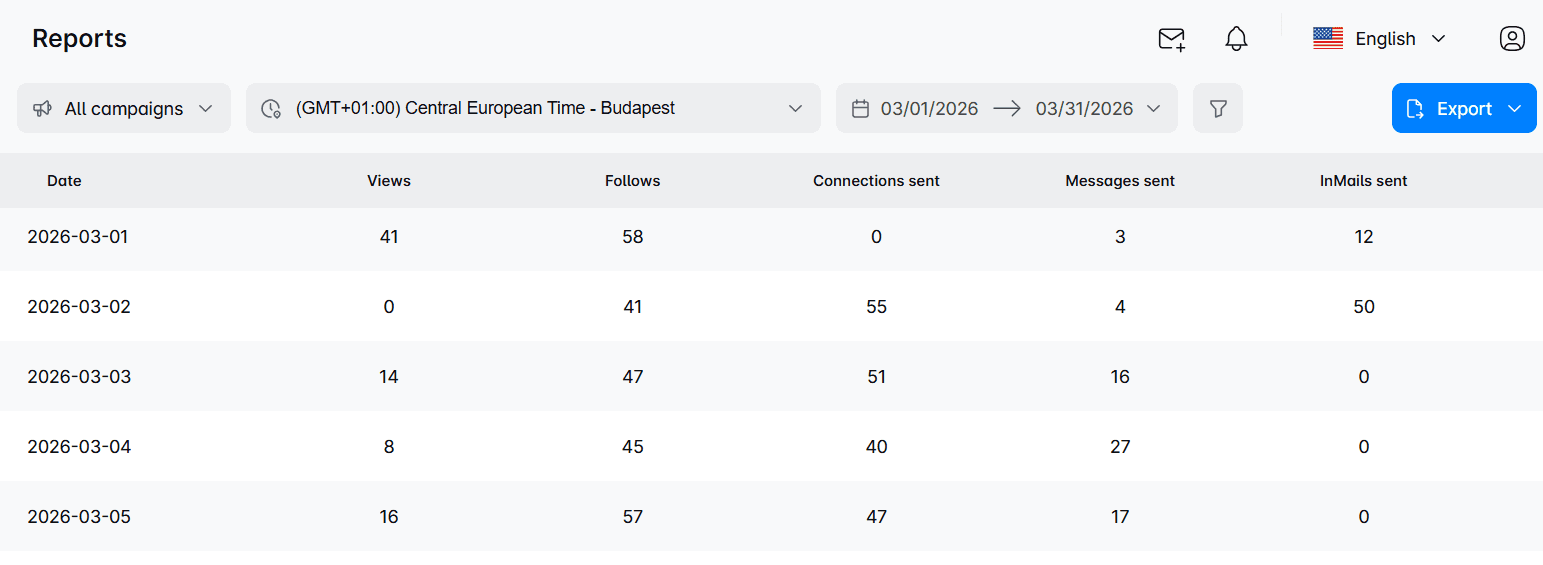
On the flip side, a step-by-step breakdown really comes in handy when running A/B tests. The results produced by different variants are displayed below one another, making it simple to determine what messages work and should be used in your next campaign vs. those you should discard.
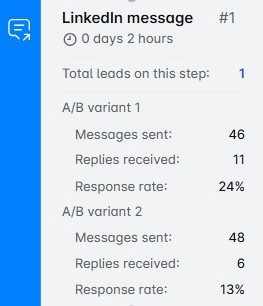
#6 Talk with your leads
Skylead automates the initial outreach. But remember, the goal is to spark conversations that you will take over. Once a lead responds, the sequence stops for them, and it’s your cue to jump in and build that relationship.
Luckily, Skylead makes it easy for you to manage these conversations! The software comes with a Smart inbox that consolidates all messages received via LinkedIn, Sales Navigator, Recruiter, and emails into one place.
Moreover, to keep things organized, you can label your chats based on their status or any criteria that suit your workflow. This can help you prioritize your responses and measure your conversion rates.
Additionally, Skylead allows you to leave notes on your chats. These can be reminders to follow up, points to mention in the next interaction...or any other information that can help you personalize and enhance the conversation.

Tips for a successful outreach campaign
Now you know how to set up your outreach campaign and what to look out for. However, you have yet to learn how to make the most of your outreach.
Personalize your messages
People are more likely to respond to personalized outreach messages that feel relevant to them. So, take the time to customize your messages based on the information you have about your leads.
With Skylead, you can reach a whole new level of personalization in cold outreach. Use pre-defined variables, add custom ones if using a CSV file as a lead source, and don’t forget to take advantage of our image & GIF hyper-personalization feature. They can increase your response rate up to 63%!
Feeling uninspired? Head over to our blog to explore personalized image and GIF templates that improve response rate!
Follow up in due time
Don’t be discouraged if you don’t get a response right away. Sometimes, all it takes is a well-timed follow-up message. However, be mindful of the frequency of your follow-ups to avoid coming off as spammy. The golden rule is to wait between 2 and 5 days from the initial message. And if you aren’t sure how to write a follow up email after no response, we have a handy guide to help you out!
Outreach campaign examples and templates for each role
Remember how Skylead came with the premade templates for you to use? Here, we’re sharing some of the best-performing sequence and message templates applicable to each role and different situations.
Sequence for sales professionals
If you want to target someone in an alternative way, why not use a viral LinkedIn post that your target audience has commented on?
In that case, you can use this template to reach out to leads who have engaged with it.
We tested it out, and our results were:
- 76% acceptance rate
- 35% reply rate
- 85% open rate
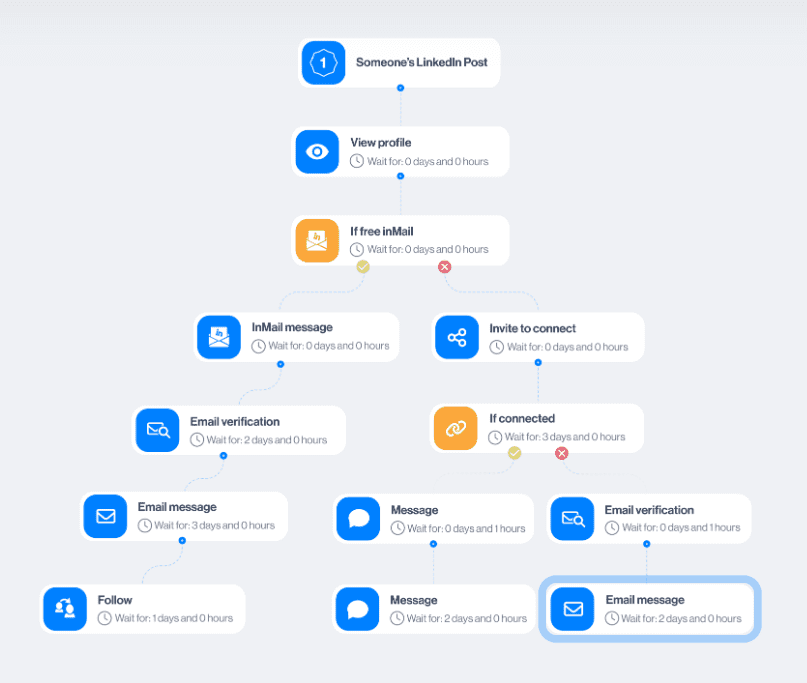
Furthermore, you’ll find every step comes with a corresponding message that you can tweak as you like.
Outreach campaign template for marketers
Feel like targeting your website visitors? You might like this sequence template, which aims to do precisely that! However, feel free to use the message templates that come with it, as well!
For this one, we had a whopping:
- 43% acceptance rate
- 23% reply rate
- 71% open rate
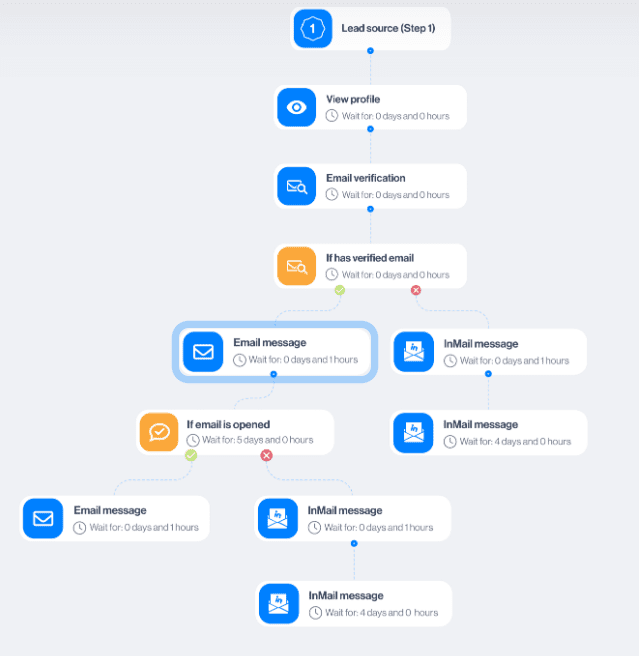
Template for company founders and agency owners
Check out this template specifically designed for reaching out to B2B founders.
We’ve run the numbers and found that, with it, our acceptance rate was 44%, reply rate 29%, and open rate 82%!
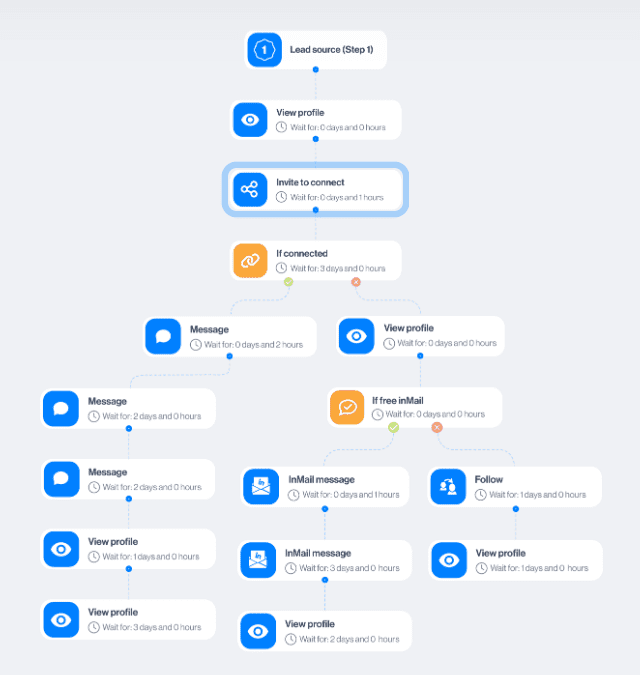
LinkedIn connection message template for recruiters
For example, let’s say you wish to reach out to your perfect candidate for the job in your company. In that case, your LinkedIn connection request can sound like this:
Hey {{firstName}},
My name is {{yourName}}, and we’re currently seeking a {{Occupation}}, and I truly believe that this role offers you a platform to leverage your skills and make a significant impact at our company.
I’d be happy to share more details about the role and benefits we offer.
Choose to use it, and you might see results similar to ours, which were:
- Acceptance rate 79%
- Reply rate 46%
Frequently asked questions (FAQs)
1. What metrics or KPIs are most important to track the success of an outreach campaign?
Key metrics to focus on include response rate, conversion rate, and ROI. These indicators help gauge engagement, effectiveness in converting prospects, and the overall financial efficiency of the campaign.
2. How do you conduct an outreach campaign?
To conduct an outreach campaign, define your target audience and choose the appropriate channels. Create a structured plan, personalize messages, and use automation for efficiency. Monitor important metrics to adjust strategies and follow up regularly to maintain engagement and improve response rates.
3. How can you segment the audience for different types of outreach campaigns?
For successful segmentation, you must understand and divide your audience based on factors like industry, job role, company size, and past interactions. This will ensure your messages resonate more effectively with each segment and will reflect positively on response rates and campaign relevance.
4. What are the common challenges or pitfalls in managing automated outreach campaigns, and how can they be avoided?
Common challenges include impersonal communication and message fatigue among recipients. To avoid these, make sure the email and LinkedIn automation tools of your choice mimic human interaction patterns, use varied content, and regularly update messaging strategies to maintain personalization.
Ready to splash into outreach waters?
As our guide comes to an end, it marks the beginning of your cold outreach journey.
All it takes is that first outreach campaign to get you started, and it's just a couple of clicks away.
But remember, cold outreach isn't a one-and-done type of process. In other words, you can't just build your campaign, launch it, and be done with it. It's what comes after launch that actually matters.
So, in the aftermath of creating an outreach campaign, pay close attention to the results it brings. But don't get discouraged if everything doesn't go as planned! Instead, observe the data, learn from it, and use it to improve your subsequent outreach efforts.
And you know what the best thing is? Skylead comes with a free 7-day trial period that you can use to test out the outreach waters. Create your account now, build that sequence, and watch as your outreach —and conversions — skyrocket!
Updated on: September 15th, 2026
Since you landed here, chances are you’ve been researching sales engagement platforms, trying to understand what they are and what they do. So, what is a sales engagement platform really?
On paper, it sounds simple - software that helps salespeople engage prospects. But in reality, it covers a lot more than just sending messages.
Modern sales teams juggle multiple prospects and channels simultaneously, dozens of daily follow-ups, not to mention endless admin work inside CRMs and spreadsheets. Without a system tying all of that together, conversations often fall through the cracks, outreach becomes inconsistent, and reps spend more time learning to use multiple new tools than they do selling.
That’s exactly the problem a sales engagement platform was built to solve.
That said, today, we’ll be breaking down what a sales engagement platform really is, its core features, how it works, and how it supports the entire sales engagement process. As a bonus, we’ll introduce you to one of the best such platforms on the market, so you can put what you've learned into practice. Spoiler alert -it’s Skylead. ?
What is a sales engagement platform?
A sales engagement platform (SEP) is software that helps sales teams plan, manage, automate, and optimize every interaction with prospects and customers alike across the entire sales cycle.
It’s meant to replace multiple tools that these individuals typically use during the process, allowing them to:
- Build structured outreach sequences
- Automate follow-ups based on timing or prospect behavior
- Personalize messages at scale
- Track engagement signals like opens, replies, and clicks
- Prioritize prospects
- Reduce repetitive work
… and more!
Sales engagement platform vs. sales enablement platform vs. CRM
These 3 tools often get lumped together. In reality, they serve very different purposes in the sales stack.
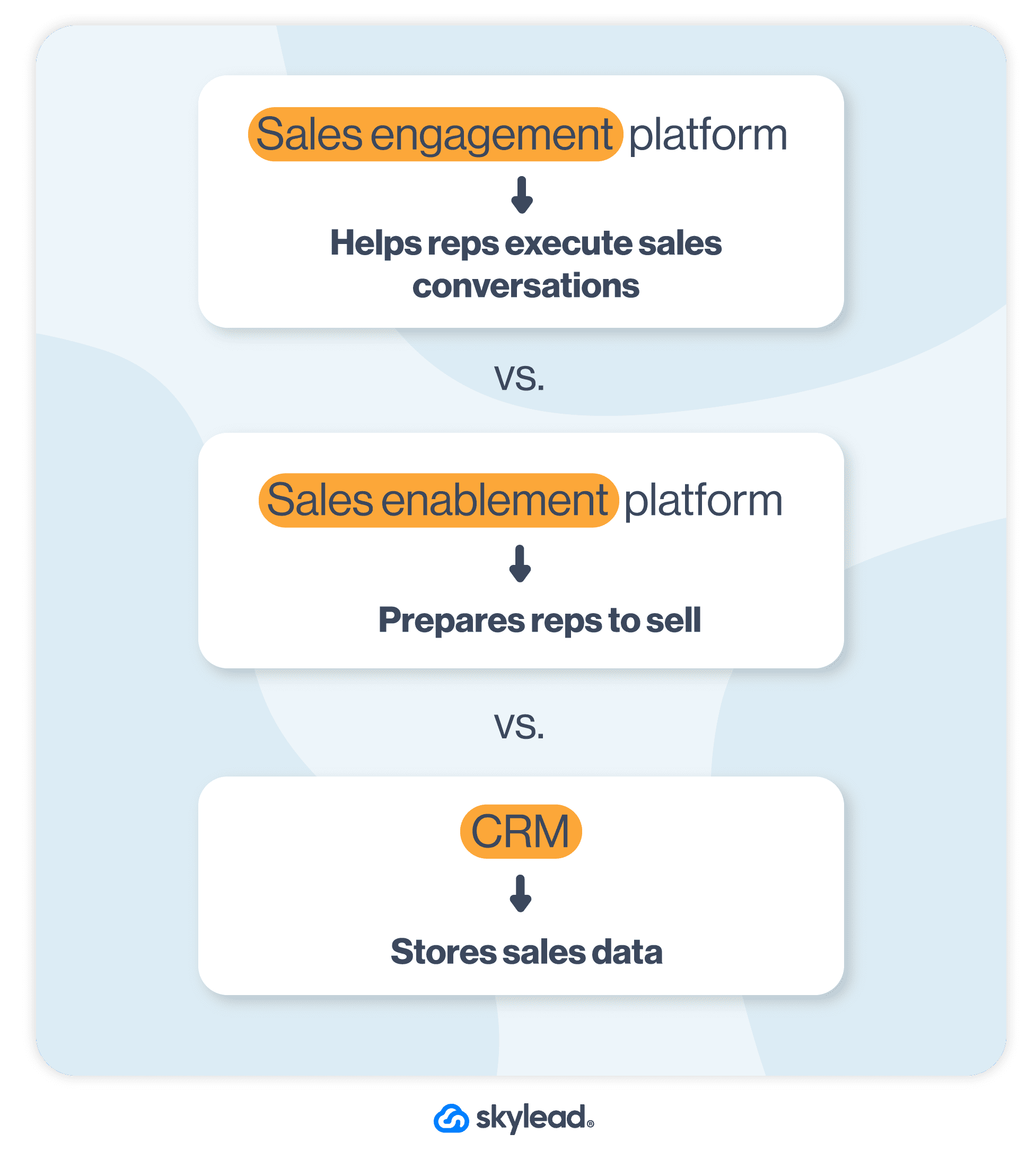
Now, let’s dig a little deeper into what each one does to understand what a sales engagement platform is really and how it differs from these two.
CRM
A customer relationship management software or CRM is your system of record, so to speak. It stores contacts, accounts, deals, and activity history and is meant to help you track deal stages and pipeline, forecast revenue, and keep customer data organized.
Popular examples include HubSpot, Salesforce, Pipedrive, and Zoho CRM.
In other words, CRMs show you where deals are, but even the best CRM software for sales doesn’t do much in terms of moving them forward.
Sales enablement platforms
On the other hand, sales enablement platforms focus on preparing reps to sell more effectively, with the highly regarded options being Seismic, Showpad, and Gong.
They typically provide training and onboarding materials, sales content libraries that include case studies, decks, and other materials created in collaboration with the marketing team, as well ascoaching resources, objection handling techniques, and playbooks.
Their job is to make sure reps have the right knowledge and content at their fingertips, so that, when the time to sell actually comes, they’re fully prepared. They stop short of execution, though.
Sales engagement platforms
And that brings us to the sales engagement platforms.
We previously talked about what sales engagement is, and then, we said it’s the ‘’execution layer’’ of the sales process where conversations with the prospects finally happen.
Now, don’t get me wrong, sales engagement can absolutely happen without a tool. But doing it manually means juggling inboxes, setting calendar reminders for follow-ups, updating the CRM after every interaction, and trying to remember who opened what and when. That might work with 20 prospects. With 200, however? Not so much.
In such situations, you need a sales engagement platform - a system that makes sales engagement at scale possible. It structures, automates, and tracks how reps interact with prospects across channels, so execution becomes consistent instead of reactive.
To make the distinction crystal clear:
- CRMs store customer information and record what happened.
- Sales enablement platforms prepare reps for conversations.
- Sales engagement platforms help execute those same conversations.
So, as you can see, SEPs don’t just store data or provide content. They drive action.
Who are sales engagement platforms for?
Contrary to popular opinion, SEPs aren’t built for SDRs only.
Rather, they are built for anyone looking for a consistent way to engage prospects at scale while keeping things personal.
In terms of specific roles, that usually includes:
- SDRs / BDRs handling high-volume outbound who need structured sequences, automated follow-ups, and clear signals on who to prioritize next.
- Account executives (AEs) managing active deals who want one place to track conversations, stay on top of stakeholders, and move opportunities forward faster.
- Sales managers requiring visibility into rep activity, engagement quality, and pipeline momentum.
- RevOps / Sales Ops teams responsible for process consistency, tooling, and reporting across the funnel.
But roles aside, sales engagement platforms are especially valuable for those who:
- Work with high lead or account volume
- Sell across multiple channels
- Want predictable execution
- Care about scaling cold outreach
- Need real engagement data to improve performance over time
Benefits of using a sales engagement platform
According to industry data, the vast majority of sales organizations have adopted or plan to adopt engagement platforms because they:
- Give reps tools to focus on selling rather than completing repetitive tasks
- Standardize best practices across teams
- Make engagement measurable and repeatable
- Enable faster ramp-up for new hires
- Provide actionable signals on prospect behavior
All of this adds up to higher conversion rates, faster cycles, and more predictable sales performance than teams using disconnected tools.
That said, let’s get into the individual benefits of using SEPs so you fully understand why you need one.
Improved sales efficiency and productivity
Sales reps spend far less time selling than most teams realize. Multiple studies show that reps typically spend only 28% of their week on actual sales activities, with the rest going to admin, internal meetings, and tool-hopping.
Sales engagement platforms tackle this head-on by automating repetitive work like follow-ups, activity logging, and meeting scheduling. Teams using SEPs consistently report double-digit increases in rep productivity, simply because sellers stop wasting hours on manual tasks and start their day with a clear, prioritized action list.
Higher response rates and more meetings booked
Outbound campaigns that use structured sequences across multiple channels (email + calls + social) generate up to 4-5 times higher engagement compared to single-channel outreach. And teams using automated sequences typically see 40% higher reply rates than those relying on manual follow-ups.
Why?
Because with SEPs:
- Every prospect gets contacted at the right time
- Follow-ups actually happen
- Messaging stays consistent
- Engagement signals trigger the next step automatically
Instead of guessing who to contact next, reps act on real behavior: opens, clicks, and replies.
Faster deal cycles
Deals slow down when momentum drops. Sales engagement platforms help prevent that by keeping prospects warm throughout the buying journey. Organizations using SEPs commonly report shorter sales cycles (often by 10-20%), simply because conversations don’t slow down and stakeholders don’t get forgotten.
Better visibility for managers and RevOps
Without an SEP, managers rely heavily on CRM data that’s often incomplete or outdated.
With a sales engagement platform, though, activity tracking happens automatically. That gives leadership visibility into:
- Which reps are engaging accounts
- Which sequences perform best
- Where deals are dropping off
- How prospects respond
This leads to stronger coaching, cleaner forecasting, and faster process improvements - all based on real data instead of assumptions.
Faster onboarding for new reps
New hires usually struggle with 2 things: knowing what to do and when to do it.
SEPs solve both.
By providing ready-made sequences and workflow templates, new hires can start executing proven plays from day 1. Many teams report significantly shorter ramp-up times because beginners don’t have to invent their own process - they simply follow what already works.
Scalable personalization
Sales engagement platforms make it possible to keep the sales outreach relevant while working with hundreds of prospects at once. Reps write the core message, while the platform handles personalization, timing, sequencing, and delivery.
That’s how teams maintain a human touch without slowing down.
Key features of sales engagement platforms
At their core, sales engagement platforms are built to help users run targeted outreach, follow up on time, and maintain consistent communication with prospects, without juggling five different tools at the same time.
While every platform looks a little different, most SEPs share the same core building blocks.
1. Multichannel outreach
Modern buyers don’t use one platform only, meaning that to actually get to them, deals require multiple touches across different channels. This is confirmed by stats, too, which suggest that it takes an average of 8 touchpoints to close a prospect. Or, as Jeb Blount explains in his book, Fanatical Prospecting, even up to 50 touchpoints if they are unfamiliar with your brand.
Now, imagine if you sent 50 emails to the same person. That would be... a lot, to say the least. It would also be a massive waste of time if it happens your prospects are inactive on email.
Now, pair that with touches on social media, particularly a platform they are active on, and up go your chances of getting a response.
Of course, you don't have to go about multichannel outreach manually. The good thing about sales engagement platforms is that they let users reach prospects across different channels, all within one sequence. So, if, say, a prospect is silent on one channel, the tool goes straight to the next.
2. Sequences
Sequences (or cadences, depending on the tool) are the backbone of any SEP.
They allow you to map out your outreach once, then reuse it across hundreds of prospects.
A typical sequence might include:
- an initial email
- a follow-up email after no response
- another email a few days later
- a message on social media
Once launched, the sequence unfolds either depending on the prospect’s behavior (in more advanced cases) or the time delay set between outreach actions.
That said, Skylead, our very own LinkedIn automation tool and cold email software ( or in umbrella term - sales engagement platform), was the first on the market to introduce so-called Smart sequences - algorithms that combine LinkedIn and email outreach actions with if/else conditions. As a result, you get coherent outreach flows that respond to prospects’ behavior in real time to make the most of your touchpoints and reach them in the fastest possible way!
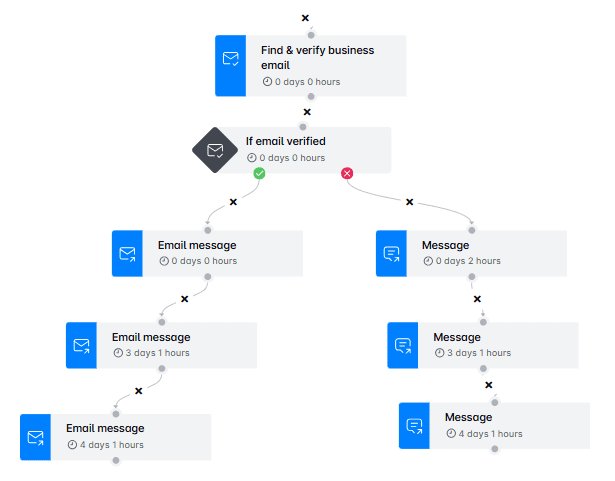
And if you rely on email outreach for the most part, you’ll be happy to know that:
- A: Not only can you connect unlimited mailboxes to your Skylead account and thus, send tens of thousands of emails a month to your prospects at no additional cost,
- B: You can also discover and verify your leads’ emails without breaking your outreach flow and thus, prevent bounces that hurt your deliverability and sender reputation.
3. Personalization at scale
Most SEPs allow you to personalize messages at scale using variables (a.k.a. merge fields) for details, such as first and last name, company name, role, industry, etc. Some, Skylead included, also let you import your own variables to personalize virtually any detail you like.
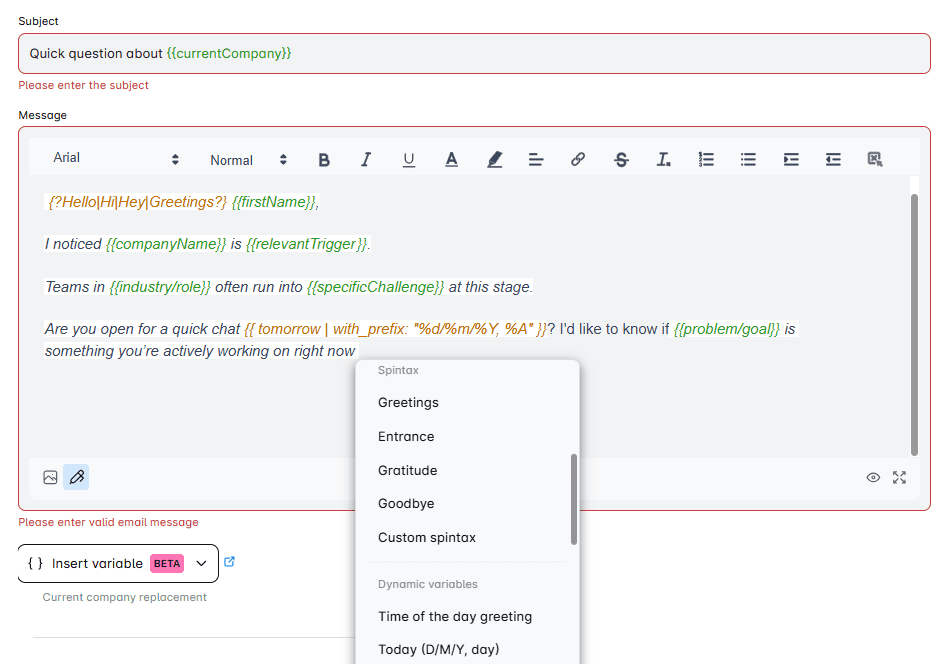
And speaking of Skylead, it comes with advanced personalization features, including:
- AI-data-enriched variables
- Spintax, which lets you rotate phrase variations (such as hi, hey, hello).
- Liquid syntax, which combines variables and conditions to show different content to different prospects based on predefined rules.
- Image and GIF personalization that lets you personalize visuals with text and variables, as well as your own and your prospects’ profile images and company logos.
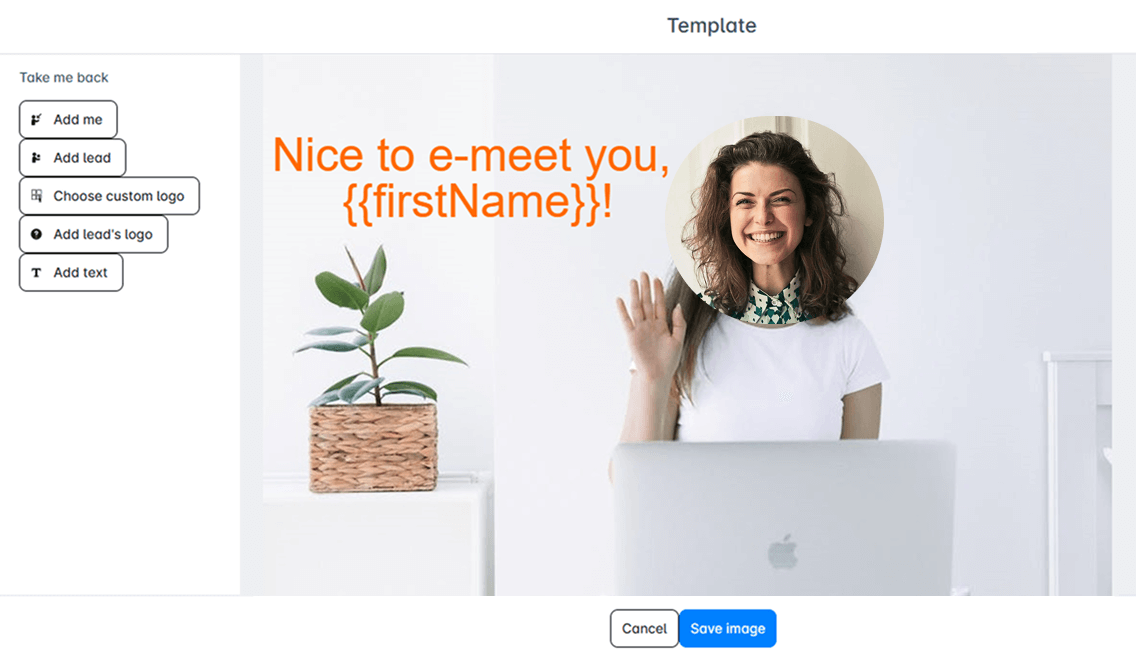
As a result of this combination, you get fully personalized outreach that feels absolutely human and gets you up to 76% increase in response rate!
4. Engagement tracking
Sales engagement platforms don’t stop at sending messages. They also track what happens after these are sent.
That might include:
- email opens
- link clicks
- replies
- social media profile views
- social media connections
… and more, depending on the platform.
These signals help users spot interested prospects faster and stop wasting time on accounts that aren’t engaging.
To paint a better picture, Skylead comes with a dedicated Reports page where you can analyze the performance of your Smart sequences in 3 different view modes:
- Graph, where you can easily observe oscillations.
- Table, to track day-by-day performance.
- Step-by-step, to examine the performance of individual steps in a sequence. This is particularly useful if running A/B tests, as you can compare up to 5 message variants side by side.
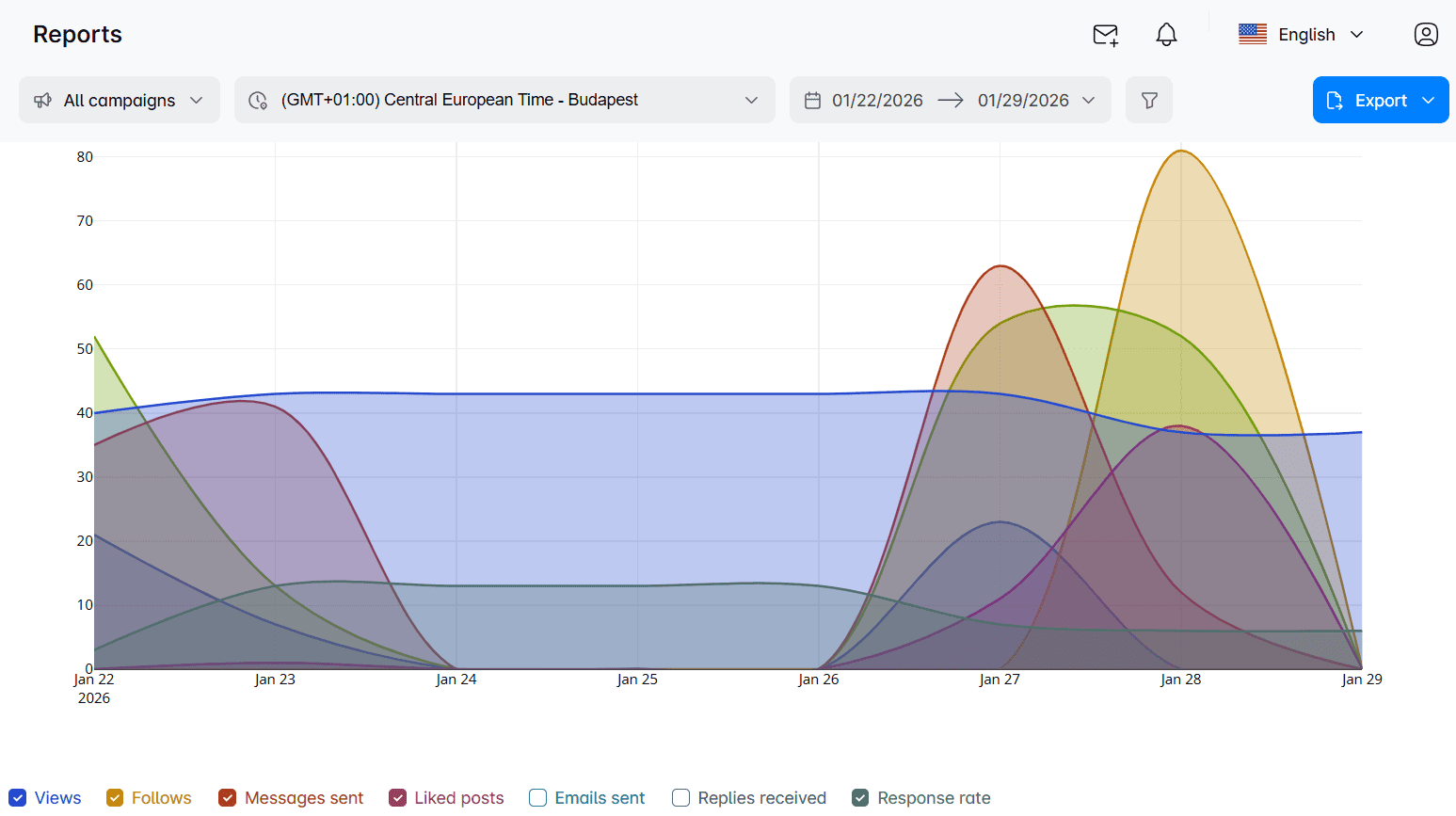
5. Unified inbox
Most sales teams still manage conversations across multiple places: Gmail, social media, CRM notes, and maybe even Slack. That fragmentation slows things down and makes it harder to keep context.
That’s why most sales engagement platforms include a unified inbox that pulls all prospect conversations into one place. Emails and all social replies sit side by side, so users don’t have to jump between tools just to answer a message.
With Skylead, this comes in the form of a Smart Inbox.
It holds your entire correspondence with prospects, regardless of channel. You can reply directly from it, leave internal notes on specific leads, and add tags to track things like meetings booked, conversions, or deal status. Everything stays connected to the outreach sequence (a.k.a. campaign), so you always know what happened before responding.
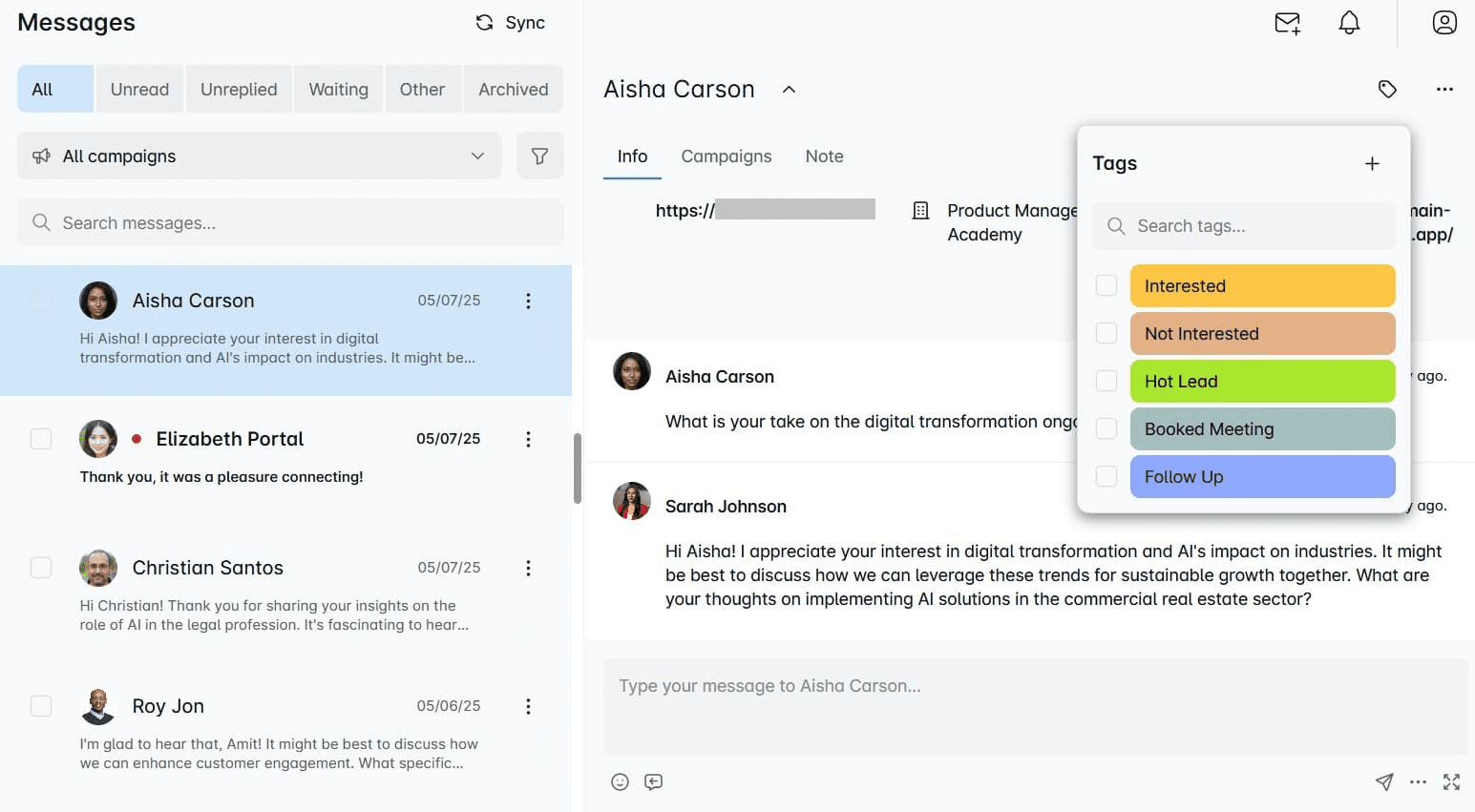
6. CRM integration
You know what a sales engagement platform is already, and that it’s different from a CRM. It’s also not supposed to replace one. Rather, it’s meant to work alongside it.
For that reason exactly, the best sales engagement platforms must integrate with CRM.
A good SEP automatically syncs activity like emails sent, replies received, etc., back to your CRM. This keeps customer records up to date without forcing users to log every interaction manually.
Skylead integrates directly with popular CRMs like Salesforce and Pipedrive. And if your tech stack looks a little different, you can still connect Skylead to virtually any CRM or internal tool through webhooks or API.
How to choose the right sales engagement platform
By now, you know what a sales engagement platform does and which features matter. The next question is obvious: how do you actually pick the right one?
Because while most SEPs look similar on the surface, they’re very different once you start using them day to day.
Here’s what we recommend focusing on.
1. Start with your sales motion
Before comparing tools, get clear on how your team sells.
Ask yourself:
- Are you running high-volume outbound outreach or account-based outreach?
- Do reps work mostly over email, social, or both?
- Are you focused on prospecting, deal acceleration, or both?
Some platforms are built mainly for SDR-heavy outbound. Others shine in account-based sales. A few handle both well.
If the platform doesn’t match your actual workflow, no feature list will save it.
2. Look for workflow flexibility (not just automation)
Automation alone isn’t enough.
What you really want is flexibility: the ability to adjust outreach based on prospect behavior, change paths mid-sequence, and personalize without breaking your flow.
Static cadences are fine for basic use cases. But if you care about timing, intent, and real engagement, make sure the platform supports behavior-based logic, not just fixed delays.
3. Make sure you will actually use it
If users find the platform clunky, slow, or confusing, adoption drops. And once adoption drops, your ROI disappears.
Pay attention to:
- How intuitive the UI feels
- How many clicks it takes to launch an outreach campaign
- Whether daily tasks are clear and prioritized
- How easy it is to reply, personalize, and adjust sequences
A sales engagement platform should simplify your day, not add another layer of friction.
4. Check CRM sync quality
Almost every SEP claims CRM integration. That doesn’t mean they all do it well.
What you want is:
- Automatic activity logging
- Clean contact and account syncing
- Reliable status updates
- Minimal manual cleanup
If you still have to update the CRM by hand, you’re missing half the value.
5. Prioritize engagement data and reporting
Make sure the platform gives you clear visibility into messages sent, replies, and clicks, and sequence performance as a whole.
This is what allows managers to coach effectively and RevOps to optimize processes based on reality, rather than assumptions.
6. Think about scale
You might be a team of 3 now. That doesn’t mean you’ll stay that way.
Look for a platform that can grow with you, meaning it supports:
- Multiple seats
- Unlimited mailboxes
- High message volumes
- Deep personalization
- Complex workflows
Switching SEPs later on is painful. So, choosing one that supports growth saves you from rebuilding your entire outreach stack down the line.
At the end of the day, the best sales engagement platform isn’t the one with the longest feature list.
It’s the one that fits your sales motion, removes manual work, gives you clean performance data, and helps your team execute consistently.
Common myths about sales engagement platforms
Sales engagement platforms are everywhere now. And with popularity comes… confusion.
Over the years, our sales team at Skylead has noticed a few recurring myths that stop teams from adopting SEPs or using them properly.
That being said, we had them list the most common objections they hear, so we can, once and for all, bust all the myths.
Myth #1: It’s just an email automation tool
This is the most common one.
Yes, SEPs send emails. But if that’s all they did, they wouldn’t deserve their own category.
A true sales engagement platform structures multichannel outreach, tracks engagement signals, prioritizes prospects, syncs activity to CRM, and creates repeatable workflows across the entire funnel.
Email automation is a feature. Execution management is the real value.
Myth #2: Only SDR teams need it
Sales engagement platforms are often associated with high-volume outbound. And while SDRs benefit massively from structured sequences and automated follow-ups, they’re not the only ones.
Account executives use SEPs to:
- Keep multi-threaded deals organized
- Follow up consistently with stakeholders
- Maintain momentum in longer sales cycles
Meanwhile, managers use them for visibility, whereas RevOps uses them for process standardization.
And honestly, execution consistency benefits the whole team, not just the top of the funnel.
Myth #3: It will make outreach robotic
This fear is understandable. After all, bad automation does feel robotic.
On the other hand, good automation feels structured.
Modern SEPs allow:
- Variables and conditional messaging
- Behavior-based follow-ups
- Channel switching based on engagement
- A/B testing for continuous improvement
So, if your outreach sounds robotic despite using a modern sales engagement platform, sorry to break it to you, but that’s not a platform problem. It’s a messaging problem.
Myth #4: Our CRM already does this
CRMs are built to store data. They are not built to manage complex outreach workflows, automate multi-step sequences, or trigger actions based on engagement behavior.
Some CRMs offer basic sequencing. But they rarely provide the flexibility, reporting depth, and execution control of a dedicated sales engagement platform.
Not to mention, if you still rely on calendar reminders and manual follow-ups, your CRM isn’t solving the execution problem.
Myth #5: It’s too advanced for small teams
This one actually works the opposite way, as small teams benefit the most from structure.
When you don’t have 10 reps, you can’t afford dropped follow-ups, inconsistent messaging, or stalled deals.
In this case, a sales engagement platform doesn’t add complexity. It removes chaos. And it gives small teams the ability to operate like larger, more mature organizations, without hiring extra people.
Frequently asked questions (FAQs)
What does sales engagement mean?
Sales engagement refers to all interactions between sales reps and prospects across the buying journey. This includes emails, calls, social touches, follow-ups, and meetings. The goal is to keep communication consistent, relevant, and timely so deals move forward.
What is the difference between a CRM and a sales engagement platform?
A CRM stores and organizes customer data, tracks deal stages, and supports forecasting. A sales engagement platform manages outreach execution. It structures sequences, automates follow-ups, and tracks engagement. In short, the CRM records what happened, while the SEP drives action.
Do sales engagement platforms replace a CRM?
No. Sales engagement platforms are designed to work alongside a CRM, not replace it. The CRM remains the system of record for pipeline and forecasting, while the SEP manages outreach workflows, follow-ups, and engagement tracking.
Are sales engagement platforms only for outbound sales?
No. While they are widely used for outbound prospecting, sales engagement platforms also support inbound follow-ups, deal acceleration, renewals, and multi-stakeholder communication. Any sales motion that depends on timely, structured engagement can benefit from an SEP.
What does the future hold for sales engagement platforms?
Sales engagement platforms are evolving toward AI-driven execution and deeper data integration. Future SEPs will prioritize buying signals, suggest next best actions, and unify account-based prospecting, outreach, conversation data, and CRM syncing. The focus is shifting from basic automation to intelligent workflow orchestration across the entire sales cycle.
From understanding sales engagement to actually executing it
With everything said and done, it’s time to give the straight answer to the original question: what is a sales engagement platform?
Sales engagement itself is the execution layer of the sales process. A sales engagement platform is the system that supports that same execution at scale.
It gives your team the structure and, of course, the tools to turn strategy into action by organizing outreach, automating follow-ups, tracking engagement signals, and keeping every prospect conversation in one place.
But the real question now is: do you want your team relying on a hunch or on a system that actually supports consistent execution?
If the latter is your answer, Skylead is the LinkedIn automation tool and cold email software for you. It helps you run structured multichannel outreach, automate follow-ups based on real prospect behavior, and keep every conversation in one place - so you close 3x more deals while saving 11+ hours a week on repetitive tasks.
Try it free for 7 days to see how predictable, scalable sales engagement actually feels!
Updated on: September 15th, 2026
Sales engagement gets talked about a lot. Sales engagement process? Much less so, and that’s where most teams get stuck.
Many sales organizations invest in better tools, automate more touchpoints, and add more channels, yet deals still stall, follow-ups fall through, and results stay unpredictable. Not because reps aren’t talented or trying hard enough, but because there’s no clear system behind how engagement should actually happen from the first touchpoint to close and beyond.
If you already understand what is sales engagement but struggle to make it consistent across deals, reps, or channels, what you need is a structured sales engagement process - a defined sequence of stages where each interaction has a purpose, a goal, and a clear signal for what comes next.
Lucky for you, you don’t have to look hard to find it, as we’ll be walking you through:
- What this process entails
- How it differs from the traditional sales process
- Why it’s critical for a predictable pipeline and revenue
You’ll also learn about the 7 core stages high-performing sales teams follow (ours at Skylead included) and the elements that make the process scalable.
What is the sales engagement process?
The sales engagement process is the structured, repeatable system sales teams use to manage interactions with prospects and customers across the entire buying journey.
In practical terms, it defines:
- When to engage
- How to engage
- Why does a specific interaction happen at a given moment
The sales engagement process turns engagement into a clear sequence of stages, where each stage has a goal, a set of recommended actions, and signals that tell reps when it’s time to move forward.
That said, many people confuse sales engagement with the sales engagement process. And although they’re related, they are not exactly the same.
Sales engagement is the umbrella term that describes all interactions between sales reps and prospects - emails, calls, LinkedIn messages, demos, follow-ups, and everything in between.
Sales engagement process, on the other hand, is more specific. It defines how those interactions are organized, sequenced, and repeated across deals so engagement stays consistent, intentional, and measurable, no matter who’s selling or which channel is used.
Sales process vs. sales engagement process
Here’s another distinction we need to make: the sales process and the sales engagement process are NOT the same.
A traditional sales process is stage-based and outcome-oriented. It typically includes stages such as:
- Lead generation
- Qualification
- Discovery
- Demo or presentation
- Proposal
- Closing
Its primary purpose is visibility and control. It helps sales teams track where deals are, forecast revenue, and understand what needs to happen next from a pipeline perspective.
What it doesn’t define in detail is how reps should engage prospects inside those stages.
That’s what the sales engagement process does. It lives inside the sales process, and clarifies:
- Which interactions should happen at each stage
- Which channels are most effective at that point
- How often should reps follow up
- What buying signals indicate progress or disengagement
In other words, while the sales process tells you that a deal is in the qualification stage, the sales engagement process tells you how to approach the prospect at this stage, what kind of message to send, when to follow up, and what outcome signals readiness to move forward.
Without this layer, reps are left to figure things out on their own.
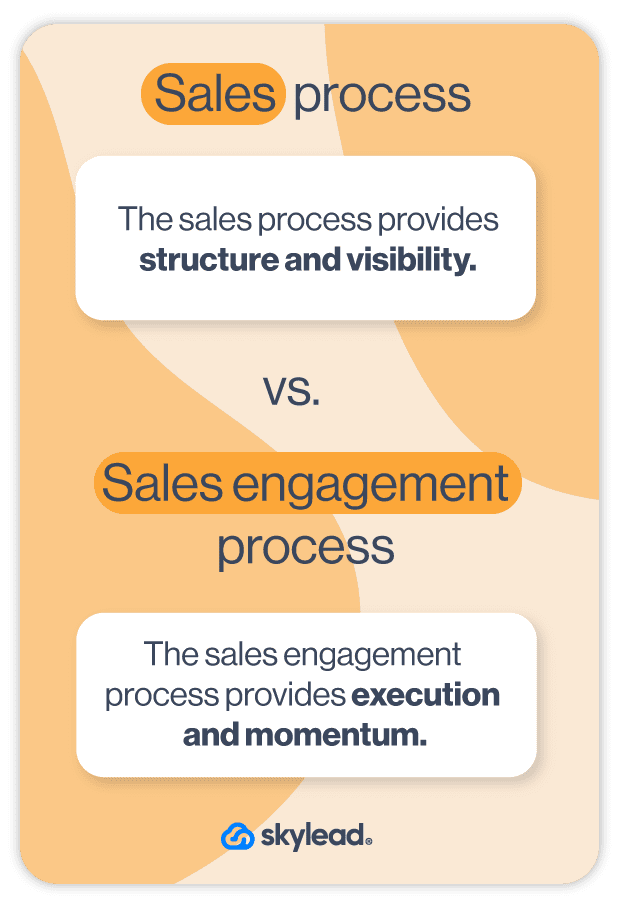
Why is an effective sales engagement process important?
Sales engagement doesn’t fail because teams don’t send enough messages. It fails because engagement isn’t coordinated.
When there’s no defined process, reps rely on personal habits, memory, and intuition to decide when to follow up, which channel to use, or how to move the prospect to the next step in the journey. That might work for a handful of deals. It breaks the moment volume increases, or more people join the team.
A structured sales engagement process changes that dynamic, and the impact shows up in a few very real ways.
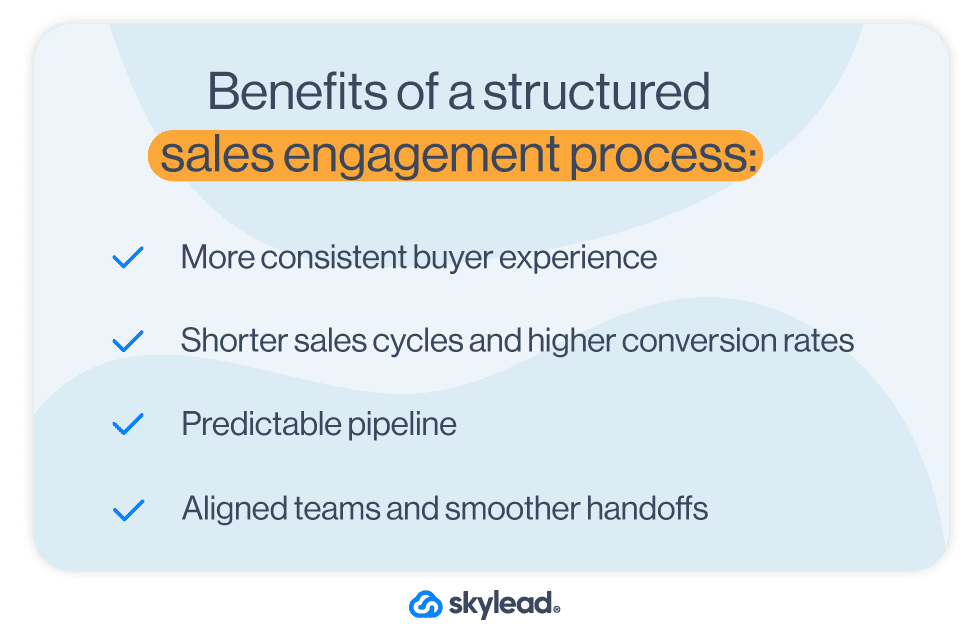
It strengthens customer relationships and builds long-term loyalty
From the buyer's side, inconsistent engagement is easy to spot. They get chased when they’re not ready, ignored when they are interested, or contacted multiple times with no awareness of previous conversations. That kind of experience slows deals down while also eroding trust.
When there’s a clearly defined engagement process, buyers are met with relevant, well-timed interactions that reflect where they actually are in their decision-making. Instead of feeling pressured or forgotten, they feel guided. That same consistency carries into post-sale follow-ups, which is why teams with structured engagement processes tend to see more renewals, upsells, and referrals over time.
It positively impacts sales cycle length, conversion rates, and revenue
Some deals stall because momentum is lost. Follow-ups are delayed. Messages repeat the same pitch. Buying signals go unnoticed. And suddenly, a ‘’warm’’ opportunity goes cold.
Research shows that B2B deals typically require between 8 and 15 meaningful touchpoints before closing, and complex sales can need 20 or more interactions. Yet many reps stop following up too early or engage without a clear plan. A structured process closes that gap, leading to higher conversion rates and shorter sales cycles, which, naturally, translates into more revenue.
It brings predictability and scalability to the pipeline
One of the biggest challenges sales leaders face isn’t closing deals. It’s forecasting them.
When engagement varies from rep to rep, the pipeline becomes hard to trust. Some deals move fast, others stall silently, and it’s unclear whether that’s due to buyer intent or execution gaps.
A sales engagement process makes performance easier to predict because engagement follows defined patterns. You can see where deals slow down, which stages cause drop-offs, and which touchpoints perform best.
That visibility is also what makes scaling possible. Instead of relying on a few top performers, teams can replicate what works across the entire organization, onboard new reps faster, and grow volume without sacrificing quality.
It aligns sales, marketing, and customer-facing teams
Without a shared engagement process, teams operate independently.
Marketing generates leads without knowing how they’ll be followed up on. Sales engages prospects without visibility into prior touchpoints. Customer success picks up accounts with little context on what was promised during the sale.
A defined sales engagement process acts as a common thread across teams. It aligns messaging, timing, and expectations throughout the buyer journey, from first interaction to long after the deal is closed.
The result is a smoother handoff, fewer dropped balls, and a more consistent experience for both buyers and internal teams.
Not to mention, a whopping 54% of sales leaders agree that working with the marketing teams leads to an increase in revenue growth, with 61% of marketers saying that creating content in collaboration with sales helps generate higher quality leads.
7 core stages of the sales engagement process
High-performing teams don’t just do sales outreach and hope deals will close by themselves. They guide prospects through a sequence of stages where each interaction builds on the last one, responds to buyer behavior, and pushes the conversation toward a clear outcome.
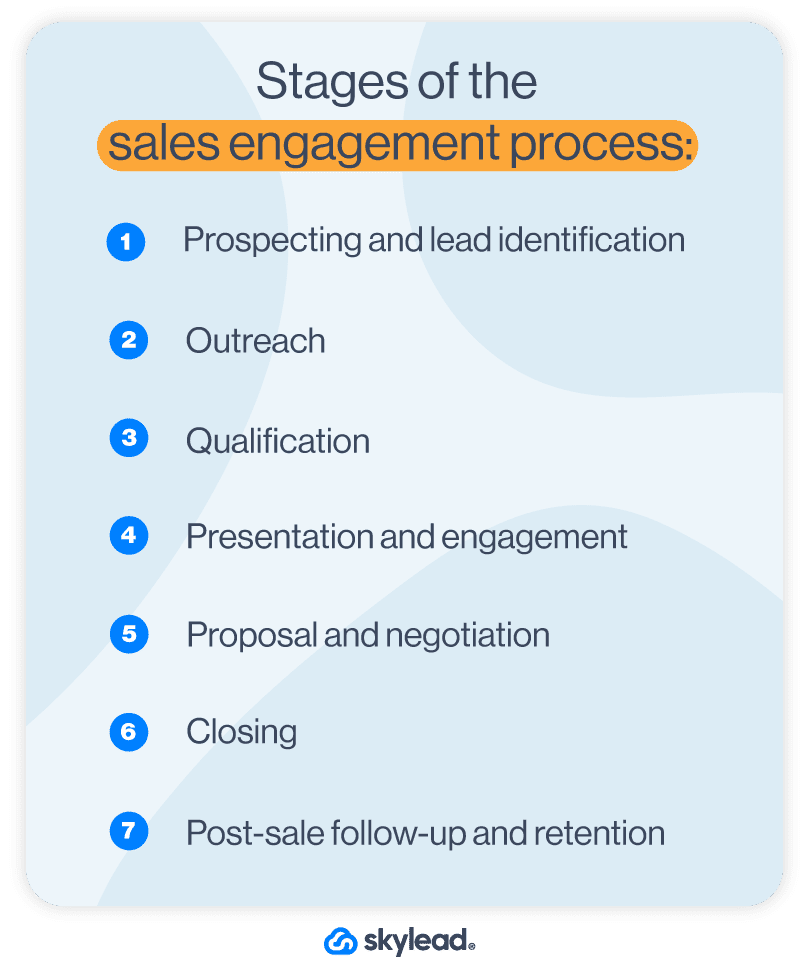
While the exact details vary by industry, deal size, and sales motion, most effective sales engagement processes follow the same core stages, including:
- Prospecting and lead identification
- Outreach
- Qualification
- Presentation and engagement
- Proposal and negotiation
- Closing
- Post-sale follow-up and retention
Together, they cover the full journey - from first contact to long after the deal is signed.
Notice how some of these stages above overlap with what’s typically included in a sales process itself? That’s intentional.
The difference is this: the sales process tells you where a deal is, while the sales engagement process tells you how to engage the prospect at that point.
1. Prospecting and lead identification
In the sales process, prospecting is often treated as a prerequisite, something that happens before engagement really begins.
In the sales engagement process, it’s where engagement starts.
That’s because who you choose to engage with determines the quality of every interaction that follows.
At this stage, the goal isn’t to contact as many people as possible. It’s to identify accounts and contacts that are worth engaging right now, based on fit and context.
Effective prospecting focuses on:
- Matching your ideal customer profile (ICP)
- Identifying business decision-makers
- Spotting signals that justify outreach (growth, role changes, new initiatives, tech adoption, etc.)
This stage also defines who should not enter your engagement flow. Filtering out poor-fit or low-intent leads early prevents wasted follow-ups, irrelevant messaging, and stalled deals later in the pipeline.
When prospecting is treated as the first engagement stage, not just where you build a prospecting list, outreach becomes more relevant, conversations start faster, and downstream stages convert more consistently.
2. Outreach
This is the stage most teams think of when they hear sales engagement. Emails, LinkedIn messages, calls, follow-ups. But without a clear engagement framework, outreach quickly turns into a mix of one-off messages, inconsistent follow-ups, and channel hopping with no real agenda behind it.
In a structured process, outreach is intentional and sequenced. Every touchpoint has a role to play.
At this stage, the goal isn’t to pitch or push for a decision. It’s to open the door to a conversation and give the prospect a reason to respond.
That starts with context. A prospect should immediately understand why you’re reaching out and why now, whether that’s tied to their role, a recent company change, or a specific problem they’re likely dealing with.
From there, channel choice matters just as much. Some conversations start best over email, others on LinkedIn, and some only move forward after a call reinforces earlier touchpoints.
Follow-ups are part of this stage, too. They’re planned in advance, spaced intentionally, and adjusted based on how the prospect reacts, not sent just because “it’s been a few days.”
Just as importantly, outreach includes signals, which a sales engagement platform can help you track and act upon. Opens, replies, clicks, profile views, meeting bookings, and even silence all provide feedback. Those signals dictate what happens next, whether that’s moving to qualification, changing the message, switching channels, or pausing engagement altogether.
Need a proven framework for targeted outreach?
Download our sales playbook to see how we engaged our leads and scaled Skylead from 2,500 to 10,000+ users in just 9 months. As a bonus, you’ll get access to outreach sequences and message templates that you can immediately use to jump-start your engagement.
3. Qualification
Once cold outreach turns into an actual conversation, the focus shifts from getting a response to understanding whether the opportunity is worth pursuing further. In other words, it’s time to qualify the lead.
Qualification is a series of interactions where reps learn whether the prospect has a real problem you can solve, how urgent that problem actually is, who’s involved in the decision, and whether it makes sense to keep investing time and effort
Effective qualification happens through:
- discovery calls and exploratory conversations
- thoughtful follow-up questions
- paying attention to engagement signals (responsiveness, depth of answers, willingness to share context, etc.)
4. Presentation
This is the point where prospects expect to see how your solution applies to their situation.
It’s also where you translate what you learned throughout the process into a focused experience that answers one core question for the prospect:
“Can this actually solve our problem?”
Presentation can take form of multiple formats, depending on the deal and how the buyer prefers to engage.
In practice, that often includes:
- Live demos centered around one or two use cases discussed during qualification
- Walkthroughs of specific workflows or outcomes that prospects care about
- Short presentations that frame the problem first, then show how your solution fits
- Supporting materials like case studies, examples, or recordings shared after the call
What matters most at this stage is relevance. Potential buyers lose interest quickly when presentations feel generic or disconnected from earlier conversations, making it imperative to prepare a sales meeting agenda in advance.
This is also where engagement becomes more interactive. Prospects ask more detailed questions, bring in additional stakeholders, and start evaluating trade-offs. Pricing, technical constraints, or internal approval processes often come up here, and objection handling has a direct impact on whether the deal keeps moving.
When this stage is done well, the prospect gains clarity - not just about the product, but about the next step. That clarity is what makes moving into proposal and negotiation feel natural rather than forced.
5. Proposal and negotiation
By the time a deal reaches this stage, the prospect is no longer evaluating whether to move forward, but how.
Many teams treat this as a simple handoff: send a quote, wait for feedback, follow up if nothing happens. In reality, this stage is where most of the fine print of the decision gets worked out, and where deals either close or fall through.
The proposal itself should reflect everything uncovered earlier in the process. Scope, pricing, timelines, and included features shouldn’t come as a surprise. If they do, it usually means something was missed in the qualification or presentation.
What actually happens here is a series of small but important exchanges. Prospects ask clarifying questions. New stakeholders get looped in. Procurement or legal may request changes. Internal priorities surface that weren’t visible before.
Negotiation, in this context, means removing obstacles that prevent a decision. Sometimes that means adjusting terms or offering discounts. Other times it means explaining trade-offs, reinforcing value, or helping the buyer navigate internal approval.
This stage also demands tighter engagement than any other. Slow replies or unclear next steps can derail deals that were otherwise ready to close. That’s why proposal and negotiation need to be treated as an active engagement phase, with defined follow-ups, clear timelines, and explicit ownership on both sides.
6. Closing
By now, the prospect understands the problem, sees how your solution fits, and has agreed (at least in principle) on scope and terms. The goal of this stage is to help them complete the decision and finalize the deal.
Closing usually involves:
- confirming final approval from all decision-makers
- completing contract signing and paperwork
- aligning on start dates, onboarding steps, or handover to implementation
Reps play a coordination role at this point. They follow up on outstanding approvals, answer last-minute questions, and keep momentum alive without applying unnecessary pressure.
Once the agreement is signed, the deal seamlessly moves forward into post-sale engagement, without a drop in communication or context.
7. Post-sale follow-up and retention
The buyer’s experience shouldn’t reset just because the deal is done. In fact, the period immediately after closing is when expectations are highest, and trust is still being formed.
Post-sale engagement typically focuses on confirming that onboarding or implementation starts smoothly, reinforcing what was agreed on during the sales process, and making sure the buyer knows who owns what moving forward.
Depending on the organization, this stage may involve a handoff to customer success, account management, or onboarding teams.
Early check-ins are especially important. In fact, simple follow-ups to confirm progress, address initial friction, or clarify next steps can prevent small issues from becoming reasons for churn later on.
Over time, post-sale engagement shifts toward retention and growth. Ongoing communication helps teams spot expansion opportunities, identify satisfied customers who may become advocates, and proactively address risks before renewals come up.
Elements of a winning sales engagement process
Defining stages is only half the job. What separates a sales engagement process that looks good on paper from one that actually works day to day is how those stages are supported.
High-performing teams don’t rely on individual reps to “figure it out.” They put a few foundational elements in place that make consistent engagement possible, even as volume grows and teams scale.
Playbooks and sequences
A winning sales engagement process is documented, and no, not in the rigid scripts or same generic messages sense. It means clear guidance on what good engagement looks like at each stage. Playbooks outline recommended actions, messaging angles, follow-up timing, and exit criteria so reps aren’t starting from scratch every time.
Sequences are the execution layer of these playbooks. They help teams manage and keep track of touchpoints while still leaving room for personalization and judgment. When done right, sequences support reps instead of replacing them.
Channel selection and touchpoints
Not every channel works equally well at every stage. Cold outreach, qualification, late-stage follow-ups, and post-sale check-ins all call for different approaches. A strong sales engagement process defines where email makes sense, where LinkedIn adds value, and when a call is necessary to move a lead further down the funnel.
Just as important is pacing. Too many touchpoints too fast can feel intrusive, whereas too few leave the buyer doing nothing, which is often worse than saying no.
Personalization
Personalization is what keeps a structured process from feeling robotic. That can be as simple as referencing a prospect’s role, industry, or recent activity, or as deep as tailoring demos, proposals, and follow-ups to specific use cases.
What matters most in personalized outreach is relevance. Every interaction should answer the unspoken question in the prospect’s mind: ‘’Why is this useful to me right now?”
Automation and technology
Automation exists to remove friction, not judgment. The best teams use sales engagement technology to handle repetitive tasks, such as prospecting, scheduling follow-ups, tracking engagement signals, or logging activity, so reps can focus on conversations that require context and decision-making.
We can’t talk about sales engagement automation without mentioning our very own Skylead. It’s THE software to use when you want to save 11+ hours a week on repetitive tasks and book 3x more meetings.
Performance tracking
You can’t improve what you can’t see. It’s that simple.
A strong sales engagement process makes it easy to spot patterns, test changes, and refine execution based on real data.
Team alignment and training
Finally, engagement only works when everyone is on the same page.
Sales, marketing, and customer-facing teams need a shared understanding of how prospects are engaged, what’s been promised, and what happens next. Training helps new reps onboard faster and experienced reps stay consistent, even as processes evolve.
When these elements work together, the sales engagement process becomes a system that supports predictable growth, repeatable results, and a better experience for both buyers and sellers.
Common mistakes to avoid in the sales engagement process
Even those who understand the importance of sales engagement often struggle to execute it well. Not because the idea is wrong, but because small missteps compound quickly across deals, reps, and channels.
Here are some of the most common mistakes we’ve seen salespeople make.
Lack of a clear strategy or goals
If reps don’t know what each stage is meant to achieve, engagement becomes reactive. Messages are sent because it feels like time, follow-ups happen out of habit, and progress is judged by activity rather than outcomes.
A sales engagement process only works when every stage has a purpose. Without that, teams end up busy. But effective? Not so much.
Over-reliance on automation without personalization
One of the fastest ways to undermine a sales engagement process is to lean too heavily on automated sequences without enough context or customization. Reps have been using chat GPT for sales copywriting for a while now - so much that prospects have learned to spot generic messages from a mile away, especially when they ignore prior interactions or repeat the same pitch across channels.
The result is predictable: lower response rates, stalled conversations, and disengagement. Automation should create consistency and save time, sure, but it’s personalization that keeps engagement human.
Ignoring data and feedback
Many teams track engagement metrics but don’t actually use them. Open rates, replies, meeting bookings, and drop-offs are all signals. When they’re ignored, teams keep running the same playbooks even when they’re clearly not working. Over time, this leads to bloated processes that look structured but produce inconsistent results.
Neglecting follow-up and post-sale engagement
Engagement gaps don’t only happen early in the funnel. Deals often stall because follow-ups aren’t planned or ownership isn’t clear, particularly during proposal, closing, or immediately after the deal is signed. Post-sale engagement is another frequent blind spot, where communication drops just when the buyer needs reassurance and guidance the most.
Poor alignment between sales and marketing
When marketing and sales operate independently, prospects experience disjointed messaging, awkward handoffs, and repeated questions. Leads arrive without context. Sales conversations contradict earlier promises. And to top it all off, customer success inherits accounts with incomplete information, which creates friction after the sale and puts retention at risk before value is even delivered.
How to optimize and scale your sales engagement process?
Designing a sales engagement process is one thing. Running it consistently, at scale, without losing personalization or control, is where most teams struggle.
This is exactly the problem Skylead was built to solve.
Skylead is a LinkedIn automation tool and cold email software that helps sales teams and agencies execute their engagement process end-to-end - from first touch to post-sale follow-up - without relying on spreadsheets, reminders, or guesswork.
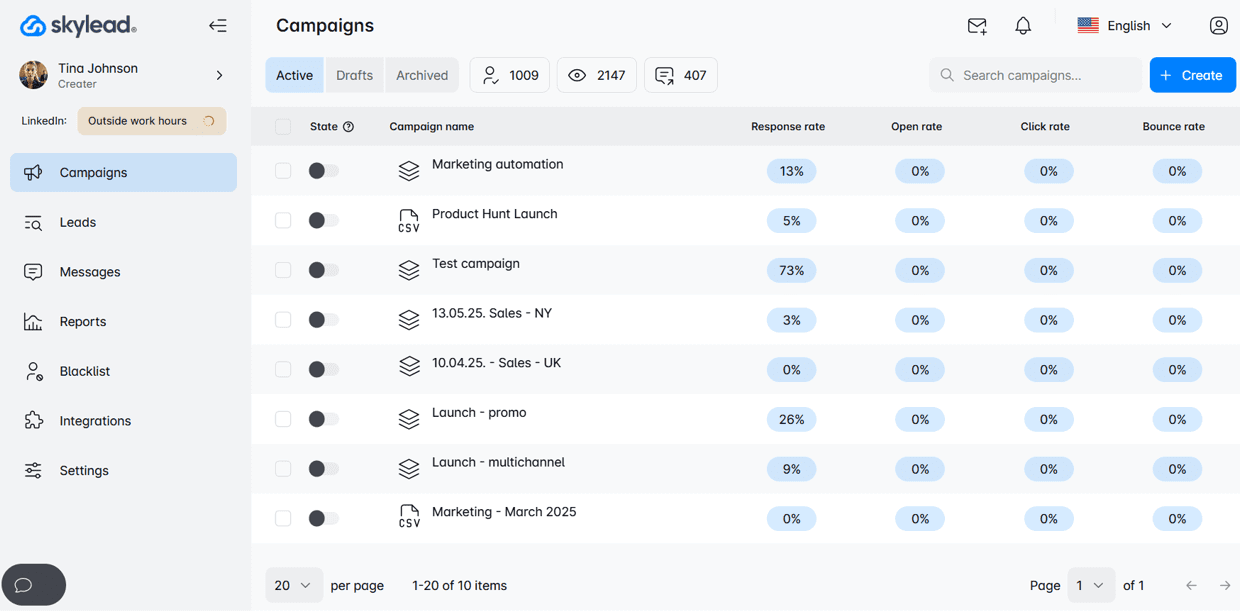
Here’s everything that makes Skylead the tool to use when you want to optimize and scale your sales engagement process.
Scalable outreach that doesn’t put deliverability at risk
One of the biggest bottlenecks in sales engagement is volume. Reps want to reach more prospects, but inbox limits and deliverability risks get in the way.
Well, not with Skylead!
Namely, you can connect unlimited email accounts to the tool and automatically rotate them to send tens of thousands of emails per month while staying within safe sending limits. There’s no manual switching and no extra fees as your email outreach volume grows.
To protect deliverability even further, Skylead includes email discovery and verification directly inside your outreach flow. Emails are found, double-verified, and used in sequences automatically, reducing bounces and keeping your sender reputation clean.
And because deliverability starts long before the first outreach campaign, we’ve also made sure to include the infinite email warm-up functionality. This way, you can have your mailbox(es) gradually prepared for outreach, so emails land in the primary inbox instead of spam.
Smart sequences that adapt in real time
We can’t talk about Skylead without mentioning our star feature - Smart sequences.
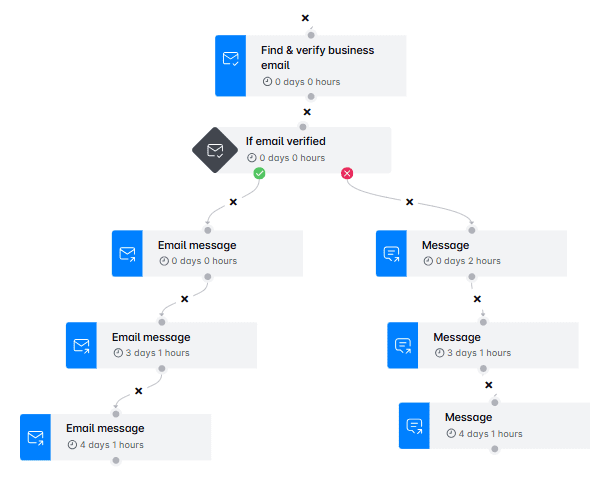
Instead of their static, linear counterparts, Smart sequences combine different LinkedIn and email actions with if/else conditions. You define the logic once, and the tool adapts execution based on how prospects behave.
- No reply? Send a follow-up email after no response automatically.
- An email opened but ignored? Switch to LinkedIn.
... and countless other scenarios!
This allows reps to focus on strategy while the platform finds the fastest path to engagement for each prospect.
Personalization that actually feels personal
Structured engagement doesn’t work if messages sound automated.
Skylead gives you multiple layers of personalization, depending on how deep you want to go.
For example, you can use predefined or custom variables to personalize messages with first and last name, role, company, or any other data you choose.
In the meantime, Spintax lets you rotate phrase variations (like hello, hi, or hey) inside bulk emails, so messages don’t look or feel repetitive.
For advanced use cases, there’s Liquid syntax, which combines variables and conditions to show different content to different prospects based on rules you define (such as if/else conditions or available user data).
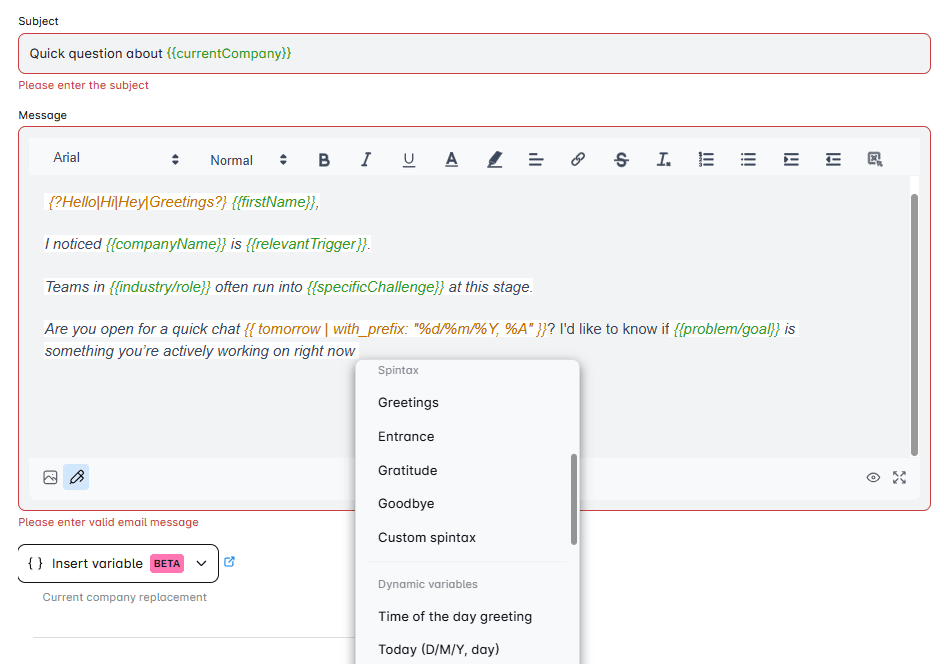
Not to mention, you can run up to 5 A/B tests for every message-based step in your Smart sequence to see what kind of personalization or angle works best for your leads!
And when text alone isn’t enough, Skylead’s native image and GIF personalization lets you embed names, company logos, profile photos, or custom text directly into visuals. Because sometimes, an image really does say more than a thousand words (and brings about a 76% increase in response rate!)
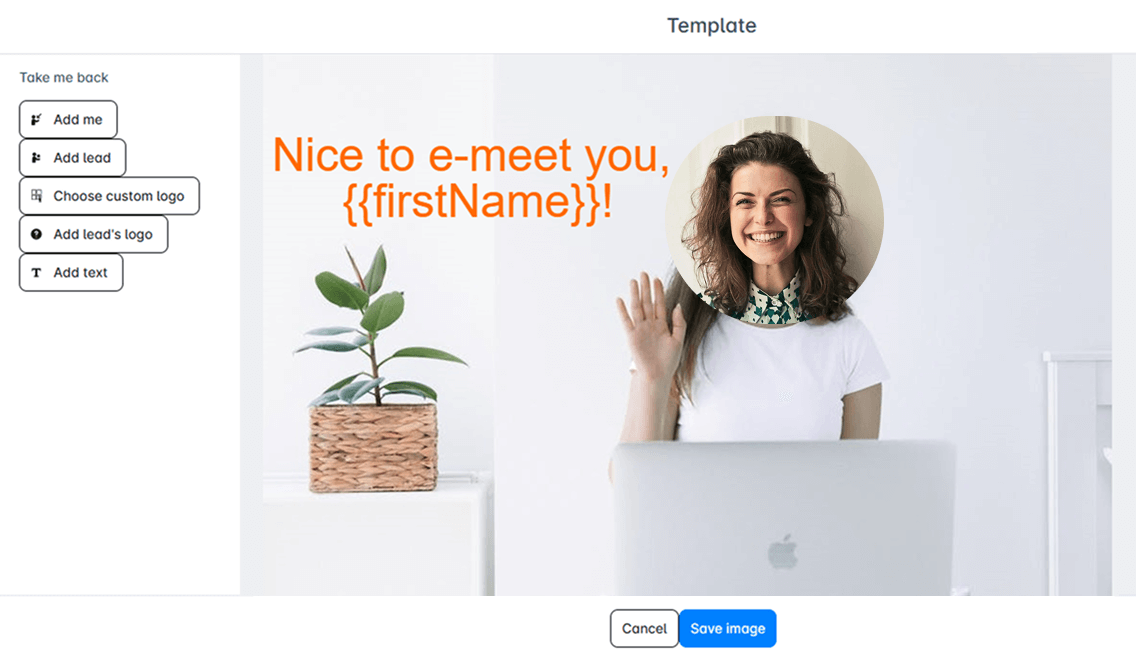
Visibility into what’s working
A sales engagement process only improves if teams can see how it performs.
That’s why our tool includes built-in outreach analytics, allowing users to track performance day by day through clear graphs and tables, or drill down into step-by-step performance within each sequence.
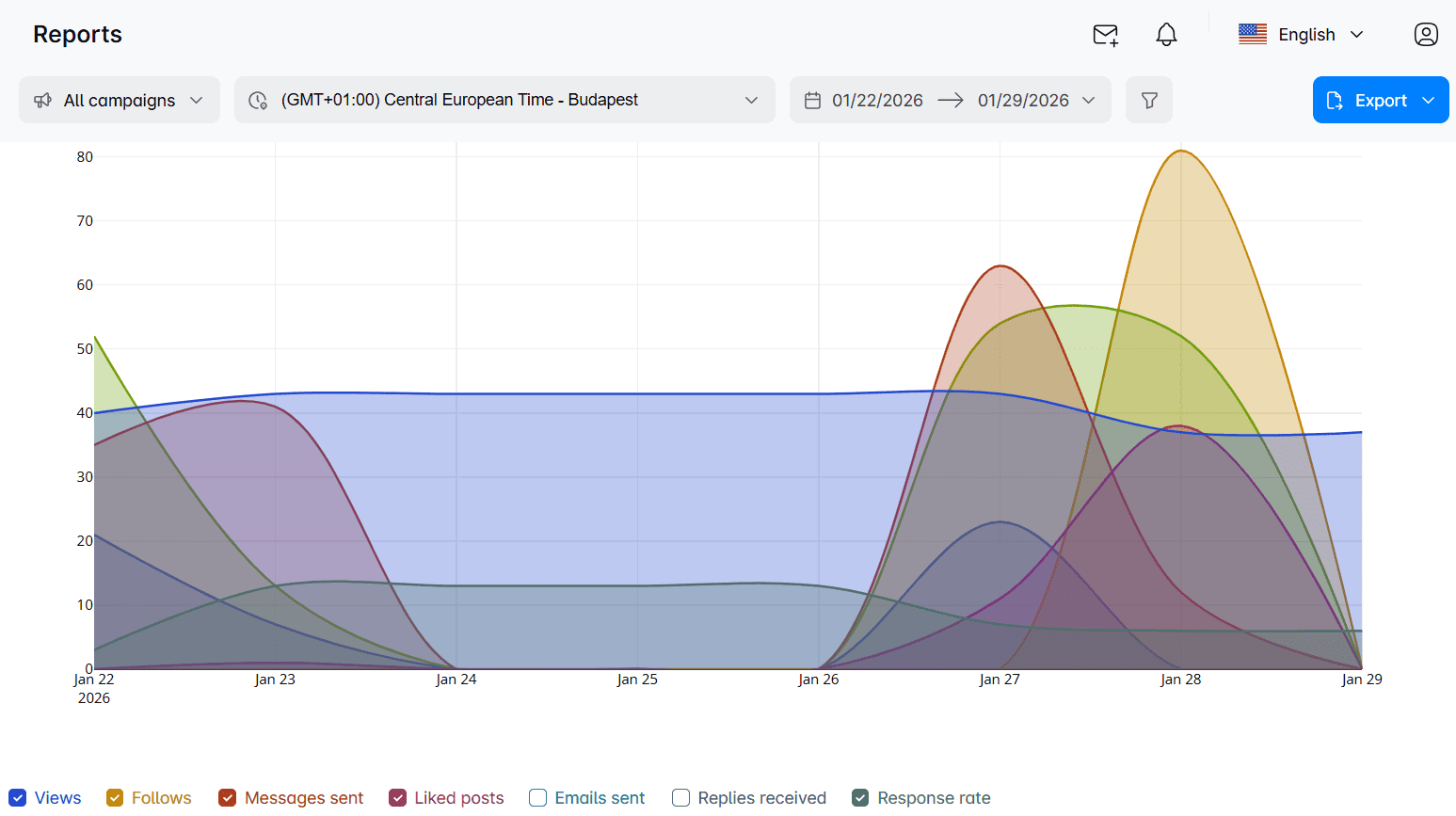
One inbox for every conversation
All replies across channels land in a Smart inbox.
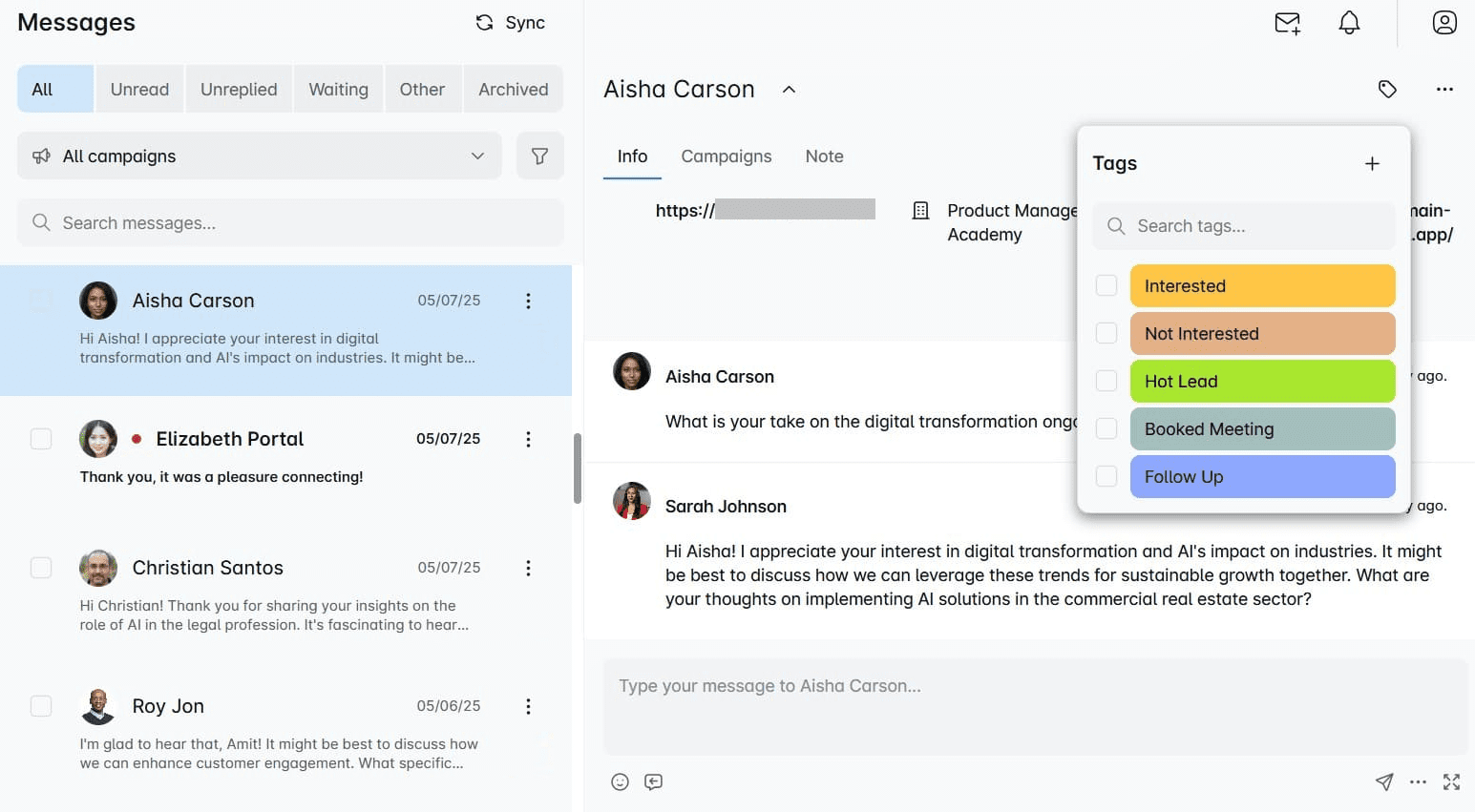
From there, reps can respond directly, leave internal notes, add tags to conversations, and track outcomes. Because everything is connected, it’s easy to see which conversations turned into meetings, which deals closed, and how outreach contributes to ROI.
Pretty handy, don’t you think?
Frequently asked questions (FAQs)
What is the difference between sales engagement and sales enablement?
Sales enablement prepares reps to sell by providing training, content, and playbooks. Sales engagement focuses on execution: how reps interact with prospects across channels, when they follow up, and how conversations progress.
How do I choose the right sales engagement platform for my team?
Look for a platform that fits how your team actually sells. An ideal platform should support multichannel outreach, flexible sequencing with conditional logic, strong personalization options, and built-in analytics. Ease of use matters just as much as power. If reps can’t adopt it quickly, even the best features don’t help.
What are the best channels for sales engagement?
There’s no single best channel. Email works well for structured outreach and follow-ups, LinkedIn supports warm touches and visibility, and calls help move complex or stalled deals forward. Effective sales engagement combines channels and adjusts based on prospect behavior.
How can I measure the effectiveness of my sales engagement process?
Effectiveness goes beyond activity volume. Track reply rates, meeting bookings, stage-to-stage conversions, deal velocity, and drop-off points. A strong sales engagement process makes these signals visible and, thus, helps teams identify what drives progress and where engagement breaks down.
Is sales engagement only for outbound sales?
No. Sales engagement applies to outbound, inbound, and post-sale interactions. Inbound leads still need timely follow-ups and clear next steps, while post-sale engagement supports onboarding, retention, and expansion. Sales engagement revolves around managing interactions, regardless of how a lead enters the pipeline.
Build a sales engagement process your team can actually follow
If your reps have to stop and think, “What should I do next?” in the middle of a deal, the problem isn’t execution. It’s the lack of a sales engagement process that they can rely on.
When engagement is structured, reps don’t guess their next move. Deals don’t fall through. And growth doesn’t depend on a handful of top performers remembering to follow up. Instead, teams operate with clarity, consistency, and momentum across channels, stages, and the entire buyer journey.
If you’re serious about building a predictable pipeline and scaling without losing personalization, the process comes first. The right tools simply make it easier to execute.
That’s exactly where Skylead fits in.
Ready to put your sales engagement process into action?
? Try Skylead free for 7 days and see what structured, scalable engagement actually feels like.
Updated on: September 15th, 2026
CRM software and tools are definitely here to stay. There is no doubt that, with the global CRM market growth projection of $128.97 billion worth in 2028, the substantial popularity of the best CRM software is yet to come.
And with the reason. Firstly, CRM offers a wide range of benefits, including centralized data and automation of tedious sales processes. Above all, a well-implemented CRM software can reach ROI up to $45 for each $1 spent.
We all wish to jump on this train. And some of us already did. But in the sea of CRM software, how would you know which one is the best for you? Whether you are starting out or considering changing your CRM software, we’ve got your back.
Therefore, in this article we will cover some of the best CRM software, why they are the best, and how to integrate them with other tools.
Furthermore, we will cover what CRM software is, if you need it and if you should buy it. Let’s get to it!
What is CRM?
Customer Relation Management, aka CRM software, is a tool that helps companies collect, organize and manage data and streamline processes related to customers’ lifecycle.
In other words, sales terms, CRM software helps teams visualize their pipeline and organize or perform tasks related to the buyer journey. Furthermore, it pinpoints the location of specific prospects in the sales funnel, their status, the next activity the sales team needs to perform, and potential value.
CRM software substitutes various spreadsheets and documents companies use to keep up with prospects’ or customers’ data. It stores all information in one place - such as messages, meetings, pain points, buyer persona type, and, in some cases, calls with customers - everything you need to know about specific leads to help you build a relationship and close deals. Lastly, CRM software shows how effective your sales strategy is and if something in your process needs improvement.
Customer-wise, CRM software provides information about each customer, their history, and any pending tasks related to nurturing and upselling.
Why is CRM one of the most valuable assets a company can acquire?
Why CRM? To clarify, let’s check out a couple of statistics first:
59% of companies tested say that CRM helped them improve Customer Retention and Satisfaction Rate by 47% and reduce lead costs by 27%. (FounderJar)
According to Salesforce, 81% of sales representatives emphasize the importance of having a view of data across the complete customer journey.
97% of sales professionals tested think that technology and CRM software are either essential or crucial for business. (LinkedIn)
Looking at the previous statistics and many more across the internet, CRM software is an essential tool for sales teams, and for good reason. To clarify, they are not just any tool on the market - they make building the relationship and social selling easier tasks and help the sales team be more customer-oriented - which is the core point of today’s sales.
Best CRM software can…
1. Centralize and label your data
CRM keeps track of all leads’ data. In other words, CRM’s centralized storage offers salespeople all the information on every individual prospect or customer at hand so they can build relationships and close deals faster.
In addition, since the prospect base can be distinct, the best CRM software also labels and sections your customer data. To clarify, you as a salesperson must know at any given time where your prospects are in the pipeline, on what note you ended the conversation, are they warmed up, or what is the next step towards closing the deal. CRM software does this for you by analyzing and labeling existing data in the system with various parameters you set. Therefore, you can be more customer-oriented by creating different messages depending on the buyer lifecycle and more personalized outreach.
2. Automate the process
With almost every piece of data being actionable, the best CRM software can automate some tedious parts of the process for salespeople, so they can focus on nurturing prospects through the pipeline. For example, appointment scheduling, assigning leads to different sales reps, or updating and importing the prospects’ data.
3. Offer analytics to close more deals and increase customer satisfaction
We can’t stress enough how important it is to conduct data analysis. Luckily, creators of the best CRM software out there share our opinion. Hence, every CRM has an analytics or reports page to help sales teams make data-driven decisions.
In other words, CRM can help you see how many deals you won or lost, what tactic you used, deal value, and much more. Thanks to this, salespeople can adjust their approach, close more deals, and improve customer satisfaction and retention.
4. Remind salespeople of pending tasks
Sometimes we as people, amongst other work, forget to write a follow-up email or two, or simply a meeting slips out of our mind. It happens. However, forgetting such tasks can cause a lost prospect or a customer. However, CRM software offers a solution to this problem, and it is an option to alert you of actions needed for every customer in the pipeline to make sure these mistakes never happen.
To buy CRM software or to create a spreadsheet? That is the question.
Our experience says to buy. CRM software offers many useful features that you can use to streamline and automate processes and save you much more time than the spreadsheet.
However, if you are just starting out, perhaps you don’t have the necessary budget or have a small company, you might want to consider creating a CRM in a spreadsheet for yourself. It can help you understand how CRMs work and how your business can benefit from them.
Additional tip: If you want to level up but are not ready to pay for the CRM itself, try out some CRM software with free plans, such as Bitrix24, Really Simple Systems, or EngageBay.
Nevertheless, if you or the company scales up, do not dwell on these spreadsheets or free plans (unless you want to), as you might miss out on the amazing features that some of the best CRM software have.
In case you wish to buy CRM software, here are the ten best CRM software currently on the market (people’s choice).
10 best CRM software for sales
CRM software is an essential tool for every sales team. However, as prospects differ, so do the salespeople. In other words, not every CRM suits every business's needs. So, how would you know which one is the best for your business needs?
Thus we present you with the top 10 list of highest-rated, best CRM software for the sales team from various listing websites. For this article, we are going to calculate the current average rating from the most popular review sites:
Furthermore, we will list who they are most suited for, advantages, disadvantages, pricing, and additional information to help you find the best CRM software for you. Let’s get started.
Salesmate - Best CRM software for cold calling
This CRM software is great for small and medium businesses who are cold calling. In addition, Salesmate has a relatively easy-to-use interface and quick access to the features you require.
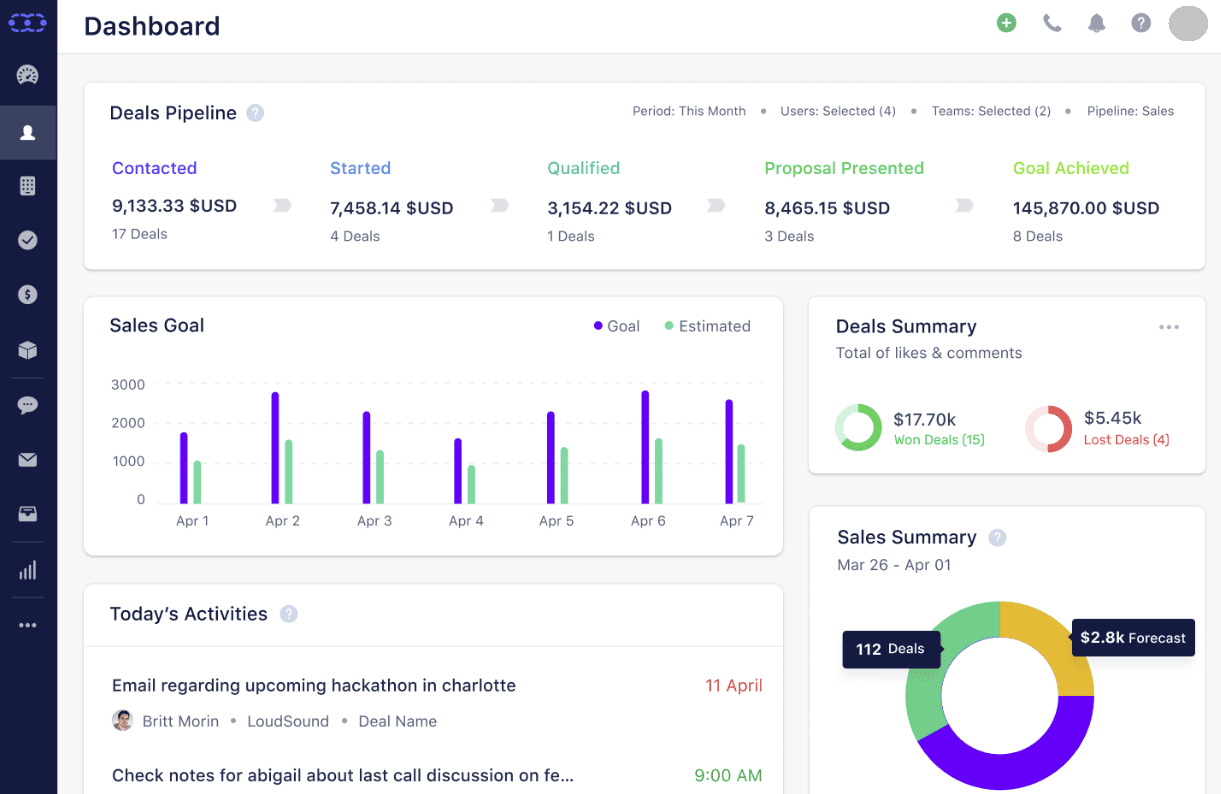
Salesmate can be integrated with Gmail or Outlook. Furthermore, each sales member can centralize prospect data, including email messages, and share them with other team parties.
Salesmate also offers reports that enable business owners and managers to track sales reps’ productivity and achievements. Team leads can also listen to calls by using the call recording option.
Advantages:
Salesmate has an option to generate tasks for you automatically. If, for example, someone fills a form on your website, that lead can directly go into Salesmate, and it automatically creates the task to follow up with that lead.
Secondly, there are calling and texting features so the sales reps can contact leads. Thus, it eliminates the need for adding other tools and saves budget, in a way.
Disadvantages:
A couple of reviewers reported a periodical system lagging. Furthermore, since every text message and call minutes have an additional price, the amount billed each month increases by that sum. This can be a problem for some users, as the amount can escalate if not properly and regularly managed.
Price:
- Starter: $15 per user / month or $144 billed annually
- Growth: $30 per user / month or $288 billed annually
- Boost: $50 per user / month or $480 billed annually
Listings rating: ⭐ 4.64
HubSpot CRM - Best CRM software for teams that are developing
There is no doubt that HubSpot surprised everyone with free access to the CRM software. However, the free version does come with its limitations.
In a free account, you get:
- Contact management
- Deal pipeline
- Quotes
- Meeting scheduling
- Live chat
- Reporting dashboard
If you wish for anything else, you need to upgrade to a paid version.
HubSpot CRM is perfect for individuals or companies that are just getting started with CRM software. Furthermore, it is useful for other medium-sized businesses that outgrew that phase.
Advantages:
HubSpot overall offers various nifty features, including sales playbooks, sequences, workflow automation, and reporting. In addition, this CRM can process up to 1,000,000 contacts and users for free and offers unlimited storage. Their Starters pricing plan is pretty fair and is somewhat beginners friendly, as opposed to other CRMs on the market.
Disadvantages:
If you wish for additional features, pricing for professional and enterprise packages is pretty steep. Furthermore, it does not directly support Dynamics 365, and pipeline and managing deals are not that intuitive.
Pricing:
- Starter: $50 per 2 users / month or $540 yearly
- Professional: $500 per 5 users / month or $5400 yearly
- Enterprise: $1200 per 10 users / month, billed yearly
Listings rating: ⭐4.504
Salesforce Sales Cloud - Best CRM software for sales experts
This is a complex and useful CRM that allows sales professionals to manage and build relationships with their prospects and customers. Salesforce Sales Cloud helps you optimize your workload, maximize your budget, and offers real-time data all in your favor so you can close more deals.
This CRM is not for beginners. In other words, they offer features galore that can be useful to sales experts already using CRMs for a couple of years, but if you are a beginner, you might want to test out and use other systems for a while before jumping to Salesforce.
Advantages:
Salesforce’s various and unique features are actually its advantage. Furthermore, they offer mobile app for Android and iOS to let you do the work on the go.
Salesforce also possesses the visual workflow drag-and-drop feature and lets you create, do and change tasks fast. In addition, Salesforce Sales cloud integrated with Slack so you can engage with prospects and customers in real time.
Disadvantages:
Salesforce is not beginner friendly and it is billed annually.
Pricing:
- Essential: $25 per user / month, billed annually
- Professional:: $75 per user / month, billed annually
- Enterprise: $150 user/month, billed annually
- Unlimited: $300 per user / month, billed annually
Listings rating: ⭐4.5
Zoho CRM - Best CRM software companies interested in contact and pipeline management only
The core functionality of Zoho’s CRM is contact management, pipeline management, and purchase control. Its dashboard is customizable, and it allows users to brand it according to their business brand.
Advantages:
One of Zoho's biggest advantages is that it allows you to reach people who use Twitter and Facebook. Furthermore, Zoho CRM tracks their actions and categorizes them as contacts so you can connect with them.
Disadvantages:
Zoho is a kind of CRM with mixed feelings - its interface is a bit outdated, it doesn't work well with extensive outreach, features are sometimes not communicating between each other, and billing annually are perhaps the reasons why Zoho is so low on the list.
Pricing:
- Free Edition: Free up to 3 Users.
- Standard Edition: 20€ per user / month or 14€ per user / month but paid annually
- Professional Edition: 35€ per user / month or 23€ per user / month but paid annually
- Enterprise Edition: 50€ per user / month or 40€ per user / month but paid annually
- Ultimate Edition: 65€ per user / month or 52€ per user / month but paid annually
Listings rating: ⭐4.292
Monday Sales CRM - Best CRM software for workflow
Before, Monday was a project management software, but now with its product development, it is much more. Now-developed Monday Sale is CRM software that centralizes your entire workflow and customer data. It allows tracking every aspect of the sales cycle, from lead generation to after-sale customer nurturing.
This CRM is best for small and medium-size businesses, and it is completely customizable.
Advantages:
Monday offers various templates that you can use for your workflow. In addition, the Monday.com dashboard is clean and straight-to-the-point, so you can easily spot any issues in your sales cycle.
Disadvantages:
Their pricing plan is confusing since they require a minimum of 3 seats, and you cannot use it as an individual (you can, but you need to pay for 3 seats). Furthermore, Monday Sell has issues with tablet and mobile device apps, and workflow automation needs additional manual work.
Pricing:
- Individual: $0 free forever (up to 2 seats), billed annually
- Basic: $8 / seat / month (3 seats minimum), billed annually
- Standard: $10 seat / month (3 seats minimum), billed annually
- Pro: $16 seat / month (3 seats minimum), billed annually
- Enterprise: Contact Monday.com for a custom quote
Listings rating: ⭐ 4.675
Zendesk Sell - Best CRM software on a budget
Formerly Base, Zendesk Sell is a CRM software perfect for small and medium-sized businesses. It provides access to all channels the sales team uses for communication including SMS, voice calls, and emails.
With Zendesk Sell, it is pretty easy to gain a full insight into the specific lead, thanks to features such as funnel tracking, customizable lists, templates, and conversion rate tracking.
Advantages:
One of the best features Zendesk Sell has is a calendar-reminder system. In addition, Zendesk Sell can be linked with Microsoft Office and possesses one tool that automatically detects duplicate leads and task sequencing.
Disadvantages:
Zendesk users reported problems such as slow loading time, mistakes in automated data entry, and issues with customer support. In addition, subscriptions are billed annually, and users need to pay more for certain features.
Pricing:
- Starter: $19 per user / month, billed annually
- Professional: $49 per user / month, billed annually
- Enterprise: $99 per user / month, billed annually
Listings rating: ⭐4.216
Copper - Best CRM software if you use Google Workspace
This is a CRM software with the main emphasis on Google Workspace. It has a well-designed UX/UI. What’s interesting about this CRM is that it contains in-app voice transcription, allowing you to take bullet points from the call right away.
Like other CRMs, Copper offers detailed reports and suggests improvements in workflow, while alerts keep you focused on the most important tasks. Furthermore, Copper is a nice CRM if you are a beginner or if you wish to change your current CRM.
Advantages:
The main advantage is that Copper integrates completely with Google Workspace - Gmail, Google Docs, and Google Sheets. In addition, the onboarding process is seamless and the system itself is simple to use.
Disadvantages:
Firstly, you are not able to attach files to emails you send in Copper. Secondly, workflow automation is a bit confusing since Copper uses rule-based workflow automation, and it may be time-consuming at first. Furthermore, another thing you might need to spend time with is filtering and extracting data.
Lastly, there is a lack of flexibility outside Google Workspace. To clarify, companies that use different email providers will not be able to integrate them with Copper.
Pricing:
- Basic: $29 per user / month or $300 annually
- Professional: $69 per user / month $708 annually
- Business: $129 per user / month (with annual commitment) $1.428 annually
Listings rating: ⭐4.53
Pipedrive - Best CRM software for multiple pipelines and customization
CRM software, Pipedrive, handles all the essential sales CRM features. It is intuitive, and you can easily separate priority deals and create different strategies for each lead.
Advantages:
Firstly, Pipedrive lets you build multiple sales pipelines and customize stages which are great for sales reps or team leads who manage various pipelines at once.
Secondly, Pipedrive’s star feature is that you can create web forms and LeadBooster chatbot, a custom chatbot to pop up next to a webform. Pipedrive then automates the process and puts lead directly into your pipeline.
In addition, Pipedrive’s powerful AI understands leads’ behavioral patterns and can give you hints on how to close deals with them.
Disadvantages:
Pipedrive can’t send a follow-up message or birthday greetings based on a date at this moment in time. In addition, users noticed some lagging issues and poor mobile app experience. Lastly, customizable reports are not available.
Pricing:
- Essential: $15 per user/month or $12.50 per user / monthly billed annually
- Advanced: $29 per user/month or $ 24.90 per user / monthly billed annually
- Professional: $59 per user/month or $49.90 per user / monthly billed annually
- Enterprise: $119 per user/month or $99 per user / monthly billed annually
Listings rating: ⭐4.446
Salesflare - Best CRM software (people’s choice)
The best CRM software on our list is Salesflare. It is a CRM software primarily for startups and small businesses, but many agencies and enterprises use it. Salesflare is intuitive and easy to use and can be integrated with more than 400 other productivity tools like Trello, thanks to Zapier.
Salesflare offers automation features, such as an automated address book, timelines, file repository, and sending emails based on triggers. It can also provide task suggestions automatically.
Advantages:
The good thing about Salesflare is that they provide dedicated support no matter the plan you choose. In addition, for all technical advice, you can even talk to developers.
Furthermore, they have a mobile app, various team access levels, and a great data gathering system. Lastly, Salesflare will automatically log phone calls or meetings, and gather contact information from email signatures, and even social media profiles.
Disadvantages:
Fortunately, there aren't many disadvantages when we talk about Salesflare - the users seem pretty content. There are, however, a couple of suggestions from them: it would be nice to have email drip functionality, and email reporting needs improvement.
Pricing:
- Growth: $29 per user / month (billed annually) or $35 billed monthly
- Pro: $49 per user / month (billed annually) or $55 billed monthly
- Enterprise: $99 per user / month (billed annually) or contact their support for custom plan
Listings rating: ⭐ 4.73
EngageBay - Best CRM software for enticing your sales team
Cloud-based CRM, EngageBay is a software that integrates sales, marketing, and finances on a single platform. The core function of this software is complete automation. Furthermore, it offers contact management tools specially designed to be simple to use. In addition, it can track web activity, email response, and analytics.
EngageBay easily Integrates with Gmail, Office 365, or any other service, with integration capabilities through Zapier or other similar integrations to further streamline your sales efforts.
Advantages:
The possibility to make a call from this CRM is a big plus, as well as an option for transcripts. In addition, what separates EngageBay from other systems is the possibility to gamify sales processes and thus keep your sales reps motivated.
Disadvantages:
A couple of lesser disadvantages came up with EngageBay. There is less troubleshooting documentation, email templates are limited, and the Chrome plugin doesn’t trigger an event, so automation needs to be done manually.
Pricing:
- A free plan is available, limited to 1,000 contacts emails
- Basic: $12.99 per user / month, $11.69 per user / month annually
- Growth: $24.99 per user / per month, $22.49 per user / month annually
- Pro: $49.99 per user / month, $44.99 per user / month annually
Listings rating: ⭐ 4.636
How to use CRM software with other tools?
We all know that only one tool won’t do if you wish to optimize your sales workflow as much as you can unless that one tool has everything you need, which is pretty rare.
So, in addition to CRM, you might be using an outreach tool or meeting scheduling tools. So the question arises - is it possible to integrate them all? Short answer - yes.
Long answer? Let us show you how you can do it.
For example, let’s take our LinkedIn automation tool and cold email software, Skylead. This tool helps you outreach leads and take action depending on their behavior. As you fill your pipeline with it, it leaves you more room to concentrate on important matters such as building relationships and closing more deals.
In addition, you can integrate Skylead with your CRM of choice by using webhooks. A webhook helps you transfer data to other applications immediately, when certain action happens. For example, as soon as the lead responds in a Skylead campaign, a webhook is triggered, and will automatically send lead’s data to your CRM.
Moreover, webhooks are the most common way to integrate tools directly into your CRM and push data about the leads in one place. You can create them by using tools such as Zapier.
Apart from using webhooks, you can also push your prospects’ information to your CRM by using Skylead’s global BCC option. To use it, simply insert the email address you get from your CRM in Skylead’s Global BCC option. This option is available only if your CRM of choice doesn’t offer direct sync with your email but through BCC.
The best CRM software in conclusion
With so many CRMs on the market, it can be daunting to go through every single one of them. But if we take software listing websites into the account you can more or less see the situation on the market.
So, let our list be your guide to narrow your choices, or figure out what other solutions are out there. Thus, here is the short overview of the best CRM software currently on the market.
| CRM Software / Listing Website | G2 | Capterra | GetApp | Software Advice | Software Suggest | Average Rating |
| Salesforce | 4.2 | 4.4 | N/A | 4.25 | 4.9 | = 4.5 |
| Hubspot CRM | 4.4 | 4.5 | 4.5 | 4.52 | 4.6 | = 4.504 |
| Salesmate | 4.6 | 4.7 | 4.7 | 4.7 | 4.5 | = 4.64 |
| Zoho CRM | 4.0 | 4.3 | 4.3 | 4.26 | 4.6 | = 4.292 |
| Monday | 4.7 | 4.6 | N/A | 4.6 | 4.8 | = 4.675 |
| Zendesk Sell | 4.2 | 4.3 | 4.3 | 4.28 | 4 | = 4.216 |
| Pipedrive | 4.3 | 4.5 | 4.5 | 4.53 | 4.4 | = 4.446 |
| Copper | 4.5 | 4.4 | 4.4 | 4.38 | 5 | = 4.53 |
| Salesflare | 4.8 | 4.7 | 4.7 | 4.72 | N/A | = 4.73 |
| EngageBay | 4.6 | 4.6 | 4.6 | 4.58 | 4.8 | = 4.636 |
Wish to use an advanced LinkedIn automation tool and cold email software in combination with your CRM software and close even more deals? Then, try out Skylead for free - an outreach that thinks for you!
Updated on: September 15th, 2026
Disclaimer: Skylead is not affiliated, endorsed by, or connected with LinkedIn in any way.
If much of your job revolves around lead generation, chances are you’ve heard of Smartlead — a tool that automates and streamlines email outreach.
Released in 2021, the software has risen above the noise, and nowadays, many salespeople, marketers, and agencies use it.
But is it the best outreach automation tool on the market?
Lucky for you, this article is your one-stop shop for all things Smartlead. We’ll break down its features and pricing and see what real users have to say about it. But most importantly, we'll introduce you to 11 alternatives so you can compare and choose the perfect tool for you!
Let’s get into it!
Smartlead or alternatives?
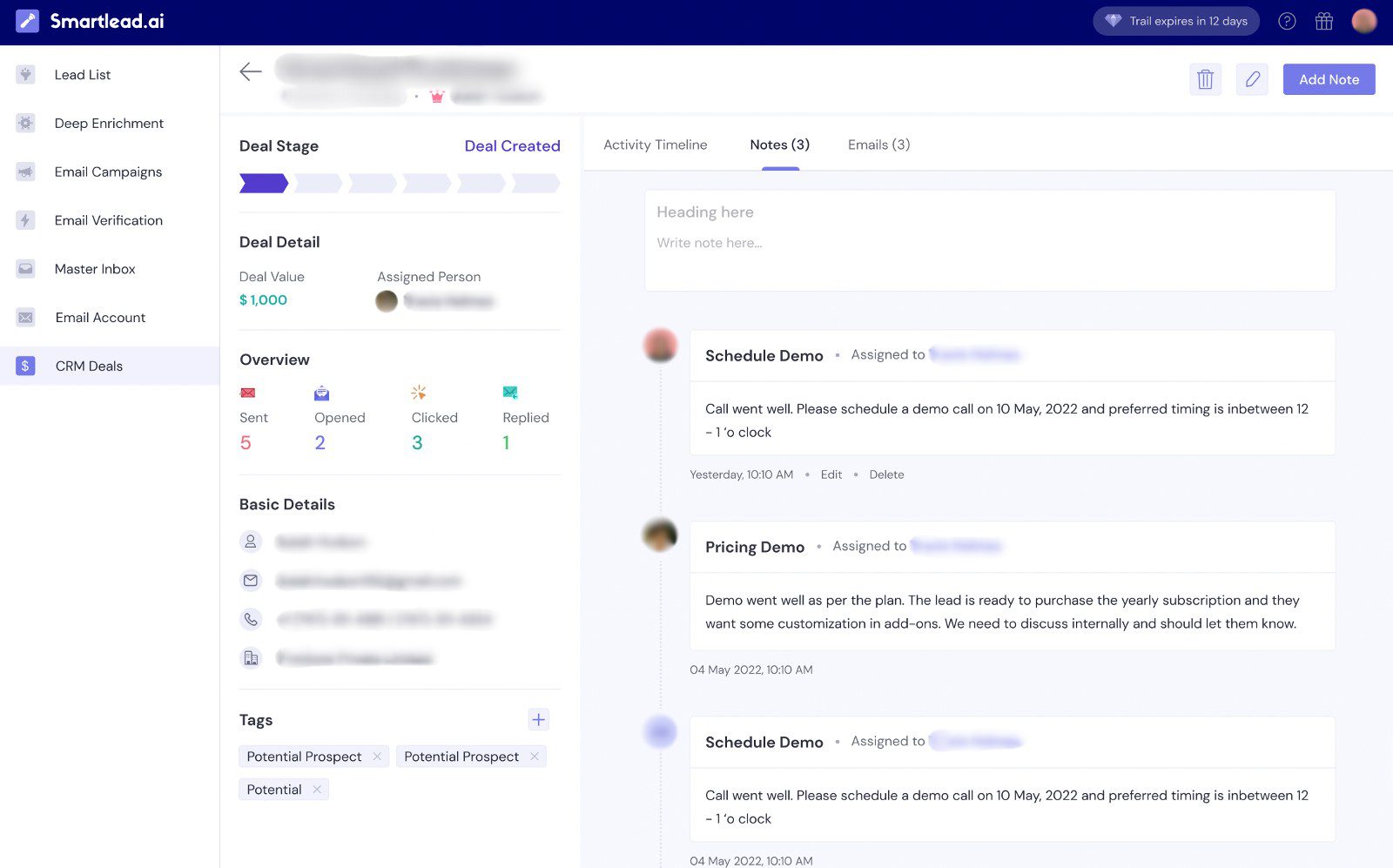
Smartlead is a cold email outreach software that promises to, and we quote:
❝Convert cold emails to consistent revenue❞
This means it’s aimed at anyone who uses cold outreach to generate leads and scale their business on autopilot, but primarily:
- Lead generation agencies
- Marketing agencies
- Sales professionals
Smartlead is a cloud-based software.
The software allows its users to create email campaigns with automatic follow-ups by importing CSV files with leads’ information. Alternatively, since the tool natively integrates with HubSpot, they can import leads directly from it. The integration works both ways, meaning that campaign data can be pushed into HubSpot as well.
Moreover, Smartlead can integrate with any other tool or CRM via Webhooks or API.
The tool is unique for its unlimited email warmup feature and dedicated IP servers that boost deliverability. It also supports inbox rotation and has a Master Inbox that keeps all emails in one place.
In terms of message personalization, users can enrich their emails with:
- Variables;
- Spintax - different variations of words/phrases/sentences (e.g., Hey there | Hello | Hi);
- Liquid syntax - a template language that adjusts content dynamically based on the available information (e.g. {{#if first_name}} Hey {{first_name}}, {{else}} Hey Mr {{last_name}} ).
The platform also supports split testing with up to 26 different email variants.
Now that we've got the essentials down, let's look at Smartlead's features more closely.
Key Smartlead features
Inbox rotation
Smartlead doesn’t limit the number of email addresses you can connect to it and use in your campaigns. This is particularly beneficial for agencies or businesses running outreach campaigns for multiple clients. Once added, the tool automatically rotates these email addresses to maximize the number of emails sent.
Unlimited email warmup
New email addresses need to be warmed up before using them for outreach. Smartlead’s unlimited email warmup feature is powered by AI and takes care of this by:
- Sending warm-up emails to a pool of other Smartlead users;
- Sending different numbers of emails every day;
- Opening emails and saving them from spam;
- Replying to these.
The result? Positive sender reputation and fewer emails flagged as spam.
Subsequences
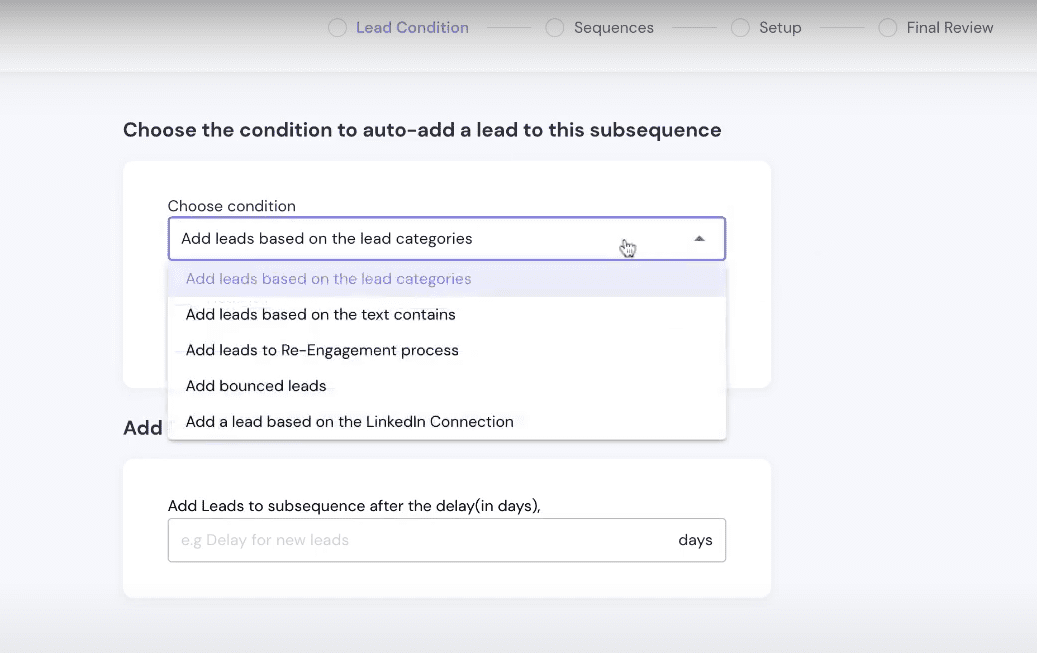
Smarlead elevates email outreach through Subsequences — additional email sequences that you can create based on recipient behavior.
Subsequences can be set up to complement any campaign. They are condition-based and activate only once the chosen condition is fulfilled.
Leads can be added to a subsequence depending on the following conditions:
- If they are categorized a certain way,
- If their reply contains specific words/phrases,
- In case they haven’t replied,
- If they bounced,
- If they are connected to you on LinkedIn.
This adds another layer of personalization to communication and helps improve engagement and conversions.
Unibox
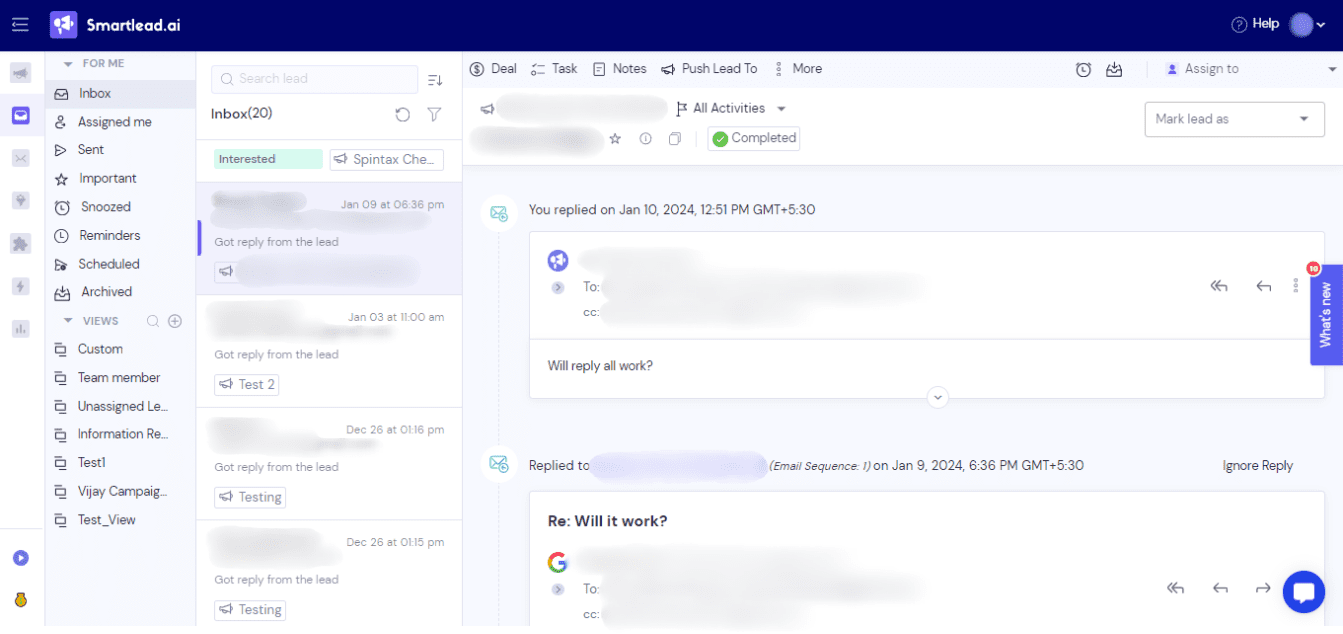
Juggling multiple inboxes for different campaigns can get overwhelming. The premise behind Smartlead’s Unibox is to eliminate this chaos by providing a single location to manage all email conversations. This streamlines the workflow and allows for easier responding and lead categorization.
Smartlead disadvantages
Smartlead may seem like a great tool. Nonetheless, it does have its limitations.
For instance, while Smartlead claims to support multichannel outreach, it’s superficial at best because you can only add manual tasks to the campaign flow. The tool will remind you to complete these when the time comes. But, since manual work is involved, wouldn’t you say this beats the purpose of using an automation tool?
For a brief moment, Smartlead users could add certain automatic LinkedIn steps to their campaigns. Unfortunately, this is no longer possible for reasons their customer support team referred to as ‘’private.’’.
That said, if you were hoping to use it for LinkedIn lead generation, feel free to explore some of the alternatives we'll discuss later.
Additionally, while the tool lets you personalize messages, it lacks the feature for image & GIF personalization. To this date, you can only insert visuals into the email copy.
Another major con is the software’s inability to discover and verify your leads’ email addresses. So, to get the email addresses of people you want to reach out to, you need to use another tool. This implies an additional cost.
Moreover, to create a Subsequence, you first need to create a simple sequence with no conditions. Subsequences are created separately based on the condition you choose. So yes, you’re breaking the campaign creation flow to do it. This is not only inconvenient but also time-consuming — especially when running multiple campaigns simultaneously.
Lastly, since Smartlead can only pull leads from a CSV file or HubSpot, it’s rather limited compared to tools that can scrape leads from multiple sources (e.g., LinkedIn search, LinkedIn posts, Sales Navigator lead lists, etc.).
Smartlead pricing
Smartlead offers 3 different month-to-month payment plans. Yearly subscriptions are also available and come with a 17% discount compared to their monthly counterparts.
That said, here is the breakdown of Smartlead pricing plans.
| Plan | Features | Price per account |
| Basic | Unlimited email accounts & email warmups; up to 2,000 active leads; up to 6,000 emails a month; dynamic sequences; dynamic IP addresses; unibox; in-depth analytics; customer support assistance within 24 hours of inquiry | $39 if billed monthly $34 a month if billed annually |
| Pro | Everything in Basic + up to 30,000 active leads; up to 150,000 emails a month; custom CRM; email guide assistance; global blacklist; webhooks & integrations; access to API; active customer support assistance | $94 if billed monthly $79 a month if billed annually |
| Custom | Everything in Pro + up to 12,000,000 active leads; up to 60,000,000 emails a month | Starting at $174 a month No annual billing available |
Pro and custom plans support adding unlimited users, although each is charged an additional $29 a month.
What others say about Smartlead
Smartlead has plenty of mixed reviews.
For instance, Antonio said:
‘’We've had 5 sets of emails having a sudden drop in deliverability from 40-90% to 10-20% in a matter of days (on successful campaigns), and according to their Slack community, a lot of people experienced identical issues.’’
He went on to mention that Smartlead’s customer support is slow. In fact, it often takes them between 24 and 48 hours to respond!
Another reviewer, Nick G., praised the interface but stated:
‘’I signed up because they had a LinkedIn feature, but they removed it.’’
11 best Smartlead alternatives
Smartlead has some useful features. However, its drawbacks and steep pricing make it an incomplete solution.
Considering the stated, you are better off choosing another tool, and here are our top picks!
1. Skylead
Hi, that’s us! ?
Skylead is a cloud-based LinkedIn automation tool and cold email software. It is a cloud-based solution for agencies, salespeople, marketers, founders, and recruiters who use outreach at scale.
It’s an All-In-One solution that has all the tools you need under one roof — and price.
Unlike Smartlead, it supports real multichannel outreach, allowing you to reach more leads on more channels.
Similar to Smartlead, Skylead supports A/B testing. This feature allows you to experiment with different messaging, subject lines, and connection requests.
It also has a Smart inbox that keeps your messages from all platforms in one place. Additionally, you can label your conversations and thus track how many people have converted each month.
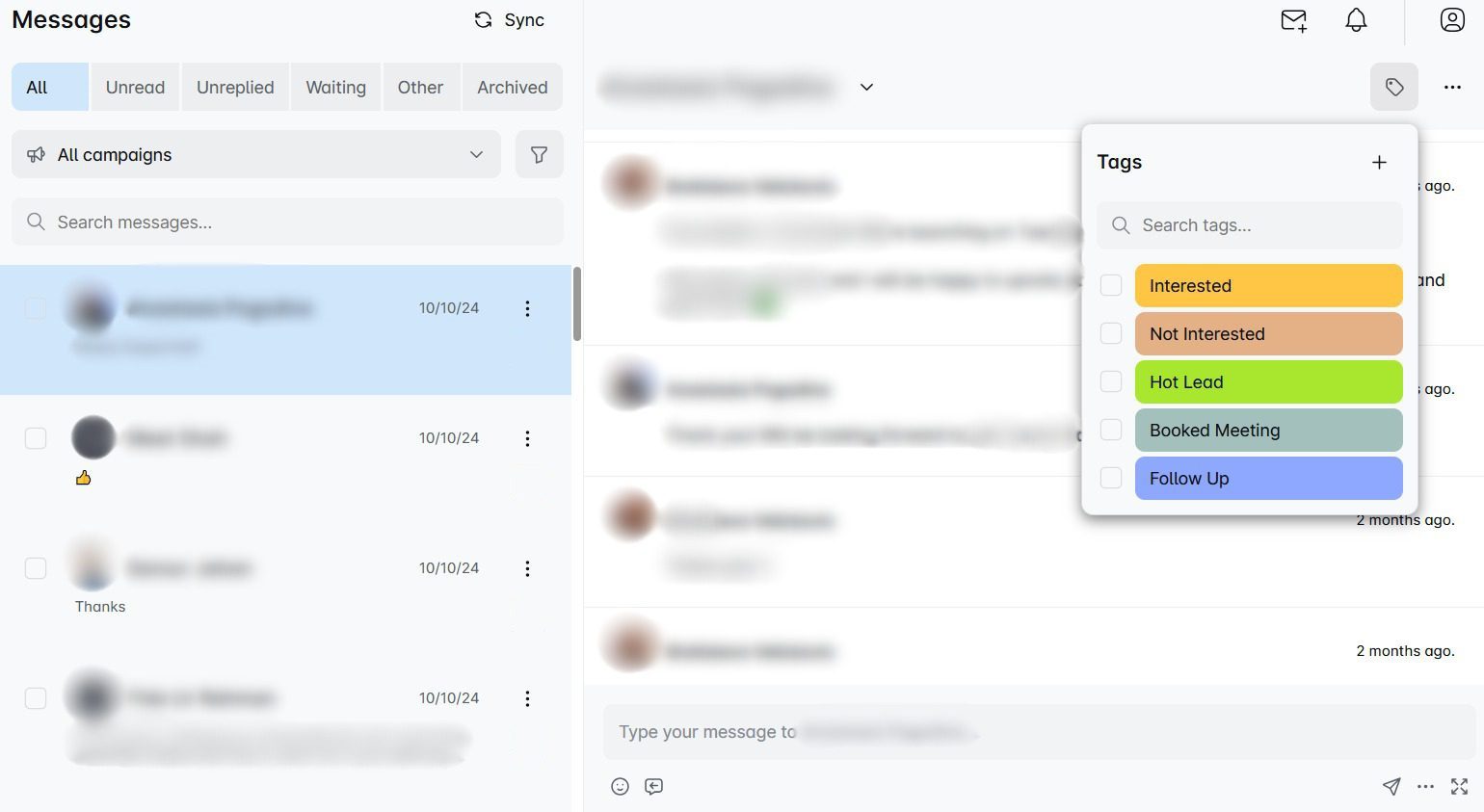
Finally, you can integrate the tool with any software or CRM using Webhooks or API, or opt in for direct integration with HubSpot, Pipedrive, or Salesforce.
If you find all this fascinating, wait till you see what else Skylead’s got! ?
So, let’s break it all down!
Account-based prospecting
The best way to find your ideal leads is to find your ideal companies first. That is exactly what Skylead offers - account-based prospecting. With it you can:
- Create account lists directly in Skylead
- And discover contacts by company to reach out to them.
In other words, once you add your companies, Skylead can help you find and match contacts within those selected companies so your pipeline stays aligned to your ICP. This way, you can really zero in on your target companies that are most likely to convert, are your true partners, and have greater lifetime value.
AI data enrichment
Apart from account-based prospecting, we introduced a game-changing feature - AI data enrichment, which you can use to:
- Enrich contact & company data
- Prompt AI to get specified info or generate personalized icebreakers for each contact
- Use all gathered info directly inside your sequences as variables.
It’s Clay-like in what it can uncover, but it’s connected to your outreach workflow, so you avoid constant tool switching and data importing.
Multichannel outreach
As one of the best sales outreach tools ever, Skylead takes over your email and LinkedIn outreach on the platform and lets you get in touch with more leads faster. On autopilot, nonetheless, to save yourself +11 hours a week!
Unlimited email outreach
As a true multichannel outreach tool, Skylead also supports email outreach!
It lets you connect and use an unlimited number of email addresses at no extra cost. And yes, the tool also auto-rotates between them to help you send tens of thousands of emails a month.
But do you know what makes our unlimited email outreach feature better? The fact that you can combine it with the outreach on the professional social network in one seamless sequence. This multichannel approach helps you maximize touchpoints with your leads and reach those you thought were unreachable before.
Moreover, our native and custom variables let you personalize your communication even further. With them, you can craft reply-inducing emails and follow-ups.
And to make sure your mailboxes are 100% ready for sending emails at scale, we've got another surprise in store. Infinite email warm-up, powered by an email warm-up tool, Mailivery. As a Skylead user, you get access to it free of charge to warm up unlimited mailboxes and keep your emails away from spam—forever!
Email discovery & verification
Skylead can discover your leads’ email addresses and turn seemingly lost opportunities into potential conversions.
The software won’t only find your leads’ emails, though. It will double-verify them to decrease the chance of your emails bouncing and improve your sender's reputation. What’s more, you can include it as a step, and Skylead will do it without breaking the outreach flow.
Some other tools have this capability as well. However, many of them use a Chrome extension for this purpose, which isn’t safe.
Moreover, Skylead’s success rate in finding and verifying emails is one of the highest on the market, if not the highest!
Finally, this feature comes at no extra cost, and there’s no cap on how many emails the tool can find and verify. This is something no other tool can say!
Smart sequences
Think of our Smart sequences as an improved version of Smartlead’s Subsequences.
But why improved?
Because, with them, you don’t have to break your outreach campaign creation flow to cover different outreach scenarios. In other words, you can do it as you work on building your campaign.
Smart sequences let you combine if/else conditions with different outreach actions and find the best route to your leads based on their behavior.
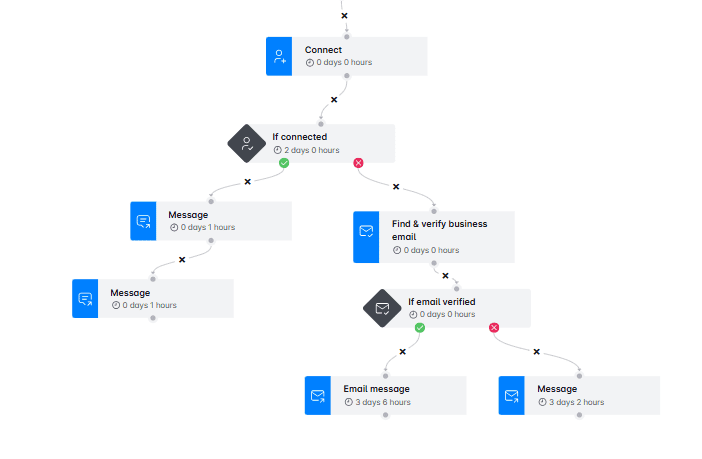
Feel free to experiment with different conditions and actions, though, as the scenarios you can create are limitless!
As you can see, Smart sequences ensure that your outreach is highly personalized and responsive to your prospects' actions. In turn, they make your campaigns more effective and increase the chances of conversion.
Image & GIF personalization
Want to make a lasting impression on your leads? Our image and GIF personalization feature is the answer.
Thanks to it, you can create dynamic images and GIFs that personalize themselves for each recipient. You can include their name, their and/or your profile photo, company logo, and even write a custom message.
It might seem like a small touch, but hey, it can increase your response rate by up to 63%!
Advanced analytics
Feel like analyzing your campaigns to determine what works and what doesn’t?
Skylead lets you do that in 3 different view modes available on the Reports page:
- Graph - Lets you compare the ratio between different metrics (e.g., open rate, click rate, reply rate).
- Table - Makes it easy to spot day-to-day variations in metrics and identify trends.
- Step-by-step - Breaks down each step of your sequence, showing you exactly how recipients are engaging at every stage. This is especially useful for A/B testing.
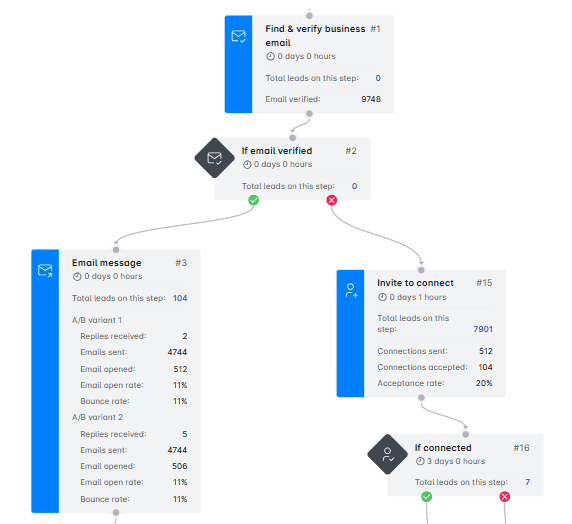
Smartlead vs. Skylead feature comparison

Pricing
Skylead comes with a singular price of $100 per seat. Unlike Smartlead, which has tiered pricing with limited features at lower levels, it offers everything you need in one plan. This makes it more cost-effective.
AI data enrichment acts as an add-on. What makes this pricing truly different is simple: our core value is not to make money from these credits, and it will never be our business model. Credits are priced based on the actual costs of our third-party providers (OpenAI, Bright Data, etc), and we offer a special rate of $1 for 100 credits. We also negotiate volume discounts with our providers. This means that, as overall usage across all users increases, costs will decrease and will be passed back to our users. This makes AI data enrichment up to 95% more cost-effective compared to similar tools on the market. This makes it the most cost-effective and the most comprehensive tool on this list.
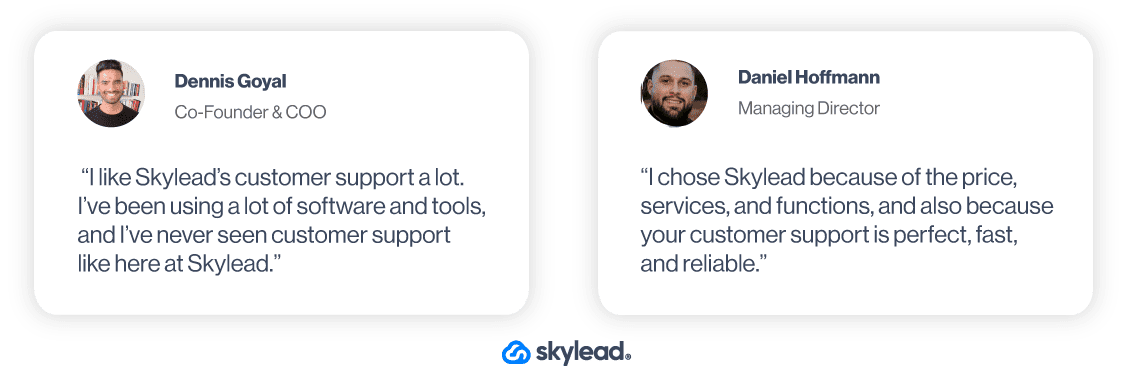
2. Instantly
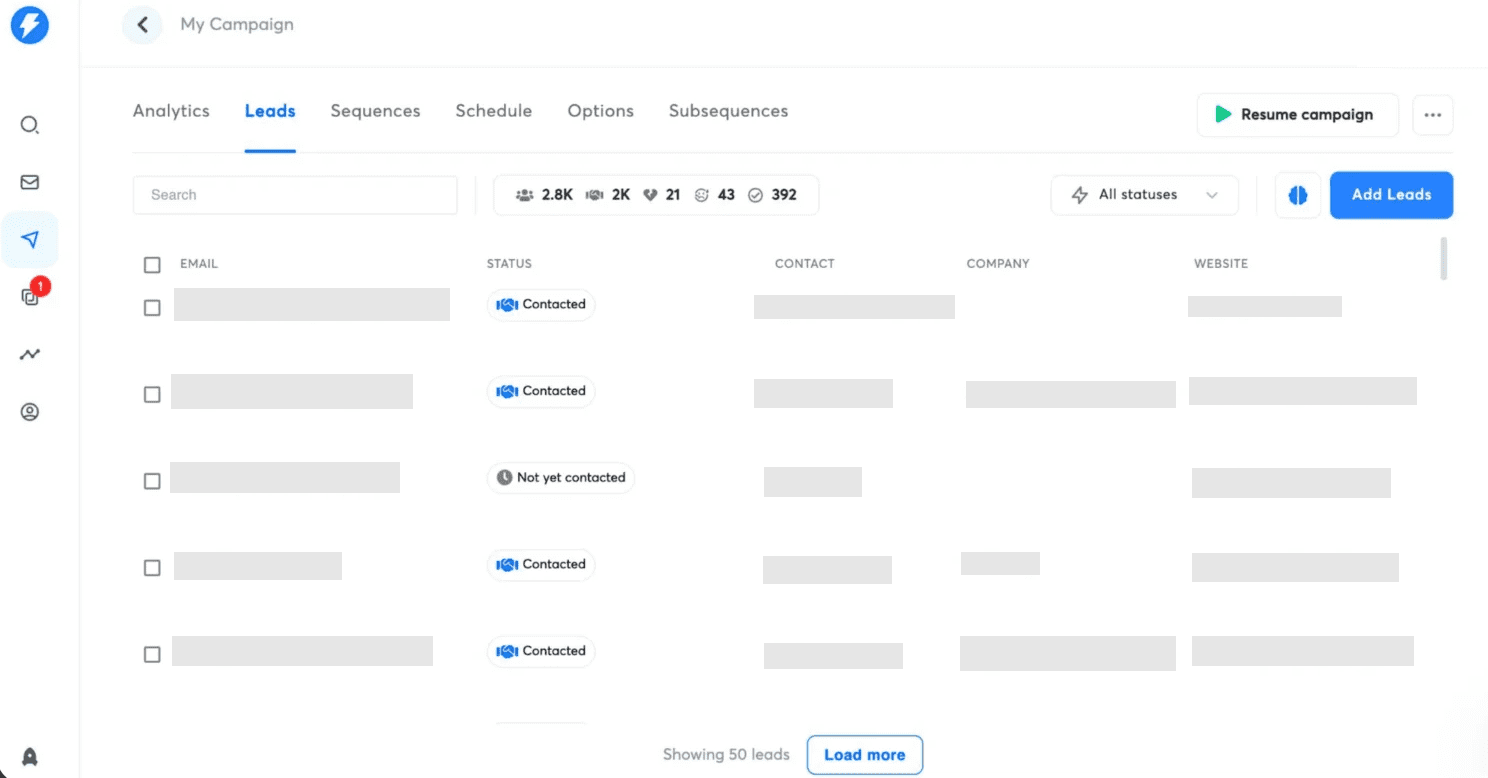
Instantly.ai is a cloud-based email outreach tool.
Like Skylead and Smartlead, it lets you connect an unlimited number of email accounts, and it rotates through them while sending emails to avoid triggering spam filters. This is complemented by its unlimited email warm-up feature, which improves senders’ reputation.
For those seeking personalization, Instantly offers message personalization with variables. Furthermore, the integrated Unibox consolidates your conversations into a single inbox, making them easier to manage and respond to.
However, Instantly is not a multichannel outreach tool, so it might not be the greatest if you are looking for a Smartlead alternative that has it all.
Also, while it offers basic reporting, the insights are somewhat limited, which might not suffice for users requiring in-depth analytics.
Finally, email verification is available but comes at an extra cost on top of already steep pricing.
Smartlead vs. Instantly feature comparison
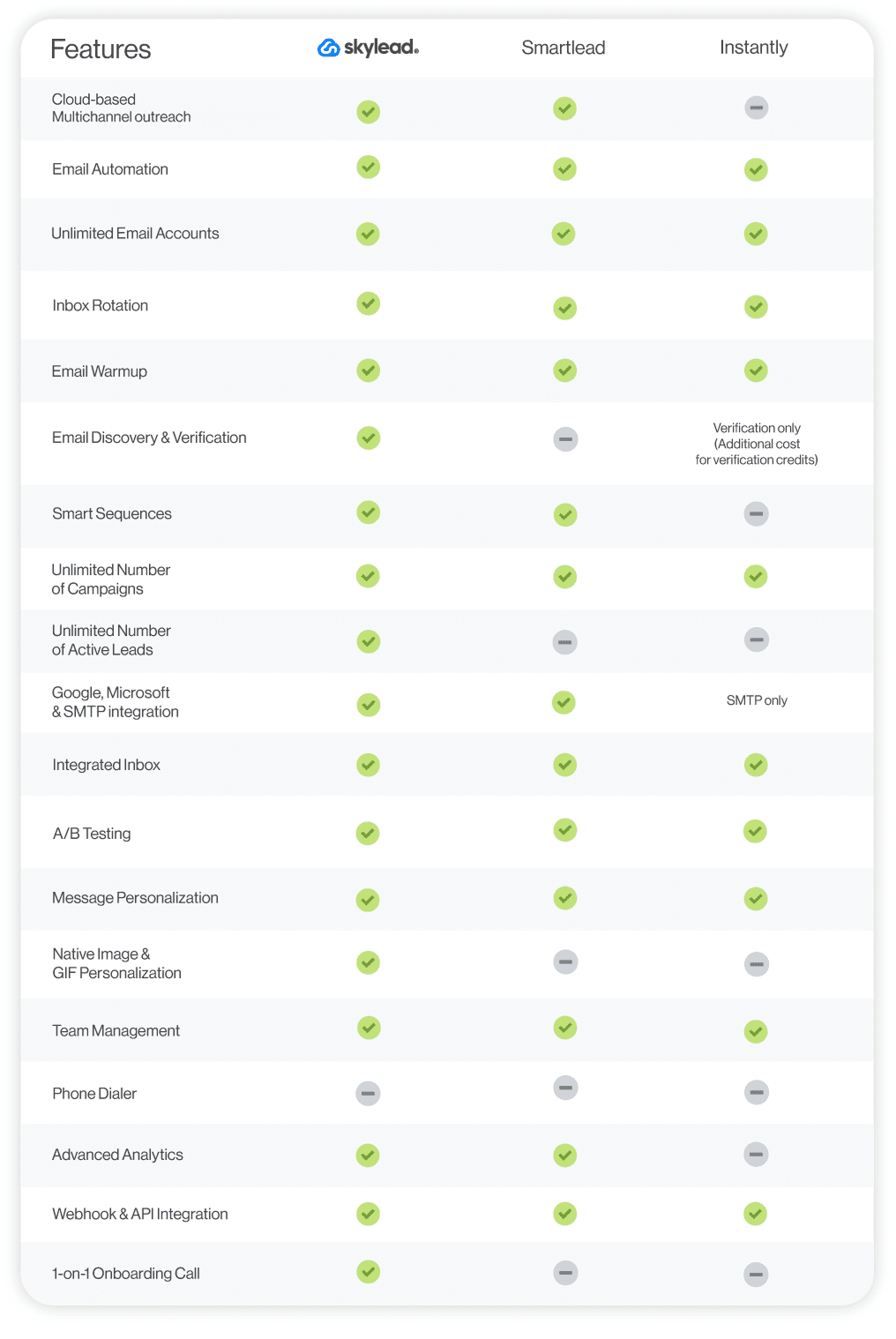
Pricing
Instantly offers 2 pricing plans with sub-plans that vary in features available.
| Sending & Warmup Plans for outreach and email warmup | Lead Finder Plans for finding verified leads | ||
| Growth | $37/mo per seat | Growth Leads | $47/mo per seat |
| Hypergrowth | $97/mo per seat | Supersonic Leads | $97/mo per seat |
| Light Speed | $358/mo per seat | Hyperleads | $197/mo per seat |
| Light Speed | $492/mo per seat | ||
3. Apollo
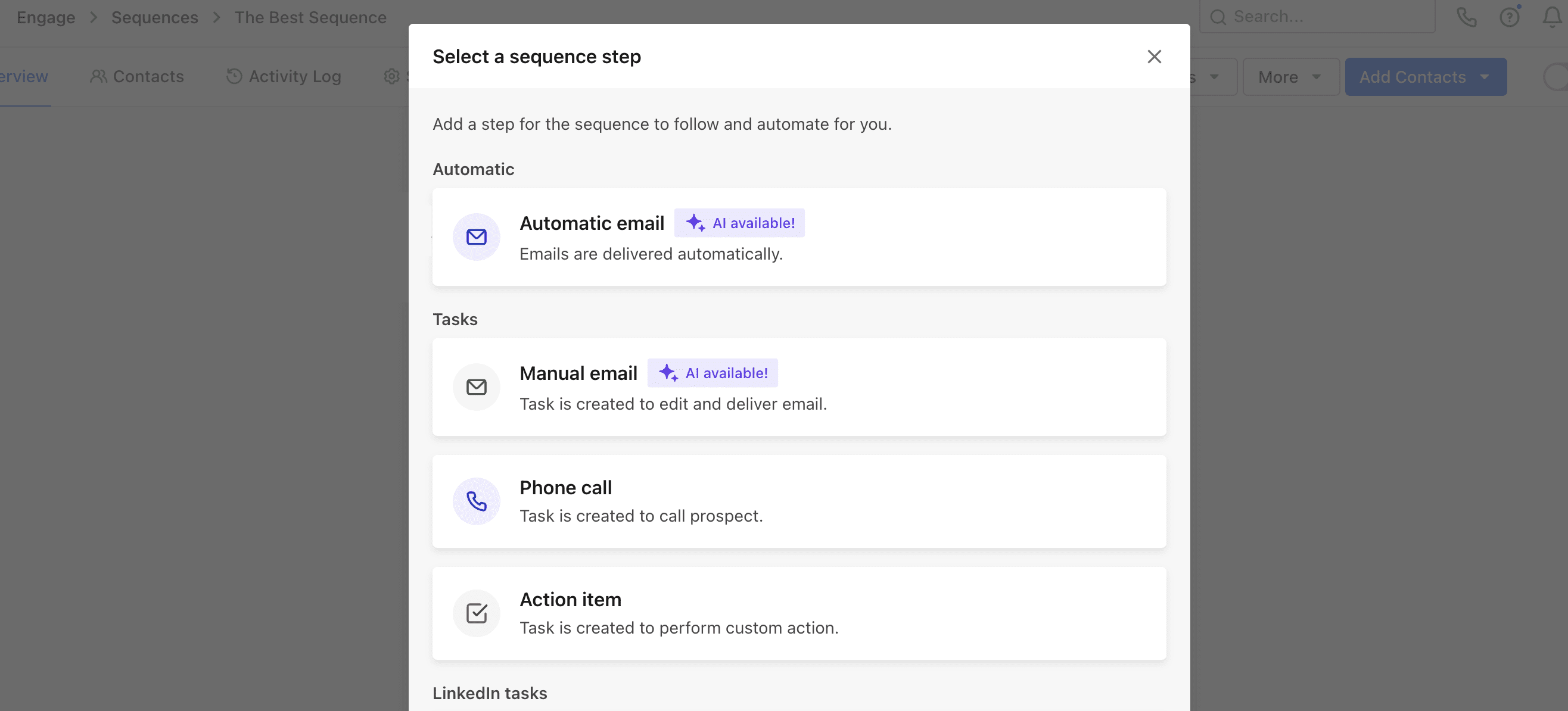
Apollo is a powerful multichannel sales engagement platform that lets users create sequences that combine email, LinkedIn outreach, and cold calls.
With it, you can set up campaigns that include automatic or manual emails.
As for engaging your leads via LinkedIn, the software can automatically:
- Send connection requests
- Messages
- Interact with your leads’ posts.
However, bear in mind that Apollo's multichannel sequences are simple. They don’t support branching paths or complex conditions, making them unsuitable for those who prefer their outreach to be more automatic and advanced.
In terms of integrations, the tool natively integrates with platforms like Pipedrive, HubSpot, and Slack. Moreover, it has A/B testing capabilities that help optimize your outreach.
You can also leverage its AI to craft personalized messages. Nonetheless, this feature isn’t that advanced. In fact, it’s equivalent to using Chat GPT for sales copywriting, which you can do while using Skylead as well.
Apollo has a database of over 275M contacts that you can pull directly into your campaigns. Additionally, it can also scrape new leads from LinkedIn.
However, a major con is that it does so through a Chrome extension. Chrome extensions inject code into LinkedIn that the platform can easily detect and penalize you for. Therefore, we don’t recommend you use any tool that relies on one.
Smartlead vs. Apollo feature comparison
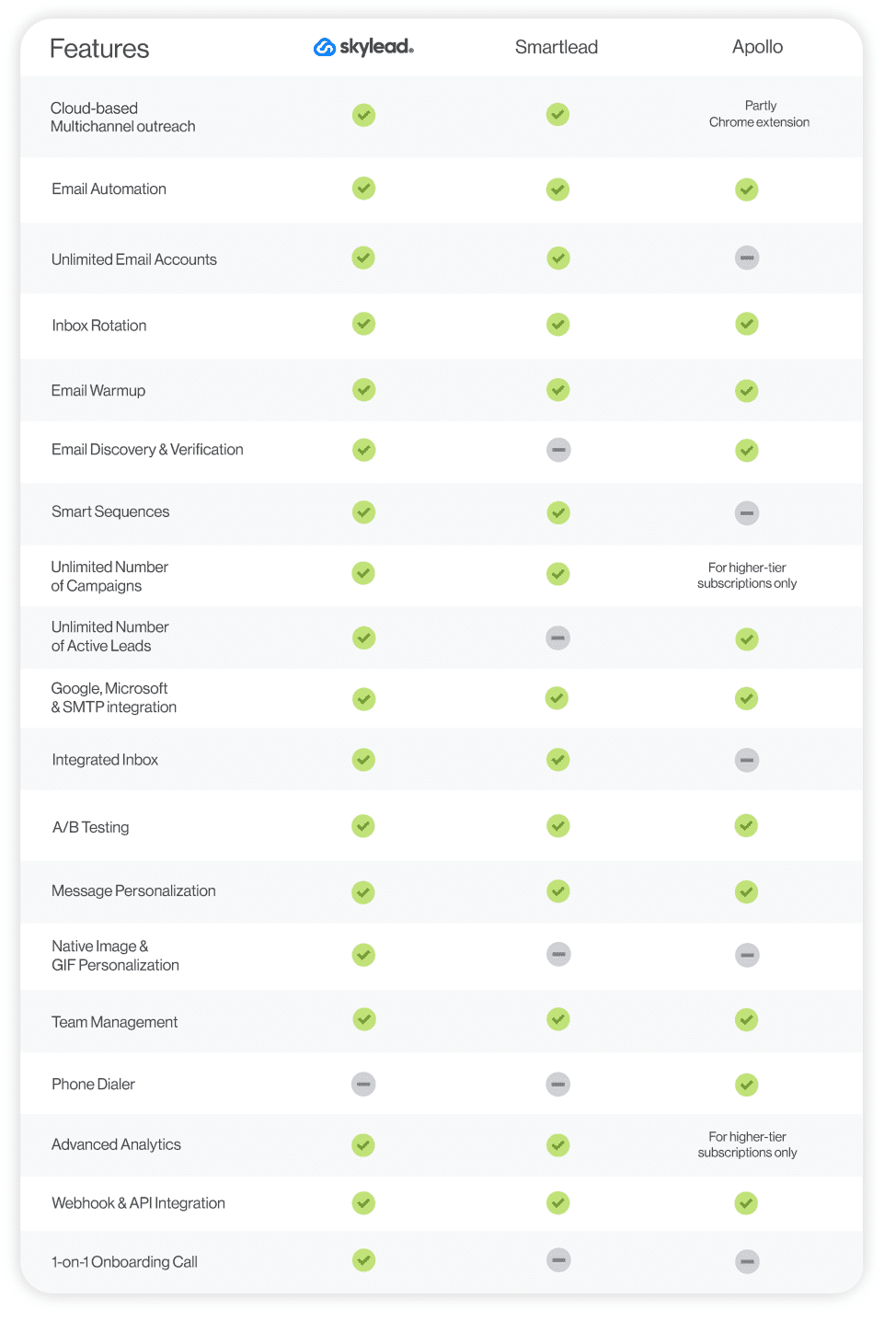
Pricing
- Free
- Basic: $59/mo per seat
- Professional: $99/mo per seat
- Organization: $119/mo per seat (billed annually)
4. Lemlist
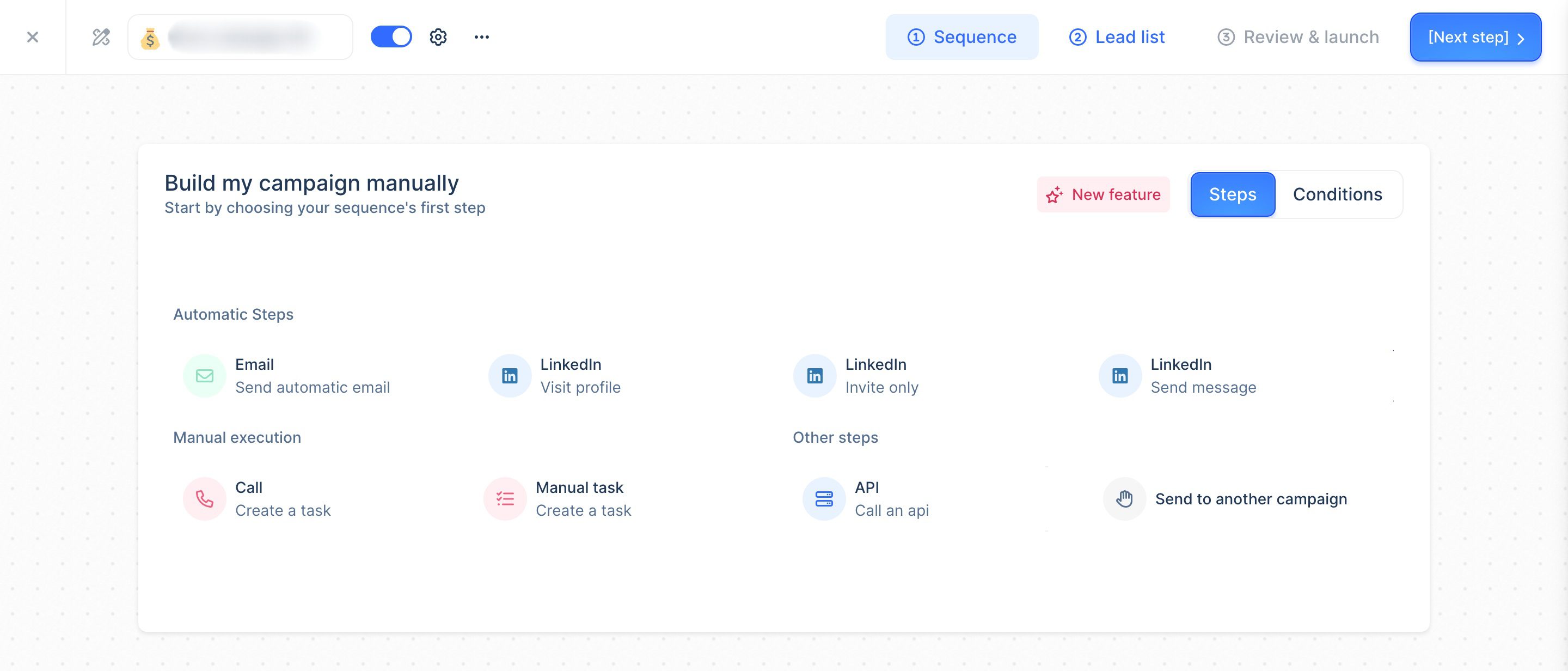
Lemlist is a cloud-based email outreach tool that also includes a Chrome extension for prospecting and outreach on LinkedIn.
Although primarily focused on email outreach, Lemlist supports multichannel campaigns like Skylead. As such, it allows you to add connection invites, profile visits, and messages to your sequences. Additionally, it integrates with AirCall for cold calling.
One of Lemlist's standout features is its advanced personalization options. To make your outreach more effective, you can use its custom intro lines, images, and landing pages.
Lemlist also offers Lemwarm, a warm-up and deliverability booster designed to keep your emails out of spam.
While the tool can find and verify emails, the highest plan limits the number of finder and verifier credits to 1,000. You can purchase additional credits, but keep in mind that $1 will only get you 5 verified emails.
Once again, since a Chrome extension is involved in LinkedIn outreach, we say you think twice before using it.
Smartlead vs. Lemlist feature comparison
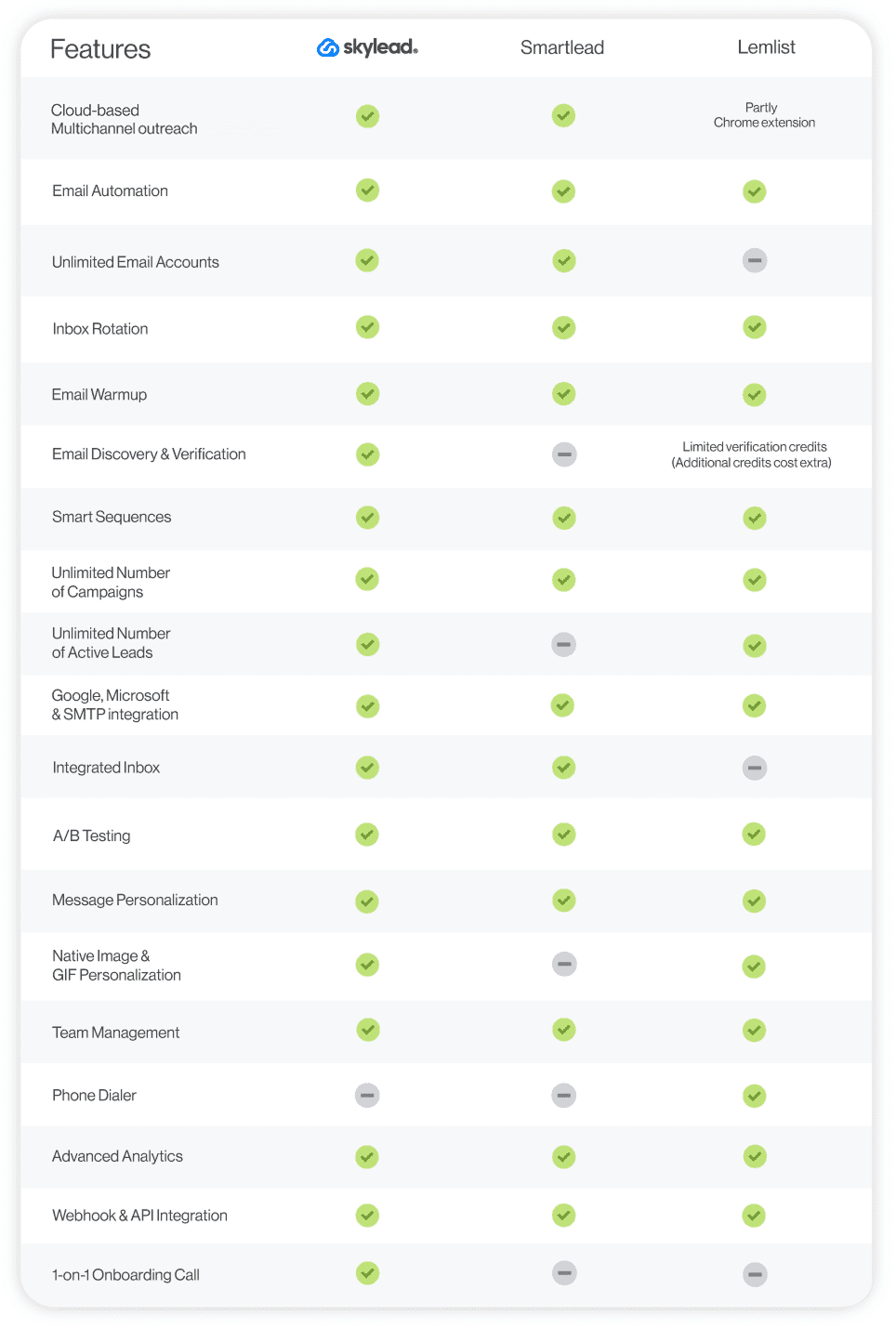
Pricing
| Plan | Price |
| Email Starter | $39/mo per seat / 1 email account |
| Email Pro | $69/mo per seat / 3 email accounts |
| Multichannel Expert | $99/mo per seat / 5 email accounts |
| Outreach Scale | $159/mo per seat / 15 email accounts |
5. Woodpecker
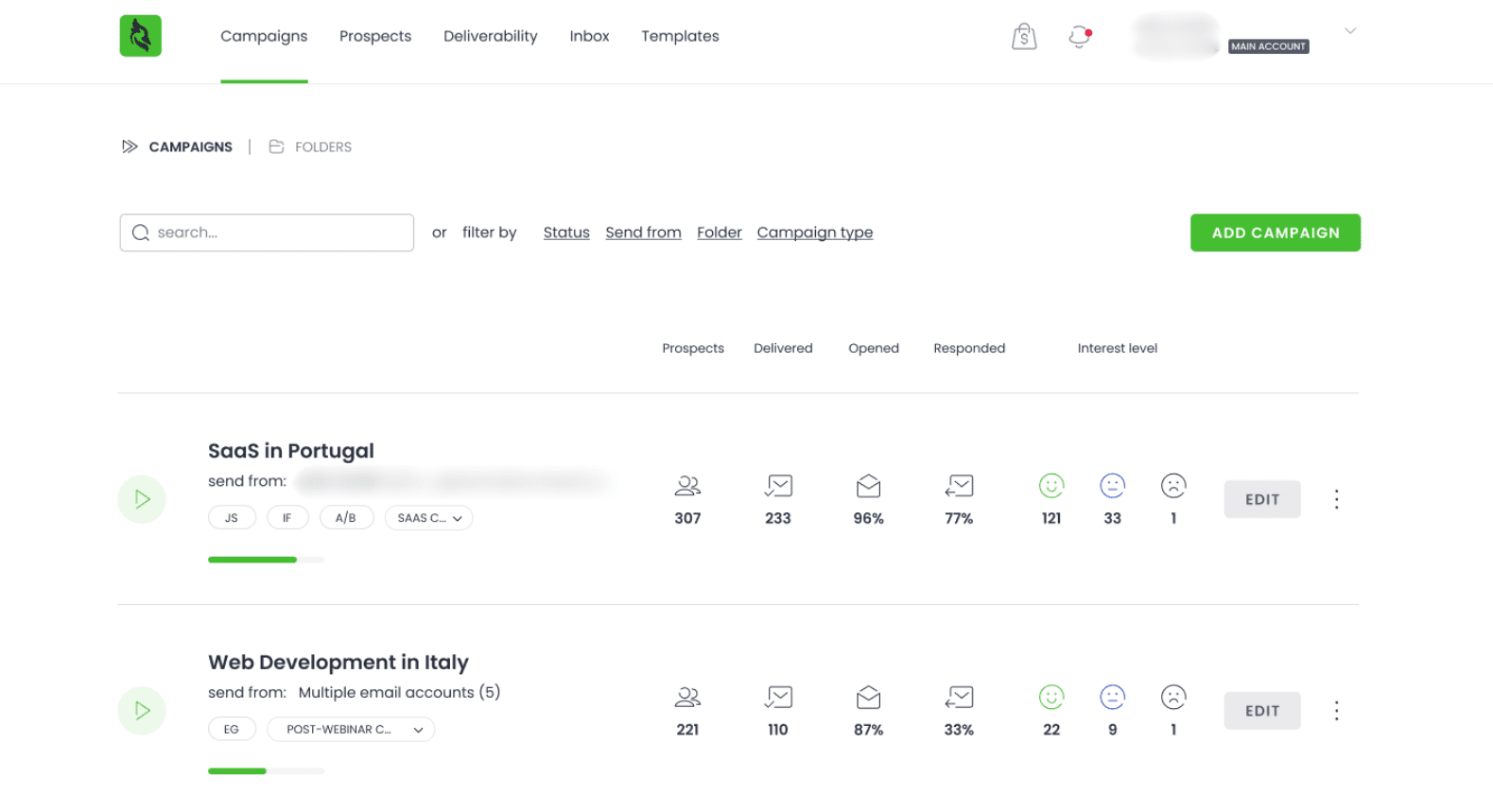
Woodpecker is a cloud-based cold emailing software that can be expanded into a full multichannel campaign platform with add-ons. These add-ons support LinkedIn actions and calls through integrations with Dux-Soup and AirCall.
One of Woodpecker’s key features is the ability to connect unlimited email accounts with auto-rotation to maintain high email deliverability. It also offers email verification to ensure your leads’ emails are valid. Nevertheless, this feature isn’t as advanced as Skylead’s.
Woodpecker lets you A/B test up to five different email variants. Additionally, it comes with an AI assistant that can generate copy for your outreach, making the process more efficient.
While Woodpecker supports multichannel outreach, the integration with Dux-Soup adds extra cost to the software. Moreover, they limit the number of prospects you can contact by price. This means that if you need to contact many leads, the cost of your subscription can quickly skyrocket.
Smartlead vs. Woodpecker feature comparison
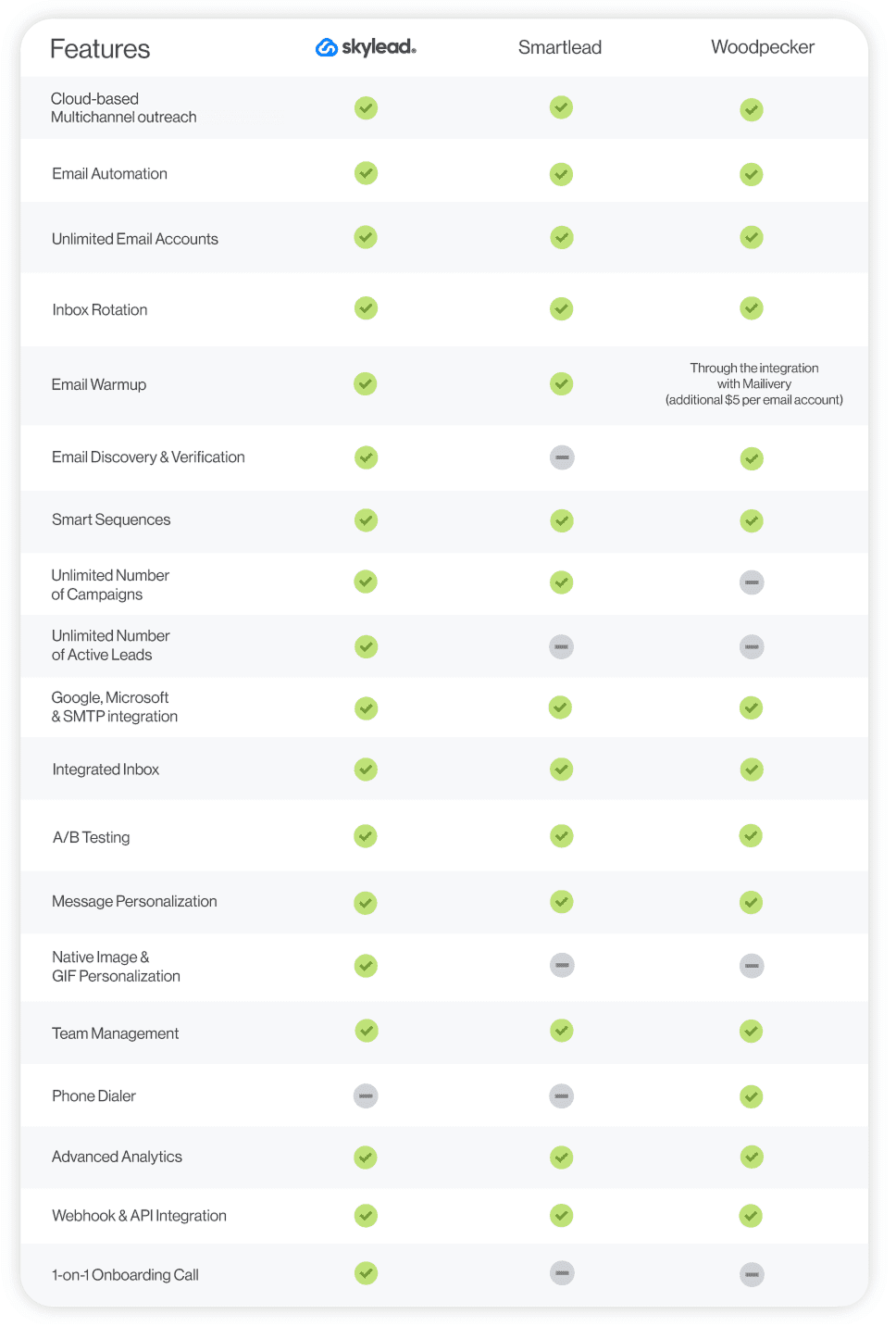
Pricing
Woodpecker offers 2 plans: Cold email and Agency. Both plans are priced identically, starting at $29 for contacting up to 500 leads. The difference between them is their intended use. The Cold Email plan is designed for individual users, while the Agency Plan allows multiple users to be added, with each additional user costing $27.
Custom plans are available as well, but require booking a call with the sales team.
Moreover, the added Dux-Soup subscription raises the cost. Depending on the plan, you’re looking at paying anywhere between the additional $14,99 and $99,00 a month.
6. Reply.io
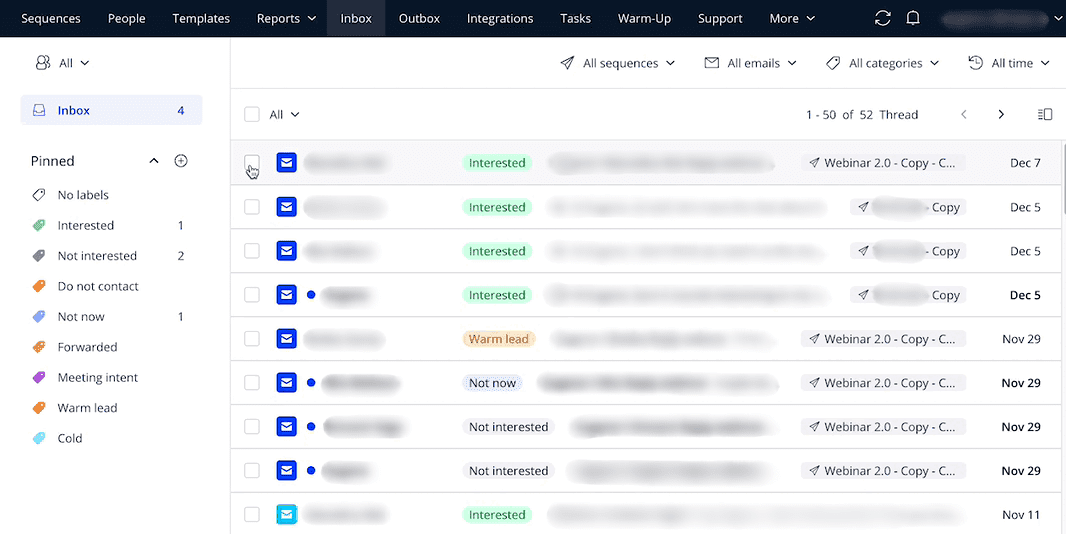
Reply.io is a multichannel outreach tool that handles tasks across multiple channels, both automated and semi-automated. It also has a Chrome extension for finding and verifying emails.
In terms of automated actions, it can send emails and like recent LinkedIn posts.
Meanwhile, actions such as profile views, connection requests, LinkedIn messages, and InMails can be both automated and semi-automated, depending on your setup.
However, keep in mind that Reply.io lets you create simple drip campaigns with no conditions. This is a downside compared to Skylead’s Smart sequences.
The tool directly integrates with Pipedrive and HubSpot, but it also supports integrations via Zapier.
For those who’d like to save additional time, the software has a collection of email and sequence templates. You can adjust them as you like and even split-test pre-made message copies against your own.
As for disadvantages, Reply.io’s smart inbox isn’t that advanced, unlike Skylead’s all-in-one inbox. To be precise, you can only use it to manage emails. To view and reply to LinkedIn messages and inMails, you’ll have to visit the platform directly.
At the risk of sounding repetitive, using Reply.io’s Chrome extension to find and verify your leads’ emails is risky. So, why use it when safer alternatives like Skylead exist?
Smartlead vs. Reply.io feature comparison
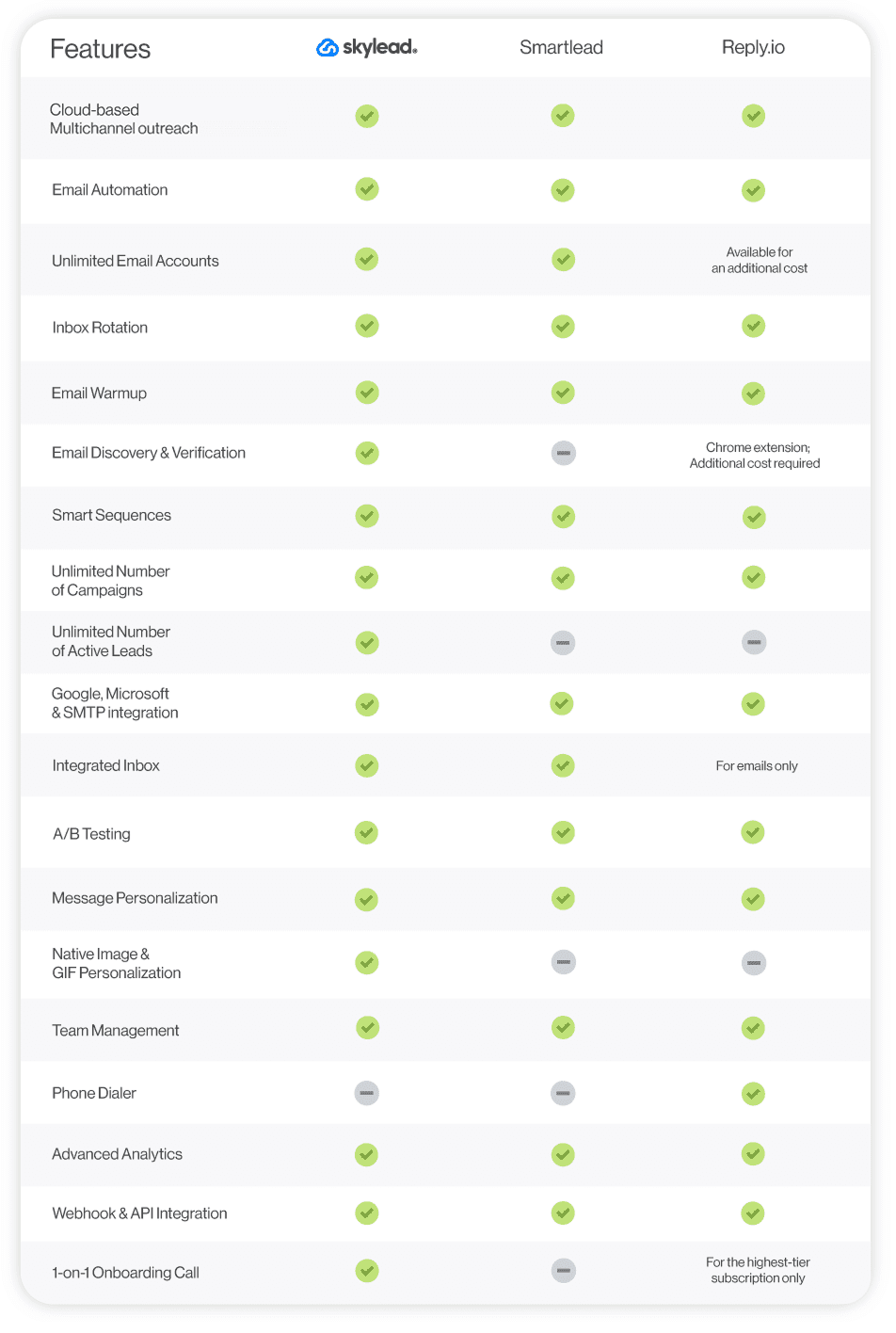
Pricing
- Free
- Starter: $59/mo per seat / 1 mailbox
- Professional: $99/mo per seat/ 5 mailboxes
- Ultimate: $139/mo per seat/ 15 mailboxes
- Custom Agency Plan: Starts at $166/mo per seat
7. Mailshake
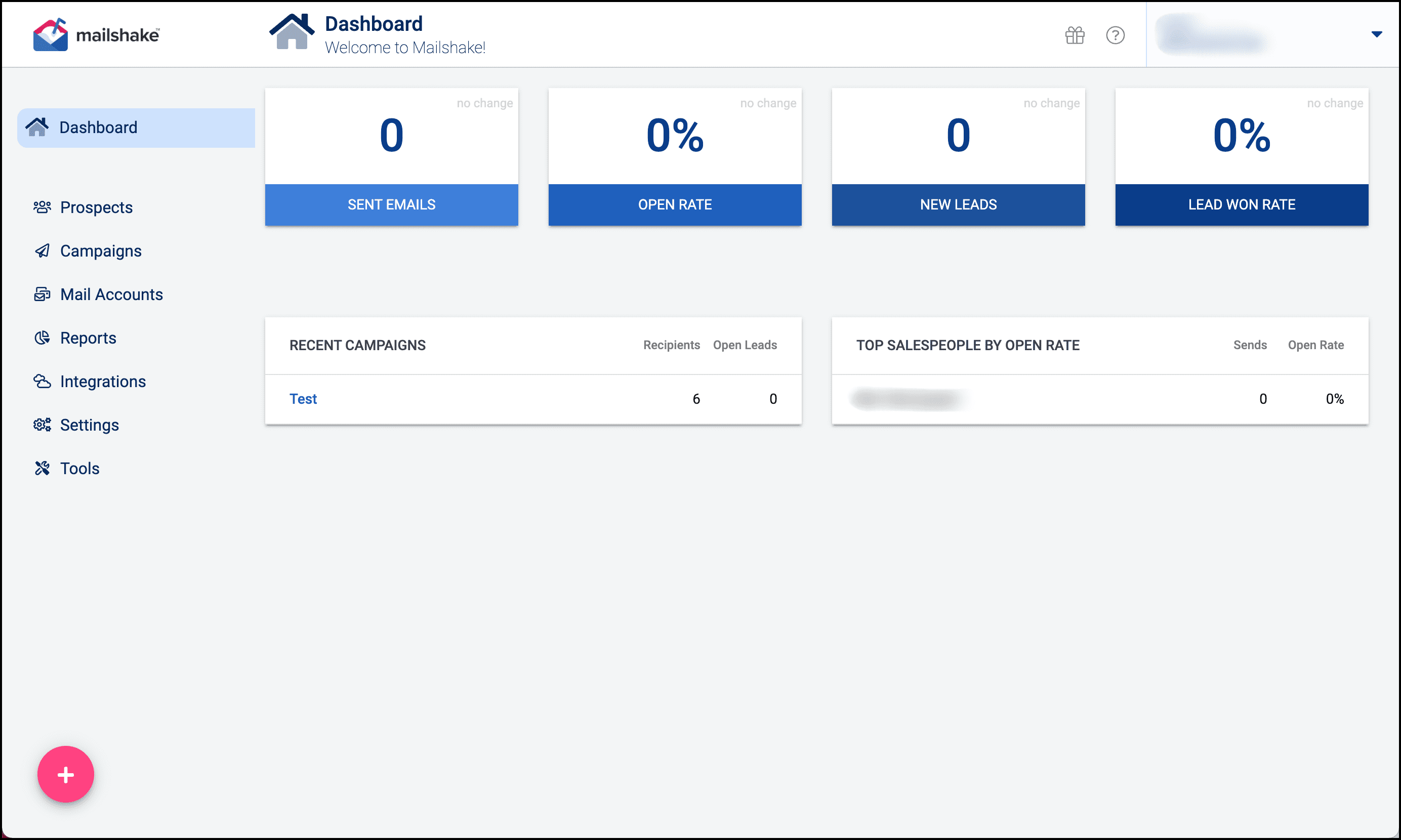
Mailshake is a cloud-based software that you can use to send personalized emails and follow-ups at scale. It also features a Chrome extension that lets users tap into multichannel outreach by automating LinkedIn actions such as:
- Connection requests,
- Profile views,
- And messages.
As part of its multichannel outreach capabilities, Mailshake includes a Dialer for cold-calling prospects in the US and Canada. The Dialer lets you make calls and record phone conversations to analyze and improve campaign performance.
Mailshake offers unlimited email warmups and A/B testing and integrates with Salesforce, Pipedrive, and HubSpot. It also supports over 1,000 integrations via Zapier webhooks.
The software is far from perfect, however.
For instance, it doesn’t support inbox rotation.
Simultaneously, LinkedIn automation and cold calling are only available with the highest-tier subscription.
Finally, since a Chrome extension is involved in the process, if you use it, you risk getting your LinkedIn account restricted.
Smartlead vs. Mailshake feature comparison
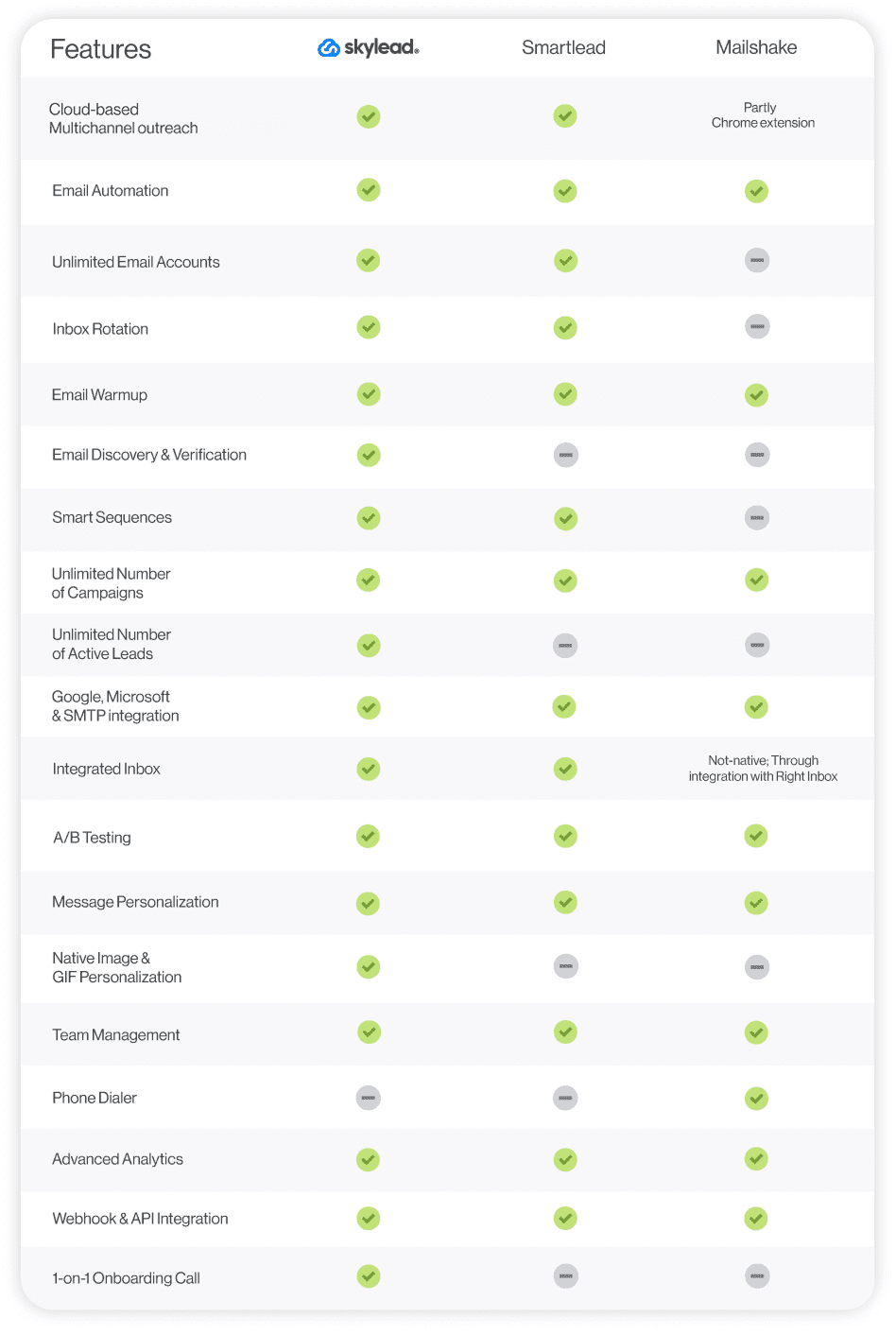
Pricing
- Starter: $29/mo per seat
- Email Outreach: $59/mo per seat
- Sales Engagement: $99/mo per seat
8. Saleshandy
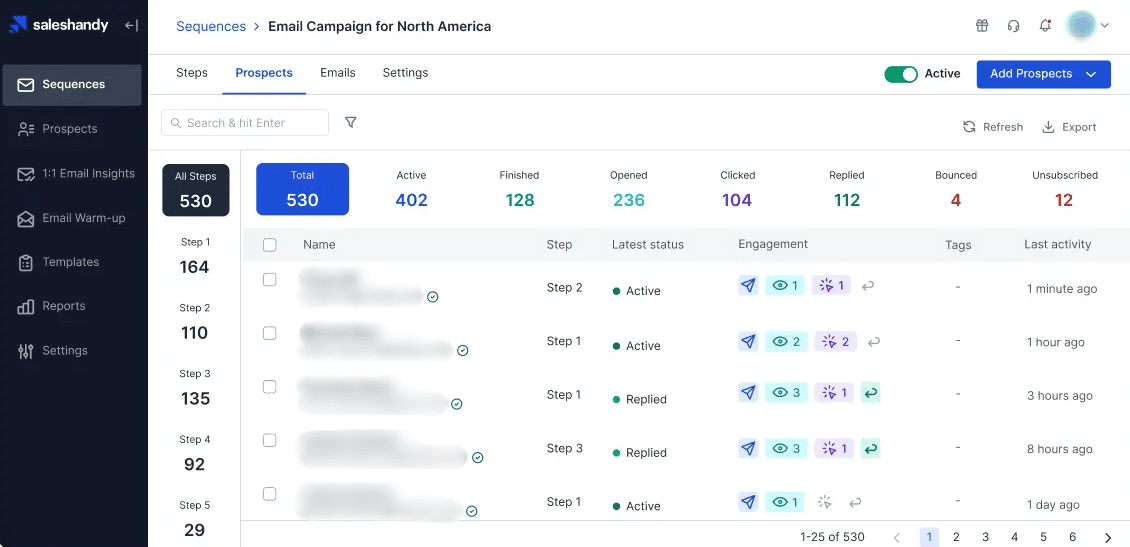
Saleshandy is another cloud-based tool designed to streamline cold email outreach.
Its key features include email sequences, email scheduling, and email tracking. The software also supports split testing, allowing users to test up to 26 different subject lines, messages, and CTAs.
You can connect unlimited email accounts to Saleshandy. Unfortunately, while the software has inbox rotation, it lets you use a maximum of 50 emails in one campaign with the highest subscription. In contrast, Smartlead and Skylead have unlimited inbox rotation.
When it comes to prospecting, the tool has a pool of over 700M verified leads that you can search through and include in your outreach. It also features a Chrome extension that finds prospects’ emails on LinkedIn and even phone numbers at a higher cost. However, as we said many times before, using an extension can compromise the safety of your LinkedIn account.
Finally, while Saleshandy excels at email outreach, it doesn’t support reaching out to prospects via LinkedIn or other non-email channels. Therefore, you are better off choosing a more complete Smartlead alternative.
Smartlead vs. Saleshandy feature comparison
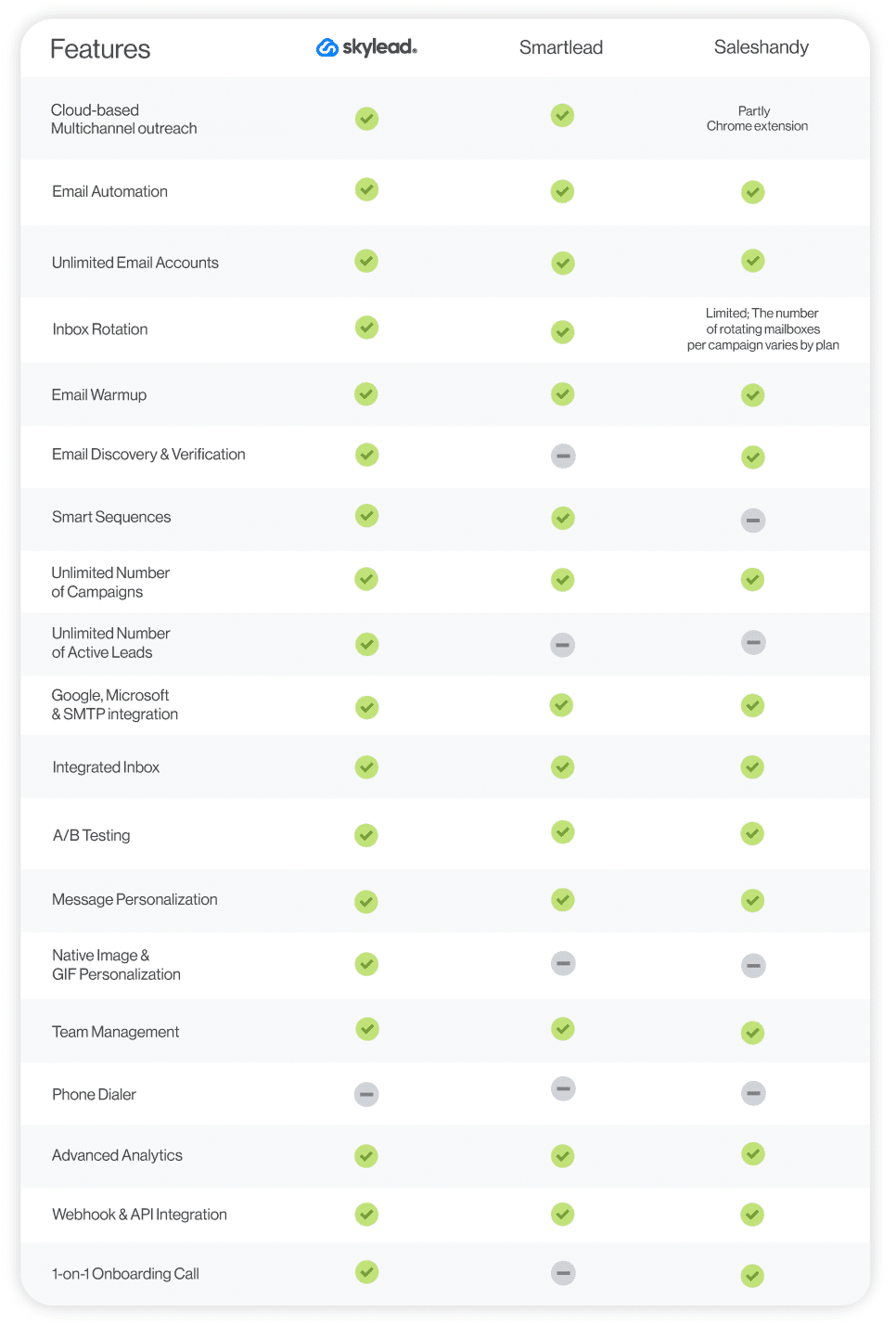
Pricing
Saleshandy comes with 4 different pricing plans and multiple sub-plans.
| Cold Emailing Plans | Outreach Starter: $36/mo per account Outreach Pro:$99/mo per account Outreach Scale:$199/mo per account Outreach Scale Plus: $299/mo per account |
| B2B Lead Finder Plans for Emails | Lead Starter: $47/mo per account Lead PRO: $99/mo per account Lead Scale: $189/mo per account Lead Scale Plus: $299/mo per account |
| B2B Lead Finder Plans for Emails & Phones | Lead Starter: $79/mo per account Lead PRO: $169/mo per account Lead Scale: $329/mo per account Lead Scale Plus: $599/mo per account |
| Agency Plans | Outreach Starter: $36/mo per account Outreach Pro: $99/mo per account Outreach Scale: $99/mo per account Outreach Scale Plus: $99/mo per account |
9. Snov.io
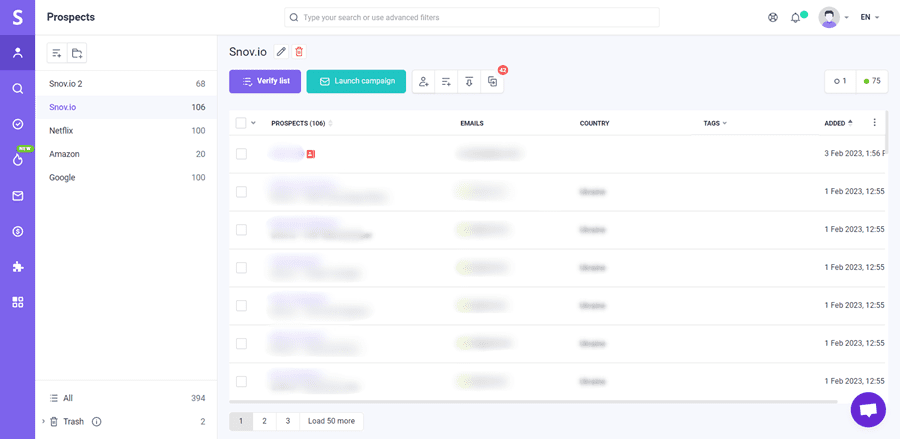
Snov.io is a cloud-based solution that lets you automate sending cold emails. Nevertheless, it also offers 2 Chrome extensions:
- One for finding prospects on LinkedIn;
- Another for finding their email addresses on the Internet.
One of its highlight features is the advanced email warm-up, compared to other email warm-up tools with limited functionalities. The tool initiates realistic email conversations, marks emails as important, reads them, and even moves them from spam to inbox to improve the sender’s reputation.
Similar to other software on the list, you can connect unlimited email accounts to Snov.io. The software also supports inbox rotation, like Skylead, which improves deliverability. And thanks to its built-in CRM, there’s no need to pay for additional software.
Its advantages aside, Snov.io isn’t perfect primarily because:
- It can only be used to reach prospects via email.
- Its Chrome extension for prospecting may compromise the safety of your LinkedIn account.
Smartlead vs. Snov.io feature comparison
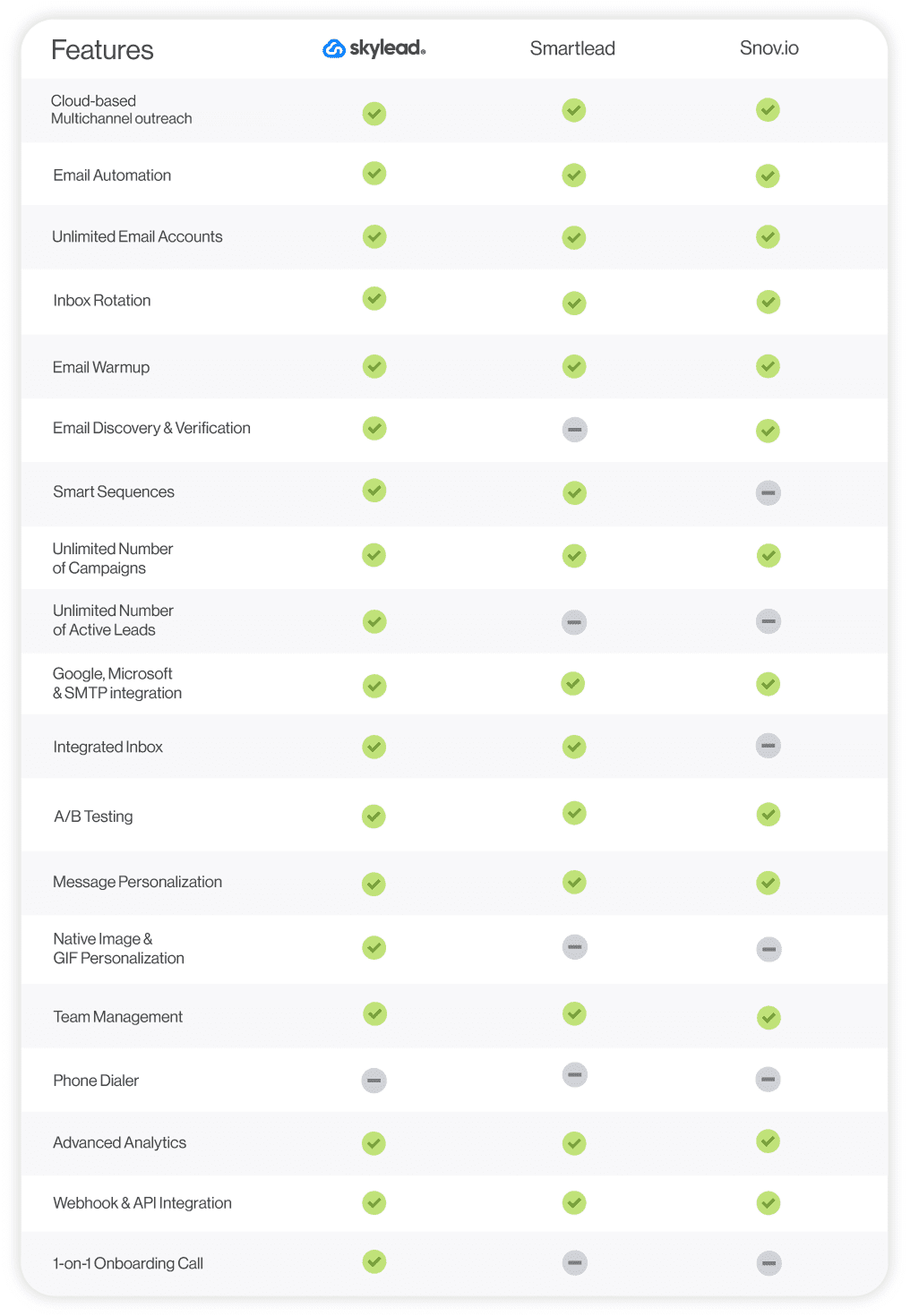
Pricing
- Trial: $0
- Starter: $39/mo per seat
- Pro: $99 / $189 / $369 / $738/mo per seat
- Managed Service: Starting at $3,999/mo per seat
10. Klenty
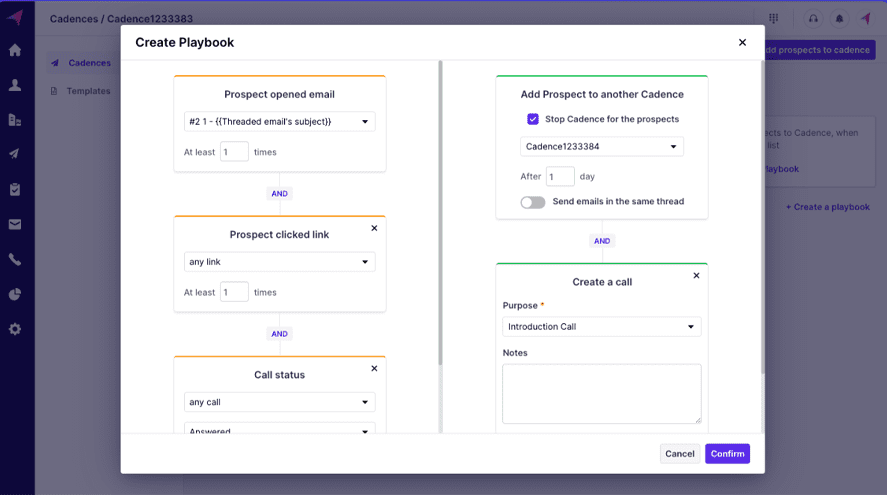
Klenty is a tool built to automate cold email campaigns, track emails, and warm up email addresses.
Nonetheless, it also supports multichannel outreach, allowing you to send SMS and WhatsApp messages, make calls, and/or perform basic LinkedIn actions like:
- Visiting profiles,
- Sending connection requests,
- Messages,
- And inMails.
Klenty adjusts its approach to outreach smartly — through Playbooks. Playbooks are similar to Skylead’s Smart sequences in that they cover different outreach scenarios to meet prospects where they are in their journey.
Additionally, Klenty can find and verify prospects’ emails based on their name and company domain.
Despite its many features, Klenty lacks one of Skylead’s most prominent ones: image and GIF personalization.
It may stand out among some other tools due to its comprehensive capabilities. However, the fact that it uses a Chrome extension for LinkedIn outreach sets it back immensely.
Smartlead vs. Klenty feature comparison
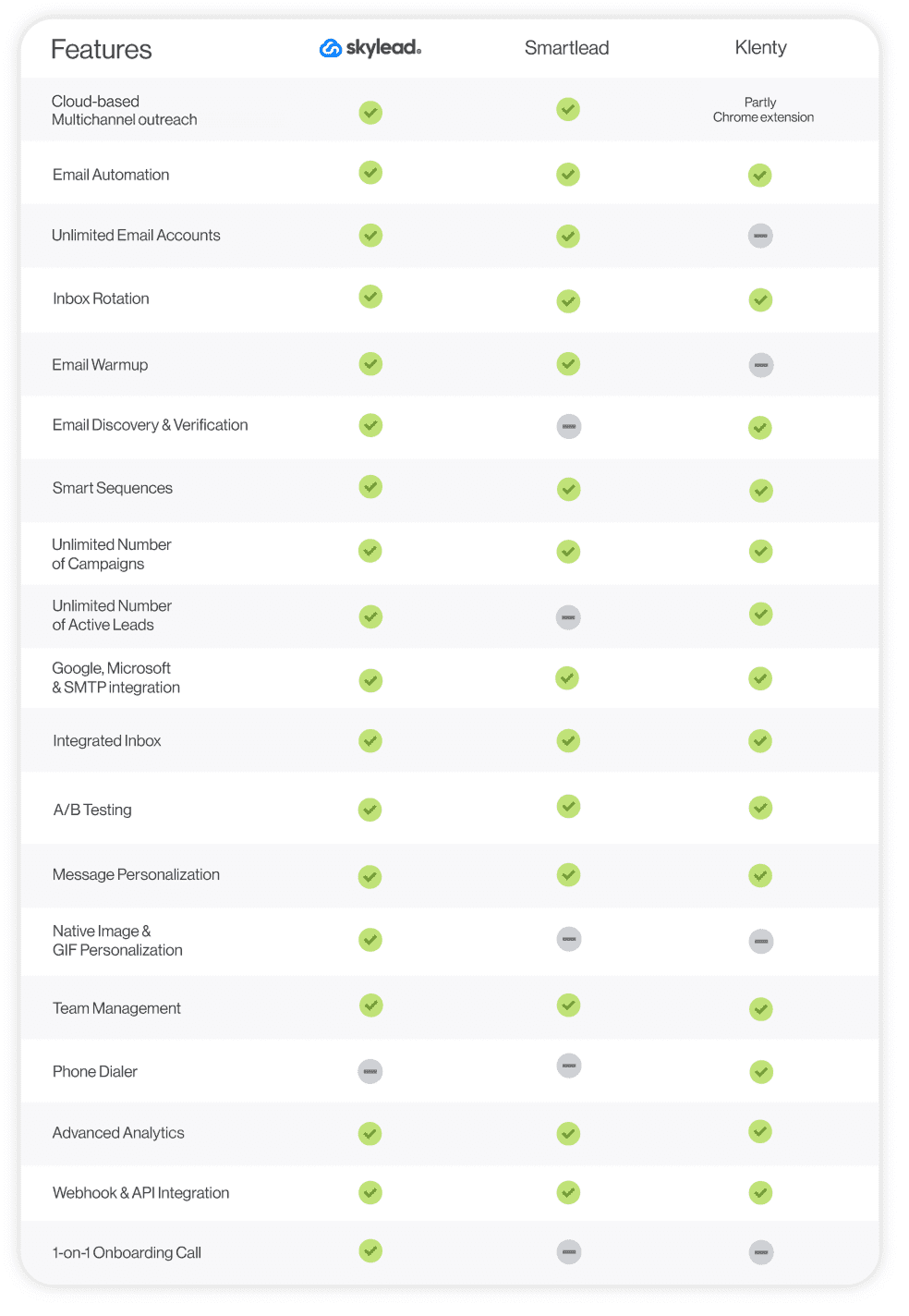
Pricing
Klenty offers quarterly and annual plans that are 20% cheaper.
- Startup: $60/mo per seat / billed quarterly
- Growth: $85/mo per seat / billed quarterly
- Pro: $125/mo per seat / billed quarterly
- Enterprise: Contact sales
11. Hunter.io
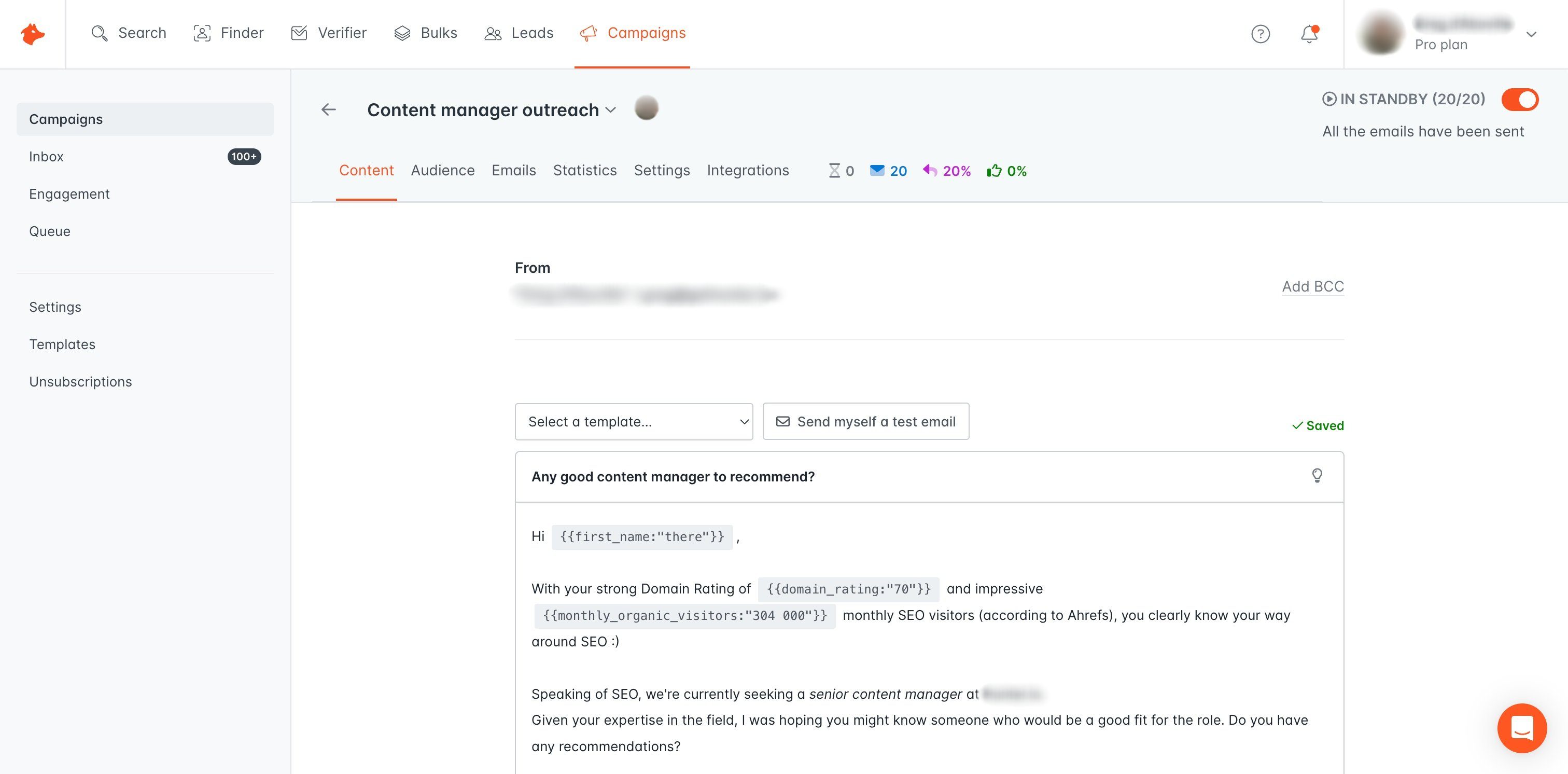
Hunter.io is a cloud-based platform that can seamlessly integrate with your workflow due to its native integrations with many tools and Google Sheets.
It supports email outreach and offers readily available variables. These help you craft highly personalized emails that increase the likelihood of getting replies.
Hunter.io also has excellent email enrichment capability. In fact, it’s almost as successful in finding and verifying emails as Skylead.
Unfortunately, the downside is that its email discovery and verification are not integrated into the outreach flow. This means you need to discover and verify emails first before creating a campaign.
Additionally, Hunter.io is limited to email outreach only and does not support LinkedIn outreach.
Smartlead vs. Hunter.io feature comparison
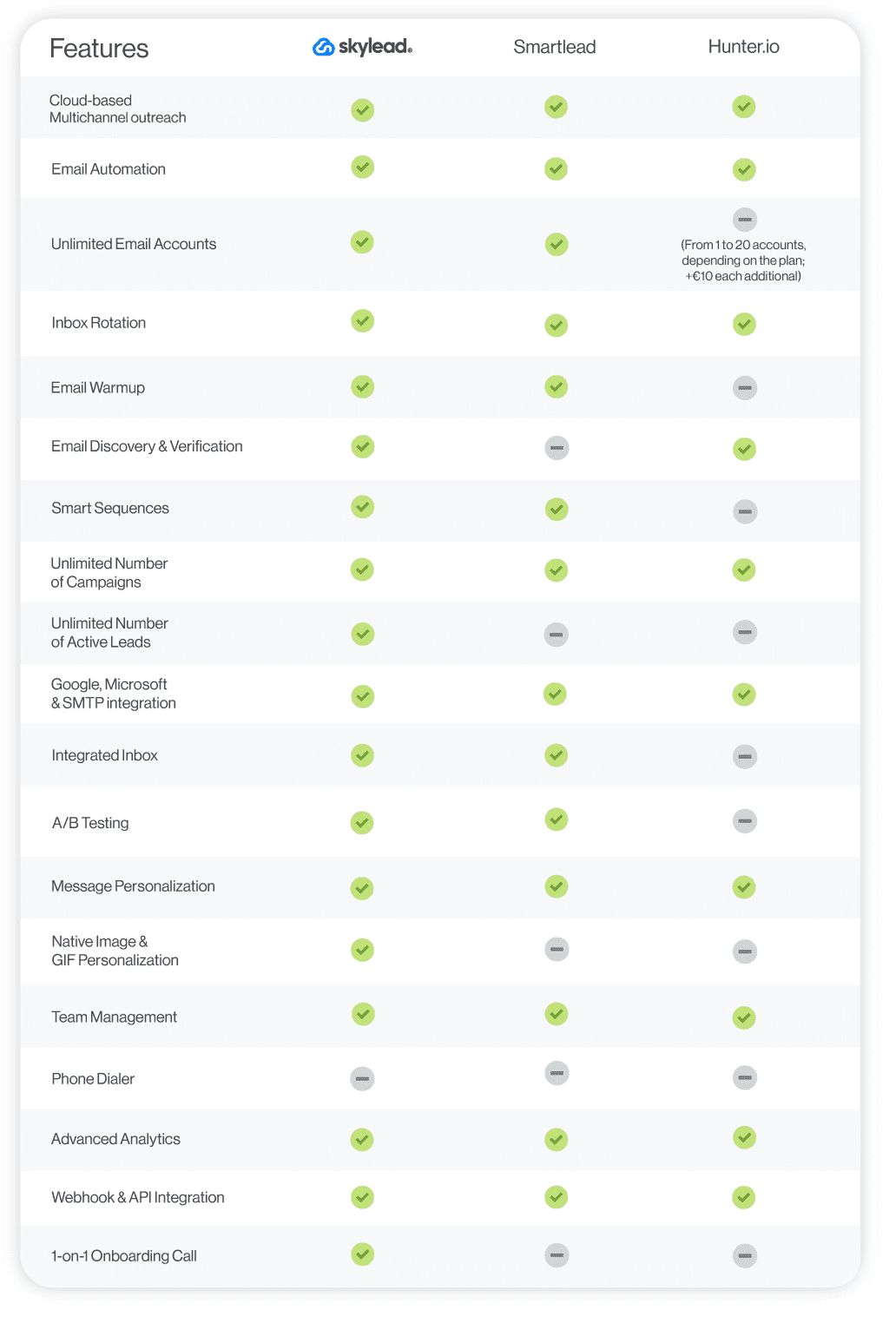
Pricing
- Free: €0
- Starter: €49/mo for 3 email accounts
- Growth: €149/mo for 10 email accounts
- Business: €499/mo for 20 email accounts
- Enterprise: Contact sales
You can connect additional email accounts to the software. However, each will cost you an additional €10 per month.
Furthermore, each plan comes with a set amount of email verification credits. Again, you can purchase more, but this will also cost extra.
Frequently asked questions (FAQs)
1. What is Smartlead AI?
Smartlead AI is one of the best cold email software designed to automate and streamline the process of sending personalized emails. It helps users manage email campaigns, warm up new email addresses, and track campaign performance.
2. What is Smartlead AI used for?
Smartlead is used for automating email outreach to generate leads and scale business operations. It allows users to create personalized email campaigns with automatic follow-ups and integrates with CRM systems like HubSpot. It is primarily used by lead generation agencies, marketing agencies, sales professionals, and recruiters.
3. How to cancel a Smartlead subscription?
To cancel your Smartlead subscription, first, log in to your account. Then, navigate to the "Plans & Billing" section under "Settings," and click on “Subscription.” This is where you should see an option to cancel it. Click the button and follow the on-screen prompts to confirm the cancellation. For assistance or complete account deletion, you can also contact their customer support team.
Smartlead vs. alternatives: Which tool wins the race?
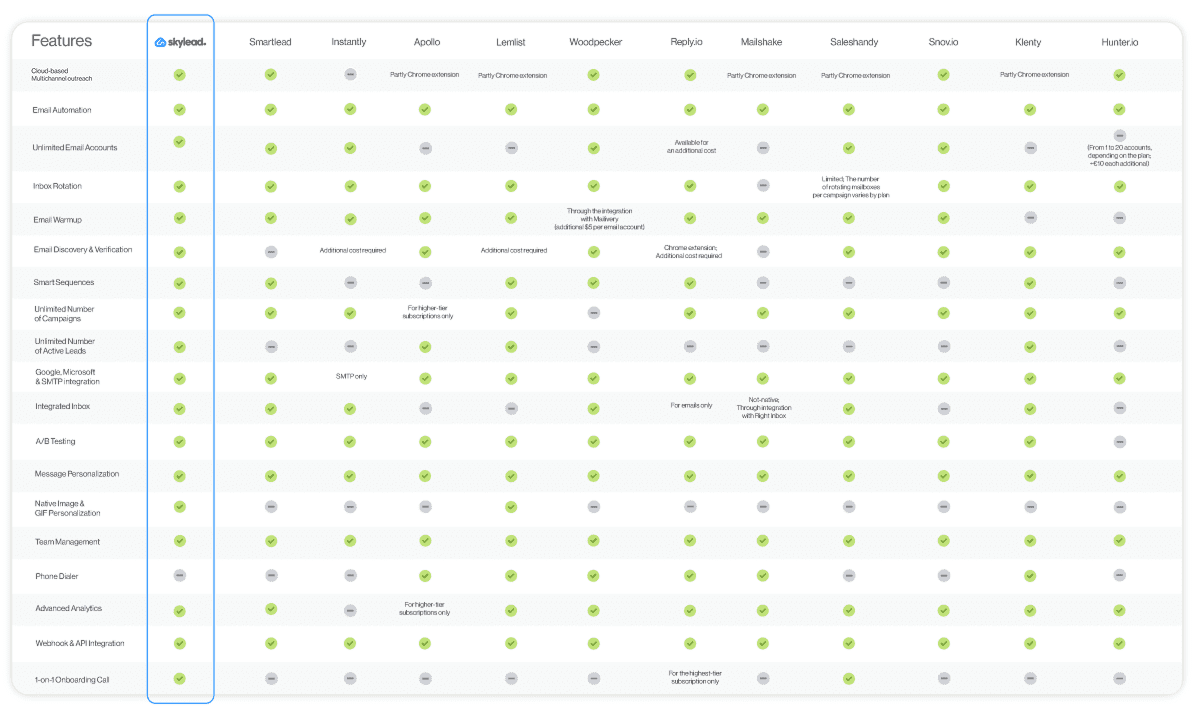
While Smartlead offers a range of features suitable for various outreach needs, its lack of multichannel outreach support and pricing makes it less than ideal. Thus, tools like Skylead, Lemlist, and Apollo, with their multichannel outreach features and more affordable pricing plans, make for compelling alternatives.
However, bear in mind that the software that works for one might not work for another. So, when deciding on the right tool to use for your outreach, choose the one based on your:
- Goals
- Budget
- Features you need
Of course, if you were to ask us which tool is the best, we’d say Skylead. And yes, we know we seem biased, considering it's ours.
But why not give us a chance to prove to you that it really is the best Smartlead alternative?
Take advantage of our 7-day free trial period, and we promise to sweep you off your feet so much that you never again consider using another software!
Updated on: September 15th, 2026
What is sales engagement? It's the system behind every successful deal.
In 2026, it's not enough to just reach out - sales engagement is how modern salespeople plan, personalize, and scale their interactions across every channel. It’s what turns cold leads into warm conversations, and warm conversations into signed contracts.
This guide breaks down the what, why, and how of sales engagement - complete with real examples, actionable best practices, and the tool that helps you run everything smoothly. Spoiler alert: it’s Skylead. ?
What is sales engagement?
Sales engagement is the process of managing and optimizing all interactions between a salesperson and a prospect throughout the buyer’s journey. Think emails, social media messages, calls, demos, follow-ups, basically every touchpoint that moves a lead closer to a deal.
However, it would be naive to assume that sales engagement is related to conversations only. Rather, it’s the system behind it - the strategy that defines how, when, and where you reach out, and the technology that helps you do it at scale.
Why is sales engagement important?
Short answer: because attention is a valuable resource, and wasting it costs you revenue.
Every day, your prospects dodge dozens of emails, screen unknown numbers, and scroll past outreach messages they didn't ask for. So, if you're relying on chance to get a response, sorry to break it to you, but you're not selling. You're gambling.
If you want to get through, you need coordinated, well-timed, and personalized outreach across the right channels.
And that? It’s exactly what sales engagement enables!
When executed well, it helps you:
- Break through the noise. By aligning your sales outreach to the buyer’s context and not your quota, sales engagement lets you reach prospects in ways that feel timely, relevant, and human.
- Close the follow-up gap. Most reps, 48% to be precise, give up after a single interaction with the prospect. But most deals require 8 touchpoints to close. That said, a strong engagement process keeps you consistent and persistent, so good leads don’t go to waste just because someone forgot to send a follow-up email after no response.
- Move faster with less work. Did you know that, on average, reps spend only 28% of their time actually selling? The rest of the time goes to repetitive tasks, such as logging activity, scheduling, and chasing replies. The sales engagement process, or rather, the tools used in it, allow them to automate these low-value activities, saving them 11+ hours a week in the meantime. That is time better spent nurturing leads!
- Optimize every step of the journey. Speaking of tools, thanks to them, you can track replies, opens, clicks, conversations, and more. This allows you to get real-time feedback on what’s working (and what isn’t) across outreach sequences, channels, and messaging.
- Build a system that scales. With a proper sales engagement process in place, you aren’t going with the gut-feeling outreach and hoping for the best. Rather, you’re running a strategy that’s trackable, repeatable, and aligned across the entire sales team, so every rep - new or experienced - takes the page out of the same winning playbook.
So, what is sales engagement? It’s the operating system behind modern sales tactics. But the reason it’s so important is that it’s THE thing that makes your outreach scalable, your messaging smarter, and the entire sales team more consistent.
Different types of sales engagement [+ examples]
Sales engagement is a coordinated series of touchpoints across different channels and stages of the sales journey. Depending on your industry, audience, and offer, your engagement strategy might look a little different.
But at its core, it includes the following types:
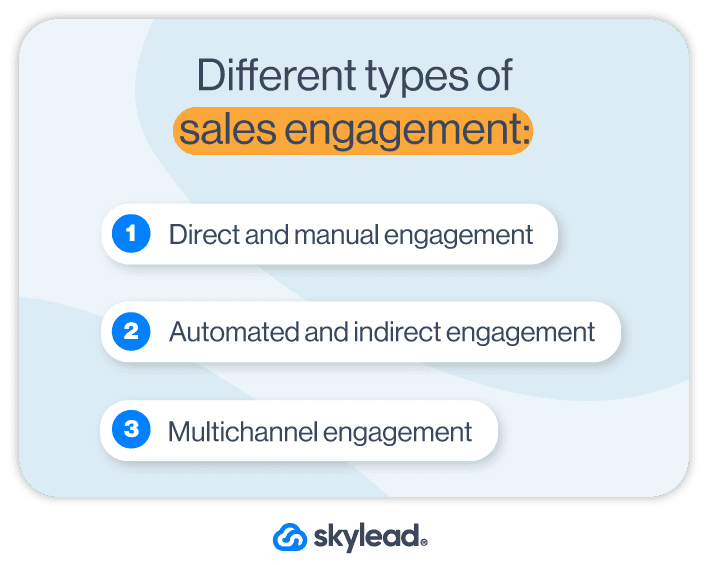
1. Direct and manual engagement
These are hands-on, human-driven interactions that typically happen in real time or are highly personalized. While they don’t scale as easily, they build trust faster and drive deeper conversations.
Examples include:
- Phone calls - Live, one-on-one conversations with prospects.
- Personalized emails - Writing custom emails based on the recipient’s role, company, or trigger event.
- Meetings - Hosting discovery calls, demos, or coffee chats (virtual or in-person).
- Live product demos - Walking a prospect through the solution in real time.
- Live chat - Answering questions via a chat widget on your site.
- Direct mail - Sending physical letters, handwritten notes, or creative packages.
- Social media engagement - Commenting, DMing, or tagging prospects in hopes of starting a conversation on social media platforms.
2. Automated and indirect engagement
These touchpoints are triggered by behavior or buying signals, and while less personal, they’re important for staying consistent and saving time.
Typical examples are:
- Automated email sequences - Pre-built cadences personalized with dynamic variables (e.g., name, company, pain point).
- Chatbots - Automated website interactions that qualify leads or answer FAQs.
- Lead capture forms - Website forms that route leads into a nurture or sales sequence.
These may not feel personal at first glance, but when done well, they allow reps to deliver the right message at the right time, without being in 10 places at once.
3. Multichannel engagement
People respond to different channels at different times. Some ignore their inbox but check LinkedIn daily. Others won’t reply to an email, but they will answer a call if they’ve seen your name before.
The tricky part is you won’t always know which channel your prospect prefers right away. And guessing wrong means your message gets ignored, even if your offer is solid.
That’s why, in our opinion, multichannel sales engagement is the most reliable approach.
Here’s what that might look like in practice:
- Day 1: Send a personalized email introducing yourself and the reason for reaching out.
- Day 2: View their LinkedIn profile (yes, people check who viewed them).
- Day 3: Send a connection request with a personalized note.
- Day 5: Send a LinkedIn follow-up message referencing your email.
- Day 8: Send a second email, this time offering a quick value point or resource.
- Day 11: Drop a voice or video message via LinkedIn for a more personal touch.
Sales engagement vs. sales enablement
So, you know what sales engagement is. But how does it differ from sales enablement? Or are they the same thing?
Not exactly, though they often work hand in hand.
Here’s the simplest way we’d put it:
- Sales enablement equips your team with what they need to sell.
- Sales engagement activates that knowledge.
Enablement gives you the what - think content, training, playbooks, Ideal Customer Profile(s) (ICP), Buyer Persona(s), objection handling templates, etc. Engagement is the how - the actual execution of your cold outreach across email, LinkedIn, calls, and beyond.
Without enablement, your reps might not know what to say. Without engagement, they might know what to say… but there’s no one to hear it.
Long story short, sales enablement prepares reps for conversations, whereas sales engagement makes sure those conversations lead somewhere.
You need both. But they solve different problems.
What is pre-sales engagement?
Pre-sales engagement refers to everything that happens before you reach out to a prospect.
It’s the prep work that sets your sales engagement efforts up for success. In other words, it’s the research, analysis, and qualification that make sure when you do make contact, it’s actually relevant.
Common pre-sales engagement activities include:
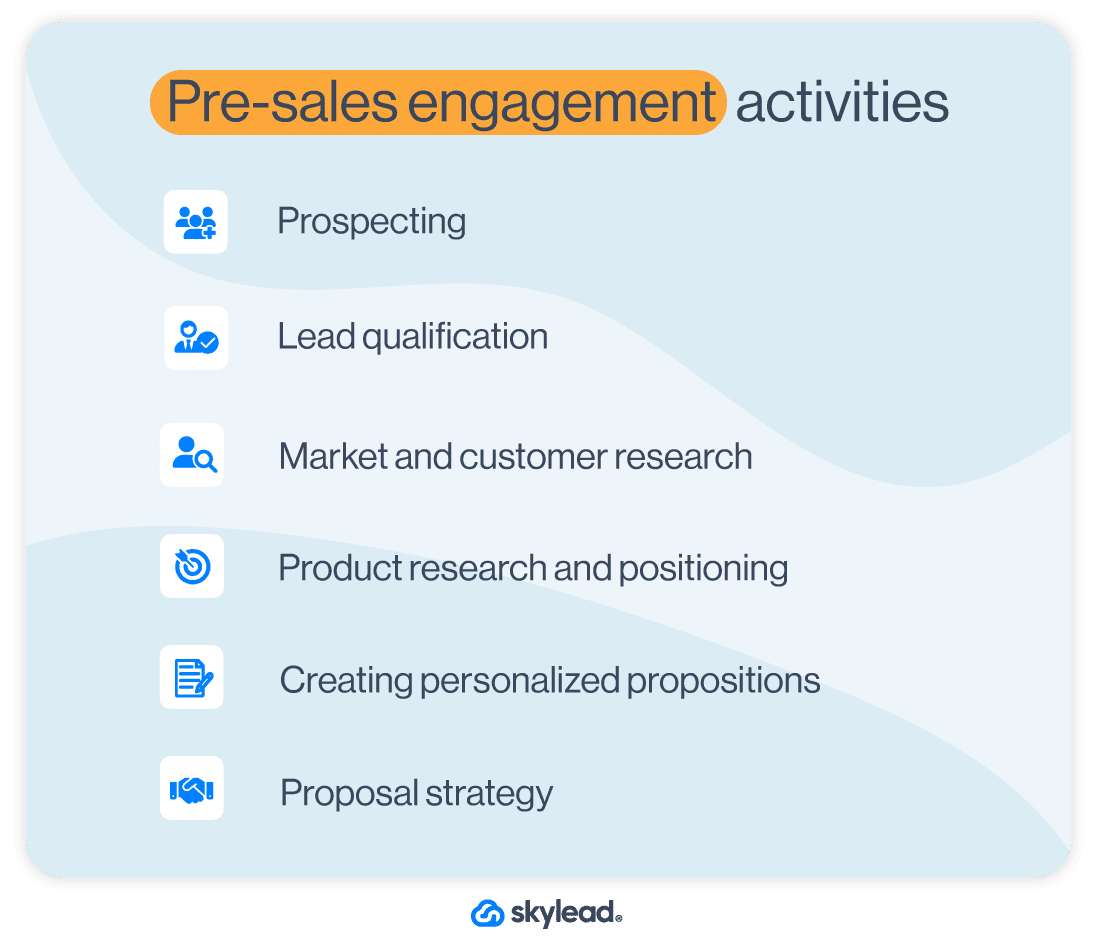
- Prospecting - Finding potential buyers that match your ideal customer profile. Most salespeople rely on LinkedIn prospecting at this stage, as the platform is home to over 1 billion professionals across 200 territories.
- Lead qualification - Making sure they’re actually a fit before engaging in lead generation.
- Market and customer research - Understanding the context your lead operates in.
- Product research and positioning - Adjusting your offer so it aligns with their needs.
- Creating personalized propositions - Drafting angles and messages that will resonate.
- Proposal strategy - Prepping potential deal structures or solutions ahead of time.
It’s simple, really. The better your pre-sales engagement, the better (and easier) your sales engagement process becomes.
Sales engagement best practices
Sales engagement takes great planning, testing, and refinement to master.
And while every company’s process will look slightly different, there are a few best practices that separate good sales engagement from bad sales engagement.
Here’s what you want to focus on:
1. Optimize your interactions
Every interaction counts. It doesn't matter if you're handling inbound leads or reaching out cold.
That begs the question: how do you make them count?
If we're talking inbound, it's all about responding fast, showing you've done your homework, and meeting the buyer where they are in their journey - not where you wish they were. If they're still exploring, don’t pitch. And if they’re ready, don’t stall.
For outbound, relevance and clarity are the most important aspects. The best reps know how to hook attention in the first sentence and then lead with value. They don’t write emails for the sake of writing, but to start a conversation.
At the end of the day, every message should have a purpose. And that purpose should be obvious to the prospect, not just to you.
2. Choose the appropriate communication channels
Not every channel is created equal. Not to mention, not every prospect wants to hear from you in the same way.
Some skim messages on their phone. Others prefer detailed emails they can forward to business decision-makers. Some reply fastest to a LinkedIn message, while others won’t engage unless there’s a calendar invite in the mix. The point is: how you reach out matters just as much as what you say.
That’s why we recommend going multichannel from the start. It gives you multiple chances to get on your prospect’s radar and figure out which touchpoint actually triggers a response. Plus, it keeps you from putting all your effort into a single channel that might not even work.
3. Leverage a sales engagement tool to boost efficiency
We live in a tech-first world. You can’t expect to run a high-performing sales engagement strategy by juggling spreadsheets and sticky notes.
The best reps automate tasks, and it pays off. Several sources say that sales automation saves reps over 6 hours per week on manual work, such as updating CRM and organizing notes, with our own research bringing it closer to 11 hours. It also helps improve conversions by 20%.
With that being said, it's clear that, if you want your efforts to pay off, your best bet is to rely on technology - specifically, sales engagement software.
This type of tool allows you to:
- Automate lead generation
- Create multichannel outreach sequences
- Personalize your outreach
- A/B test your messaging
- Track opens, clicks, replies, and conversions in real time
…and thus, stay consistent, even when you’re managing 100+ leads.
Now, how do you choose the right one?
Your ideal sales engagement software should:
- Support multichannel outreach
- Include hyper-personalization options
- Provide real-time performance analytics
- Integrate with your CRM (or replace it entirely)
- Be easy enough to use without a lengthy onboarding process
Lucky for you, Skylead checks all these boxes, and then some!

Skylead is a LinkedIn automation tool and cold email software that also comes with account-based prospecting, lead enrichment, and AI SDR functionalities that turn it into a full-blown sales engagement platform. That's exactly what makes it THE platform for sales teams and agencies who want to save 11+ hours each week and book 3 times more meetings.
From day one, we let you build Smart sequences - adaptive multichannel outreach flows built around if/else logic. These sequences help you respond to prospect actions in real time, depending on what they do (or don’t do). While at you, you can split test up to 5 message variations, use liquid syntax, spintax, and pre-defined or custom variables for personalization, and then get detailed performance data across each step in your sequence.
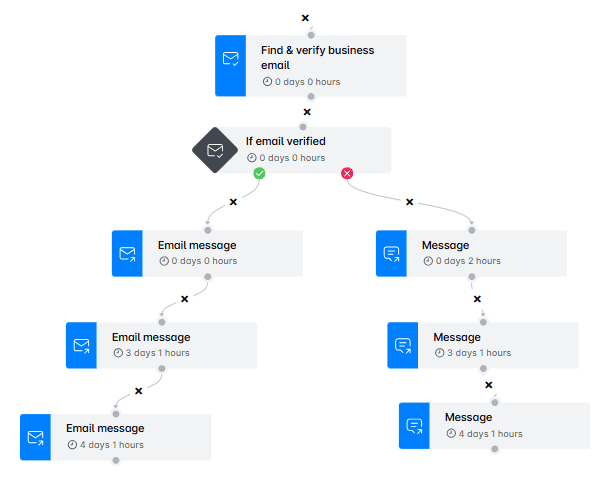
Need to scale your LinkedIn and email outreach? No problem! Namely, Skylead lets you connect unlimited mailboxes to help you send tens of thousands of emails a month at no extra cost. It even auto-rotates between them to keep your outreach flowing with no interruptions, and includes an infinite email warm-up to maintain deliverability. There’s no need to hunt for emails either, as the tool can find and verify emails for you as part of your sequence.
And when you want to go beyond plain text, use Skylead’s Image and GIF personalization feature to embed your prospect’s name, photo, logo, or custom text into visuals, and thus, boost your reply rate by up to 76%.
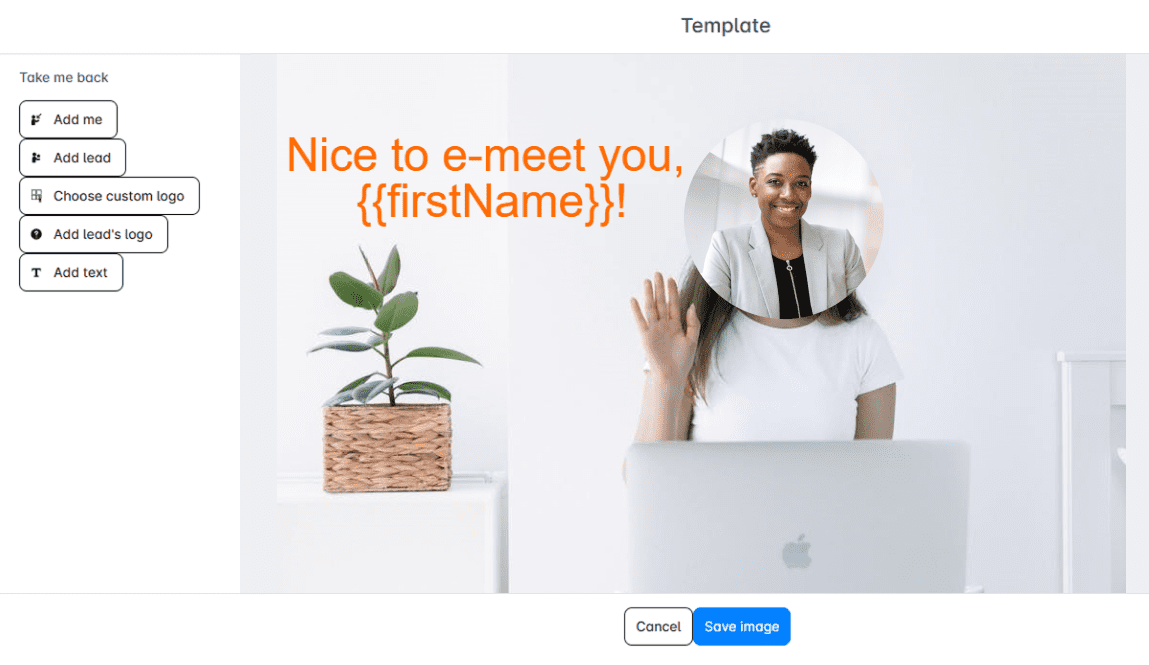
This tool also includes a Smart inbox that you can use to manage all your correspondence and, thus, track conversions and ROI.
Not to mention, it integrates with the best sales CRM.
The best thing is, you can get all of this for just $100 a month. No extra costs included.
Interested? Your 7-day free trial is just a click away!
4. Monitor and measure your engagement metrics
Now, not all sales engagement efforts will provide the same results. But the thing is, you can’t improve what you don’t measure. It’s that simple.
And that’s why you need to track the right sales engagement metrics. They help you spot bottlenecks, double down on what’s working, and recover deals before they fall completely off the track.
Here are some of the main metrics we recommend keeping an eye on:
- Reply rate - The percentage of prospects who respond to your messages, whether emails, LinkedIn cold messages, X DMs, etc. It’s one of the clearest signals that your messages are landing (or not).
- Open rate - How many people opened your email. This can help you gauge the effectiveness of your email subject lines or timing.
- Click-through rate (CTR) - The percentage of recipients who clicked a link in your message. It’s especially useful for determining if there’s enough interest in what you’re offering.
- Positive reply rate - Not all replies are created equal. This metric focuses on interested responses only, such as meeting requests, referrals, and qualified questions, among others.
- Touchpoints per deal - How many interactions it takes to move a lead through the pipeline. This helps you understand how persistent you need to be.
- Time to first response - How quickly leads are replying after the initial message. Shorter equals better.
- Meetings booked - The number of qualified prospects who agree to a sales call, demo, discovery session, etc. You can also track which sequence or channel drove the booking, so you know where to invest more time and resources.
5. Stay flexible and open to adjustment
No matter how comprehensive your process is, sales engagement isn’t static. Buyer behavior evolves. Channels come in and go out of style. And what worked last quarter? It might just not work now!
So, test often. Stay curious. And don’t treat your sequences like finished novels - treat them for what they are, drafts.
The best teams iterate. That’s how they stay relevant.
Frequently asked questions
What does sales engagement mean?
Sales engagement is the process of managing and optimizing every interaction between a salesperson and a prospect across the entire sales journey. This includes how you reach out, when you follow up, and the tools you use to maintain consistency and scalability. Done right, sales engagement helps you stay relevant, increase reply rates, and close more deals.
What is an example of a sales engagement?
An example of sales engagement is a multichannel outreach sequence that includes personalized emails, LinkedIn actions, and follow-ups over time. For example, a rep might email a prospect on Day 1, view their profile the next day, send a connection request with a custom note, then follow up with a message referencing the original email. Later, they might share a resource or send a quick video message.
How is sales engagement different from CRM?
The main difference between sales engagement and CRM is that a CRM keeps all your prospect data in one place, while sales engagement helps you act on it. In other words, while CRMs are designed to store data, track pipeline stages, and manage records, sales engagement processes help reps plan, execute, and optimize real-time outreach across one or more channels.
Your sales engagement process is only as good as the tool that powers it
If you want real conversations - the kind that turn into closed deals - you can’t just wing it. You need structure. You need speed. And you need a sales engagement process that actually works.
But merely knowing what sales engagement is isn’t enough. You need an engine to power it all. A sales engagement tool, if you will.
Luckily, we’ve got just what the doctor ordered: Skylead.
It’s the tool to use when you want to scale your outreach, personalize every touchpoint, and book 3x more meetings in less time.
Ready to see it in action? Start your 7-day free trial now and watch what happens when your strategy meets the right software!
Updated on: September 15th, 2026
Disclaimer: Skylead is not affiliated, endorsed by, or connected with LinkedIn in any way.
Looking for an Evaboot alternative? You’re in the right place!
If you're in sales, marketing, or recruiting, chances are you've used Evaboot (or still are) to clean and export LinkedIn Sales Navigator leads.
But maybe you're hitting limits - on verified emails, data volume, or LinkedIn itself. Or maybe you're just exploring tools with a better price-to-feature ratio. Whatever your reason, you're not alone.
In fact, thousands of teams search for tools like Evaboot every month, whether for LinkedIn prospecting or LinkedIn lead generation purposes, email verification, or building cleaner prospecting lists. And that's exactly what this guide is here to help you with.
In this article, you'll find:
- A quick overview of Evaboot’s strengths, cons, and pricing
- The top Evaboot alternatives compared side by side
- In-depth reviews of 8 tools that help you prospect and reach out to your leads
We also included user ratings, real user pros & cons, and pricing details, so you don’t have to do the digging.
Let’s start with the basics. ?
What is Evaboot?
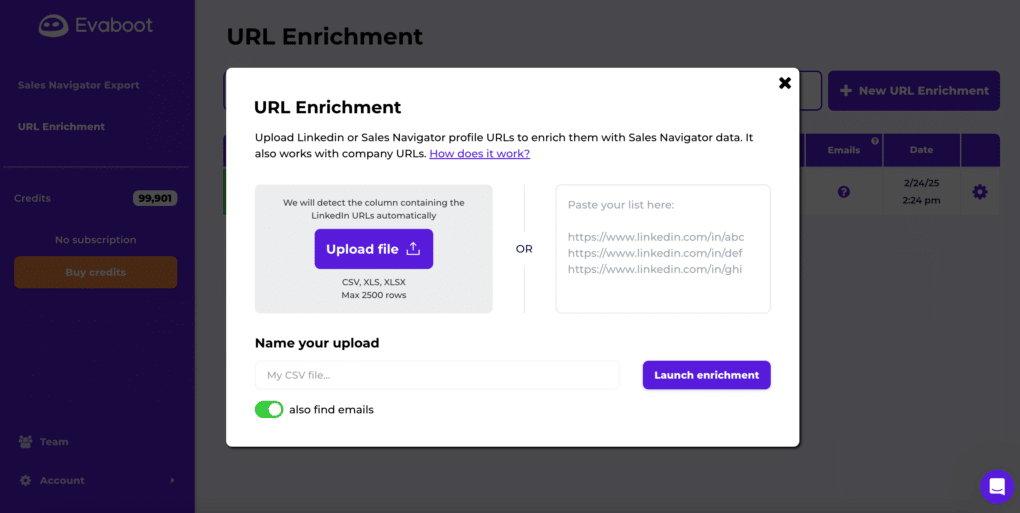
Evaboot is a LinkedIn data cleaning and export tool designed to help sales, marketing, and recruiting teams get more value from LinkedIn Sales Navigator.
It’s especially popular with users who want to:
- Scrape LinkedIn Sales Navigator leads’ information and export it to a CSV file
- Clean job titles and remove junk data
- Get verified business emails without extra tools
- Build cleaner, ready-to-use outreach lists
But as useful as it may seem, Evaboot is neither perfect nor the only game in town.
Evaboot cons
And that brings us to the limitations Evaboot users often face.
First and foremost, Evaboot comes in the form of a Sales Navigator Chrome extension.
Why is this a problem? Because Chrome extensions inject code into LinkedIn, making your LinkedIn account visible to LinkedIn and subject to potential restrictions.
That said, if you'd like to keep your account in good standing, we recommend you switch to a tool that's cloud-based (we’ll get to that in a second).
Now, while the above is the biggest Evaboot con in our eyes, their users are also commonly bogged down by the:
- Lack of outreach features - Evaboot focuses solely on data extraction and cleaning. There are no built-in sales outreach capabilities, so if you'd actually like to get in touch with your leads, you'll need to add another tool to your stack.
- Email verification volume caps - All plans come with a monthly limit on verified emails. Once you hit your quota, you’ll either need to wait for the next cycle or pay for add-ons.
- Lack of built-in enrichment - Evaboot doesn’t enrich contact data beyond what’s available in Sales Navigator. If you need firmographic details, tech stack info, or buying signals data, you’ll need another enrichment provider.
- Higher cost per verified lead - As your team grows or prospecting volume increases, the cost per verified lead can become less competitive compared to all-in-one tools.
- Dependence on Sales Navigator - Evaboot pulls data exclusively from Sales Navigator. So, if your prospecting workflow spans multiple channels or databases, it may not be enough to cover your needs.
Evaboot pricing
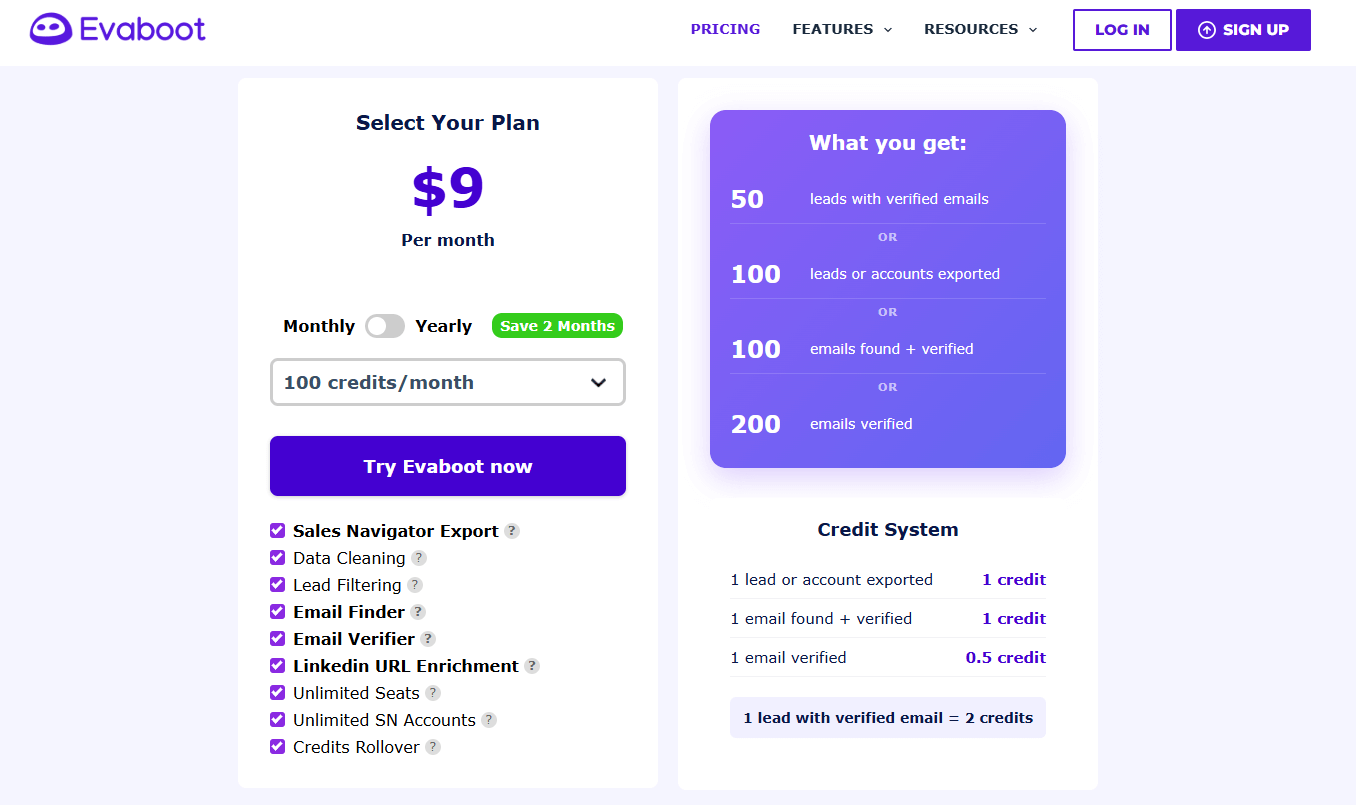
Evaboot runs on a credit-based system, where each action you take consumes credits. Here’s how it breaks down:
- 1 lead or account exported = 1 credit
- 1 email found + verified = 1 credit
- 1 email verified only = 0.5 credit
In other words, exporting a single lead with a verified email costs 2 credits (1 for the export + 1 for the email verification).
Their pricing starts at $9/month for 100 credits, and scales up depending on the number of credits you need. Larger plans can give you thousands of credits, but the structure means costs rise quickly if you’re exporting and verifying at higher volumes.
And since Evaboot doesn’t include the outreach feature, many teams also end up paying for additional tools on top of the credit spend, making the overall cost higher than it first appears.
Best 8 Evaboot alternatives
If you’ve reached the limits on what Evaboot can do, don’t worry, there are plenty of other tools on the market.
That said, here’s a quick comparison of the Evaboot alternatives you should know about:
| Tool | Pricing | User rating (G2, Capterra & ProductHunt average) |
| Skylead | Single plan at $100/month | ⭐4.8 |
| Wiza | Free plan available Paid plans start from $49/month | ⭐4.6 |
| Emelia | Starts from $37/month | ⭐4.8 |
| Bardeen | Free plan available Paid plans start from $99/month | ⭐4.7 |
| Skrapp | Free plan available Paid plans start from $49/month | ⭐4.6 |
| LeadLoft | Starts from $99/month | ⭐4.8 |
| PhantomBuster | Starts from €69/month | ⭐4.5 |
| GetProspect | Free plan available Paid plans start from $49/month | ⭐4.2 |
Now, let’s get into them in detail, shall we?
1. Skylead
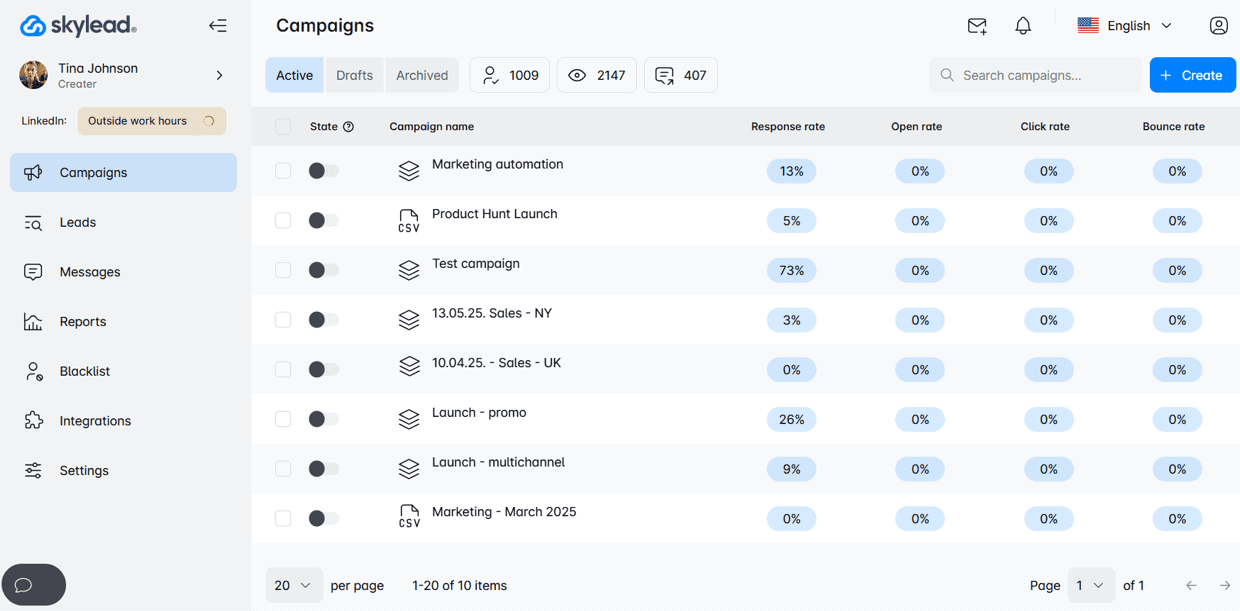
User rating: ⭐4.8
Why, yes, that’s us!
Skylead is a cloud-based complete LinkedIn automation tool and cold email software designed for agencies, sales teams, recruiters, and marketing teams who want to save 11+ hours a week and close 3x more meetings.
Now, let’s get into the features that make our tool the strongest Evaboot alternative.
Account-based prospecting
The best way to find your ideal leads is to find your ideal companies first. That is exactly what Skylead offers - account-based prospecting. With it you can:
- Create account lists directly in Skylead
- And discover contacts by company to reach them out.
In other words, once you add your companies, Skylead can help you find and match contacts within those selected companies so your pipeline stays aligned to your ICP. This way, you can really zero in on your target companies that are most likely to convert, are your true partners, and have greater lifetime value.
AI data enrichment
Apart from prospecting, we introduced a game-changing feature - AI data enrichment, which you can use to:
- Enrich contact & company data
- Prompt AI to get specified info or generate personalized icebreakers for each contact
- Use all gathered info directly inside your sequences as variables.
It’s Clay-like in what it can uncover, but it’s connected to your outreach workflow, so you avoid constant tool switching and data importing.
Smart sequences
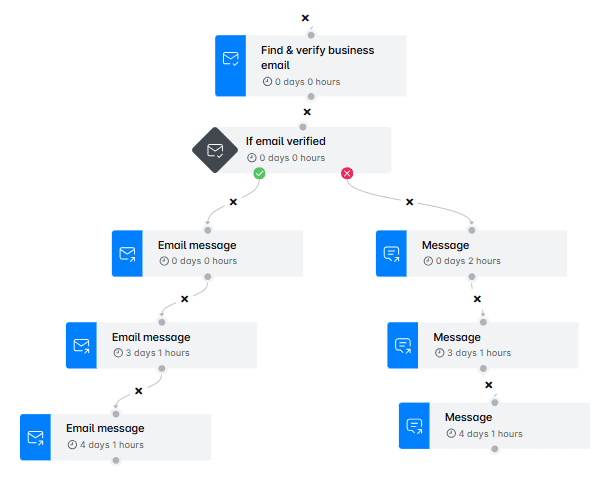
We were the first tool on the market to bring about Smart sequences - a type of outreach sequence that you build by combining if/else conditions with different email and LinkedIn automated actions. As a result, you get coherent outreach flows that adapt to your prospect’s behavior to reach them in the fastest way possible.
Now, unlike tools that cap the number of steps you can add to your outreach campaign, we give you unlimited sequence steps.
You can also track performance in detail in:
- Graph view to spot oscillations at a glance
- Table view to observe daily trends
- Step-by-step view to see the individual performance of each step in a sequence
Plus, you can A/B test your content at every stage to see what resonates most with your audience.
Unlimited email automation
Skylead allows you to connect unlimited email accounts to the tool. At no extra cost, at that! Not only can you connect as many mailboxes as you wish, but you can also use as many as you want within the same campaign. The tool will auto-rotate through them to help you send tens of thousands of emails a month, all while sticking to the healthy sending limits.
Infinite email warm-up
You connect unlimited inboxes, as you’ve learned, but you can also warm them up free of charge, courtesy of our partner, an email warm-up tool, Mailivery. Thanks to the infinite email warm-up, you can rest assured your emails will stay clear of the spam folder and land in the primary inbox just about every time.
Email discovery & verification
Unlike Evaboot, which caps your verification volume, Skylead comes with an unlimited email discovery & verification feature. This means you can reach prospects even if their email isn’t publicly listed, while keeping bounce rates low and your sender reputation high.
Image and GIF personalization
With Skylead, you can instantly boost replies by adding personalized images and GIFs into your cold outreach. You can enrich your visuals with:
- Your lead's name
- Their and/or your photo
- Their and/or your logo
- Custom text
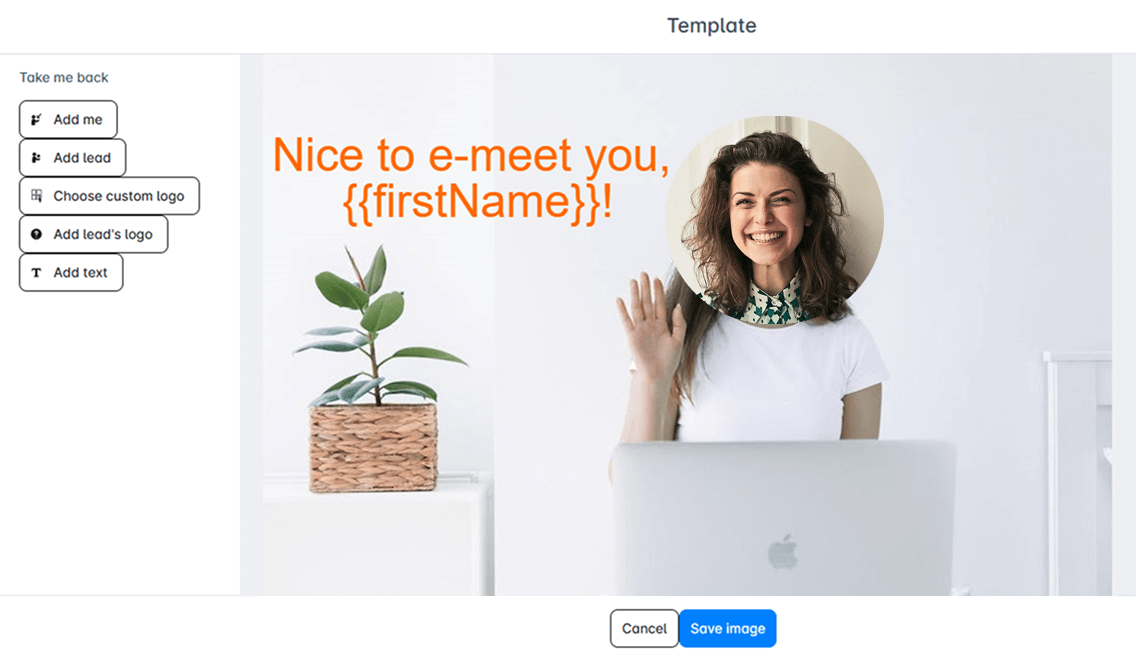
It’s a small touch that can improve your response rate by up to 76%! Best of all, it comes included at no extra cost, as well.
Pricing
Skylead comes at a single cost of $100 per seat per month, which gives you access to all features with no limits. You’ll also find tutorials, templates, and guides to get the most out of our tool right away.
AI data enrichment acts as an add-on. What makes this pricing truly different is simple: our core value is not to make money from these credits, and it will never be our business model. Credits are priced based on the actual costs of our third-party providers (OpenAI, Bright Data, etc), and we offer a special rate of $1 for 100 credits. We also negotiate volume discounts with our providers. This means that, as overall usage across all users increases, costs will decrease and will be passed back to our users. This makes AI data enrichment up to 95% more cost-effective compared to similar tools on the market.
And if you need help in real-time? Our support team is known for lightning-fast responses, as quick as 7 seconds on average!
If you prefer a longer commitment, we’ve also got an annual plan. Opt for it, and you’ll get 12 months for the price of 10. Not bad, huh?
We don’t expect you to commit right away, though. Feel free to try out our tool for 7 days free of charge & see for yourself why we are the #1 Evaboot alternative!
2. Wiza
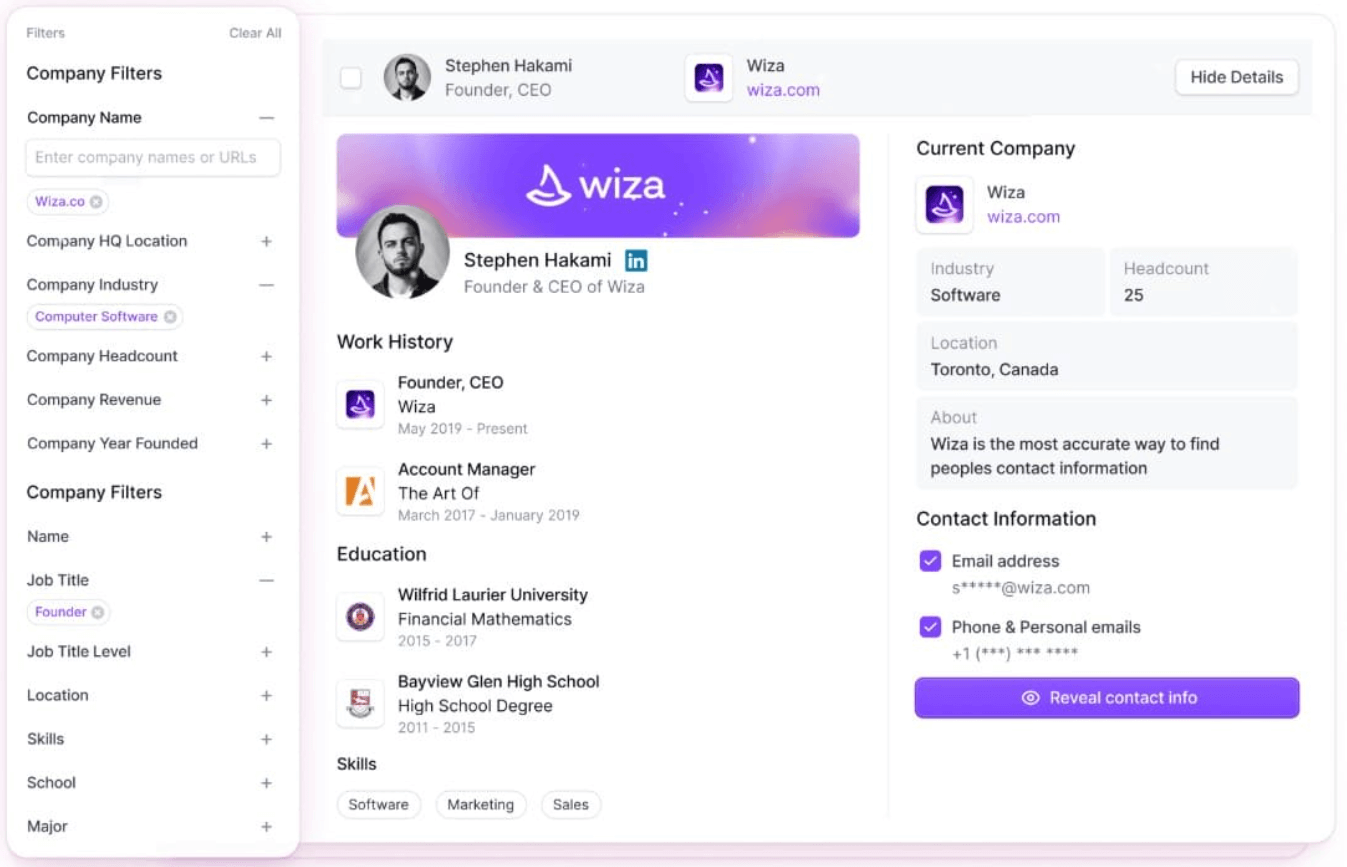
User rating: ⭐4.6
Wiza is built for teams focused on lead extraction, email & phone verification, and data enrichment. It doesn’t belong to the sales outreach tools category, but it does simplify turning LinkedIn search results into lead lists with accurate contact information.
Pros
- Easy-to-use interface
- Clean, real-time email & phone verification
- Integrates with CRMs like HubSpot, Salesforce, and Pipedrive
Cons
- Similar to Evaboot, it relies on scraping LinkedIn data (which comes with risks)
- Credits-based model. Even with “unlimited” plans, there may be limits on “exports” or how many contacts you can process in given workflows
- Focuses only on extraction and verification - no outreach or personalization features
Pricing
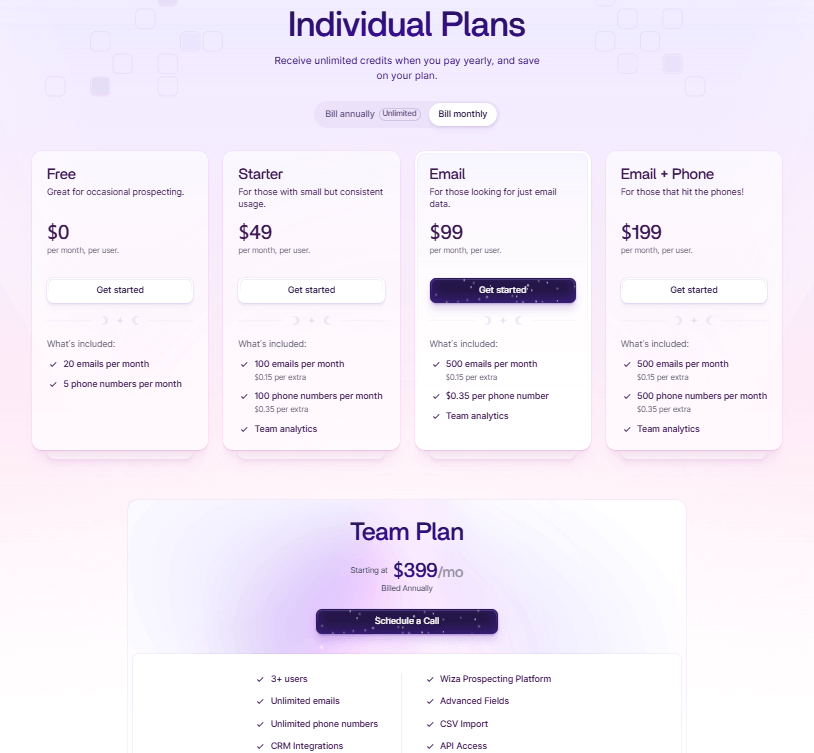
Wiza has a free plan that you can use to find and verify 20 emails a month + 5 phone numbers.
When it comes to paid plans, though, it comes with 3 Individual plans, including:
| Starter | $49/mo per user *100 emails + 100 phone numbers |
| $99/mo per user *500 emails | |
| Email + Phone | $199/mo per user *500 emails + 500 phone numbers |
…and a Team plan for 3+ users with unlimited emails and phone numbers credits, which starts at $399/month and is billed annually.
3. Emelia
User rating: ⭐4.8
Emelia brands itself as an all-in-one B2B prospecting tool. However, compared to Evaboot, it goes beyond simple scraping and data cleaning by adding multichannel outreach capabilities into the mix. Nevertheless, since it is a Chrome extension, it is not a safe solution, like Skylead is.
Pros
- Combines prospecting and outreach in one platform
- Built-in email finder & phone number discovery
- Email outreach with mailbox rotation
- Email warm-up included
- Magic Writer, a.k.a. a Chat GPT for sales-copywriting-like agent that writes messages for you
Cons
- Email outreach is unlimited only on the highest tier
- Credits still apply to some features (e.g., phone finder, enrichment)
Pricing
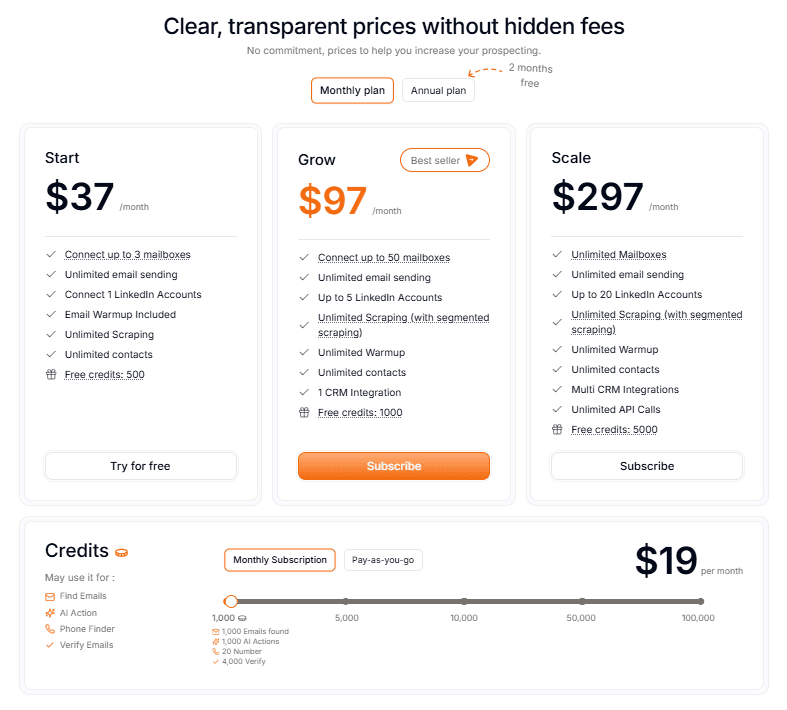
Emelia features 3 core plans, which differ in the number of connected mailboxes, LinkedIn accounts, CRM integrations, and included monthly credits.
| Start | $37/mo per user *Up to 3 mailboxes, 1 LinkedIn account, 500 free credits/month |
| Grow | $97/mo per user *Up to 50 mailboxes, 5 LinkedIn accounts, 1 CRM integration, 1,000 free credits/month |
| Scale | $297/mo per user *Unlimited mailboxes, 20 LinkedIn accounts, multi-CRM integrations + API access, 5,000 free credits/month |
All plans come with email warm-up, unlimited email sending, scraping, and contacts, though.
If you need additional credits, you can buy them at $19/month for 1,000 credits (used for actions like email finding, phone number discovery, and verification).
There’s also a free trial to test the tool out before committing.
4. Bardeen
User rating: ⭐4.7
Bardeen is a browser-based workflow automation tool that allows you to extract data from across the web and push it into your CRM or spreadsheets. You can think of it as a productivity and automation copilot.
With it, you can build your own custom workflows. Or, use prebuilt Playbooks to speed up contact scraping and enrichment, or route leads into Notion, Airtable, Google Sheets, and HubSpot, among other tools.
Pros
- Automates repetitive prospecting tasks
- Offers prebuilt Playbooks for lead generation, enrichment, and data management
- Works directly in your browser
- Supports pushing data from custom workflows to your CRM
Cons
- Not a full-scale outreach platform (no native messaging features)
- May require technical setup or customization for more advanced automations
- It's a Chrome extension, making it not safe for your LinkedIn account
Pricing
Bardeen has 3 annual plans that differ in the number of credits, available integrations, and level of support.
| Starter | from 99/month for 15K credits a year |
| Teams | from $500/month for 120K credits a year |
| Enterprise | from $1,500/month for 500K+ credits a year |
There’s also a free plan with 100 credits that you can use to build and test your automations.
And just in case you were wondering what Bardeen credits are used for, it’s for account monitoring, lead enrichment, and triggering actions across your connected apps.
5. Skrapp
User rating: ⭐4.6
Skrapp is a B2B lead search and enrichment platform that helps its users build verified prospect lists. It offers multiple ways to find emails - from uploading a list of names and domains to using its own database of over 200M professionals and 20M companies. It also includes email verification and basic company enrichment features.
Pros
- Multiple ways to find emails: by name, domain, or using Skrapp’s B2B contact database
- Built-in email verification with 97%+ accuracy
- Company enrichment with role, industry, and revenue insights
- API and CRM integrations
Cons
- Chrome extension for scraping data from LinkedIn
- Lacks outreach capabilities
- A credits-based pricing model can get costly at scale
Pricing
Skrapp offers a free plan, along with 2 paid ones.
The main difference between them is in how many email credits** you get, how many users you can add, and whether your unused credits roll over.
| Free | $0/month *50 email credits**, 1 user, no rollover |
| Professional | $49/month *1,000 email credits, up to 2 users, with rollover |
| Enterprise | from $99/month *5,000+ email credits, up to 5 users, with rollover |
If you need more volume, you can scale the Enterprise plan even further, to 20K, 50K, or 100K+ credits/month. Though bear in mind that the price can increase up to $699 a month in that case.
**Email credits are used every time you find, verify, or enrich a contact.
6. LeadLoft
User rating: ⭐4.8
LeadLoft is a modern sales engagement platform built to help B2B teams automate lead generation and outreach in one place.
While it’s not as customizable as some larger platforms, it’s built for speed and simplicity, meaning it’s a good fit for smaller teams with no technical know-how who want results fast.
Pros
- Combines prospecting and multichannel outreach under one roof
- Verified contact data and phone numbers
- Built-in email warm-up, enrichment, deduplication, and bounce protection
- AI tools for writing emails, building playbooks, and qualifying leads
- Native CRM with activity tracking and deal management
Cons
- Limited reporting and analytics for large sales teams
- Higher user seat costs for teams wanting to scale the sales engagement process
- No flexible credits-based plan for light users
Pricing
LeadLoft has 2 monthly plan options with a free trial for both:
| Unlimited | $99/month for 1 user |
| Scale AI | $400/month for 1 user *includes access to AI features - AI Writer, AI Prospector, AI Playbook Builder, AI Deal Router |
They also provide a fully Managed Service, though you need to contact their team to get the exact pricing details.
7. PhantomBuster
User rating: ⭐4.5
PhantomBuster can be a time-saver for teams who want to automate repetitive data tasks without coding.
Namely, it’s a data automation platform that helps teams extract, enrich, and act on prospect data from 15+ online platforms. It’s known for its prebuilt automations (called “Phantoms”) and enrichment workflows that run in the background to deliver fresh leads every day.
Pros
- Automates repetitive data collection and workflows across multiple platforms
- Supports hundreds of prebuilt “Phantoms” (automation templates)
- Can extract contact data and push it directly into CRMs or spreadsheets
- API access for custom integrations
- Flexible cloud-based setup (no need to run automations locally)
Cons
- Steep learning curve if you’re not tech-savvy
- Can be time-consuming to set up and troubleshoot
Pricing
PhantomBuster offers a 14-day free trial with 2h of execution time, 1K AI credits, 5 Phantom slots, and 50 email credits.
Meanwhile, paid plans start at €69/month, with 3 main pricing tiers:
| Starter | €69/month *With 20h execution time, 10K AI credits, 5 Phantom slots & 500 email credits |
| Pro | €159/month *With 80h execution time, 30K AI credits, 15 Phantom slots & 2,500 email credits |
| Team | €439/month *With 300h execution time, 90K AI credits, 50 Phantom slots & 10,000 email credits |
8. GetProspect
User rating: ⭐4.2
GetProspect is an email finder and lead generation platform with a focus on B2B data. It allows you to search for contacts by role, company, or industry, then export verified emails with basic enrichment.
Pros
- Access to a B2B contact database with 200M contacts, 230M corporate emails, 26M international companies, and 130M phone numbers
- Easy email search by company or domain
- Email verification included
- Bulk email checker with duplicate removal
- CRM integrations available (e.g., HubSpot, Pipedrive)
Cons
- Using their Chrome extension to find someone’s email on LinkedIn is not a safe solution
- The accuracy of data may vary depending on industry and region, despite the 95% accuracy claim
- Limited enrichment
Pricing
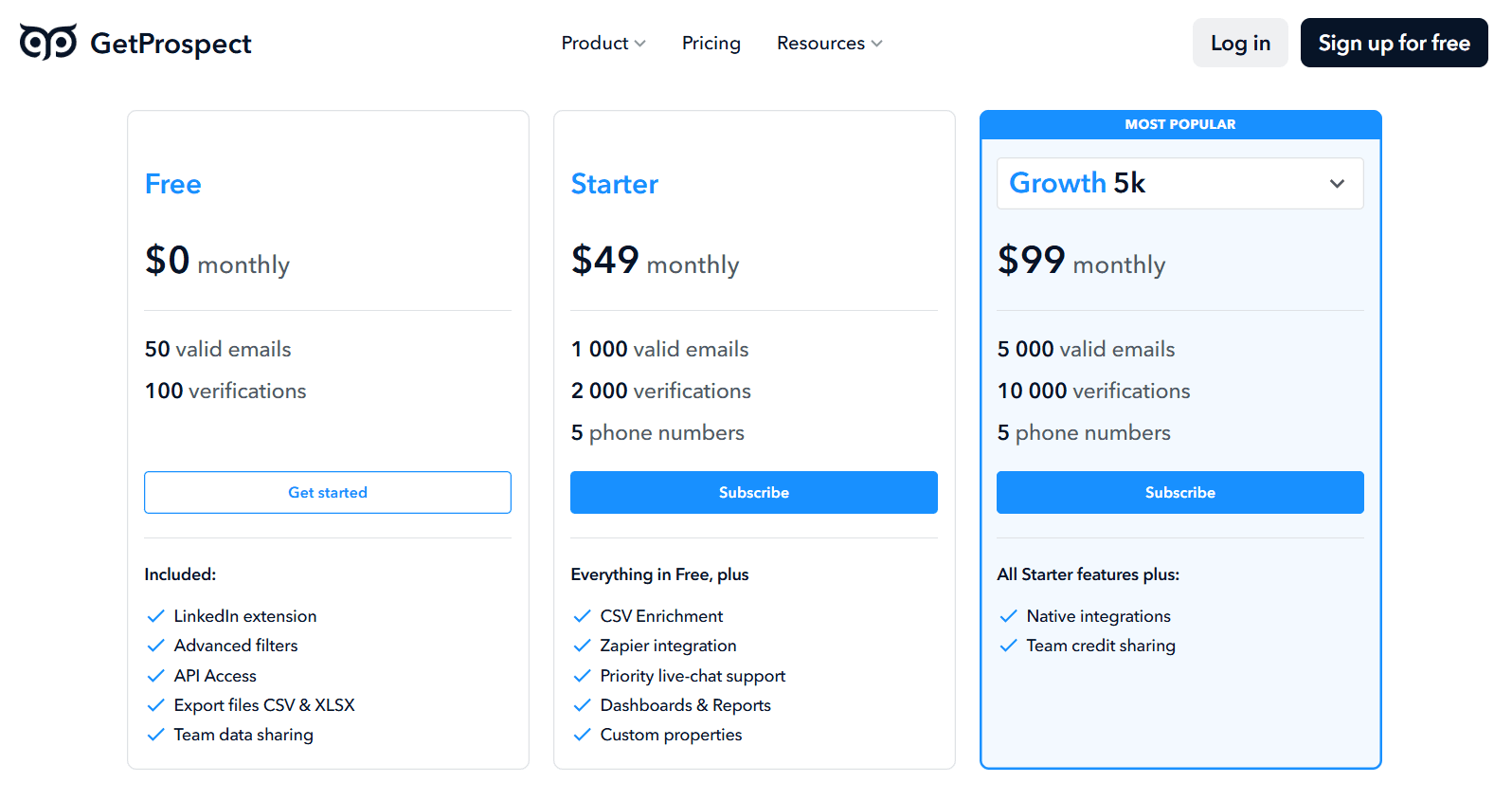
Much like the majority of other Evaboot alternative solutions, GetProspect uses a credit-based model. Their plans include:
| Free | $0/month *Includes 50 valid emails, 100 verifications |
| Starter | $49/month *Includes 1,000 valid emails, 2,000 verifications, 5 phone numbers |
| Growth | From $99/month *Includes 5,000 valid emails, 10,000 verifications, 5 phone numbers |
You can also purchase additional email and phone credits if need be, with prices varying based on the number of credits purchased.
How to cancel Evaboot?
If you’ve chosen your ideal Evaboot alternative, it’s time to cancel your subscription.
The good news is that it’s fairly easy to do so. Just:
- Go to your Evaboot account page using this link: https://app.evaboot.com/?page=account.
- Scroll down to the Billing section.
- Click Cancel subscription.
A pop-up will appear explaining that you’ll lose your credits in a month if you proceed.
If you’re ok with that, confirm your choice by clicking ‘’cancel my subscription.’’ You’ll also get a confirmation email once it goes through.
If you’d rather not cancel yet, you can pause your subscription for 1, 2, or 3 months instead. This should give you enough time to check whether any of the Evaboot alternatives are working for you.
In that case:
- Your credits will roll over month-to-month for the entire duration of the pause.
- You’ll still be able to use your existing credits.
- Your subscription will automatically resume on the scheduled date, unless you extend the pause or cancel.
Frequently asked questions (FAQs)
How do I choose the right Evaboot alternative?
It depends on your goals. If you’re just looking to extract data, some tools focus solely on that. Others offer a more complete workflow that includes email outreach, lead management, and CRM integrations. Think about how the tool fits into your stack, your team size, and your growth needs.
Can I integrate an Evaboot alternative with my CRM?
It depends on your CRM and the alternative in question. In most cases, the answer is yes, as most tools on this list support native integrations with popular CRMs like HubSpot, Salesforce, or Pipedrive. Even if a tool doesn’t offer direct integration, you can often connect it through Zapier.
What happens to my Evaboot credits if I cancel my subscription?
When you cancel your Evaboot subscription, you have one month to use your remaining credits. After that, they expire. If you pause your plan instead, your credits will roll over during the pause period.
Found your ideal Evaboot alternative?
Evaboot is a solid tool, but it’s not for everyone. Whether it’s the lack of outreach, the LinkedIn compliance risk, or the extra cost from stacking tools, it’s understandable if you’re looking for something more flexible.
The good news? We’ve given you 8 Evaboot alternatives, each with its own strengths.
Now it’s up to you to pick the one that fits your workflow, team size, and growth goals.
And hey, if you’re still unsure, why not take Skylead for a spin?
Sign up now & take advantage of our 7-day free trial!