What is sales outreach? [with 7 best practices & message templates]

Inbox fatigue is real. Buyers are flooded with emails, LinkedIn messages, ads, and ‘’quick follow-ups’’ every single day. As a result, many sales teams assume outreach is dead. It’s not. What is dead is generic, volume-driven outreach that treats prospects like entries in a spreadsheet. Sales outreach still works in 2026 - but only when it’s intentional, relevant, and built around the buyer’s context instead of the seller’s quota.
When done right, outreach doesn’t annoy. It starts conversations. And those conversations are still one of the fastest ways to build a pipeline. So, if you're wondering what sales outreach is (really) and how to make it work for you and your team, hold on to your hat - you’re about to find all of it out!
We’ll also show you how the sales engagement platform and outreach software we made - Skylead - can help you put what you learned into practice!
What is sales outreach?
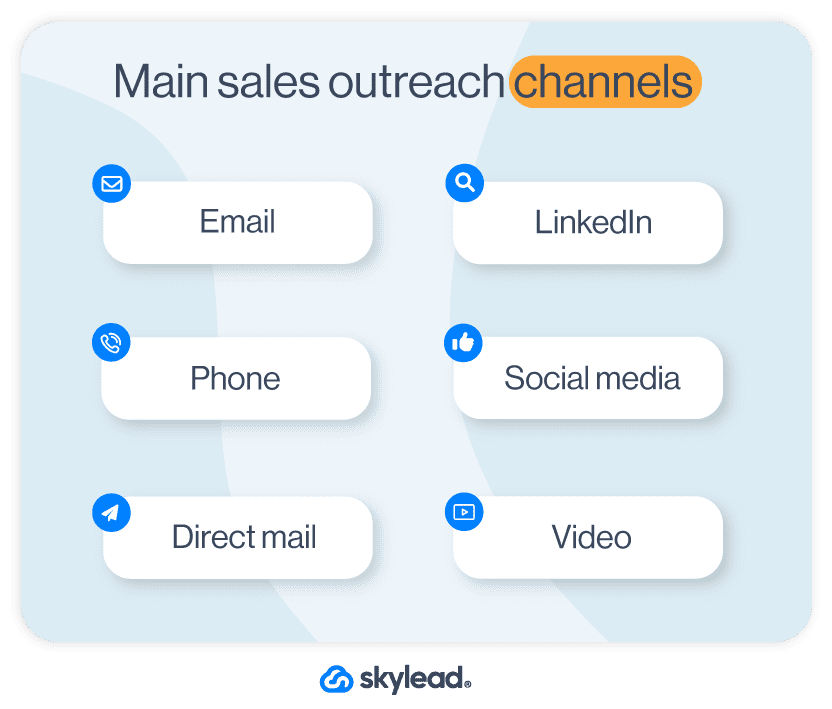
Sales outreach is the proactive process of contacting prospects or customers to start, continue, or advance a sales conversation. It includes every outbound interaction a sales rep initiates, such as emails, LinkedIn messages, social media messages, calls, direct mail, and follow-ups.
Sales teams use outreach to start conversations with new prospects, continue existing ones, and restart conversations that have stalled. It’s a core part of how the pipeline is built and maintained, especially in B2B sales, where buyers rarely reach out on their own.
Sales outreach isn’t limited to cold outreach, though. It also covers warm follow-ups, reactivating old leads, and ongoing communication during an active deal. Because of that, outreach applies across the entire sales funnel, starting from the first contact through the late-stage decision-making.
Sales outreach vs. sales prospecting
You’d be surprised by how many people confuse outreach with prospecting. One cannot do without the other, sure, but they’re not the same thing.
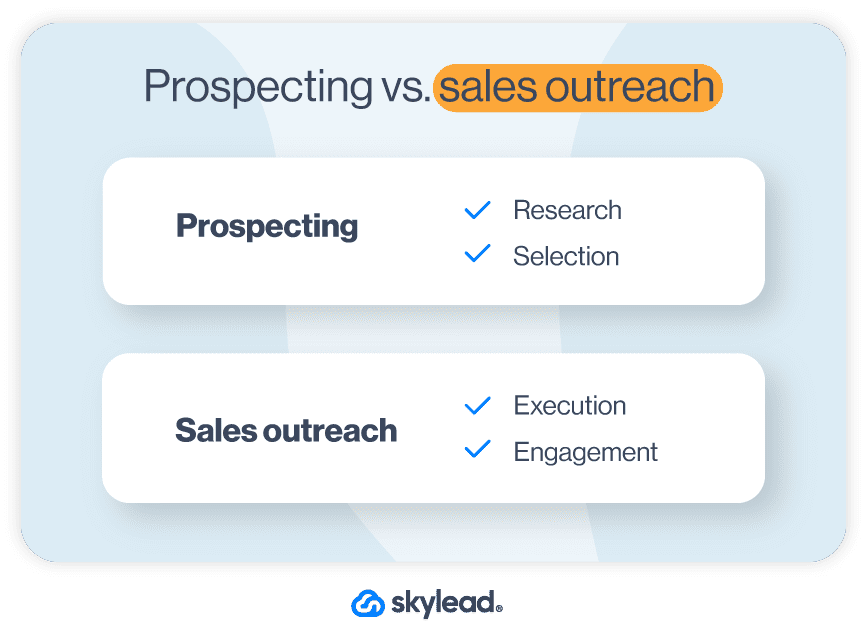
Sales prospecting focuses on finding and qualifying potential buyers. Prospecting activities include finding accounts that match your ideal customer profile, researching business decision-makers within them, and deciding who is worth reaching out to in the first place. So, as you can see, prospecting happens before the first message is ever sent.
Sales outreach is the execution layer, so to speak, where you actually contact people from your prospecting list.
In short:
- Prospecting helps you decide who to reach out to.
- Sales outreach defines how and when you do it, and it includes the execution itself.
Strong outreach can’t compensate for poor prospecting, and vice versa. Reaching out to the wrong people - no matter how well-written the message is - still leads to low reply rates and stalled deals. At the same time, what good are high-quality prospects if no one contacts them, follows up, or gives them a reason to respond?
What makes sales outreach effective?
Everyone can send a message to a prospect. You don’t even have to write it yourself. You can use Chat GPT for sales copywriting.
But will a message generated with no goal, sent at a random interval, land you a reply? Chances are slim.
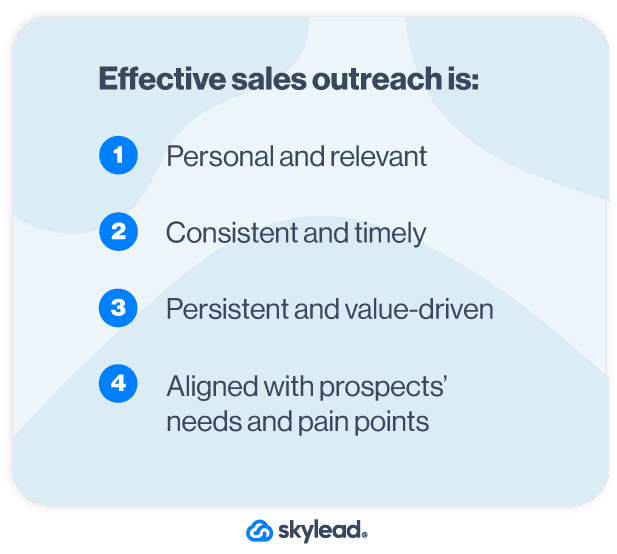
Effective sales outreach boils down to:
- Personalization and relevance
- Consistency and timing
- Persistence and value-driven messaging
- Alignment with prospects’ needs and pain points
1. Personalization and relevance
Personalization is one of the strongest predictors of reply rates in sales outreach, but not in the ‘’first-name-only’’ sense.
In fact, personalized emails deliver 32% higher response rates than non-personalized ones, especially when they reference the buyer’s role, company context, or current priorities. Meanwhile, Salesforce reports that 66% of buyers expect sellers to understand their needs and expectations before reaching out.
This explains why surface-level personalization fails. Prospects respond when outreach reflects why they’re being contacted, not just that they are. It’s only natural, then, that messages that connect directly to their situation, challenges, or recent activity consistently outperform generic ones sent at scale.
2. Consistency and timing
The best results are achieved from outreach that's both consistent and well-timed.
Statistically speaking, companies that respond to leads within the first hour are 7x more likely to qualify and close a lead than those that wait longer.
In outbound sales, timing also applies to sales cadences (or, as we like to call them, Smart sequences - but more on that later). Data indicates that consistent touchpoints across a defined time window work better than one-off messages, as buyers often need multiple exposures before they’re ready to engage. Consistency keeps you top of mind without forcing the conversation prematurely.
3. Persistence and value-driven messaging
80% of sales require 5+ follow-ups, yet 92% of reps quit after 4 attempts. This gap alone explains why many outreach efforts underperform.
That said, persistence only works when each follow-up adds value. Prospects disengage quickly when messages repeat the same pitch or are ‘’just following up’’. Effective outreach sequences introduce new context, be it a relevant insight, a different angle, a clearer use case - anything that gives the other party a reason to respond, really.
4. Alignment with prospects’ needs and pain points
LinkedIn’s State of Sales report found that 68% of buyers are unlikely to engage with sellers who provide insights irrelevant to their business.
Similarly, Gartner reports that B2B buyers spend only 17% of their time interacting with sales reps during the buying process, making relevance critical whenever contact does happen.
How sales outreach impacts revenue growth
Revenue growth rarely comes from one perfectly timed message. It comes from staying present throughout the entire buyer journey.
High-performing sales reps are 2.3x more likely to follow a structured outreach process with defined cadences and follow-ups. These individuals don’t rely on memory or gut feeling to decide when to reach out. They systemize it.
That consistency matters because most prospects aren’t ready to act when they first see your message. The more relevant touchpoints you create, the more chances you give a deal to move forward.
What’s more, many reps leave revenue on the table, thinking that sales outreach stops the moment the deal closes. The fact is, B2B buyers are far more likely to expand or renew when sellers maintain ongoing, value-driven communication after the initial sale.
That said, post-sale outreach helps you:
- Stay visible as customer needs evolve
- Spot expansion or upsell opportunities earlier
- Reduce churn by addressing issues before they escalate.
Main sales outreach channels
Sales outreach can be inbound or outbound, depending on who initiates the conversation.
Inbound sales outreach happens when a buyer shows interest first, for example, by downloading content, requesting a demo, or filling out a form, and a sales rep follows up. In this case, the prospect has already expressed clear buying signals.
On the other hand, outbound sales outreach is initiated by the sales rep and targets prospects who haven’t asked to be contacted yet.
In practice, when people talk about sales outreach, they’re usually referring to outbound outreach.
For that reason, the rest of this blog will focus primarily on outbound sales outreach and the channels most teams rely on to make it work.
Contrary to what some say, email is not dead. It’s simply evolved.
It remains one of the most widely used sales outreach channels in 2026, if not the most used, and there are multiple reasons for it. Namely, email outreach scales well, allows for personalization, and gives prospects the flexibility to respond on their own time and terms.
Studies show that the average cold email open rate in B2B is around 27.7%, and while open rates alone don’t tell the full story, they demonstrate that email still reaches real inboxes. Email is also the channel with the highest ROI in outbound, with an estimated $36 for every $1 spent.
That said, email performance depends heavily on relevance and structure. Generic emails sent in high volume rarely perform well, while short, context-aware messages tied to a clear reason for reaching out continue to drive replies.
LinkedIn plays a dual role in modern sales outreach: research and sales engagement.
Reps typically use the platform for LinkedIn prospecting, primarily because it is home to over 1B professionals across the globe.
And although a free version is readily available, they also offer 4 paid tiers:
- Premium Business
- Premium Career
- Recruiter
- Sales Navigator
… with Premium Business and Sales Navigator, in particular, earning most reps’ trust. As its name suggests, Sales Navigator is a subset of LinkedIn Premium designed with sales teams in mind. It comes with advanced filters, features like Sales Navigator alerts, Lead lists, and also Buyer Intent - all of which help reps zero in on the right prospects before moving on to targeted outreach.
Once you’ve identified prospects, you can interact with them through profile views, meaningful comments on posts, connection requests with personalized notes, and, once requests are accepted, direct messages.
Paid subscribers also have access to LinkedIn inMail, the platform’s own version of email, which allows them to contact prospects out of their network.
LinkedIn’s structure, with visibility into your profile, title, and mutual connections, gives outreach an immediate context that plain email lacks, which typically contributes to stronger engagement.
Phone
Albeit not as popular as it used to be in the past, some reps still rely on phone outreach, but they rarely engage in it standalone.
Cold calls work best when they’re:
- Timed after prior email or LinkedIn touchpoints
- Used to follow up on interest or signals
- Focused on starting a conversation, not closing a deal
In most successful outbound strategies, calls reinforce other channels instead of replacing them. That’s because familiarity increases pickup rates and context increases willingness to engage.
Social media
Social media outreach means reaching out to prospects directly on platforms like X (formerly Twitter), Facebook, Instagram, Reddit, along with industry-specific Slack and Discord communities.
These platforms are conversational by nature, so outreach here usually feels more relaxed and contextual. Rather than delivering a polished pitch, reps here often reference a recent post, a comment, or an ongoing discussion. That small bit of context goes a long way in making the message feel relevant and timely, without forcing heavy personalization.
Direct mail
Direct mail may sound old-school, but sales teams are using it again precisely because digital inboxes are so crowded.
When a physical package containing a handwritten note, a book, or a small branded item arrives at a prospect’s desk, it cuts through the noise. It signals intent and attention in a way that digital outreach often can’t.
Direct mail is typically used selectively for high-value accounts, strategic prospects, or when digital channels have stalled.
Video
Ok, video is not exactly a channel; it’s more of a format. That’s not to say it doesn’t have its place in sales outreach.
A short, personalized video (whether hosted on a platform or embedded via email) gives prospects a human face and a concise explanation of why you’re reaching out. It works extremely well in follow-ups or re-engagement attempts where text has gone unanswered. And because it’s so uncommon in cold outreach, it immediately stands out.
Want to take advantage of this right away? You can use Sendspark to record a video once and then personalize it at scale using its AI-powered dynamic video feature. Even better: if you sign up for Skylead first, you can elevate your outreach by adding those personalized videos directly into your multichannel sequences, since Skylead integrates with Sendspark. Plus, Skylead users get 50% off their first month with Sendspark. Create your Sendspark account and use the promo code SKYLEAD50 to claim the offer.
Best practices for successful sales outreach
Knowing the channels is one thing. Using them well is another.
The reps who consistently book meetings and close deals tend to follow a few practical rules, regardless of industry or channel mix.
1. Build an ideal customer profile and buyer persona
Effective outreach starts long before the first message is sent.
A solid ICP defines which companies are worth your time based on firmographics like industry, size, revenue, location, and tech stack. Buyer personas narrow that down to who inside those companies you should talk to, including their role, responsibilities, and common pain points.
Without these clearly defined, you end up reaching out to people who don’t have the problem you solve, don’t feel the urgency, and don’t have the authority to act.
2. Craft compelling, personalized messages
Strong outreach messages connect your value to something specific about the prospect, be that their role, company situation, market pressure, or recent activity. The goal isn’t to impress them with research, but to show that the message wasn’t written for just about ‘’anyone in their industry.’’
If the reason for outreach isn’t obvious within the first few lines, most prospects won’t keep reading.
3. Sequence your outreach instead of sending one-offs
High-performing sales teams plan outreach as a sequence of touchpoints spread across days or weeks. Each step has a purpose: introduction, reminder, added context, or a new angle. Sequences reduce guesswork and prevent outreach from being random or reactive.
4. Leverage sales engagement tools
Manual outreach is fine… until it isn’t.
When you’re working with a handful of leads, sending messages manually, tracking follow-ups in your head, and switching between inboxes feels manageable. But the moment you try to scale, things fall apart. Follow-ups get missed. Leads slip through the cracks. Consistency drops. And suddenly, outreach turns into a major time drain.
Luckily, there is a solution, and it comes in the form of sales outreach tools and sales engagement platforms.
Not sure which tool to try out? Why not start with Skylead?
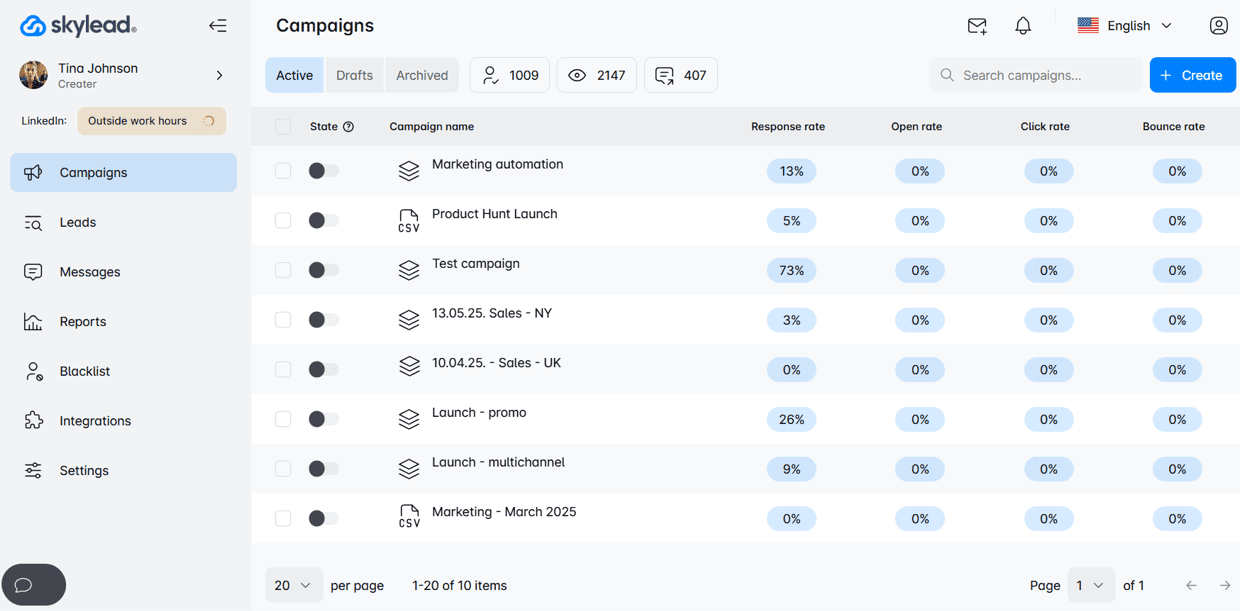
Skylead is THE sales engagement platform and outreach tool that helps you book 3x more meetings in less time.
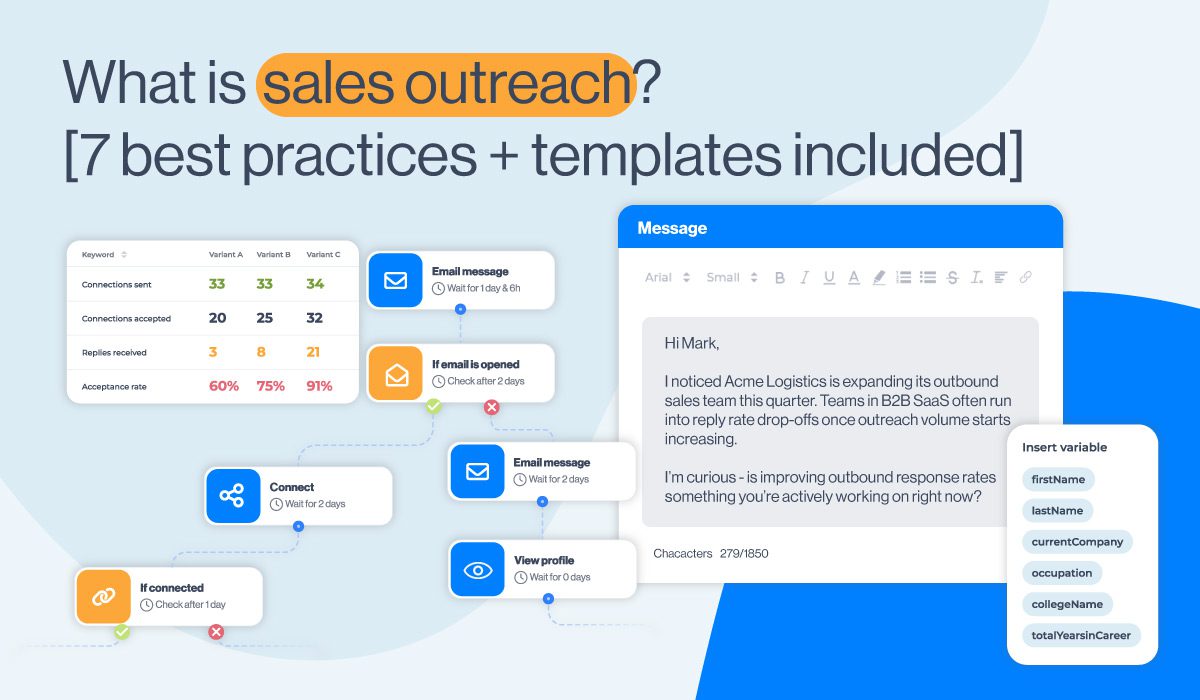
At the very core of Skylead are Smart sequences, a.k.a. advanced algorithms that combine multichannel outreach actions with if/else conditions. The way it works is, you define steps and conditions, and the tool executes the appropriate step based on your prospect’s behavior to reach them in the fastest way possible.
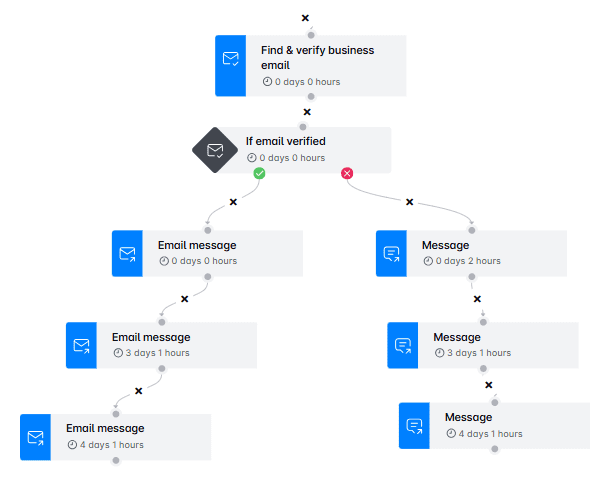
As you go about making your sequence, you also have the opportunity to A/B test up to 5 message variations and personalize messaging using predefined or custom variables
Scaling email outreach is just as straightforward. Skylead lets you connect unlimited mailboxes at no extra cost and rotates them automatically to help you send tens of thousands of emails each month. You can even find and verify emails directly inside your sequences to protect your deliverability. And if you need to warm up a new email domain, we can help as well, thanks to our infinite email warm-up feature, courtesy of InboxFlare.
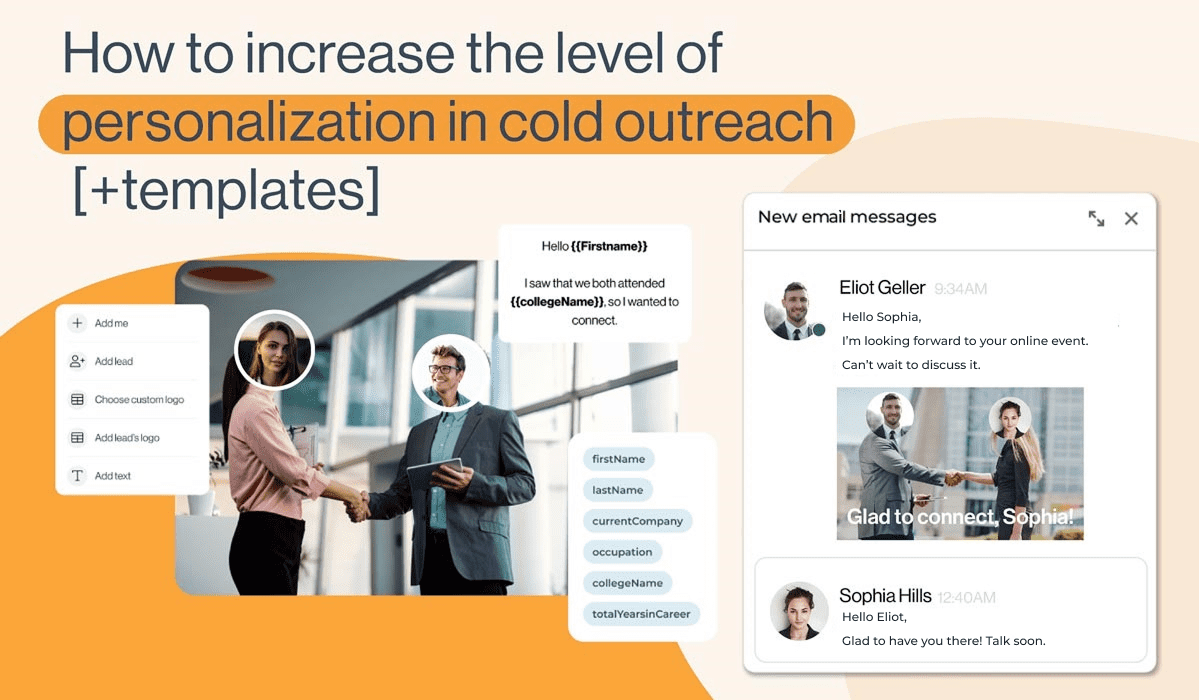
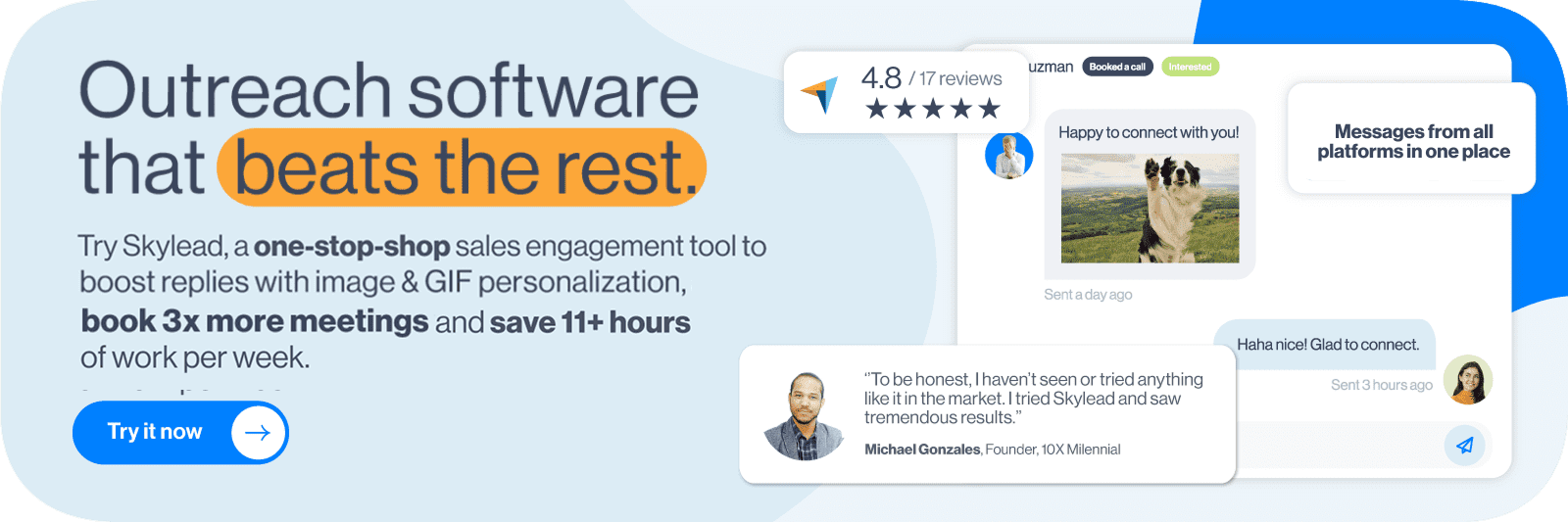
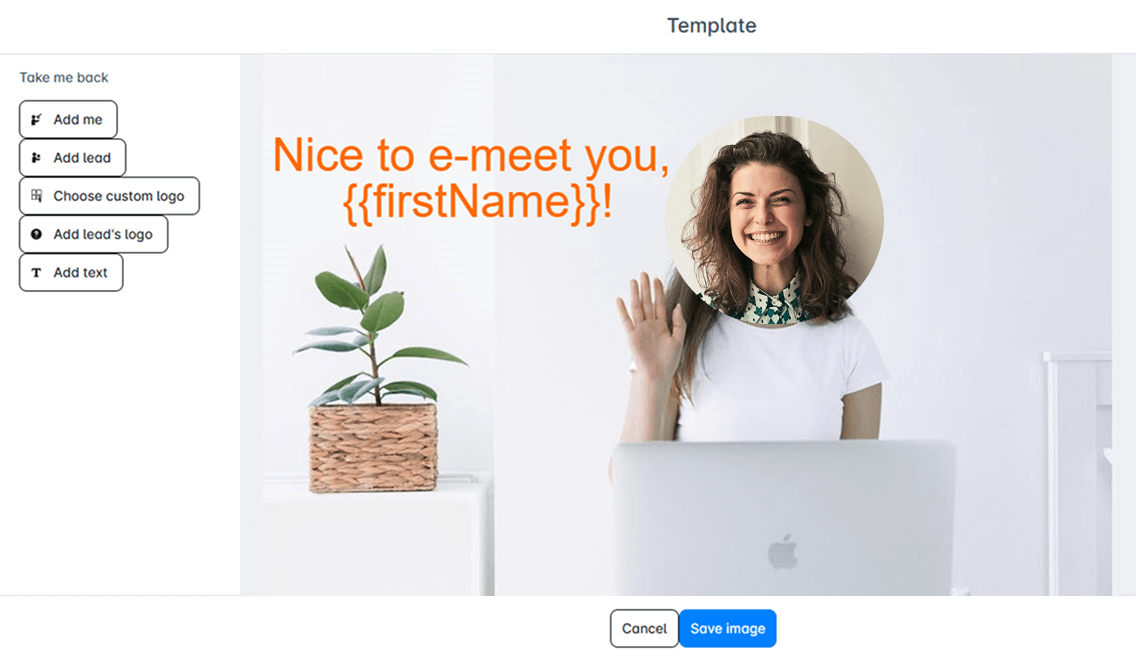
When plain text isn’t enough, Skylead’s image and GIF personalization lets you add images and GIFs to your messages, complete with names, logos, profile photos, and custom text. It’s a small touch that makes outreach feel human and has been shown toincrease reply rates by up to 76%.
What’s more, all replies land in a Smart inbox, meaning you can reply from it straight away and even use it to keep track of conversions and ROI.
The result is simple: a structured sales engagement process, fewer dropped leads, and more meetings booked, without adding hours to your workday.
Sounds good? Go ahead and try Skylead free for 7 days!
5. Keep messages short and focused
Outreach messages aren’t meant to explain everything. Rather, their job is to spark interest and earn a reply. That said, focus on one problem, one insight, or one question. Trust me, if a prospect wants more details, they’ll ask.
6. Follow up with intent, not habit
Your follow-up email after no response or a LinkedIn follow-up message will only work if it brings something new to the table. That something can be a new context, a different use case, or a clearer next step. In other words, if you’re following up just for the sake of doing it and have nothing else to say, then, by all means, don’t.
7. Track & optimize results
How do you expect to know if your sales outreach strategy is working without tracking its performance?
Reply rates, meeting bookings, pipeline creation, and deal progression all offer clues about what’s working and what’s not. The best reps review these regularly and adjust targeting, messaging, and timing based on real outcomes.
Sales outreach templates by channel
Cold email outreach template
Use this when reaching out to a prospect for the first time.
Template:
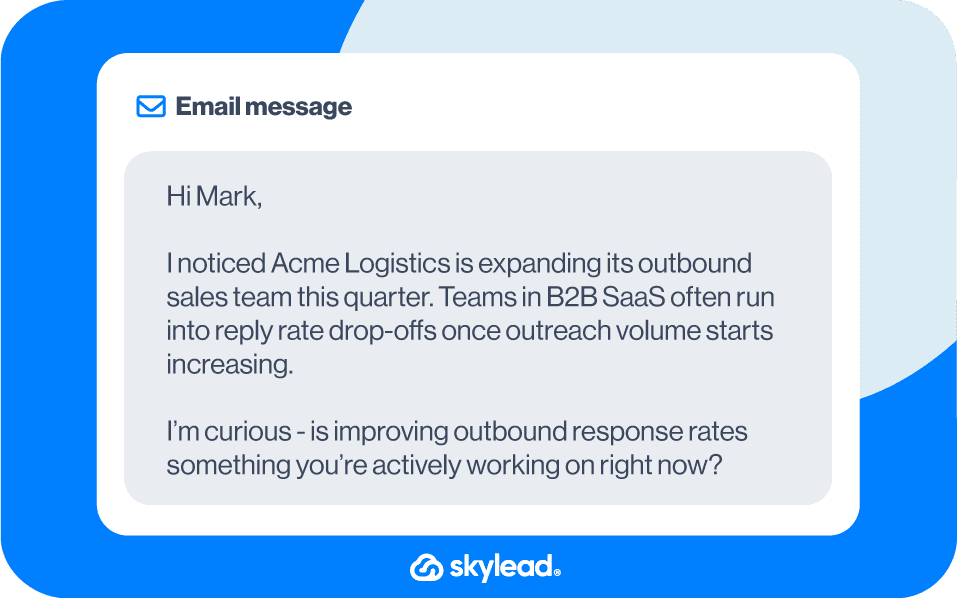
Hi {{firstName}},
I noticed {{companyName}} is {{relevantTrigger/Context}}. Teams in {{industry/role}} often run into {{specificChallenge}} at this stage.
I’m curious - is {{problem/goal}} something you’re actively working on right now?
Real example:
LinkedIn connection request template
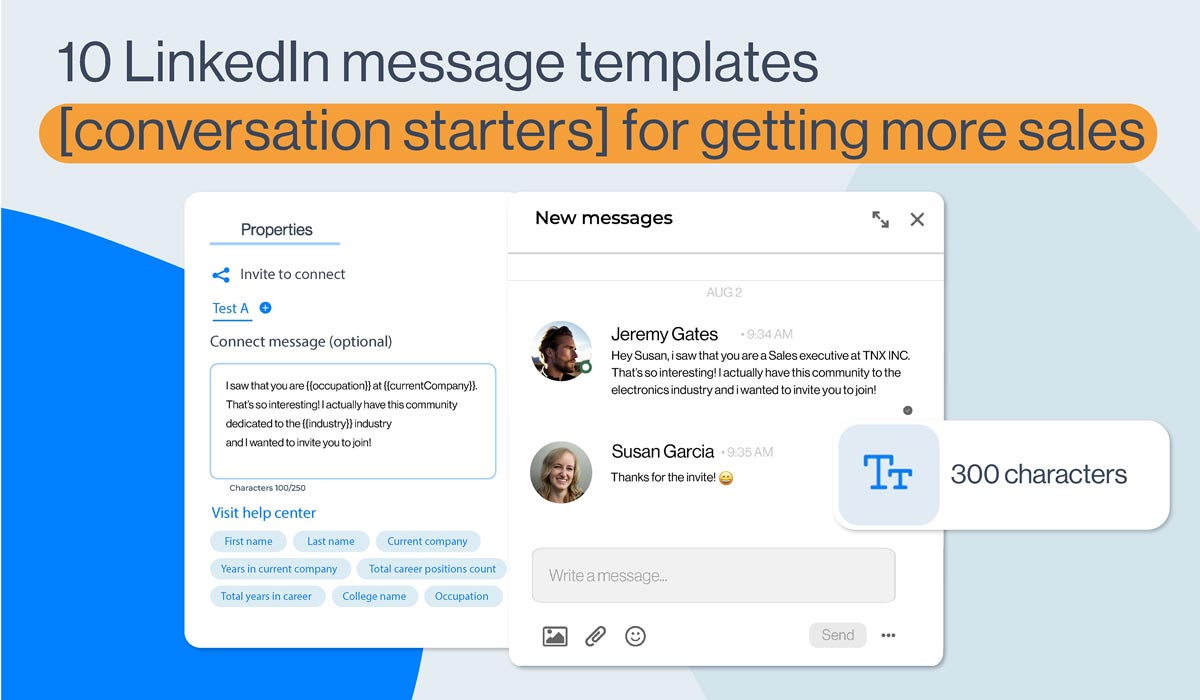
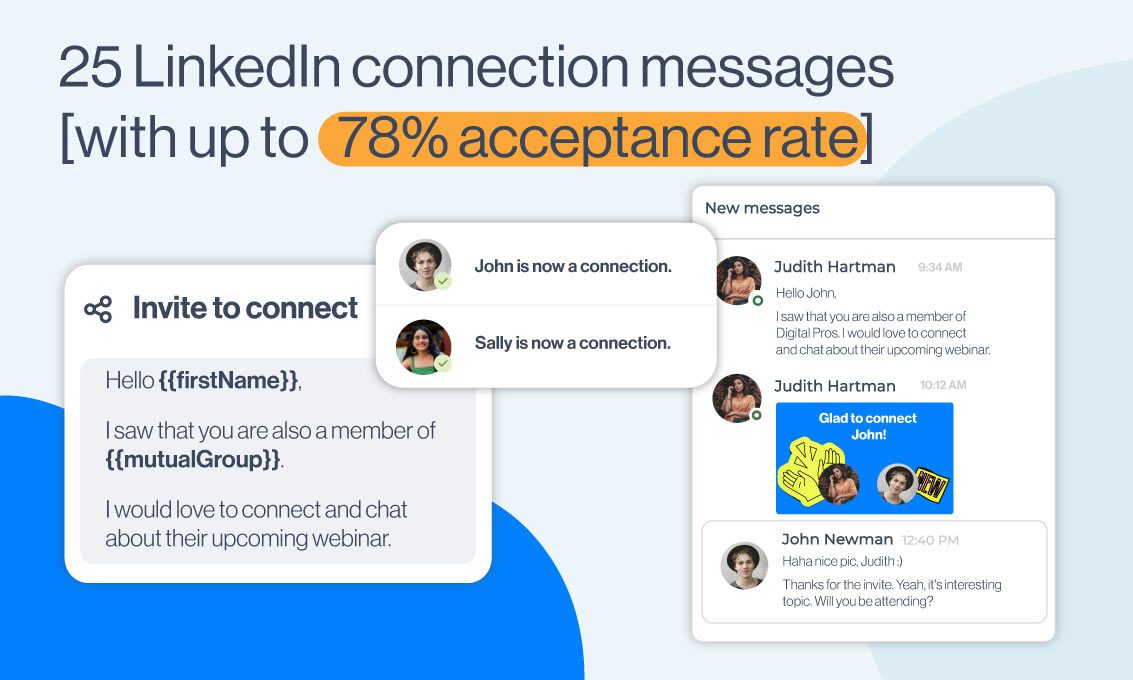
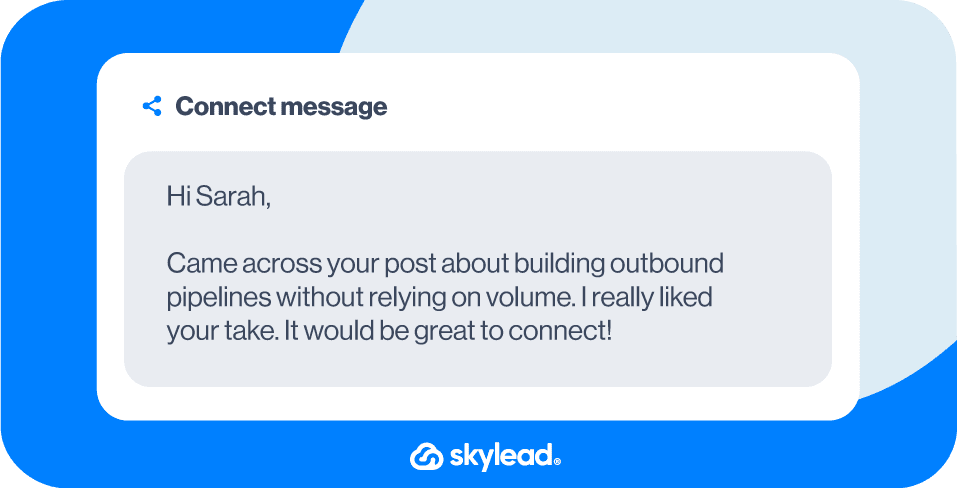
This LinkedIn connection message template works best when it references something visible on the prospect’s LinkedIn profile or feed.
Template:
Hi {{firstName}},
Came across your {{post/comment}} about {{topic}}. I really liked your take. It would be great to connect!
Real example:
LinkedIn follow-up message template
Send this after the connection is accepted to keep the conversation open without forcing a pitch.
Template:
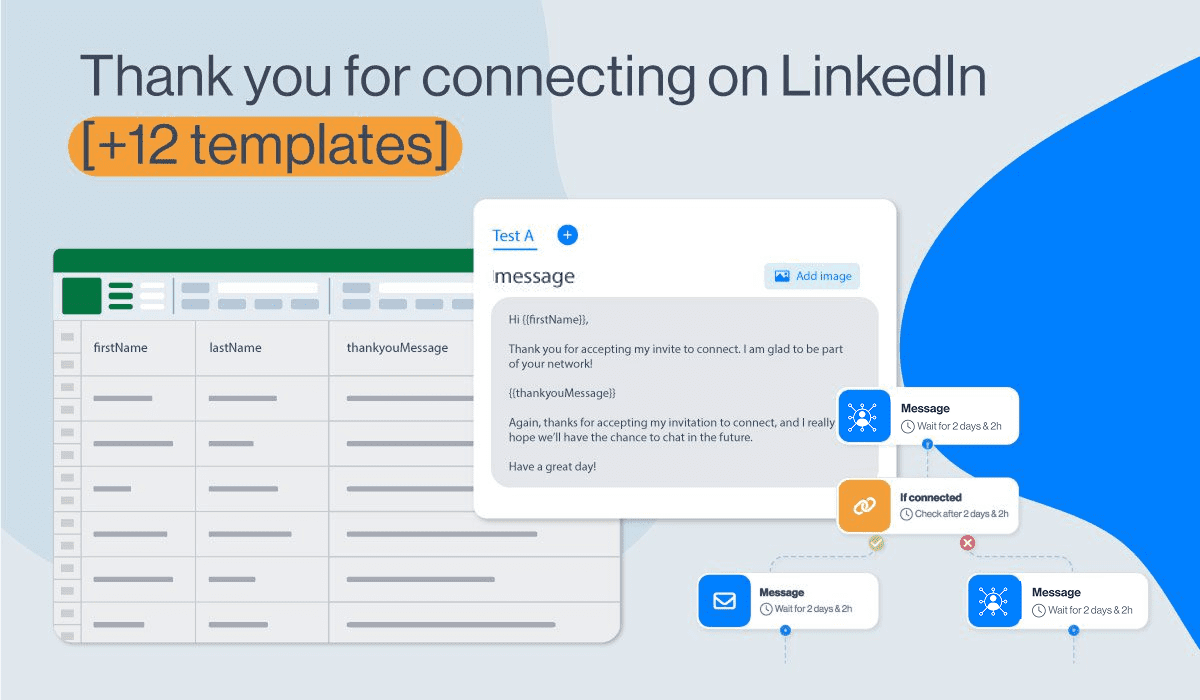
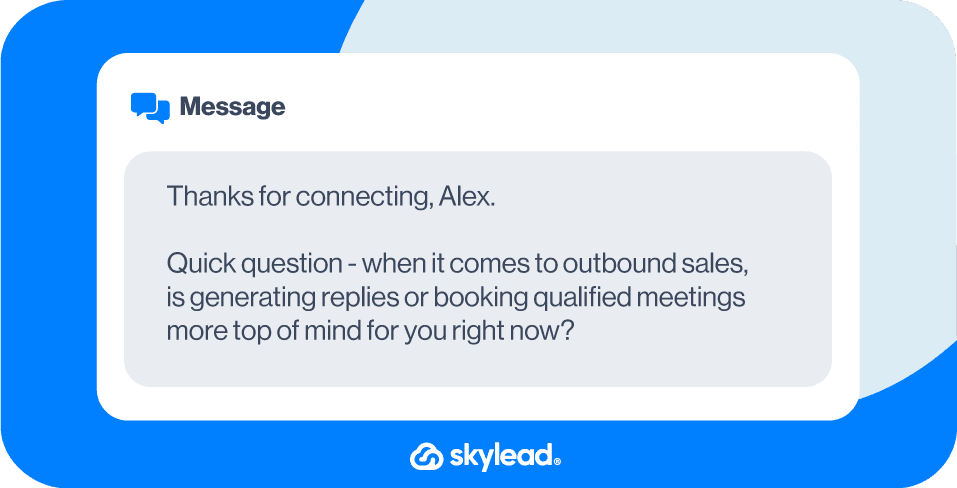
Thanks for connecting, {{firstName}}.
Quick question - when it comes to {{areaYouHelpWith}}, is {{challengeA}} or {{challengeB}} more top of mind for you right now?
Real example:
Phone outreach template (opening)
Best used after an email or LinkedIn touchpoint.
Template:
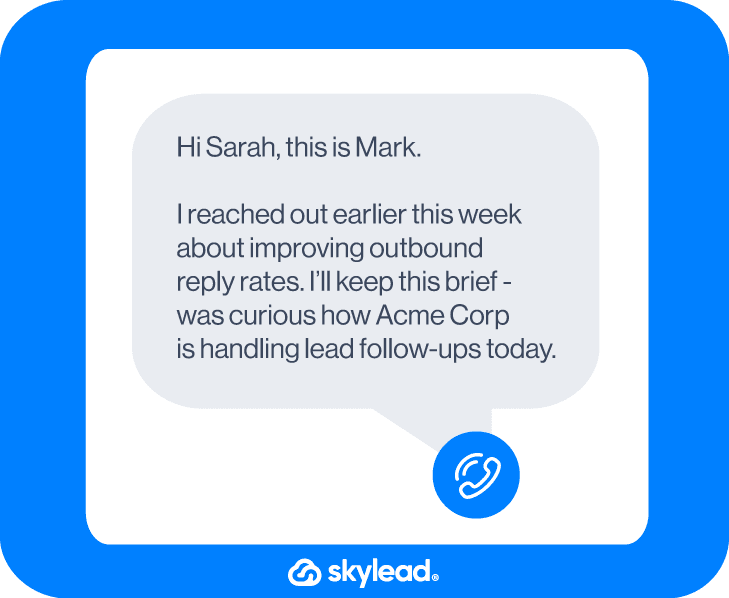
Hi {{firstName}}, this is {{yourName}}.
I reached out earlier this week about {{reasonForOutreach}}. I’ll keep this brief - I was curious how {{companyName}} is handling {{specificChallenge}} today.
Real example:
Social media outreach template
Use this on platforms like X, Reddit, Slack, or Discord when a prospect is publicly active.
Template:
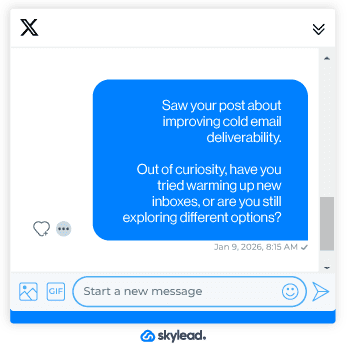
Saw your {{post/comment/question}} about {{topic}}.
Out of curiosity, have you tried {{approach/idea}}, or are you still exploring different options?
Real example:
Video outreach follow-up template
Send a video accompanied by this message when text alone hasn’t landed.
Template:
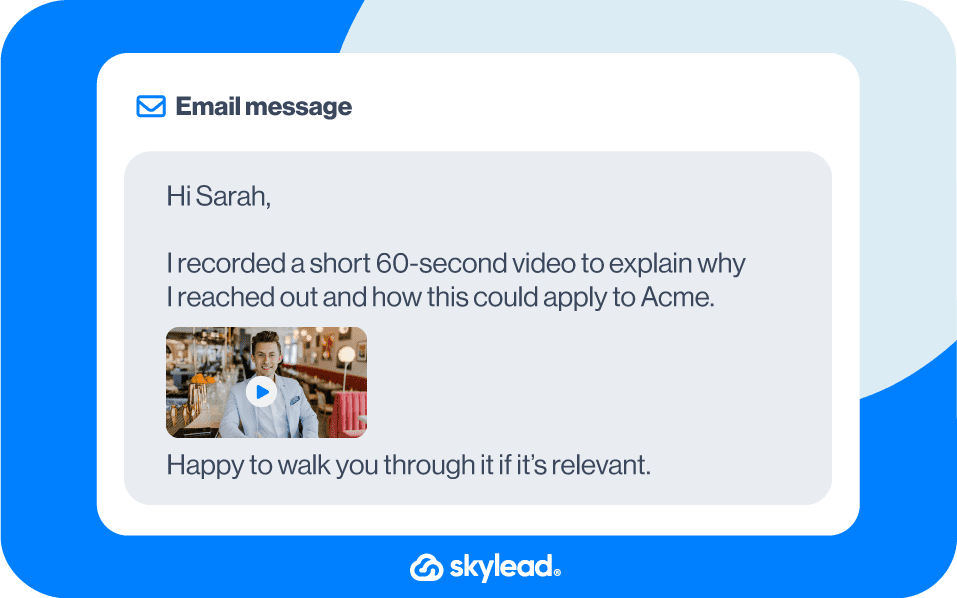
Hi {{firstName}},
I recorded a short {{length}} video to explain why I reached out and how this could apply to {{companyName}}.
Happy to walk you through it if it’s relevant.
Real example:
Frequently asked questions
What is the 3-3-3 rule in sales?
The 3-3-3 rule is a simple framework used in outbound sales to keep outreach focused and relevant. It suggests that a sales rep should spend 3 minutes researching the prospect, 3 sentences writing the message, and 3 seconds explaining the value.
How to do sales outreach?
Sales outreach starts by identifying the right prospects and choosing an appropriate channel, then reaching out with a clear, relevant message. From there, it relies on consistent follow-ups through a structured sequence.
What is a good sales outreach strategy?
A good sales outreach strategy is structured, repeatable, and prospect-focused. It combines clear targeting, multichannel sequences, relevant personalization, and consistent follow-ups. Instead of relying on one-off messages or intuition, it creates a system that gives prospects multiple chances to respond at the right moment.
What are the most common sales outreach mistakes?
The most common sales outreach mistakes include targeting the wrong people, sending generic messages, stopping follow-ups too early, and treating outreach as a one-time task instead of a process. These mistakes usually lead to low reply rates and missed opportunities, even when the product or offer itself is strong.
How to choose the right outreach channel?
The right outreach channel depends on where your prospects are active and how they prefer to communicate. Some respond best to email, others to LinkedIn or phone. In practice, combining channels and letting prospect behavior guide the conversation is more effective than relying on a single channel.
Start building your sales outreach engine
Sales outreach only works when it’s structured, consistent, and easy to scale. Random messages, forgotten follow-ups, and manual tracking don’t produce predictable results.
The teams that book meetings week after week rely on sequences, multichannel touchpoints, and clear visibility into what’s working. That’s exactly what sales engagement platforms are built for. That’s exactly what Skylead was built for.
With Smart sequences that adapt to prospect behavior, multichannel outreach support, image and GIF personalization, and performance tracking in one place, Skylead removes the friction from outbound. You spend less time managing outreach and more time talking to interested prospects.
The result? 3× more meetings and 11+ hours saved every week.
Start your 7-day free trial now and see results in your first campaign!