Sales engagement process: What is it? [+ 7 stages & benefits]
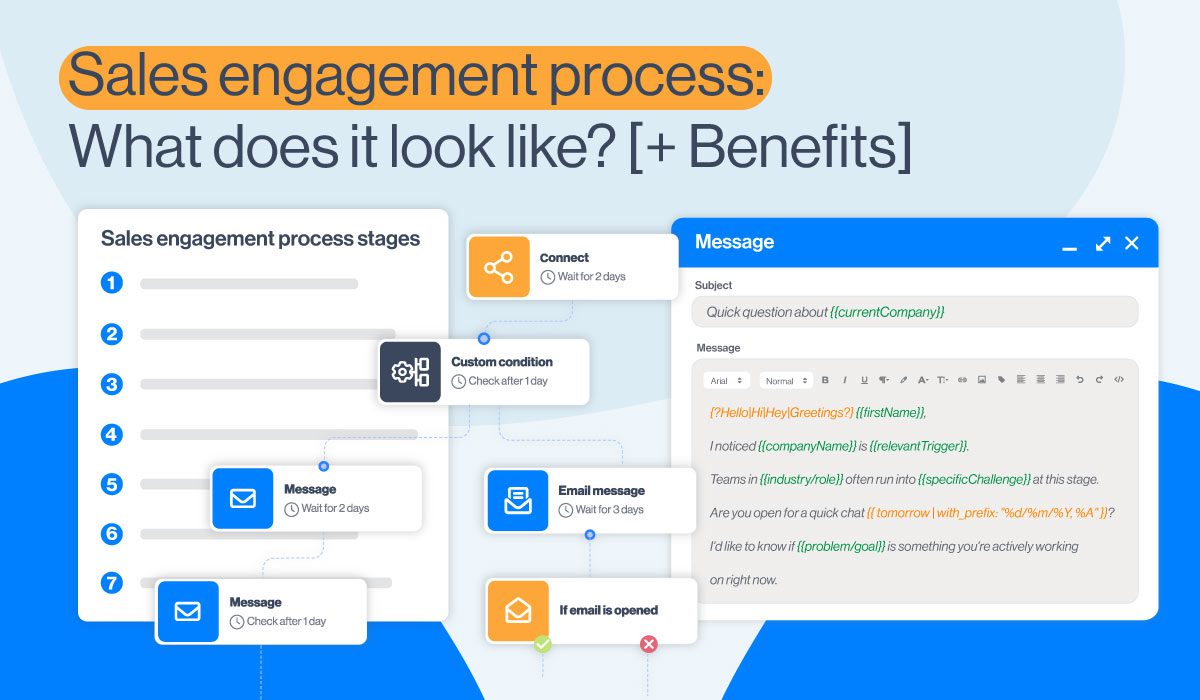

Sales engagement gets talked about a lot. Sales engagement process? Much less so, and that’s where most teams get stuck.
Many sales organizations invest in better tools, automate more touchpoints, and add more channels, yet deals still stall, follow-ups fall through, and results stay unpredictable. Not because reps aren’t talented or trying hard enough, but because there’s no clear system behind how engagement should actually happen from the first touchpoint to close and beyond.
If you already understand what is sales engagement but struggle to make it consistent across deals, reps, or channels, what you need is a structured sales engagement process - a defined sequence of stages where each interaction has a purpose, a goal, and a clear signal for what comes next.
Lucky for you, you don’t have to look hard to find it, as we’ll be walking you through:
- What this process entails
- How it differs from the traditional sales process
- Why it’s critical for a predictable pipeline and revenue
You’ll also learn about the 7 core stages high-performing sales teams follow (ours at Skylead included) and the elements that make the process scalable.
What is the sales engagement process?
The sales engagement process is the structured, repeatable system sales teams use to manage interactions with prospects and customers across the entire buying journey.
In practical terms, it defines:
- When to engage
- How to engage
- Why does a specific interaction happen at a given moment
The sales engagement process turns engagement into a clear sequence of stages, where each stage has a goal, a set of recommended actions, and signals that tell reps when it’s time to move forward.
That said, many people confuse sales engagement with the sales engagement process. And although they’re related, they are not exactly the same.
Sales engagement is the umbrella term that describes all interactions between sales reps and prospects - emails, calls, LinkedIn messages, demos, follow-ups, and everything in between.
Sales engagement process, on the other hand, is more specific. It defines how those interactions are organized, sequenced, and repeated across deals so engagement stays consistent, intentional, and measurable, no matter who’s selling or which channel is used.
Sales process vs. sales engagement process
Here’s another distinction we need to make: the sales process and the sales engagement process are NOT the same.
A traditional sales process is stage-based and outcome-oriented. It typically includes stages such as:
- Lead generation
- Qualification
- Discovery
- Demo or presentation
- Proposal
- Closing
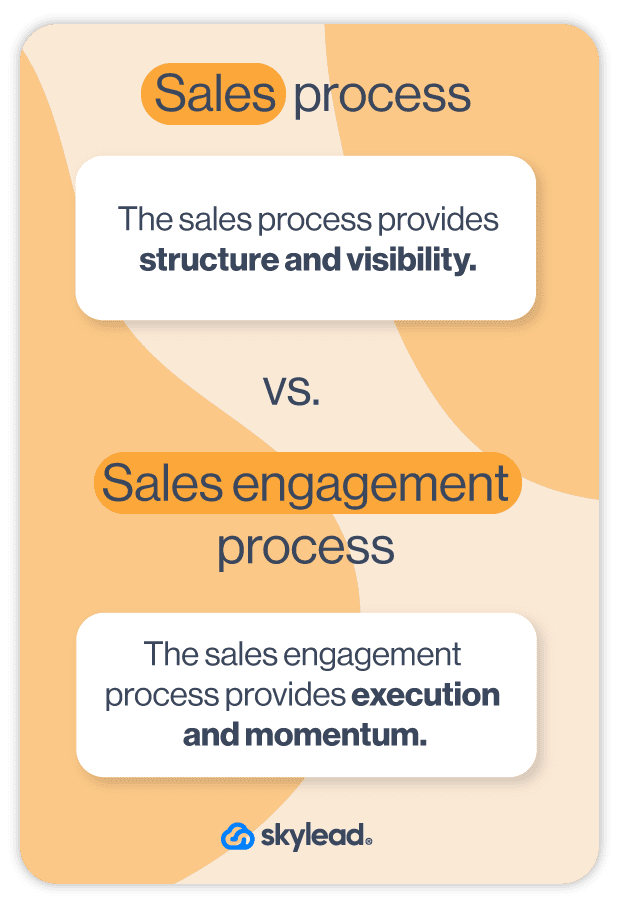
Its primary purpose is visibility and control. It helps sales teams track where deals are, forecast revenue, and understand what needs to happen next from a pipeline perspective.
What it doesn’t define in detail is how reps should engage prospects inside those stages.
That’s what the sales engagement process does. It lives inside the sales process, and clarifies:
- Which interactions should happen at each stage
- Which channels are most effective at that point
- How often should reps follow up
- What buying signals indicate progress or disengagement
In other words, while the sales process tells you that a deal is in the qualification stage, the sales engagement process tells you how to approach the prospect at this stage, what kind of message to send, when to follow up, and what outcome signals readiness to move forward.
Without this layer, reps are left to figure things out on their own.
Why is an effective sales engagement process important?
Sales engagement doesn’t fail because teams don’t send enough messages. It fails because engagement isn’t coordinated.
When there’s no defined process, reps rely on personal habits, memory, and intuition to decide when to follow up, which channel to use, or how to move the prospect to the next step in the journey. That might work for a handful of deals. It breaks the moment volume increases, or more people join the team.
A structured sales engagement process changes that dynamic, and the impact shows up in a few very real ways.
It strengthens customer relationships and builds long-term loyalty
From the buyer's side, inconsistent engagement is easy to spot. They get chased when they’re not ready, ignored when they are interested, or contacted multiple times with no awareness of previous conversations. That kind of experience slows deals down while also eroding trust.
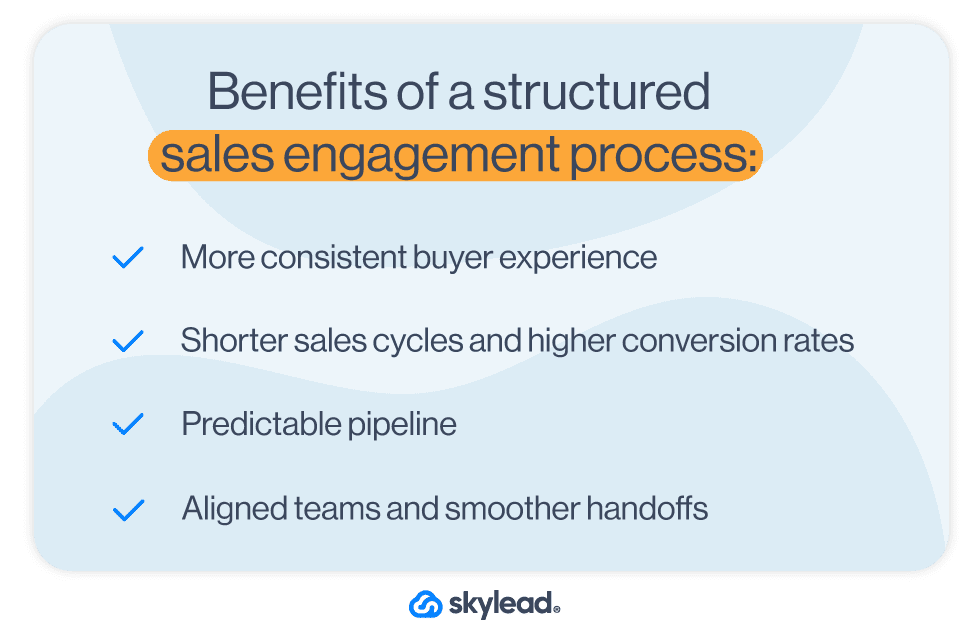
When there’s a clearly defined engagement process, buyers are met with relevant, well-timed interactions that reflect where they actually are in their decision-making. Instead of feeling pressured or forgotten, they feel guided. That same consistency carries into post-sale follow-ups, which is why teams with structured engagement processes tend to see more renewals, upsells, and referrals over time.
It positively impacts sales cycle length, conversion rates, and revenue
Some deals stall because momentum is lost. Follow-ups are delayed. Messages repeat the same pitch. Buying signals go unnoticed. And suddenly, a ‘’warm’’ opportunity goes cold.
Research shows that B2B deals typically require between 8 and 15 meaningful touchpoints before closing, and complex sales can need 20 or more interactions. Yet many reps stop following up too early or engage without a clear plan. A structured process closes that gap, leading to higher conversion rates and shorter sales cycles, which, naturally, translates into more revenue.

It brings predictability and scalability to the pipeline
One of the biggest challenges sales leaders face isn’t closing deals. It’s forecasting them.
When engagement varies from rep to rep, the pipeline becomes hard to trust. Some deals move fast, others stall silently, and it’s unclear whether that’s due to buyer intent or execution gaps.
A sales engagement process makes performance easier to predict because engagement follows defined patterns. You can see where deals slow down, which stages cause drop-offs, and which touchpoints perform best.
That visibility is also what makes scaling possible. Instead of relying on a few top performers, teams can replicate what works across the entire organization, onboard new reps faster, and grow volume without sacrificing quality.
It aligns sales, marketing, and customer-facing teams
Without a shared engagement process, teams operate independently.
Marketing generates leads without knowing how they’ll be followed up on. Sales engages prospects without visibility into prior touchpoints. Customer success picks up accounts with little context on what was promised during the sale.
A defined sales engagement process acts as a common thread across teams. It aligns messaging, timing, and expectations throughout the buyer journey, from first interaction to long after the deal is closed.
The result is a smoother handoff, fewer dropped balls, and a more consistent experience for both buyers and internal teams.
Not to mention, a whopping 54% of sales leaders agree that working with the marketing teams leads to an increase in revenue growth, with 61% of marketers saying that creating content in collaboration with sales helps generate higher quality leads.
7 core stages of the sales engagement process
High-performing teams don’t just do sales outreach and hope deals will close by themselves. They guide prospects through a sequence of stages where each interaction builds on the last one, responds to buyer behavior, and pushes the conversation toward a clear outcome.
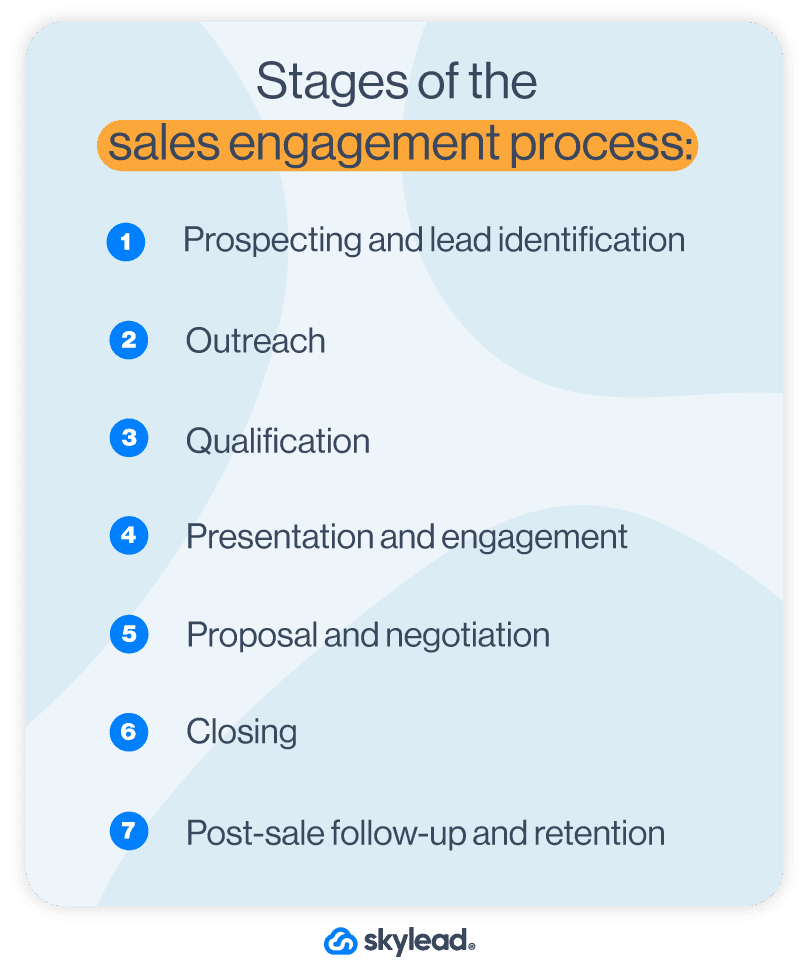
While the exact details vary by industry, deal size, and sales motion, most effective sales engagement processes follow the same core stages, including:
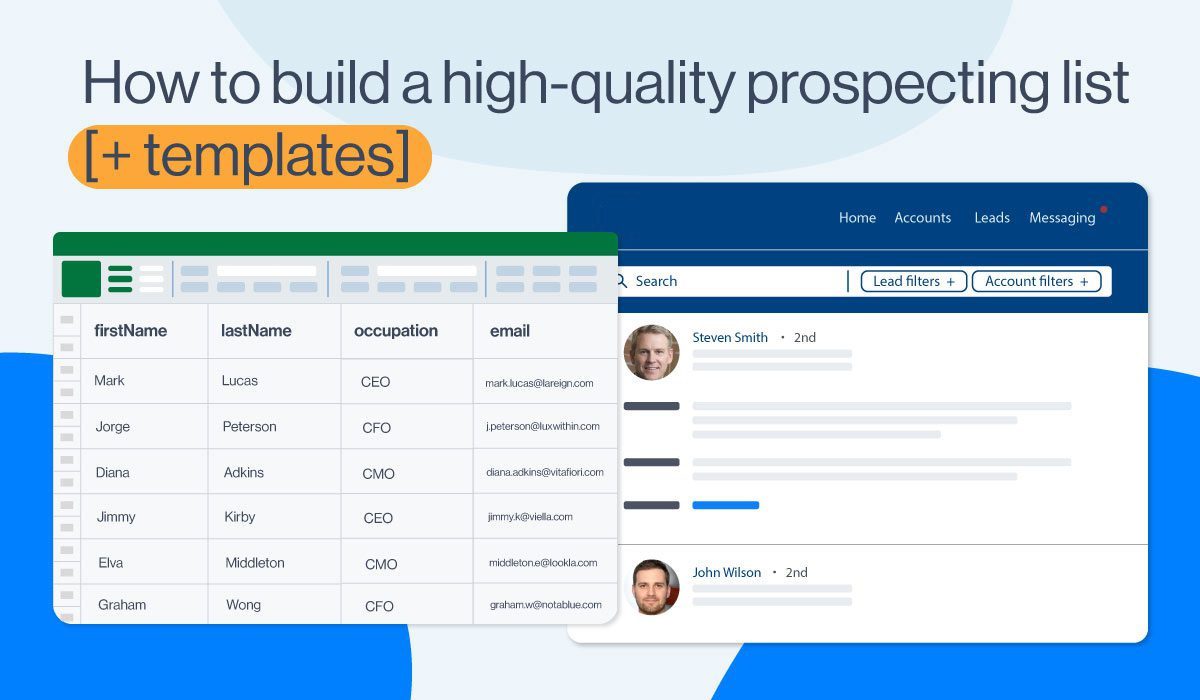
- Prospecting and lead identification
- Outreach
- Qualification
- Presentation and engagement
- Proposal and negotiation
- Closing
- Post-sale follow-up and retention
Together, they cover the full journey - from first contact to long after the deal is signed.
Notice how some of these stages above overlap with what’s typically included in a sales process itself? That’s intentional.
The difference is this: the sales process tells you where a deal is, while the sales engagement process tells you how to engage the prospect at that point.
1. Prospecting and lead identification
In the sales process, prospecting is often treated as a prerequisite, something that happens before engagement really begins.
In the sales engagement process, it’s where engagement starts.
That’s because who you choose to engage with determines the quality of every interaction that follows.
At this stage, the goal isn’t to contact as many people as possible. It’s to identify accounts and contacts that are worth engaging right now, based on fit and context.
Effective prospecting focuses on:
- Matching your ideal customer profile (ICP)
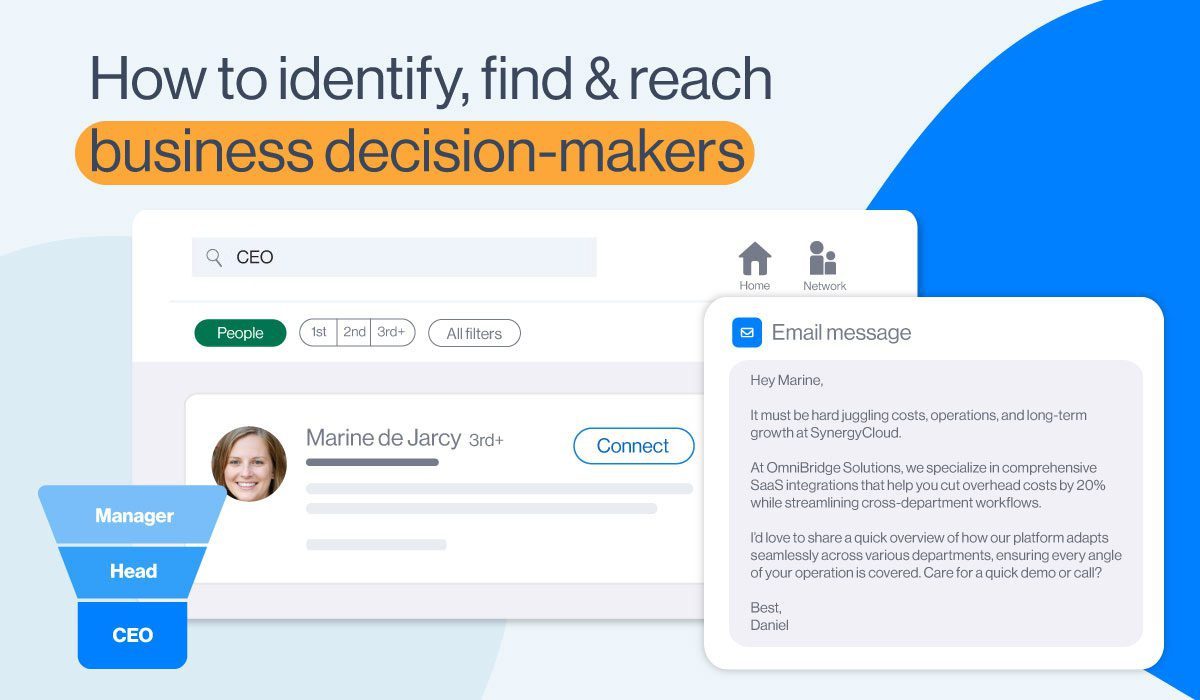
- Identifying business decision-makers
- Spotting signals that justify outreach (growth, role changes, new initiatives, tech adoption, etc.)
This stage also defines who should not enter your engagement flow. Filtering out poor-fit or low-intent leads early prevents wasted follow-ups, irrelevant messaging, and stalled deals later in the pipeline.
When prospecting is treated as the first engagement stage, not just where you build a prospecting list, outreach becomes more relevant, conversations start faster, and downstream stages convert more consistently.
2. Outreach
This is the stage most teams think of when they hear sales engagement. Emails, LinkedIn messages, calls, follow-ups. But without a clear engagement framework, outreach quickly turns into a mix of one-off messages, inconsistent follow-ups, and channel hopping with no real agenda behind it.
In a structured process, outreach is intentional and sequenced. Every touchpoint has a role to play.
At this stage, the goal isn’t to pitch or push for a decision. It’s to open the door to a conversation and give the prospect a reason to respond.
That starts with context. A prospect should immediately understand why you’re reaching out and why now, whether that’s tied to their role, a recent company change, or a specific problem they’re likely dealing with.
From there, channel choice matters just as much. Some conversations start best over email, others on LinkedIn, and some only move forward after a call reinforces earlier touchpoints.
Follow-ups are part of this stage, too. They’re planned in advance, spaced intentionally, and adjusted based on how the prospect reacts, not sent just because “it’s been a few days.”
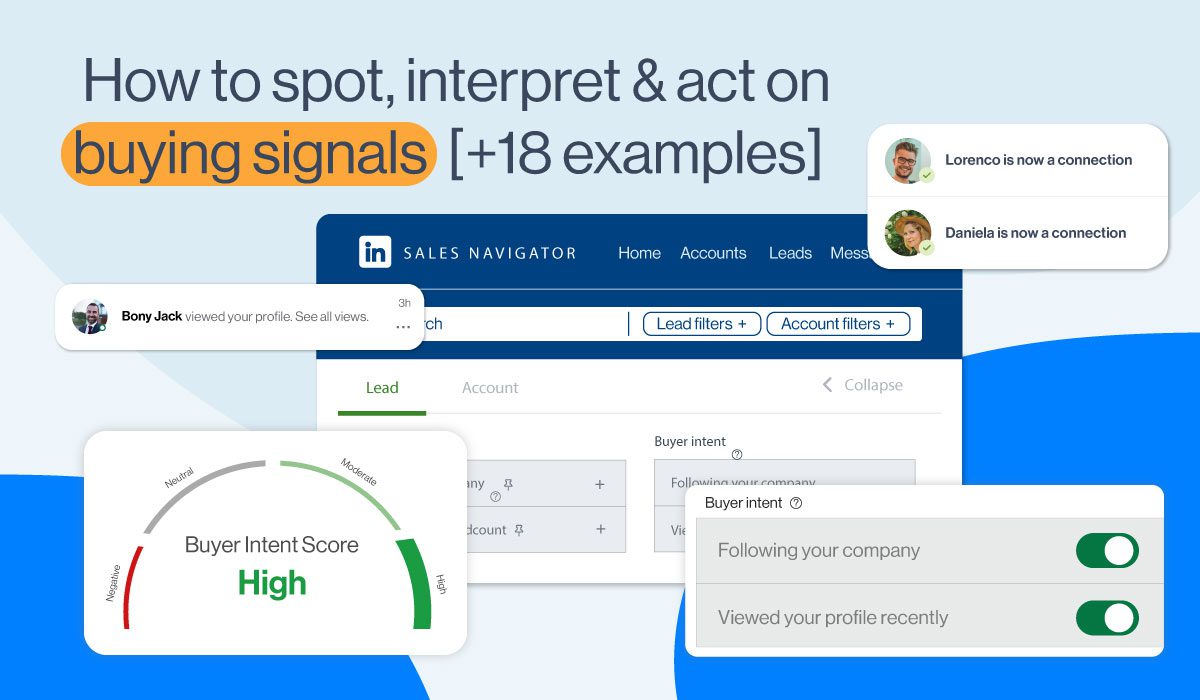
Just as importantly, outreach includes signals, which a sales engagement platform like Skylead can help you track and act upon. Opens, replies, clicks, profile views, meeting bookings, and even silence all provide feedback. Those signals dictate what happens next, whether that’s moving to qualification, changing the message, switching channels, or pausing engagement altogether.
Need a proven framework for targeted outreach?
Download our sales playbook to see how we engaged our leads and scaled Skylead from 2,500 to 10,000+ users in just 9 months. As a bonus, you’ll get access to outreach sequences and message templates that you can immediately use to jump-start your engagement.
3. Qualification
Once cold outreach turns into an actual conversation, the focus shifts from getting a response to understanding whether the opportunity is worth pursuing further. In other words, it’s time to qualify the lead.
Qualification is a series of interactions where reps learn whether the prospect has a real problem you can solve, how urgent that problem actually is, who’s involved in the decision, and whether it makes sense to keep investing time and effort
Effective qualification happens through:
- discovery calls and exploratory conversations
- thoughtful follow-up questions
- paying attention to engagement signals (responsiveness, depth of answers, willingness to share context, etc.)
4. Presentation
This is the point where prospects expect to see how your solution applies to their situation.
It’s also where you translate what you learned throughout the process into a focused experience that answers one core question for the prospect:
“Can this actually solve our problem?”
Presentation can take form of multiple formats, depending on the deal and how the buyer prefers to engage.
In practice, that often includes:
- Live demos centered around one or two use cases discussed during qualification
- Walkthroughs of specific workflows or outcomes that prospects care about
- Short presentations that frame the problem first, then show how your solution fits
- Supporting materials like case studies, examples, or recordings shared after the call
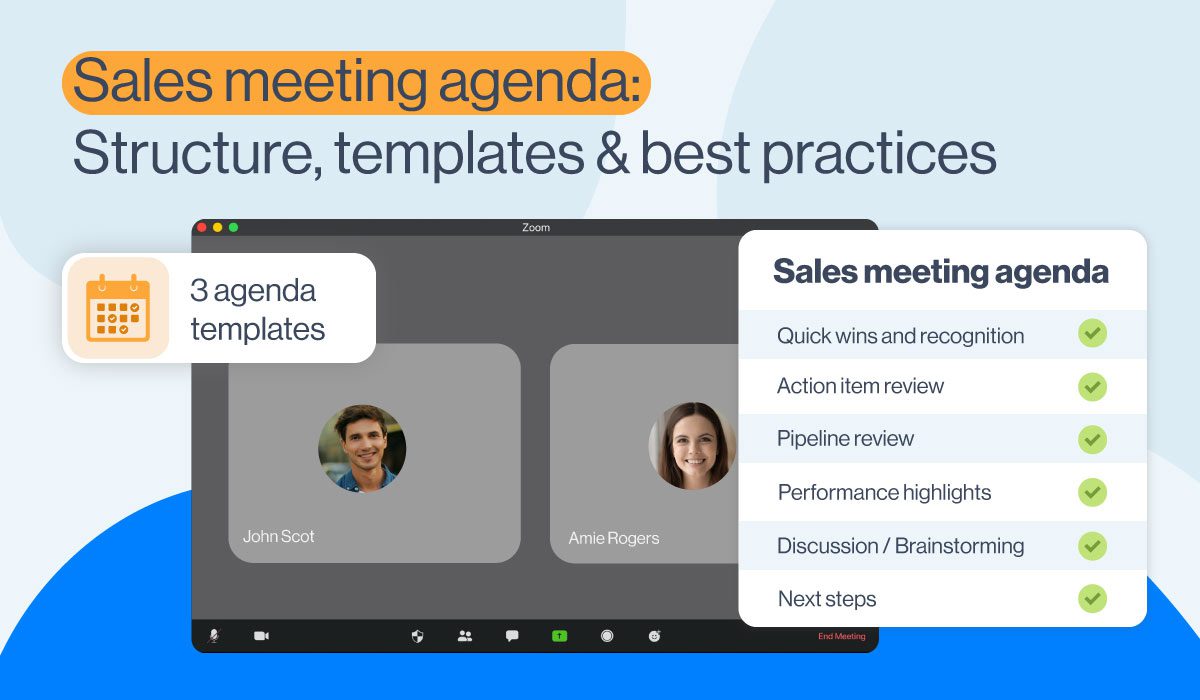
What matters most at this stage is relevance. Potential buyers lose interest quickly when presentations feel generic or disconnected from earlier conversations, making it imperative to prepare a sales meeting agenda in advance.
This is also where engagement becomes more interactive. Prospects ask more detailed questions, bring in additional stakeholders, and start evaluating trade-offs. Pricing, technical constraints, or internal approval processes often come up here, and objection handling has a direct impact on whether the deal keeps moving.
When this stage is done well, the prospect gains clarity - not just about the product, but about the next step. That clarity is what makes moving into proposal and negotiation feel natural rather than forced.
5. Proposal and negotiation
By the time a deal reaches this stage, the prospect is no longer evaluating whether to move forward, but how.
Many teams treat this as a simple handoff: send a quote, wait for feedback, follow up if nothing happens. In reality, this stage is where most of the fine print of the decision gets worked out, and where deals either close or fall through.
The proposal itself should reflect everything uncovered earlier in the process. Scope, pricing, timelines, and included features shouldn’t come as a surprise. If they do, it usually means something was missed in the qualification or presentation.
What actually happens here is a series of small but important exchanges. Prospects ask clarifying questions. New stakeholders get looped in. Procurement or legal may request changes. Internal priorities surface that weren’t visible before.
Negotiation, in this context, means removing obstacles that prevent a decision. Sometimes that means adjusting terms or offering discounts. Other times it means explaining trade-offs, reinforcing value, or helping the buyer navigate internal approval.
This stage also demands tighter engagement than any other. Slow replies or unclear next steps can derail deals that were otherwise ready to close. That’s why proposal and negotiation need to be treated as an active engagement phase, with defined follow-ups, clear timelines, and explicit ownership on both sides.
6. Closing
By now, the prospect understands the problem, sees how your solution fits, and has agreed (at least in principle) on scope and terms. The goal of this stage is to help them complete the decision and finalize the deal.
Closing usually involves:
- confirming final approval from all decision-makers
- completing contract signing and paperwork
- aligning on start dates, onboarding steps, or handover to implementation
Reps play a coordination role at this point. They follow up on outstanding approvals, answer last-minute questions, and keep momentum alive without applying unnecessary pressure.
Once the agreement is signed, the deal seamlessly moves forward into post-sale engagement, without a drop in communication or context.
7. Post-sale follow-up and retention
The buyer’s experience shouldn’t reset just because the deal is done. In fact, the period immediately after closing is when expectations are highest, and trust is still being formed.
Post-sale engagement typically focuses on confirming that onboarding or implementation starts smoothly, reinforcing what was agreed on during the sales process, and making sure the buyer knows who owns what moving forward.
Depending on the organization, this stage may involve a handoff to customer success, account management, or onboarding teams.
Early check-ins are especially important. In fact, simple follow-ups to confirm progress, address initial friction, or clarify next steps can prevent small issues from becoming reasons for churn later on.
Over time, post-sale engagement shifts toward retention and growth. Ongoing communication helps teams spot expansion opportunities, identify satisfied customers who may become advocates, and proactively address risks before renewals come up.
Elements of a winning sales engagement process
Defining stages is only half the job. What separates a sales engagement process that looks good on paper from one that actually works day to day is how those stages are supported.
High-performing teams don’t rely on individual reps to “figure it out.” They put a few foundational elements in place that make consistent engagement possible, even as volume grows and teams scale.
Playbooks and sequences
A winning sales engagement process is documented, and no, not in the rigid scripts or same generic messages sense. It means clear guidance on what good engagement looks like at each stage. Playbooks outline recommended actions, messaging angles, follow-up timing, and exit criteria so reps aren’t starting from scratch every time.
Sequences are the execution layer of these playbooks. They help teams manage and keep track of touchpoints while still leaving room for personalization and judgment. When done right, sequences support reps instead of replacing them.
Channel selection and touchpoints
Not every channel works equally well at every stage. Cold outreach, qualification, late-stage follow-ups, and post-sale check-ins all call for different approaches. A strong sales engagement process defines where email makes sense, where LinkedIn adds value, and when a call is necessary to move a lead further down the funnel.
Just as important is pacing. Too many touchpoints too fast can feel intrusive, whereas too few leave the buyer doing nothing, which is often worse than saying no.
Personalization
Personalization is what keeps a structured process from feeling robotic. That can be as simple as referencing a prospect’s role, industry, or recent activity, or as deep as tailoring demos, proposals, and follow-ups to specific use cases.
What matters most in personalized outreach is relevance. Every interaction should answer the unspoken question in the prospect’s mind: ‘’Why is this useful to me right now?”
Automation and technology
Automation exists to remove friction, not judgment. The best teams use sales engagement technology to handle repetitive tasks, such as prospecting, scheduling follow-ups, tracking engagement signals, or logging activity, so reps can focus on conversations that require context and decision-making.
We can’t talk about sales engagement automation without mentioning our very own Skylead. It’s THE software to use when you want to save 11+ hours a week on repetitive tasks and book 3x more meetings.
Performance tracking
You can’t improve what you can’t see. It’s that simple.
A strong sales engagement process makes it easy to spot patterns, test changes, and refine execution based on real data.
Team alignment and training
Finally, engagement only works when everyone is on the same page.
Sales, marketing, and customer-facing teams need a shared understanding of how prospects are engaged, what’s been promised, and what happens next. Training helps new reps onboard faster and experienced reps stay consistent, even as processes evolve.
When these elements work together, the sales engagement process becomes a system that supports predictable growth, repeatable results, and a better experience for both buyers and sellers.
Common mistakes to avoid in the sales engagement process
Even those who understand the importance of sales engagement often struggle to execute it well. Not because the idea is wrong, but because small missteps compound quickly across deals, reps, and channels.
Here are some of the most common mistakes we’ve seen salespeople make.
Lack of a clear strategy or goals
If reps don’t know what each stage is meant to achieve, engagement becomes reactive. Messages are sent because it feels like time, follow-ups happen out of habit, and progress is judged by activity rather than outcomes.
A sales engagement process only works when every stage has a purpose. Without that, teams end up busy. But effective? Not so much.
Over-reliance on automation without personalization
One of the fastest ways to undermine a sales engagement process is to lean too heavily on automated sequences without enough context or customization. Reps have been using chat GPT for sales copywriting for a while now - so much that prospects have learned to spot generic messages from a mile away, especially when they ignore prior interactions or repeat the same pitch across channels.
The result is predictable: lower response rates, stalled conversations, and disengagement. Automation should create consistency and save time, sure, but it’s personalization that keeps engagement human.
Ignoring data and feedback
Many teams track engagement metrics but don’t actually use them. Open rates, replies, meeting bookings, and drop-offs are all signals. When they’re ignored, teams keep running the same playbooks even when they’re clearly not working. Over time, this leads to bloated processes that look structured but produce inconsistent results.
Neglecting follow-up and post-sale engagement
Engagement gaps don’t only happen early in the funnel. Deals often stall because follow-ups aren’t planned or ownership isn’t clear, particularly during proposal, closing, or immediately after the deal is signed. Post-sale engagement is another frequent blind spot, where communication drops just when the buyer needs reassurance and guidance the most.
Poor alignment between sales and marketing
When marketing and sales operate independently, prospects experience disjointed messaging, awkward handoffs, and repeated questions. Leads arrive without context. Sales conversations contradict earlier promises. And to top it all off, customer success inherits accounts with incomplete information, which creates friction after the sale and puts retention at risk before value is even delivered.
How to optimize and scale your sales engagement process?
Designing a sales engagement process is one thing. Running it consistently, at scale, without losing personalization or control, is where most teams struggle.
This is exactly the problem Skylead was built to solve.
Skylead is a sales engagement platform and outreach tool that helps teams execute their engagement process end-to-end - from first touch to post-sale follow-up - without relying on spreadsheets, reminders, or guesswork.
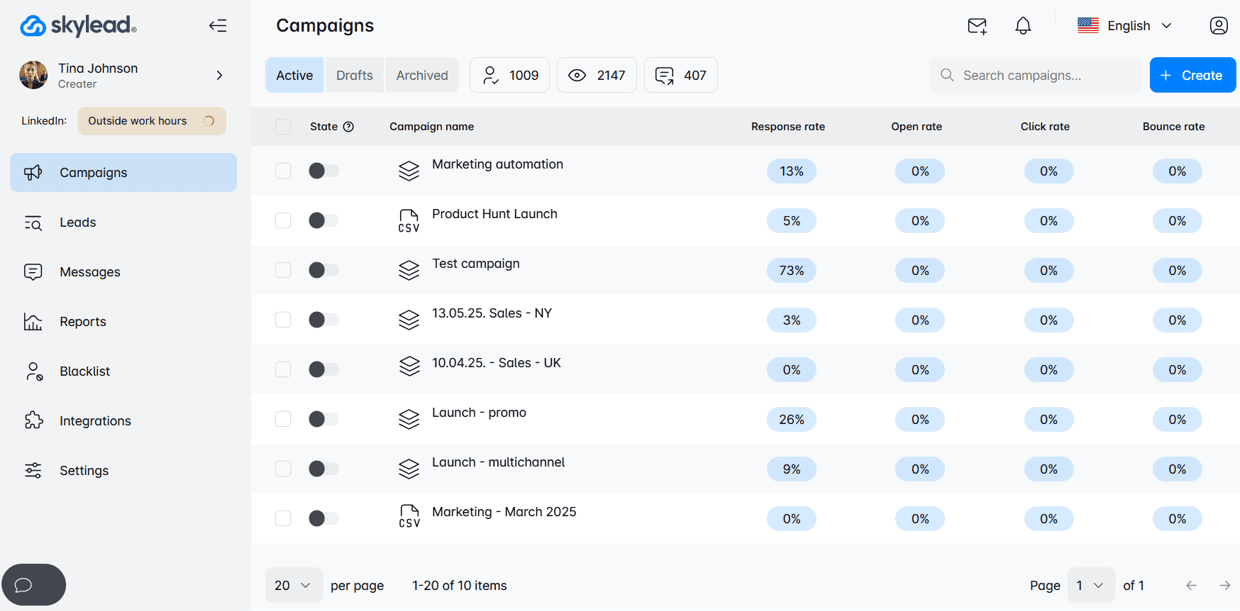
Here’s everything that makes Skylead the tool to use when you want to optimize and scale your sales engagement process.
Scalable outreach that doesn’t put deliverability at risk
One of the biggest bottlenecks in sales engagement is volume. Reps want to reach more prospects, but inbox limits and deliverability risks get in the way.
Well, not with Skylead!
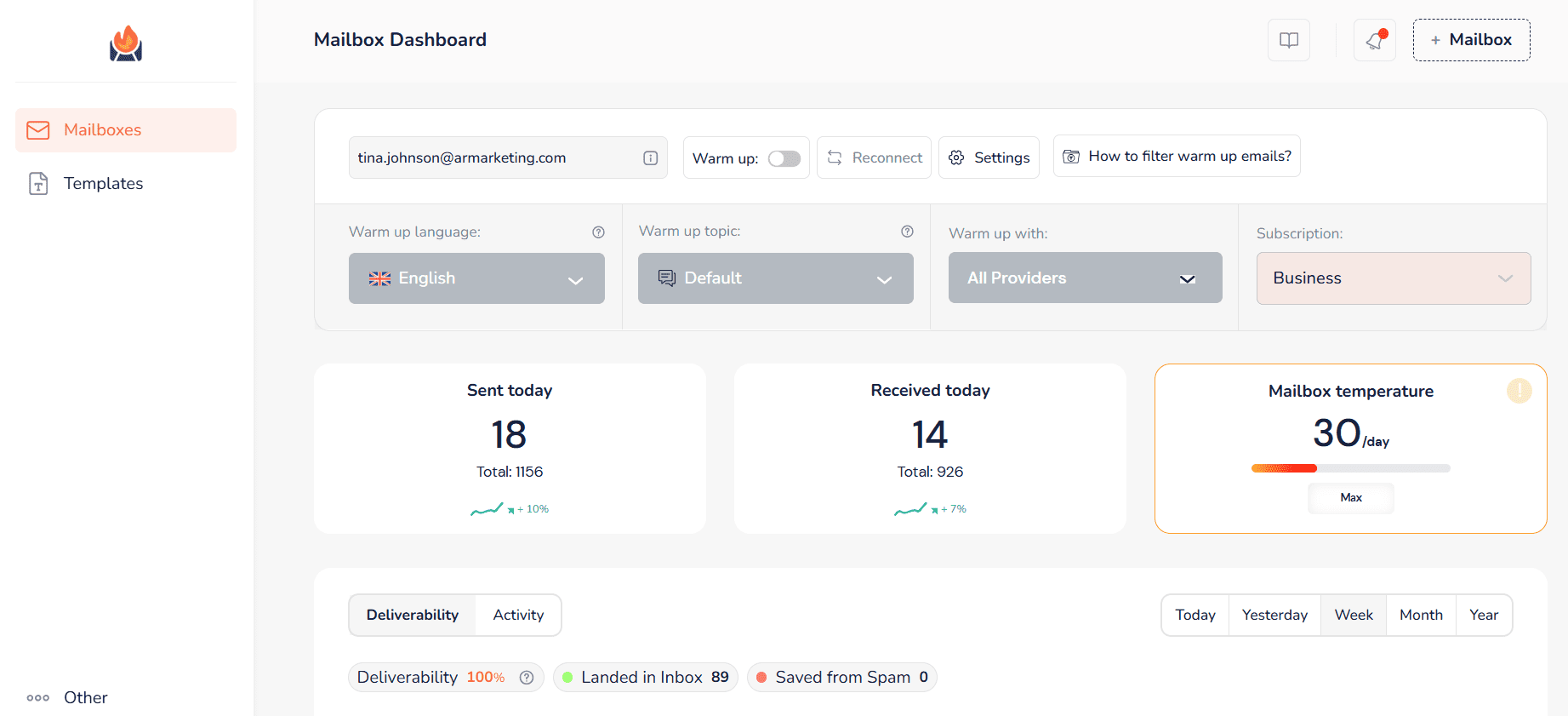
Namely, you can connect unlimited email accounts to the tool and automatically rotate them to send tens of thousands of emails per month while staying within safe sending limits. There’s no manual switching and no extra fees as your email outreach volume grows.
To protect deliverability even further, Skylead includes email discovery and verification directly inside your outreach flow. Emails are found, double-verified, and used in sequences automatically, reducing bounces and keeping your sender reputation clean.
And because deliverability starts long before the first outreach campaign, we’ve partnered up with an email warm-up tool, InboxFlare, to provide infinite email warm-up. This way, you can have your mailbox(es) gradually prepared for outreach, so emails land in the primary inbox instead of spam.
Smart sequences that adapt in real time
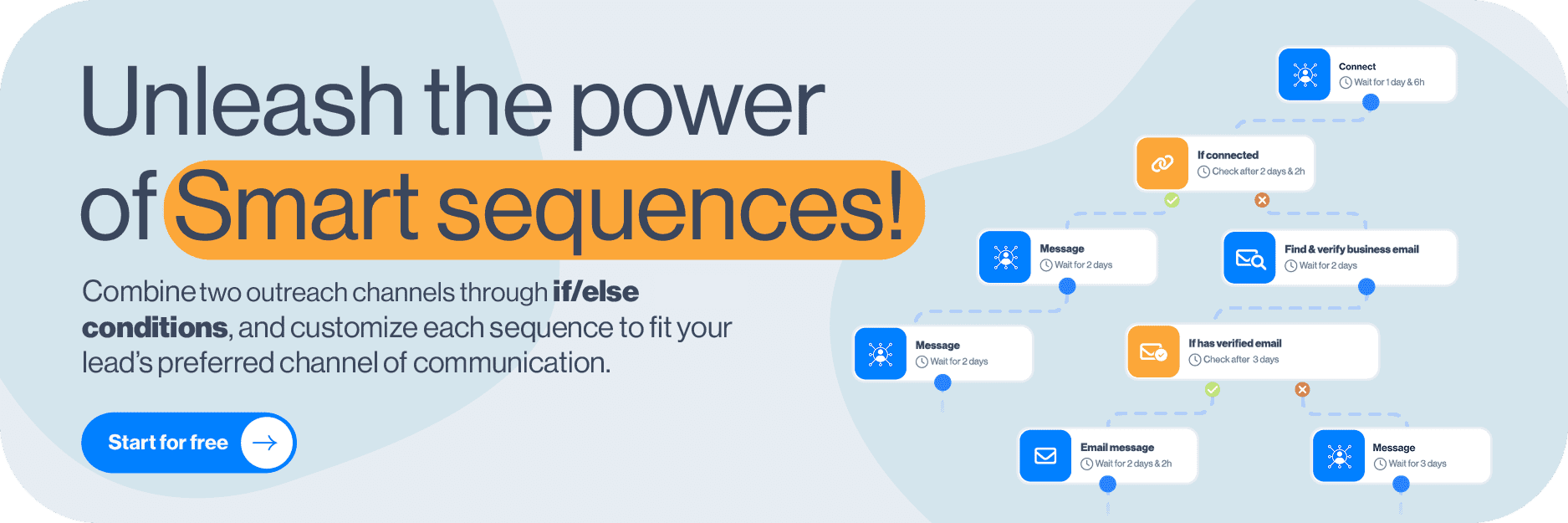
We can’t talk about Skylead without mentioning our star feature - Smart sequences.
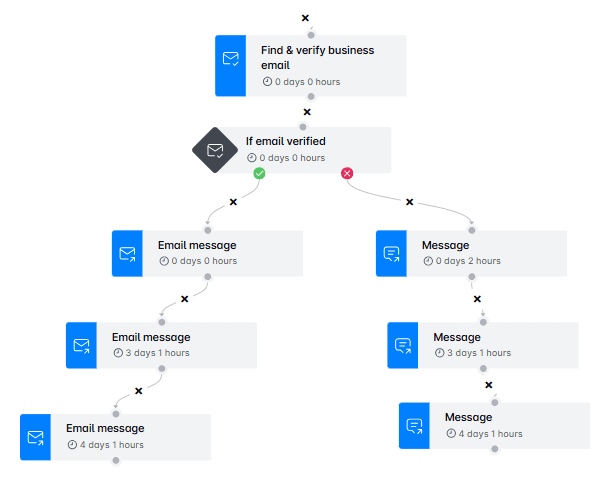
Instead of their static, linear counterparts, Smart sequences combine outreach actions with if/else conditions. You define the logic once, and the tool adapts execution based on how prospects behave.
- No reply? Send a follow-up email after no response automatically.
- An email opened but ignored? Switch channels.
... and countless other scenarios!
This allows reps to focus on strategy while the platform finds the fastest path to engagement for each prospect.
Personalization that actually feels personal
Structured engagement doesn’t work if messages sound automated.
Skylead gives you multiple layers of personalization, depending on how deep you want to go.
For example, you can use predefined or custom variables to personalize messages with first and last name, role, company, or any other data you choose.
In the meantime, Spintax lets you rotate phrase variations (like hello, hi, or hey) inside bulk emails, so messages don’t look or feel repetitive.
For advanced use cases, there’s Liquid syntax, which combines variables and conditions to show different content to different prospects based on rules you define (such as if/else conditions or available user data).
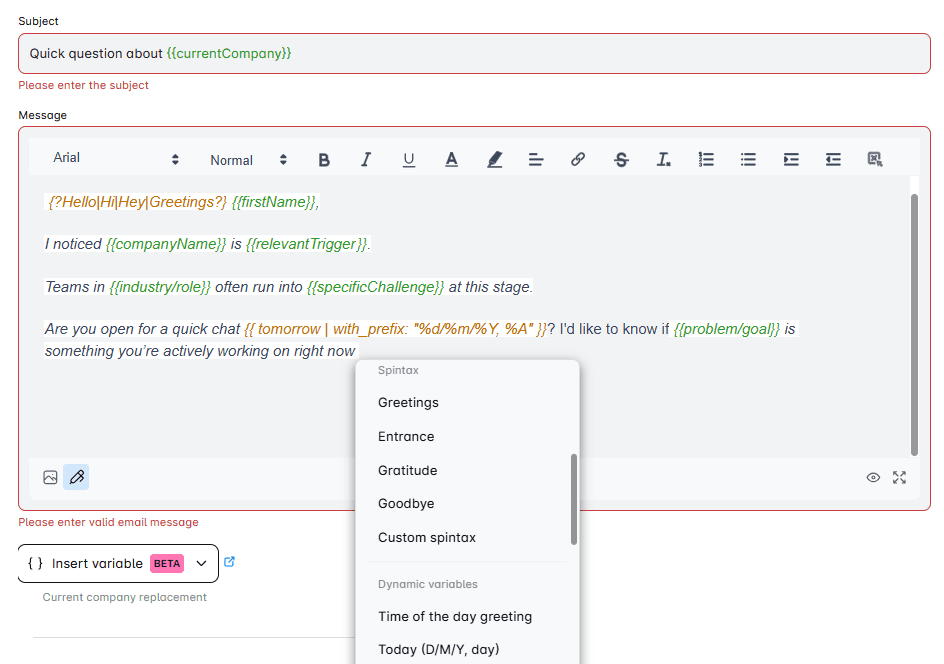
Not to mention, you can run up to 5 A/B tests for every message-based step in your Smart sequence to see what kind of personalization or angle works best for your leads!
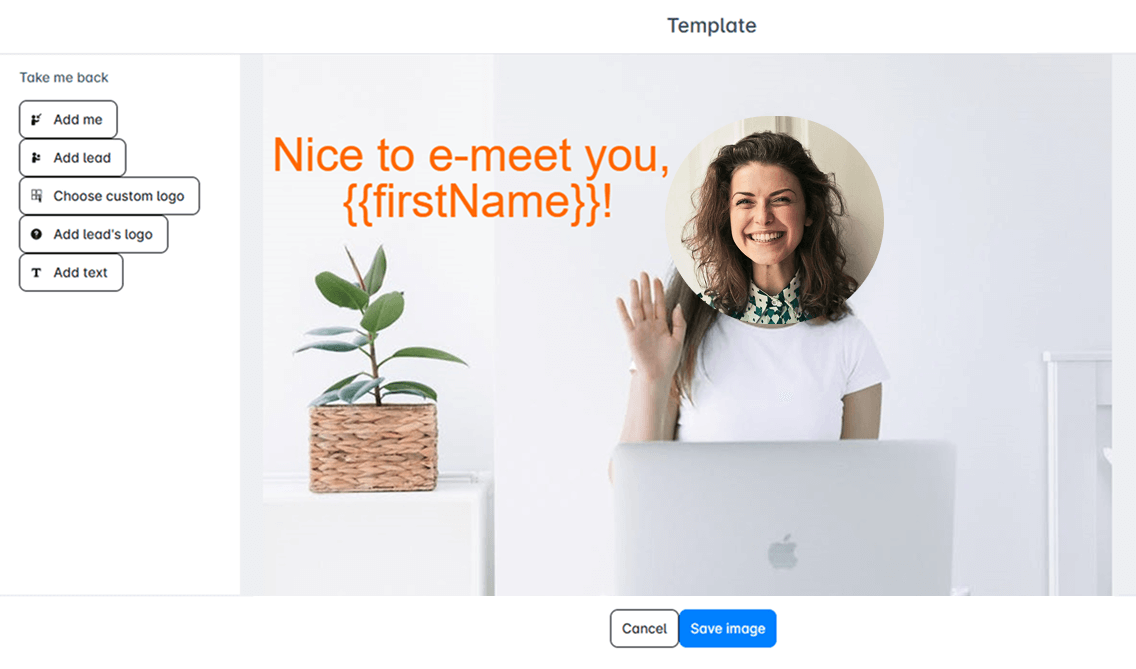
And when text alone isn’t enough, Skylead’s native image and GIF personalization lets you embed names, company logos, profile photos, or custom text directly into visuals. Because sometimes, an image really does say more than a thousand words (and brings about a 76% increase in response rate!)
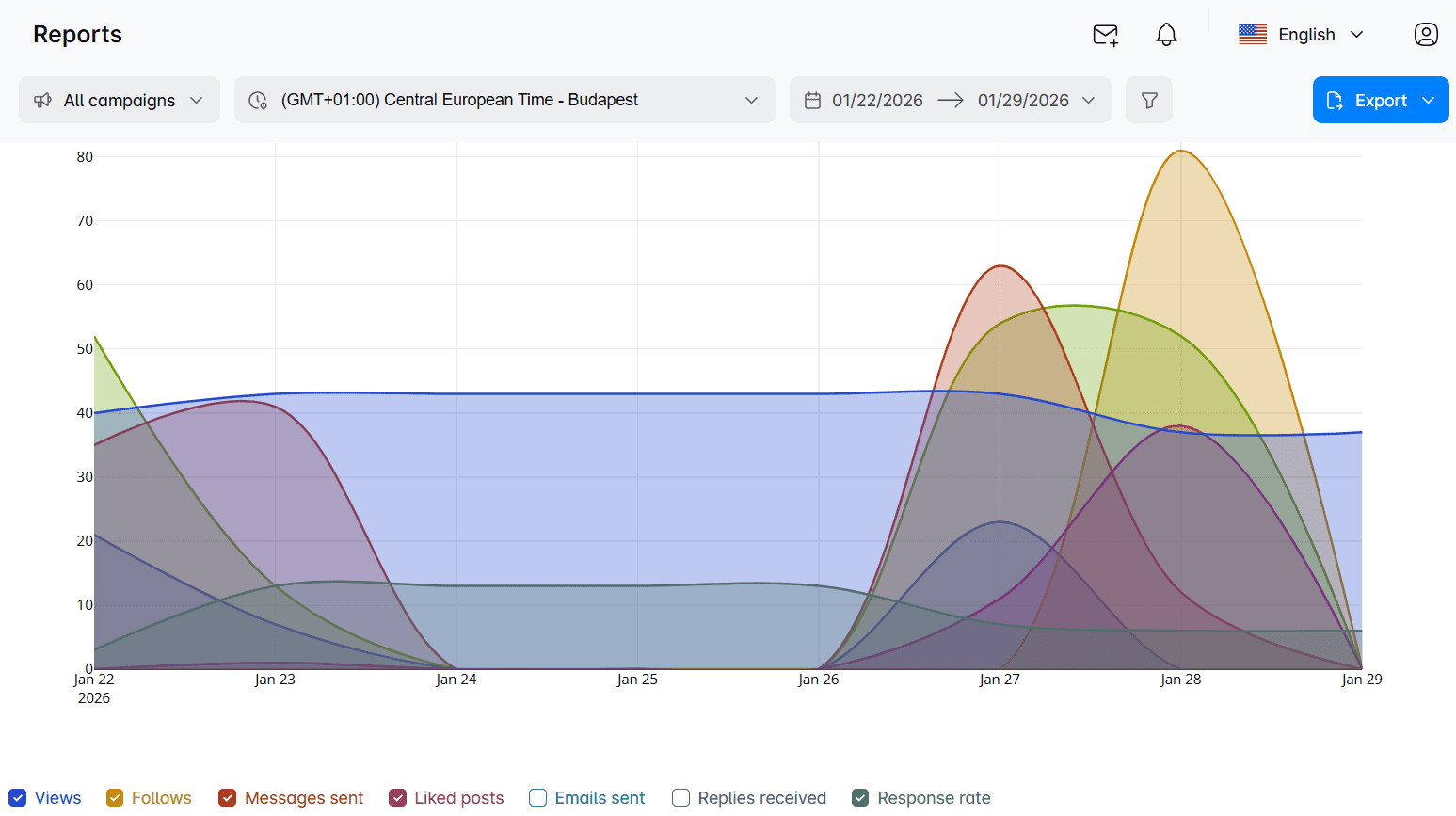
Visibility into what’s working
A sales engagement process only improves if teams can see how it performs.
That’s why our tool includes built-in outreach analytics, allowing users to track performance day by day through clear graphs and tables, or drill down into step-by-step performance within each sequence.
One inbox for every conversation
All replies across channels land in a Smart inbox.
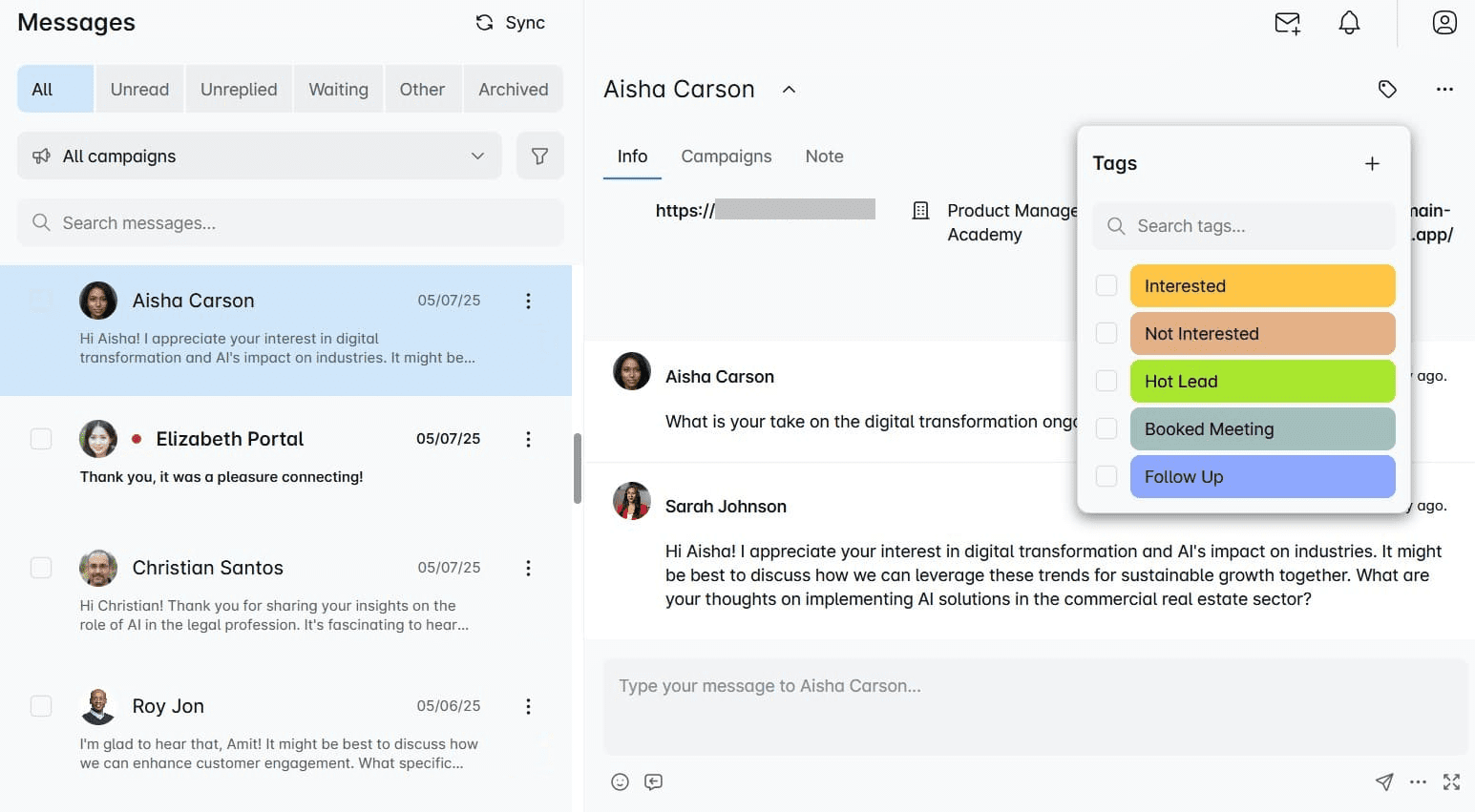
From there, reps can respond directly, leave internal notes, add tags to conversations, and track outcomes. Because everything is connected, it’s easy to see which conversations turned into meetings, which deals closed, and how outreach contributes to ROI.
Pretty handy, don’t you think?
Frequently asked questions (FAQs)
What is the difference between sales engagement and sales enablement?
Sales enablement prepares reps to sell by providing training, content, and playbooks. Sales engagement focuses on execution: how reps interact with prospects across channels, when they follow up, and how conversations progress.
How do I choose the right sales engagement platform for my team?
Look for a platform that fits how your team actually sells. An ideal platform should support multichannel outreach, flexible sequencing with conditional logic, strong personalization options, and built-in analytics. Ease of use matters just as much as power. If reps can’t adopt it quickly, even the best features don’t help.
What are the best channels for sales engagement?
There’s no single best channel. Email works well for structured outreach and follow-ups, LinkedIn supports warm touches and visibility, and calls help move complex or stalled deals forward. Effective sales engagement combines channels and adjusts based on prospect behavior.
How can I measure the effectiveness of my sales engagement process?
Effectiveness goes beyond activity volume. Track reply rates, meeting bookings, stage-to-stage conversions, deal velocity, and drop-off points. A strong sales engagement process makes these signals visible and, thus, helps teams identify what drives progress and where engagement breaks down.
Is sales engagement only for outbound sales?
No. Sales engagement applies to outbound, inbound, and post-sale interactions. Inbound leads still need timely follow-ups and clear next steps, while post-sale engagement supports onboarding, retention, and expansion. Sales engagement revolves around managing interactions, regardless of how a lead enters the pipeline.
Build a sales engagement process your team can actually follow
If your reps have to stop and think, “What should I do next?” in the middle of a deal, the problem isn’t execution. It’s the lack of a sales engagement process that they can rely on.
When engagement is structured, reps don’t guess their next move. Deals don’t fall through. And growth doesn’t depend on a handful of top performers remembering to follow up. Instead, teams operate with clarity, consistency, and momentum across channels, stages, and the entire buyer journey.
If you’re serious about building a predictable pipeline and scaling without losing personalization, the process comes first. The right tools simply make it easier to execute.
That’s exactly where Skylead fits in.
Ready to put your sales engagement process into action?
👉 Try Skylead free for 7 days and see what structured, scalable engagement actually feels like.